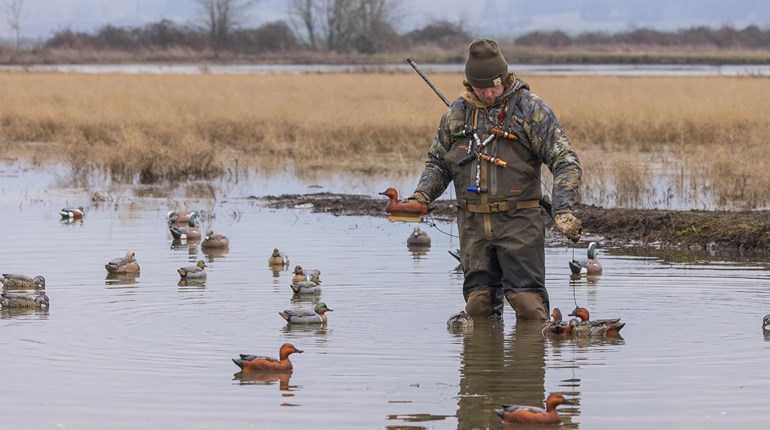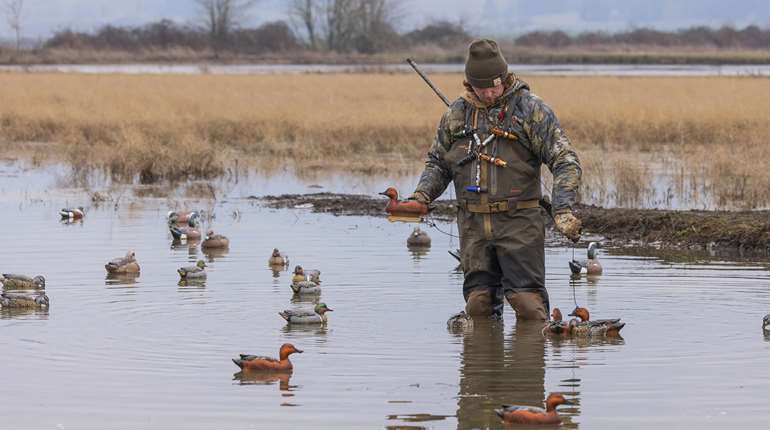
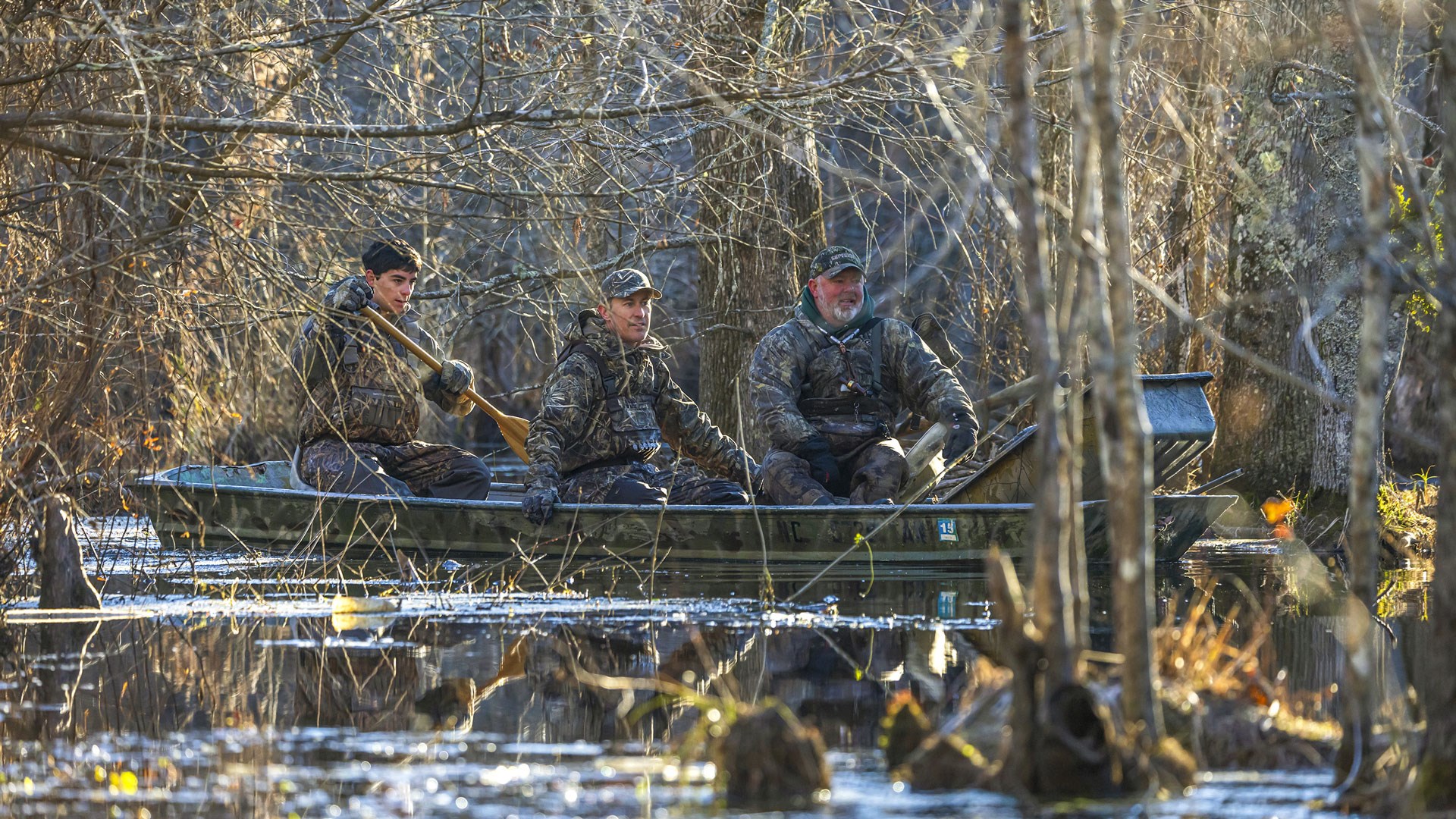
Four of us slipped into backpacks and started hiking through the trees. Brad Evans, the group leader, pulled a little sled. In it were seven floating duck decoys and a motorized swimmer. “Are we coming back for more decoys once we get the blind set up?” I asked. “Nope, there’s no blind and this is all the decoys we need,” Evans replied.
Guided by the beams of our headlamps, we were soon busting ice. “This is it,” Evans said, 20 minutes later. “This is where we’re hunting. Turn off your lights and you’ll see it better.”
As my eyes adjusted to the darkness, silhouettes of lifeless trees stretched for the stars. The edge of the tree line in which we stood gave way to a small opening. “Let’s break ice,” Evans instructed. “Once the ducks start pouring in, we wanna shoot fast and get outta here because we’re hunting it again, day after tomorrow.”
It was last January. We were on Evans’ family property in Ahoskie, N.C. Black ducks were what I came for. I’d never hunted them before. Sleep was hard to come by the night prior.
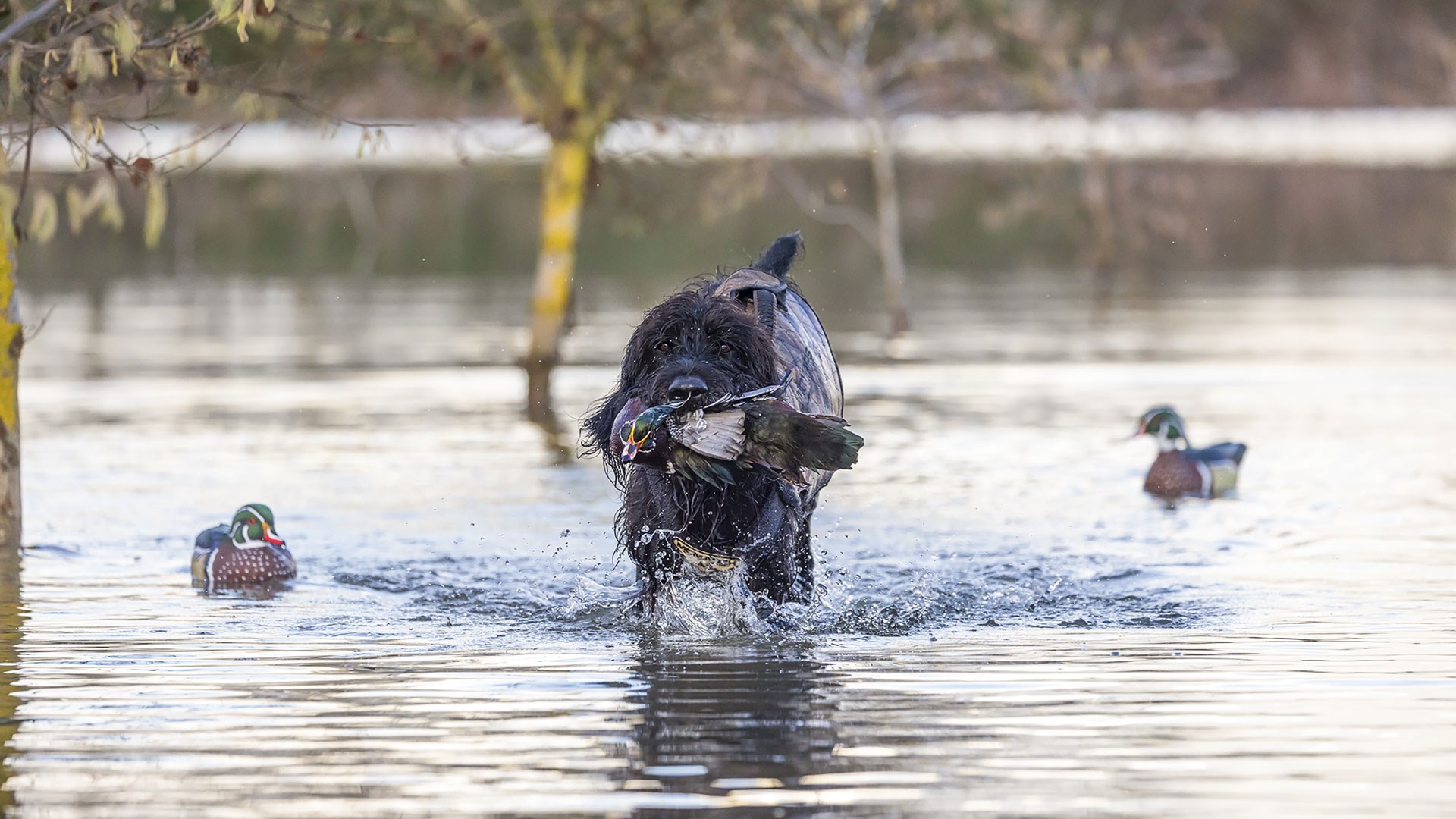
I was about as far across the continent as one could get from home, outside Eugene, Oregon. But Evans’ approach was appealing: a small spread, no blind, and shooting fast so we could hunt the place again, soon. It’s a formula that maximizes late-season duck hunting success, one I abide by back home. We left the flooded cypress swamp with mixed-bag limits of wigeon, woodies, gadwall and a handful of prized black ducks. Ducks were still dropping in on our way out.
The Late-Season X
Two days prior to the North Carolina trip I was hunting a small creek near my home. Mallards had just started piling into the tiny stream due to increased hunting pressure on a local river. With six floating decoys and a wing spinner on a jerk cord (motorized decoys are forbidden in Oregon) a buddy and I shot limits in less than 30 minutes. We did the same two days later.
Many late-season duck hunts start by finding the X. And being where ducks want to be starts with scouting. Physically searching in the middle of the day, when ducks are safely tucked away, is a good time to scout.
In recent years I’ve expanded my scouting efforts to include cellular trail cameras. I used to rely on non-cell trail cameras but by the time I checked cards ducks had often moved in and out and the brief hunting window was missed. With a cellular trail camera you can see when ducks start using an area and time your hunt accordingly.
Hunting pressure is one factor that forces ducks into secluded, midday holding places late in the season. Winter storms, high winds, ice and rising water levels are other reasons.
All trail cameras are set on video mode in order to capture sounds and movement. Oftentimes there may only be a few ducks in front of the camera, with several hundred more calling from behind where the camera is pointing.
Think Small
The benefit of finding and hunting the X is you’re where ducks want to congregate. Have just one experience trying to pull ducks away from where they want to gather and you quickly realize the biggest spreads, the fanciest decoys and the best calling won’t do a thing. It’s humbling and frustrating.
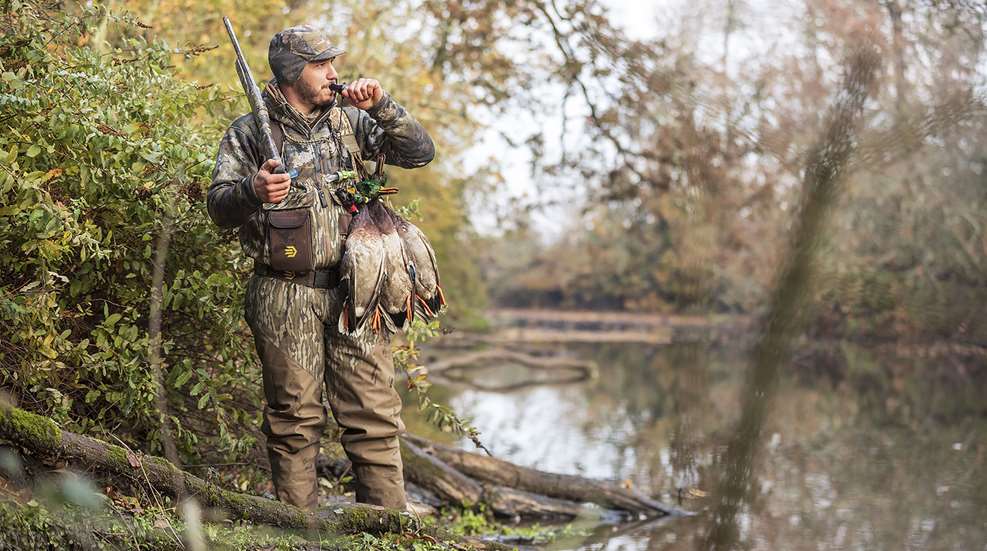
When hunting secluded hiding places, go light. Rarely is a blind needed, and if you do want one, try a small panel that’s simple and quick to brush-in. Because ducks often dump into tight spots so quickly, simply hiding in grass, by trees and amid brush, can suffice.
A half-dozen decoys will routinely pull in ducks, especially when hunting narrow creeks, flooded timber with small holes and river sloughs with expanded edges due to rising water. When ducks want to be in these places, have the spread set out well before shooting light. The limited number of decoys mimics the arrival of the early birds. The look is natural and not overbearing. Shoot quick and get out fast, before the bulk of the ducks arrive, and you can hunt it again a day or two later while favorable conditions attracting ducks still prevail.
Movement in the Spread
On our black duck hunt last winter, the swimming decoy was essential for keeping the water from freezing over. We had to break surrounding ice a couple times, but for the most part the moving decoy kept enough water open that ducks wanted in.
When it comes to creating movement in small spreads, think precision and timing. As new ducks from the north country migrate into our hunting locales, wind-aided wing decoys are very effective. In a slight wind they’ll spin all morning, nonstop, and pull in ducks. The same is true for a couple jerk cord setups with six or seven birds on each string, where continual movement puts action on the water that ducks love. But late in the season, when hunting educated birds seeking safety in small pockets, less decoy movement can be more effective. In areas I hunt, this is largely due to the fact so many hunters are using wind-driven wing decoys that never stop turning.
A wing decoy on a jerk cord is sometimes the only movement needed to fool birds in small confines. When ducks come in low, say following a river slough or a wide creek that necks down at the head end, it only takes slight wing movement to get their attention. When distant ducks are first seen, pull on the cord just enough to slowly turn the wings a few times. The black-and-white contrast is all that’s required to get ducks looking. Continual, fast movement can look unnatural in small holes, to the point of flaring birds. When ducks land in tight confines, it’s done quickly. Less decoy movement can be more effective.
It’s not too slight to go with a single floating decoy on a jerk cord, either. Unlike the wing decoy that’s engaged when ducks first come into view, the swimmer can be creating ripples on the water when ducks aren’t in sight. This is especially effective when ducks descend from overhead, quickly dropping in at a steep angle. They instantly pick up on the moving water and are set at ease seeing ducks have already arrived and are safe.
In a couple places where a buddy and I hunt late-season wood ducks, a Motion Duck Shallow Water Decoy Spreader is very effective. When river levels rise due to heavy rains, creeks flood and sloughs back up on the river. I live in the heart of hazelnut country where the excess water routinely spills over into orchards and wood ducks pile into them by the hundreds. With four decoys on the spreader, and eight more placed around the edges, the movement attracts the attention of wary ducks from a long way. Because the most accessible nuts are at water’s edge, we’re set up well inside the orchards, and water movement is key to bring ducks into shooting range.
In a couple states I hunted last season where motorized decoys were allowed, Mojo’s Mallard Machine impressed me. The water movement this decoy creates is very natural, and ducks love it. One guy I hunted with ran two Machines, and in the wide-open space we hunted ducks didn’t hesitate banking in. There’s something to be said for continual decoy movement on the water late in the season, especially if it’s not overly aggressive.
Elevate with Silhouettes
One of the benefits of running small decoy spreads on late-season ducks is there’s less to carry. The lighter you go, the more remote holes you can access. If you want to increase the visibility of six or 12 floating decoys and not get bogged down, consider silhouettes. Silhouette decoys are light, easy to carry and noticeable in a spread.
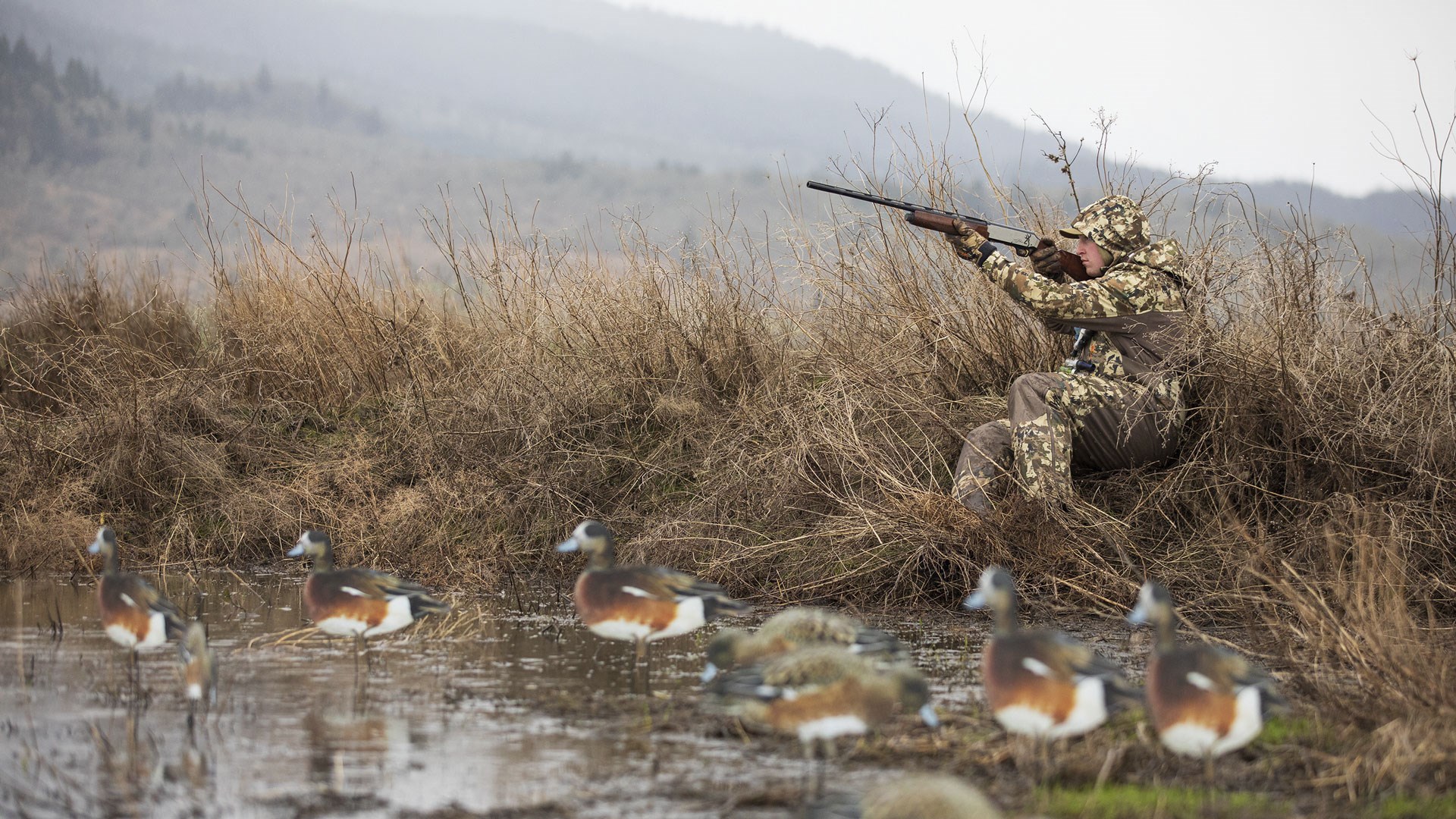
Situating silhouettes on shorelines is a great, natural look. This is where ducks often spend time preening and resting, meaning it’s a relaxed presentation. If hunting wigeon that go ashore to graze on grass that’s greening up late in the season, the silhouettes can be moved well away from water, where the birds graze.
Two seasons ago I started experimenting with staking silhouettes to logs and fallen trees. After some trial and error, late last season I was finally happy. I got online and ordered some 12-inch-long, circle-top galvanized garden spikes. I painted the tops flat black and inserted them into Big Al’s updated mallard silhouettes. I chose these decoys because their photo-finish is precise and the breasts of the drakes are the ideal color for increasing visibility on low-light hunts and when placed in dark shadows.
Next, I went to the local hardware store and picked up a small ball-peen hammer. I cut the handle in half and drilled a hole through the end of the handle. Using a 12-inch Nite IZE Gear Tie, I threaded it through the hole in the hammer handle and a dozen silhouette decoys with holes drilled into each of the tails. I have five of these setups ready to go. They’re easy to attach to a pack or toss into a Marsh Rat.
Staked atop floating logs and trees that have fallen into the water, these elevated silhouettes have been a game changer. Often there’s only room for a half-dozen, but their presence has greatly increased the visibility of many spreads. Step back and look at them from a distance. On long river sloughs and mid-sized creeks, it’s easy to see how ducks can spot them from afar. They’re visible well before the floaters come into view. The look is also natural, as evidenced by numerous trail-camera clips I’ve amassed of ducks hauling out on logs to preen and sleep.
Species-Specific Looks
On the final week of duck season two years ago, Northern shovelers poured into the valley. Over a spread of mixed decoys in the wide open, I shot some dandy drakes, including a mounter, my third; you can’t have too many of these gorgeous birds to stare at in the offseason. I fired a photo to my buddy, Austin Crowson. Two days later Crowson joined me. There were plenty of spoonies in the air but the wind had shifted 180 degrees from the previous time I’d hunted it and birds were reluctant to commit.
Crowson pulled six drake Final Approach Live Floating Shoveler decoys from the spread and hiked to a big flooded field a few hundred yards away. Even from a distance, the white radiates from these decoys and the natural iridescent colors pop. Ducks love ’em. A flock of three drakes banked into the decoys and Crowson dropped two. A few minutes later he doubled on two more drakes. The bar was raised; a drake limit or nothing. In short order, he pulled it off—seven drakes taken over six drake decoys. And he went home with a wall-hanger.
Species-specific decoys can have major pulling power in some late-season situations. The adage “birds of a feather flock together” often holds merit. With wigeon it’s particularly applicable in the late season. Observe a flock of 5,000 wigeon grazing, with no other ducks in the mix, and you’ll get it—or a couple hundred wood ducks packing into a tiny, tangled slough or skinny creek, with no mallards or teal in sight.
With late-season wigeon—a forte in our area—a dozen floating wigeon decoys and two or three dozen Big Al’s wigeon silhouettes are the ticket. The floaters are strung out in a line, like they’re swimming to shore. A third of the silhouettes are huddled on shore, where the floaters are heading. The rest of the silos are spread out in feeding groups. The minimal spread emulates a small number of wigeon starting to feed, and has accounted for countless limits for buddies and I in recent years.
Taking the species-specific concept one step further, last season I tested some Big Al’s Eurasian wigeon silhouettes. When the wigeon were in thick I added a half-dozen Euro drakes to a half-dozen Final Approach Eurasian floaters. I killed a hybrid American-Euro, and Crowson shot a pure Euro over them. I’ve watched Eurasian wigeon mingle with massive flocks of Americans. Often the Euros are with their own kind, maybe only two or three, but they’re together. Both Euros we shot over those flats last year fell in the decoys sharing their same feather colorations.
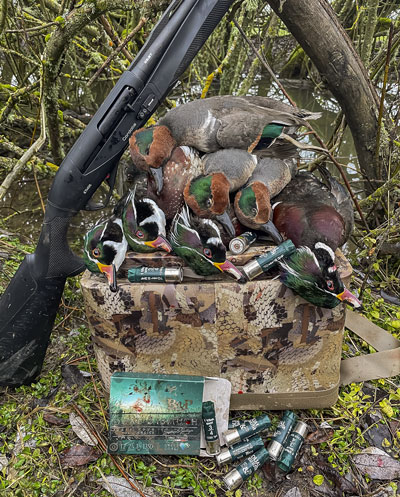
Wood ducks are another species-specific decoy that offers confident pulling power. Be it a half-dozen floaters set in a tight corner of a slough or a dozen spread throughout a slender creek, these decoys work. If there’s a current flow, plop a couple decoys in it for added movement. If not, set up some on a jerk cord. Woodies are a sucker for moving decoys of the same flavor.
Six to 12 mallard decoys are hard to beat anytime, anywhere. Be it targeting greenheads or a mix of species, these are the granddaddy of imposters that regularly fool ducks.
Backup Plans
When hunting late-season ducks in small water, have a backup plan. Actually, have a few. The more options you have, the more hunting you’ll get in.
Monitor winter storms and wind direction. Storms and freezing conditions move birds in the late season. As these ducks arrive, the more places you have to hunt them when conditions are right, the better.
Ducks might only visit a particular slough when water levels allow them to reach food sources they’ve yet to access. They may only funnel into a creek once there’s enough water to safely roost on logs floating beneath brush and against shore. They might work a small pond or newly flooded field when there’s enough water to allow them to safely stay in the middle, away from shoreline predators, yet where they can see killers in the sky.
Hunting windows can be brief when storms and ice are the cause of congregating ducks. Being ready to hunt these locations when the time is right is key.
Wind also influences where ducks choose to hide. By traveling light you’ll be able to easily reach secluded hiding locales. Downsized loads will also afford quick changes in location, even alterations in the spread until you find what birds like.
Should water levels significantly change overnight, or fellow hunters beat you to the spot on the river, backup plans are your way out. This is where cellular trail cameras are invaluable scouting tools.
Know the Zone
One of the factors in making small decoy spreads consistently work in the late season is understanding when and where to use them. Knowing if you’re hunting a feeding locale or a roost can impact what time of day you hunt the spot and for how long.
If a hole fills with ducks late in the morning after they’ve been shot at in surrounding areas, or a massive storm causes them to move, an early start may not be necessary. But if that hiding spot exists only because of a high water event, it may only be appealing to ducks for a few days. When that’s the case, don’t save the spot, hunt it.
If the spot you’re hunting sees birds piling in before shooting light, you may have time to let bird numbers build before hunting it. Fifty birds might suffice, but 500 ups the odds of success. If forecasts lead you to believe water levels will be favorable for a while, you might be able to hunt it three times in a week. Get in early, shoot quick and get out so as not to educate every duck using the spot.
As for blinds, don’t create an eyesore that’ll spook ducks in confined quarters. Keep the hide simple and discreet. Minimize movement and resist the urge to stare at birds as they drop in.
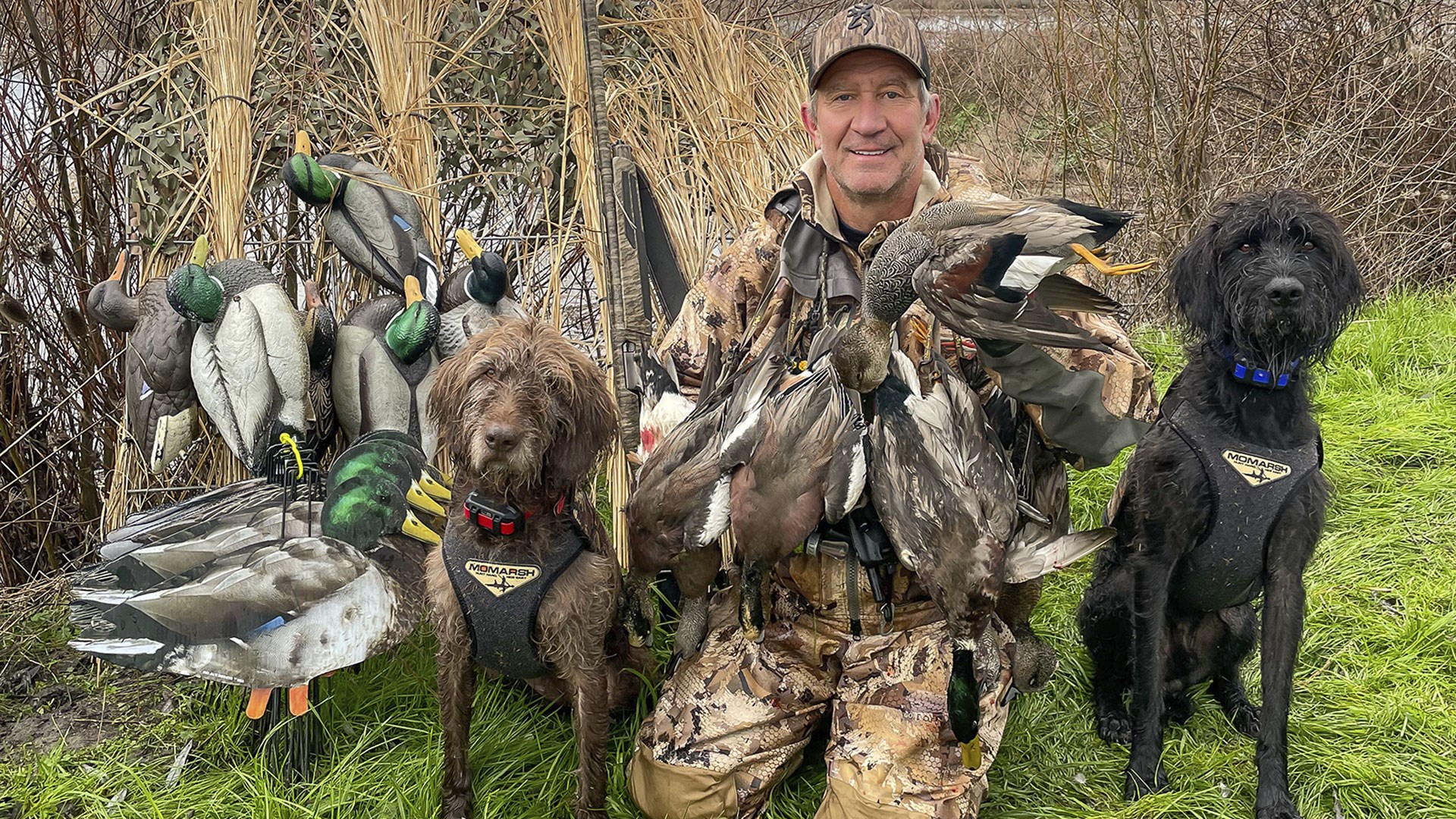
While hunting with a bunch of buddies in a mobile home-sized blind, overlooking a massive spread of decoys with half of you blowing calls at will might be fun and sometimes effective, there’s a time and place where downsizing has a more applicable fit. For me, hunting small water with my aging father or a buddy is tops. If I can get in a dozen solo hunts a season, just me and my dogs in duck holes where the action is up close and fast, that’s even better, and achievable with a few decoys and minimal gear.