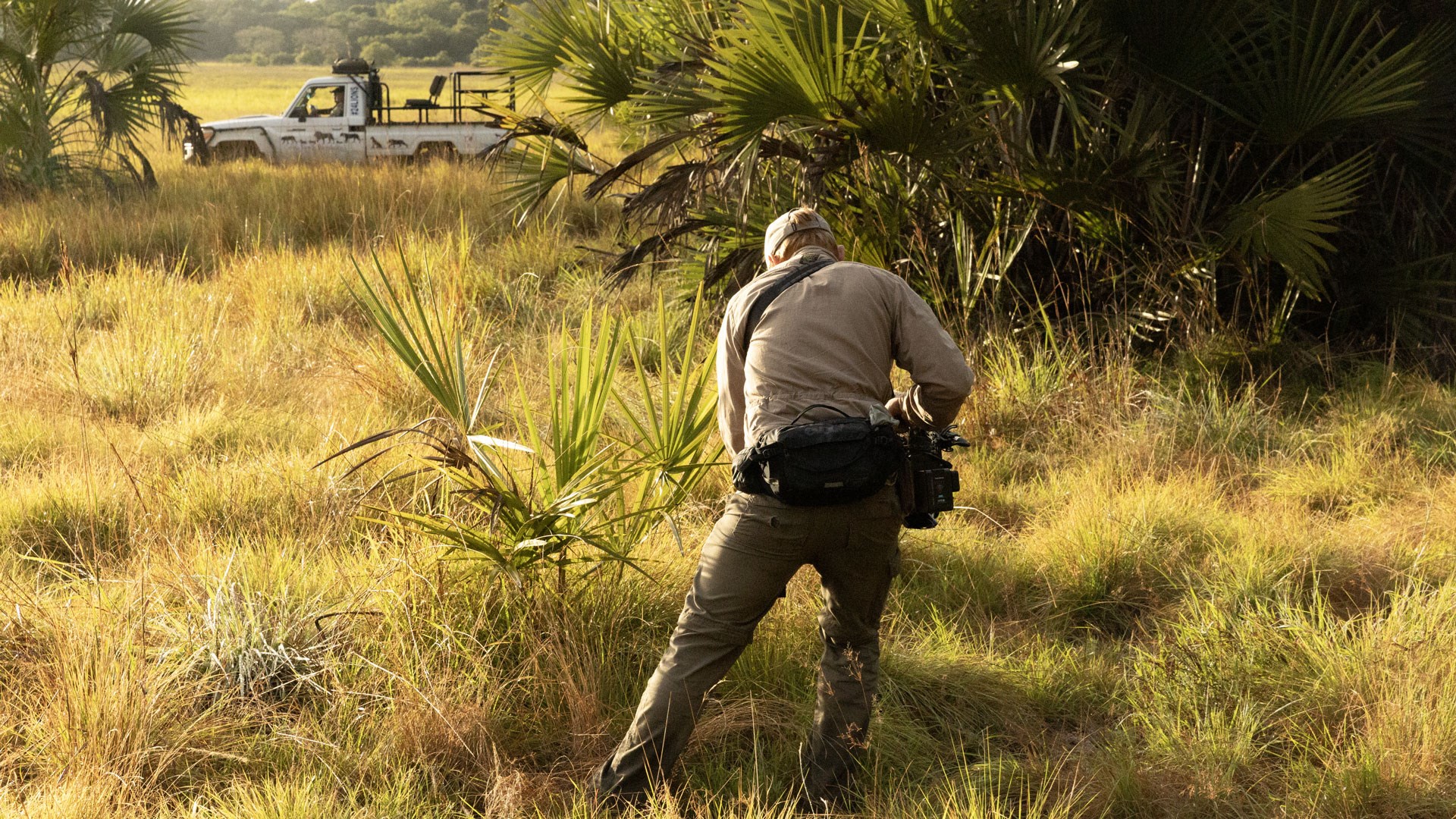
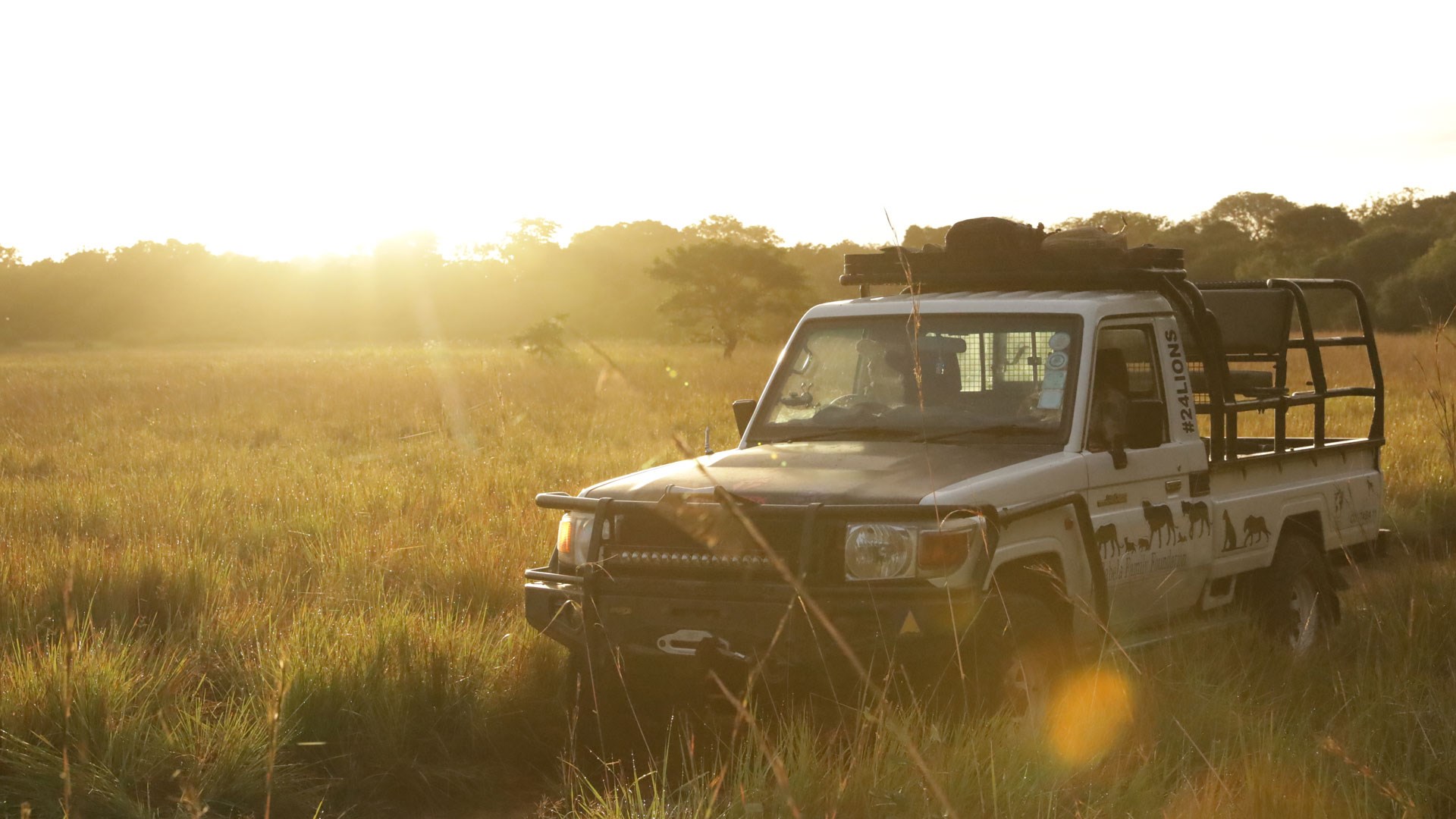
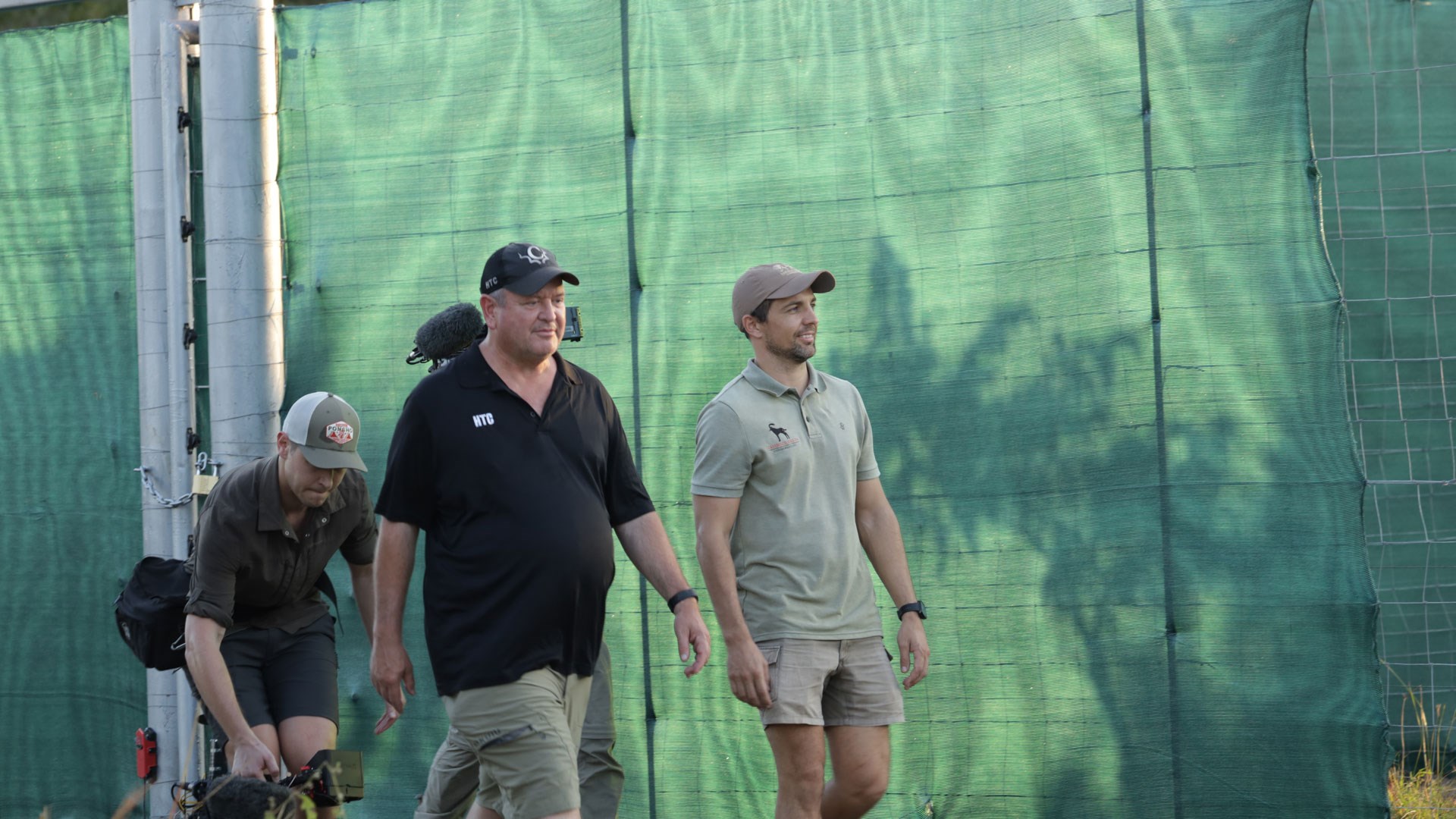
Visitors to Mozambique’s Zambeze Delta Safaris usually spend the after-dinner hours congregating around the campfire and enjoying a sundowner. Instead of gathering with the rest of the visitors for cocktail hour, however, Dan Cabela (son of Cabela’s founder Dick Cabela) and the film crew of the Hard Truths of Conservation television show on Discovery Channel have assembled in the parking area on the far edge of camp. Five Land Cruisers sat idling in the moonlight while camera operators Byron Pace, Sean Viljoen and Keenan Ferguson loaded camera equipment. They paused to interview Dan who speaks on camera about the plan for the night.
“We’re going to try to find a leopard to collar,” Dan said. He’s standing alongside Coenraad Scheepers, a houndsman from South Africa whose specialized pack of blueticks and foxhounds are trained to tree leopards. It’s challenging and sometimes dangerous work, to be sure. Leopards are powerful predators capable of killing animals much larger than themselves (expect to need 100 stitches for every second a leopard is mauling you, someone says aloud—a bit of intel that was on my mind the rest of the night). The mission of the trip was to collar a leopard to gather vital data that will help game departments and conservationists better manage the cats, but the leopard Coenraad’s dogs treed would not appreciate these altruistic ambitions. Further complicating matters was the fact that when the veterinarian darted the leopard the cat would fall from the tree in a state of semi-sedation and would have to be caught in a net before it hit the ground.
The plan seemed outlandish (especially for anyone standing under a musasa tree holding a rope net and waiting for a half-drunk leopard to fall from the blackness above), but it’s necessary. Good conservation requires good data, and obtaining good data requires specialized and often risky work in remote conditions. And how is this research funded? By hunters, primarily.
Sharing Hard Truths
Most people—and even many hunters—don’t appreciate just how critical hunting is to wildlife conservation around the world. Sure, hunting licenses pay for wildlife management and hunting serves to control game populations that might otherwise overwhelm the available resources, but few people appreciate hunting’s true economic impact. A study found that U.S. hunters spent an estimate $38.3 billion on non-commercial hunting-related expenses in 2015, and hunting creates full- and part-time jobs for an estimated 700,000 Americans each year. Hunting license sales also generate over $1 billion for conservation in the United States each year. Important conservation products, habitat enhancement, and wildlife resource officers’ salaries are paid by hunters. But the impact of hunting is not limited to the United States. In South Africa hunting generates $344 million annually and creates over 12,000 jobs annually, substantial numbers in a nation where the average annual income is $18,000 and unemployment rates are over 30 percent. In neighboring Mozambique hunting supports almost 11,000 jobs annually.
Hard Truths of Conservation sets out to illustrate how wildlife (and the habitat required to support wildlife) provides financial opportunities to rural communities that support hunting as a sustainable method of wildlife management. Local communities are stakeholders of wild game, and rural communities the world over reap financial benefit from regulated sport hunting. Local villagers are far less likely to kill crop-raiding elephants or poison stock-killing lions in areas where lions and elephants represent a valuable financial resource, and regulated hunting is crucial to providing the economic incentives required for poor, rural people to avoid killing conflict animals.
Of course, the primary beneficiary of sport hunting is the animals themselves, an ironic concept for many. But what Dan Cabela and his team are trying to illustrate on Hard Truths of Conservation is the vital role hunters play in conserving wildlife populations and vital habitat.
Roaring Back
Dan Cabela and the Hard Truths film crew travel around the world documenting cases where sport hunting has helped conserve wildlife populations, and perhaps nowhere is that more evident than Mozambique’s Zamebeze Delta. When the Mozambican Civil War ended in 1992, wildlife populations were depleted in the delta and there was little hope that the area would ever again support robust wildlife populations. However, a forward-thinking South African named Mark Haldane saw the potential in the region and began making efforts to restore wildlife populations. He began by hiring an anti-poaching team and restoring damaged habitat, and soon wildlife populations rebounded enough that Haldane could offer limited sport hunting in the area. Quotes were low and tightly controlled in those early days, but the meat generated from hunts fed villagers and his safari camps employed local people who had only recently been running for their lives from heavily armed soldiers. Over time, wildlife returned and the habitat was restored. More importantly, local people saw the benefit of sport hunting through meat drops, employment opportunities, and community projects.
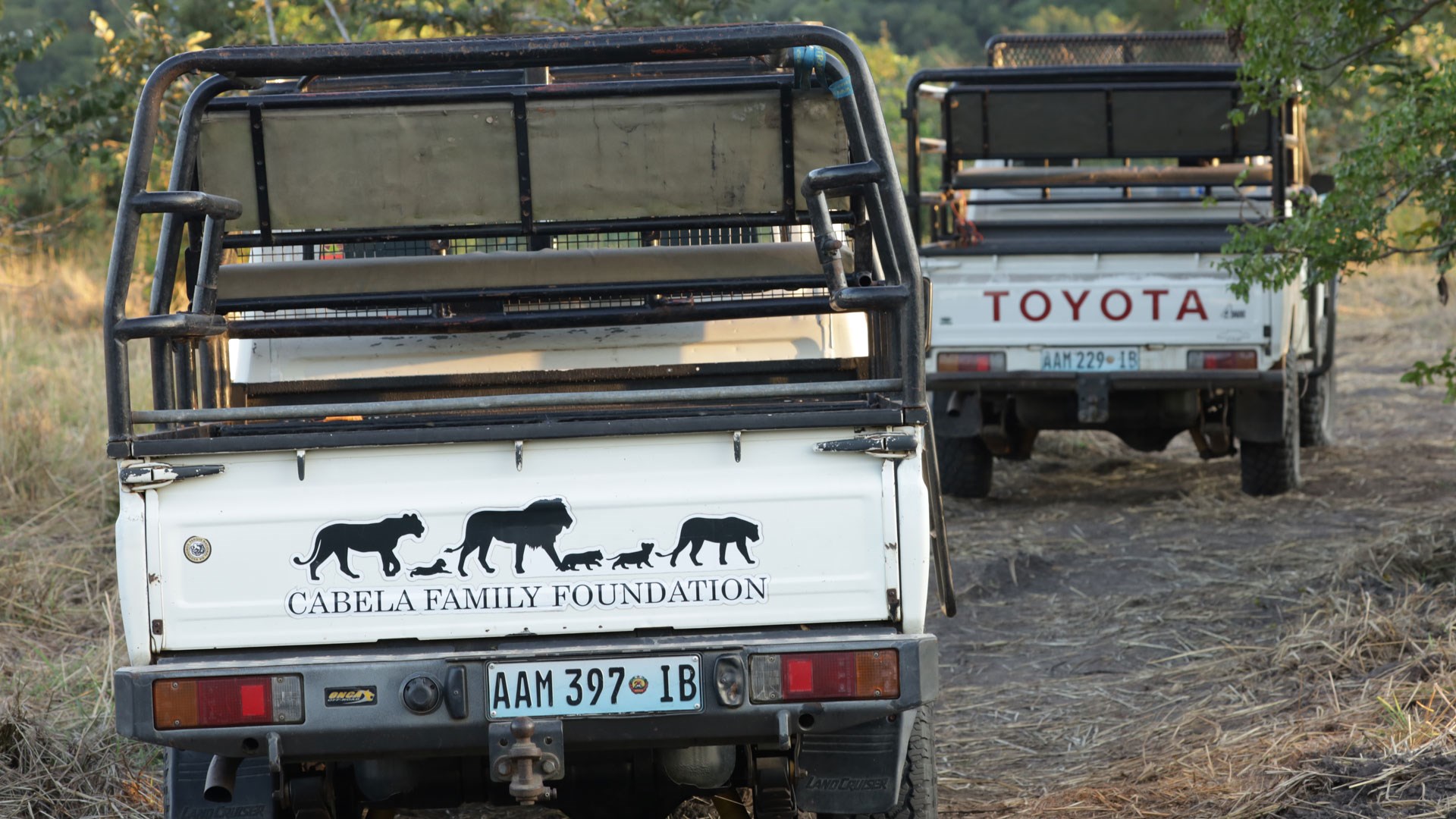
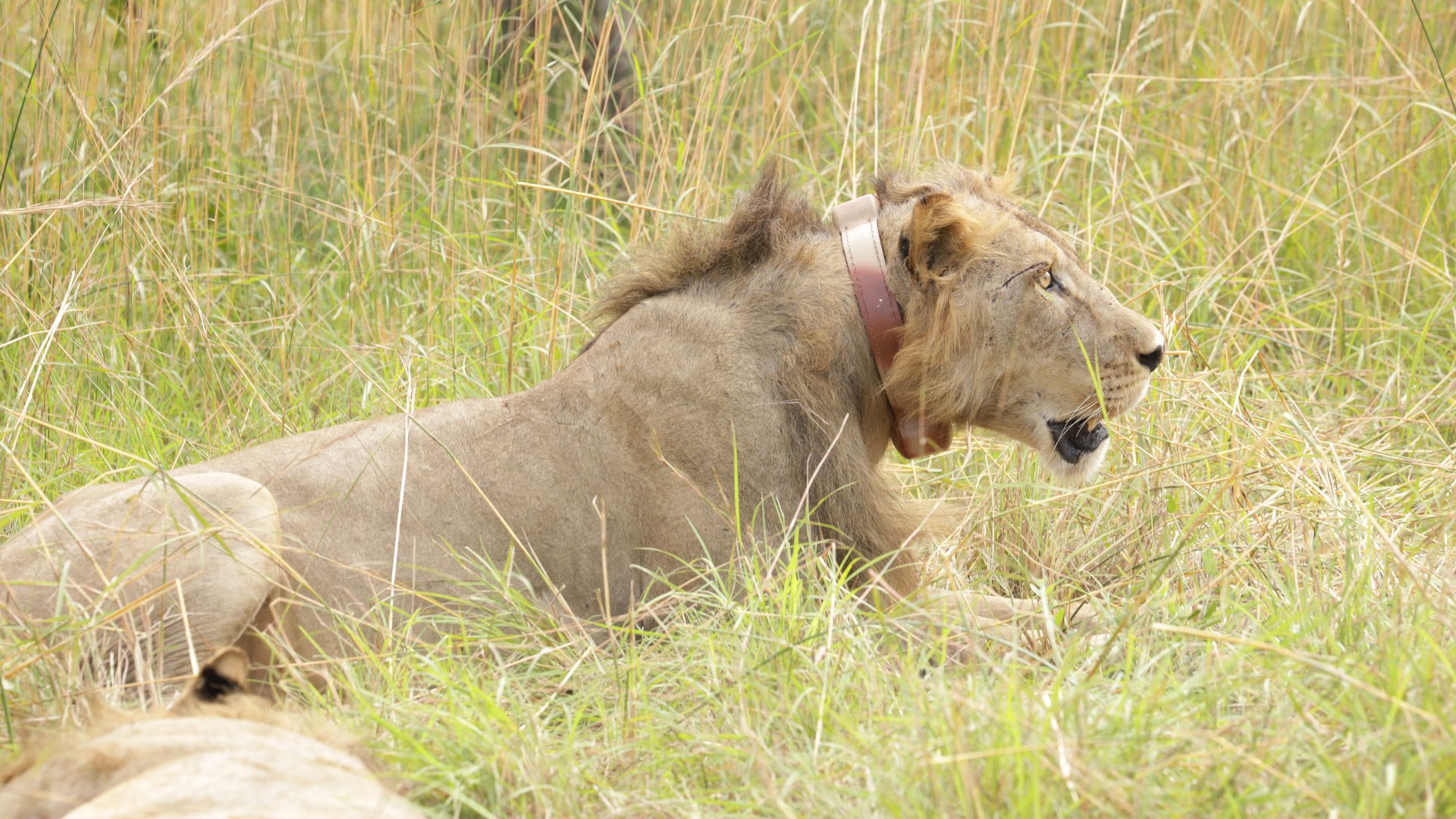
The Zambeze delta’s recovery is remarkable, but until 2018 an important keystone species was missing—the African lion. The Cabela Family Foundation provided funding to re-establish lions in the Delta that year, relocating 24 of the cats from South Africa in what would be the largest wild lion relocation in African history.
On the Prowl
Chasing leopards in the dark is nerve-wracking enough, but to add a bit more stress to the proceedings one of the reintroduced lions began to roar far out in the moonlight floodplain while I followed Coenraad and his pack of dogs through the darkness. We didn’t catch a leopard that night, but the following night Dan and Coenraad captured and collared a female leopard. The process is never as simple as that (for the details—including what happened with the leopard managed to escape the net—you’ll have to tune into the show), but it’s a major win for African leopards. The data obtained from that collar and other leopard collarings the Cabela Family Foundation has helped fund will provide an in-depth understanding of the ecology of these rare cats and provide a vital tool for future management practices.
Hard Truths has taken Dan and his film crew around the world and has covered some remarkable projects including transporting bighorn sheep in Nevada, collecting tissue samples from musk ox in Canada, and examining management techniques for non-native Himalayan tahr in New Zealand. As you might imagine, such ambitious projects are not without risks and challenges, but Cabela believes it’s vital to see why—and how—hunter dollars are being used to save wildlife.
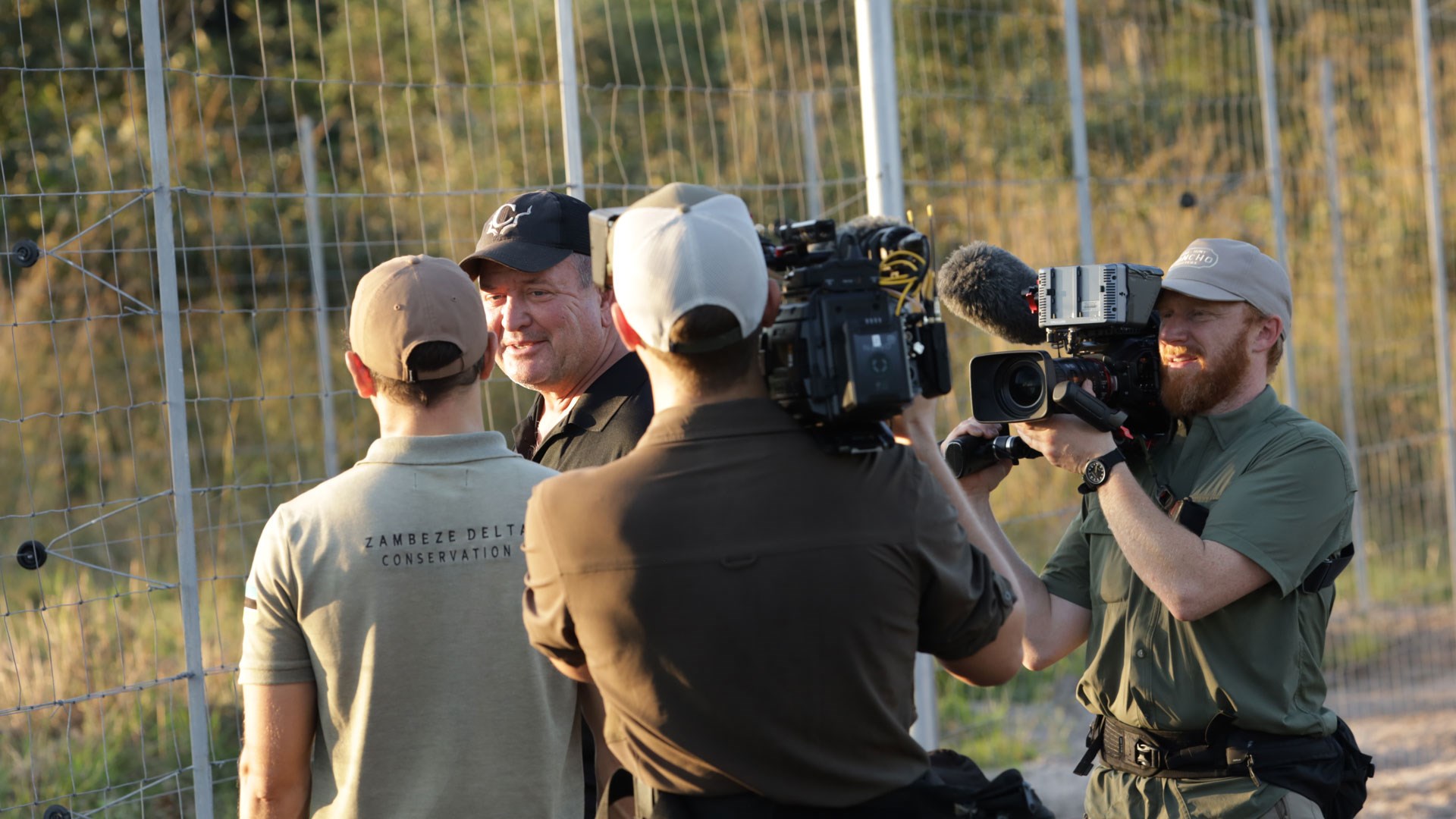
I returned with Dan and the Hard Truths team to Mozambique this year to go behind the scenes as they filmed several episodes for the show. The to-do list was epic: Dan was planning to relocate two male lions from nearby Gorongosa Park to the Zambeze Delta, collar an elephant, reintroduce spotted hyenas to the delta ecosystem, and replace a satellite collar on a female cheetah that had lost a foot in a snare. What’s even more ambitious is that Dan planned to complete all this work within a few short weeks.
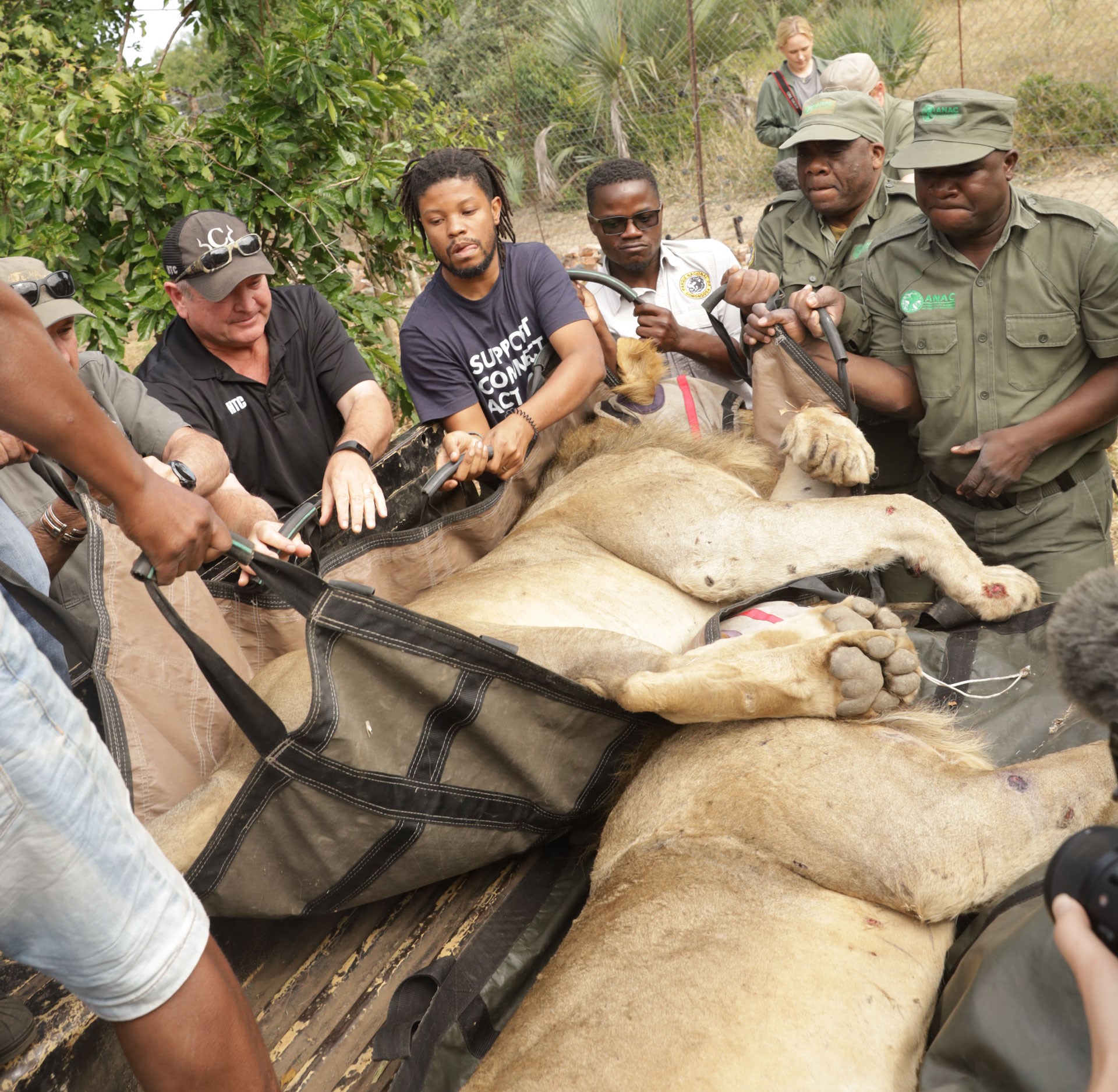
We started with the lion move. The two males from Gorongosa were being held at a boma (fenced enclosure) in the park, and they would have to be darted, collared, and flown by helicopter back to the delta for release. When we arrived at the park we assembled in two Land Rovers with Dan, his daughter Dana, and veterinarian Hugo Pinho Pereira along with Byron and Sean from the film crew in the first Cruiser while Mark Haldane, cameraman Keenan Ferguson, and I followed behind. The truck I was in stopped short of the boma gate while Dan’s Land Cruiser went inside with the lions. For some time, the only sound that could be heard through the trees that surrounded the boma was the rumbling of the Cruiser motor, then a guttural growl cut through the midmorning air. From my vantage point I could see into the south end of the boma, and suddenly a big male lion paced into view. He stopped and stared at us, growling and flicking his tail. Looking eye-to-eye with a wild lion is not an experience to be forgotten.
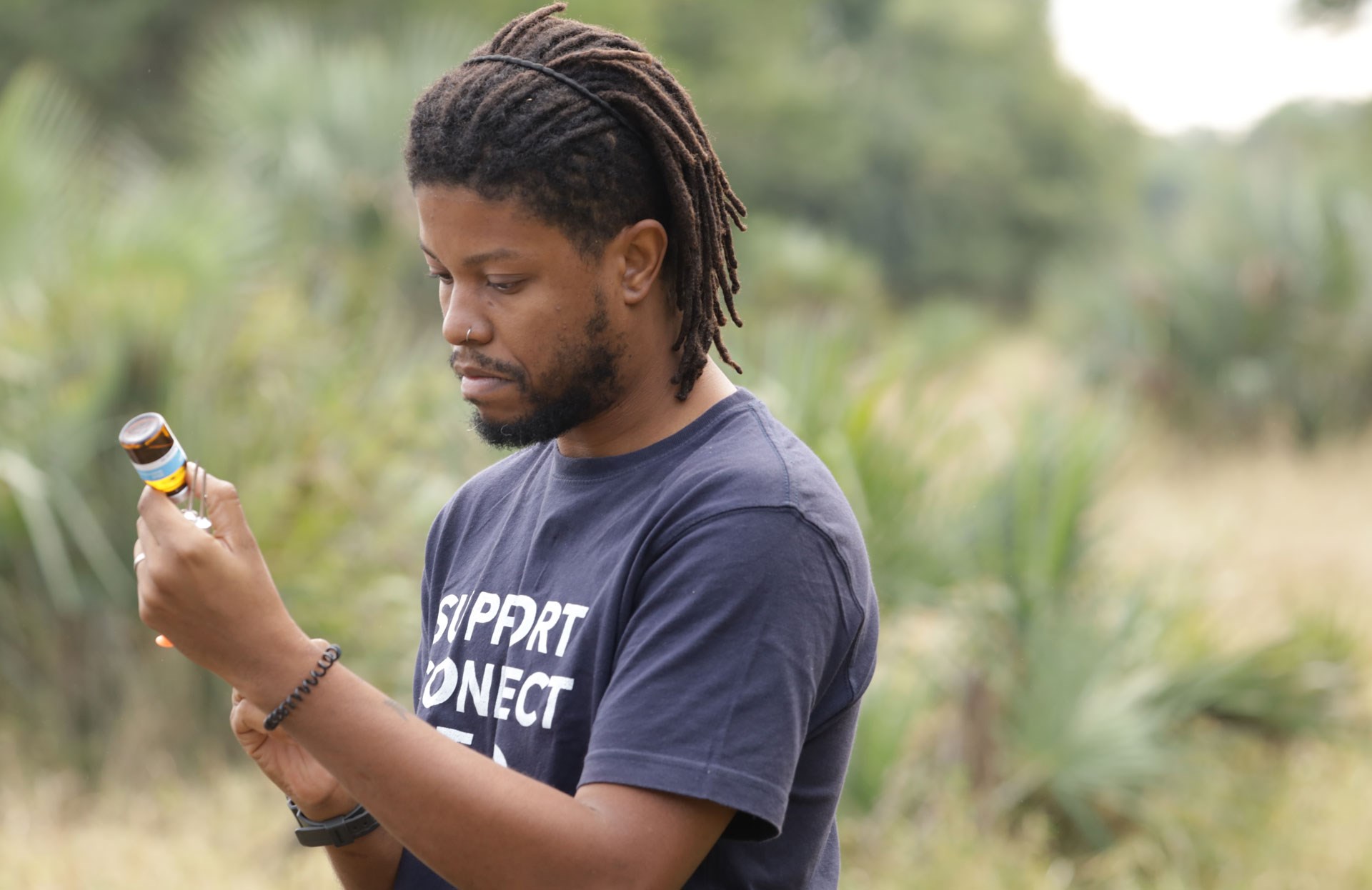
Dr. Pereira darted the lions and when they were both down, we entered the boma, standing in close, huddled silence as the cats lay stretched out snoring. The camera crew moved slowly around the cats, filming the frantic work of collaring and tissue sampling the cats while keeping talking to a minimum. Loud noises stress sedated lions, and stressing them can counteract the sedatives. None of us wanted to be inside the boma with an angry, half-drugged lion.
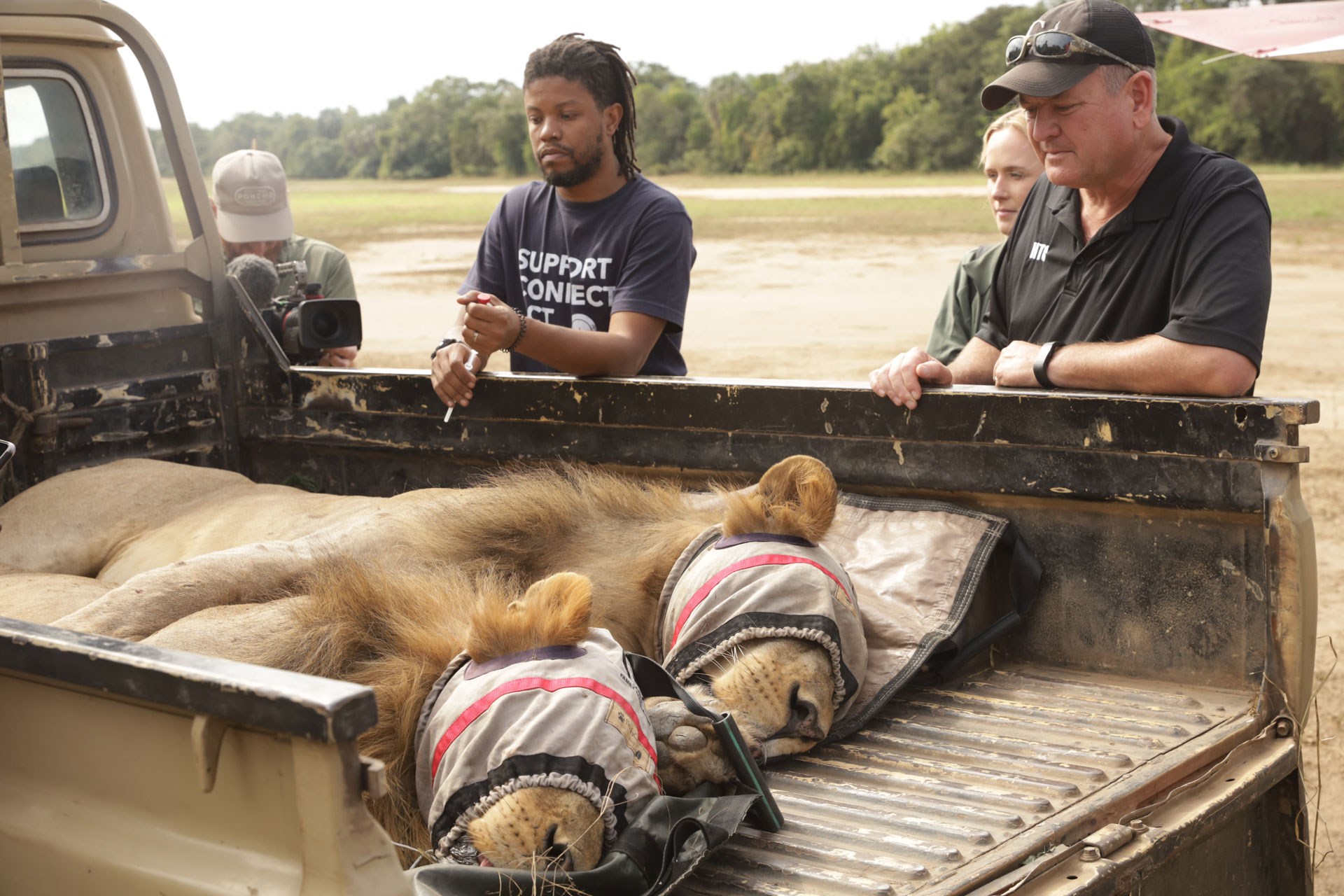
The cats were loaded into an airplane and Dan and the film crew piled in alongside. I had my misgivings (if loud voices can awaken a lion, what would the sound of airplane engines do …) but wished Dan the best. I last saw Sean straddling a sleeping lion and filming while the plane door closed, then we piled into a helicopter and headed back for the delta.
While the lions were sleeping off their sedation drugs the next day, Dan and the crew set out to collar a bull elephant. They left camp in one helicopter while we followed behind in another, waiting for the word that the dart was in the elephant. The all-clear came crackling through the headphones of the chopper, but as we closed in on Dan and the film crew, we saw their chopper hovering above the ground and that the elephant was still on its feet. The drug hadn’t yet taken effect, and the bull was walking across the open grassland toward the forest.
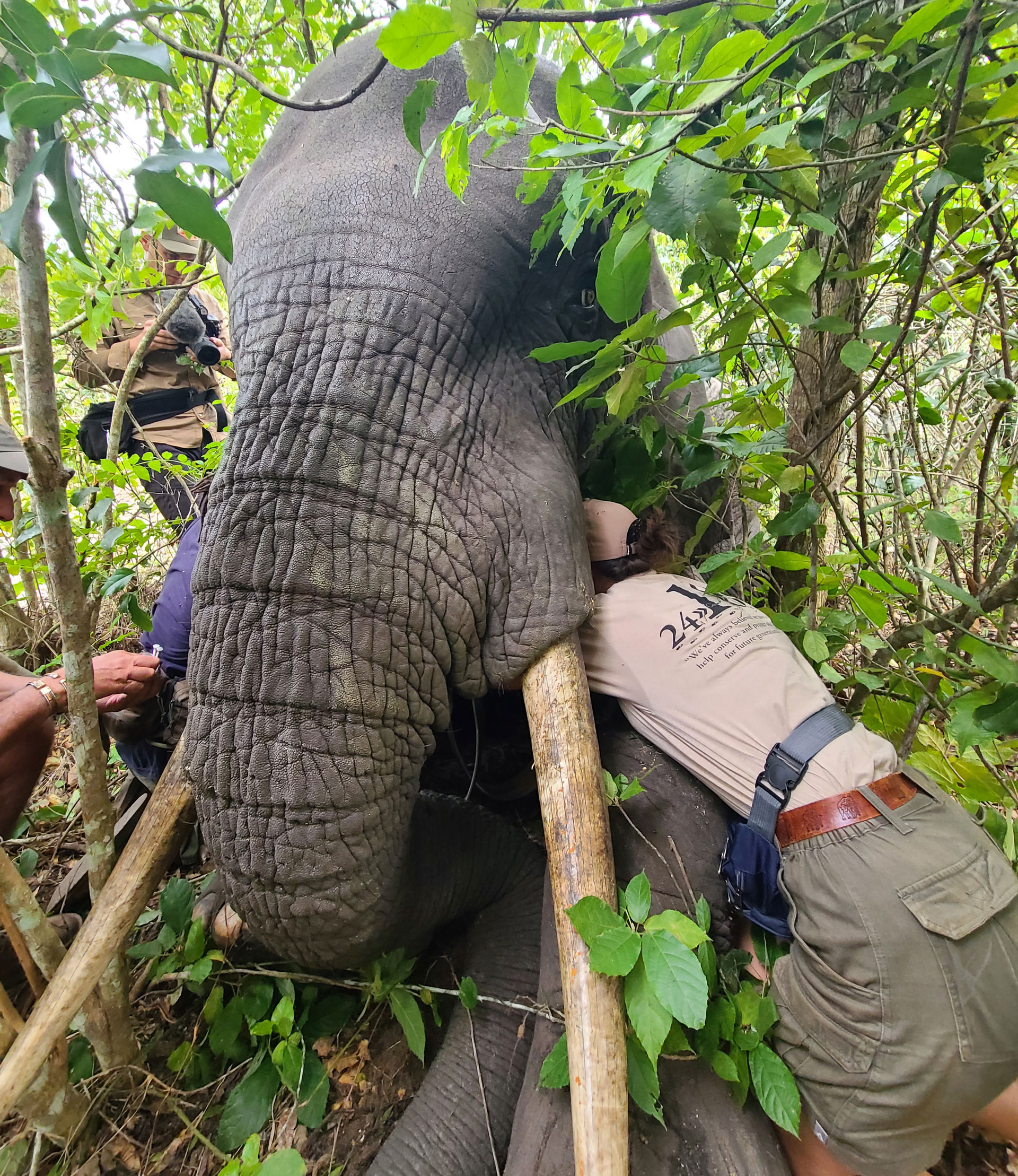
“We need to try to keep him out of the trees,” came the call across the radio. Good luck. If you’ve never tried to dissuade a five-ton elephant from going where he likes, let me assure you that it’s a losing proposition with or without a helicopter.
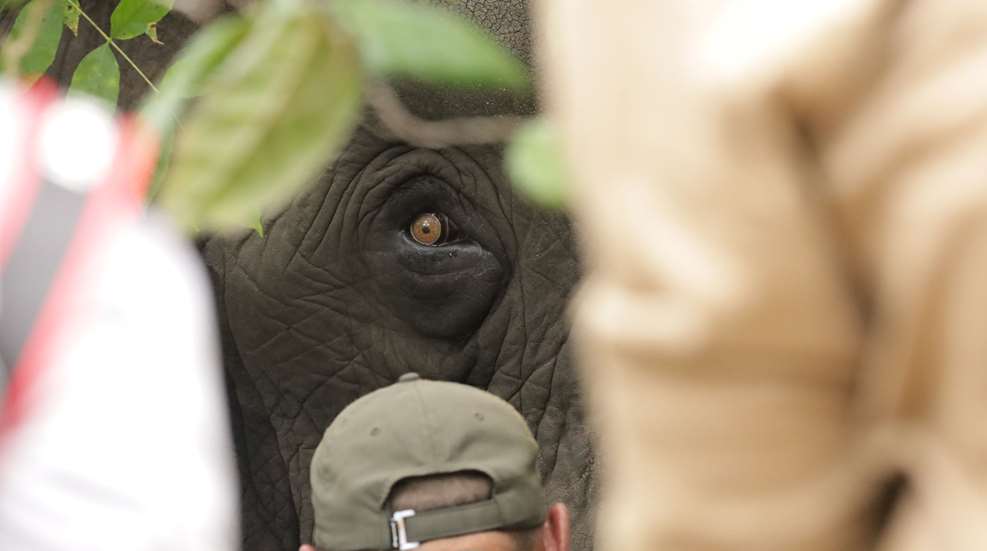
The bull went down in some trees, which caused the veterinarian concern because the animal could injure itself or be unable to breathe properly if it landed in an awkward position. I followed Dan and the film crew at a low run through the thorn branches without time to look down for puff adders or cobras and came across the sleeping bull. He was propped against a tree, his trunk was coiled beneath him.
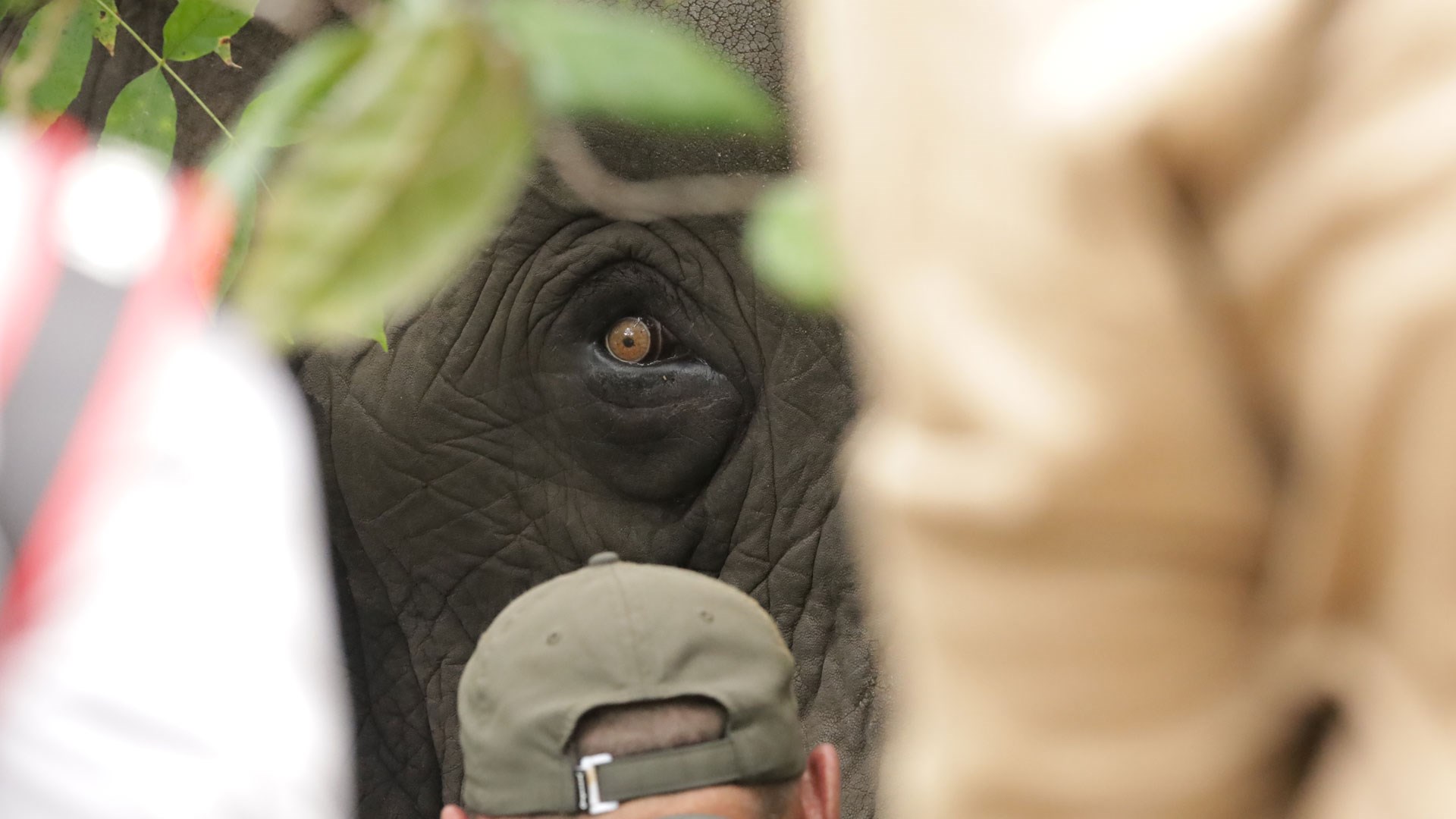
That posed a real problem. Unless we could free the trunk the elephant might suffocate, so the whole crew including the cameramen dropped a collective shoulder into the side of the elephant’s head and neck and with a united heave we rocked the bull’s head a few inches. This is impossible, I thought. It was like trying to move a boulder, but with no other option we combined forces again and dug our heels into the Mozambican sand. Slowly the great head tilted, and Dr. Pereira managed to pull the trunk free, allowing the elephant to breathe. Covered in sweat and lacerated from the thorns we took a moment’s rest, and then Byron filmed as Dan attached a collar the width of a weightlifter’s belt around the elephant’s neck.
Hard Reality
Most hunters will never have to save a sedated elephant or hope that a wire fence keeps an irate lion away from them, but it’s important for everyone—hunter or not—to understand why this work is so important and where the funds to undertake these ambitious projects are generated. It’s hunter funding that protects wildlife through conservation efforts home and abroad. That may be a duck impoundment in Ohio or an elephant relocation in Africa, but this work will only continue to happen if hunters pay the bill.
That’s what Hard Truths of Conservation is striving to make the world understand. It’s a very different narrative than anti-hunters have preached for decades, but it’s the truth. And everyone should know it.
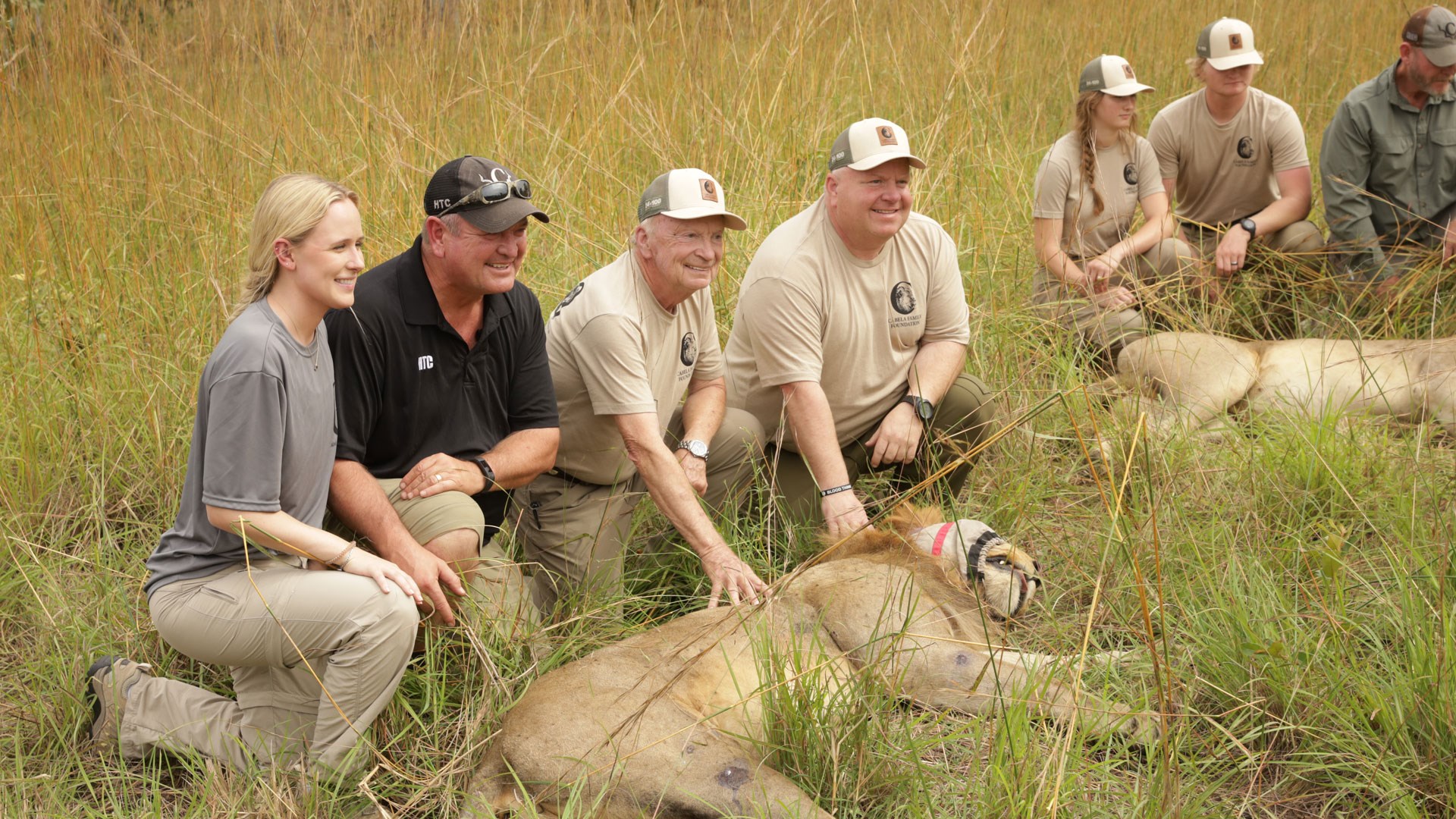
The Zambeze Delta is flourishing because of hunters. Sable, waterbuck, reedbuck and nyala abound here, and thanks to the Cabela family Foundation’s efforts there are now hyenas and lions here to keep these vast herds in check. The only thing I felt missing from the delta on that trip was Mary Cabela, the matriarch of the family who sadly passed away in May of 2023. She was a force for conservation and would have loved to see what the foundation that bears her name is accomplishing for wildlife around the world.
Dan is continuing the family legacy, though. The Cabela Family Foundation’s mission is to ensure that real, sustainable conservation efforts are being funded, and it has become Dan’s mission to educate viewers about the positive impacts of hunting. It’s remarkable that his message is reaching a mainstream audience that has for so long been taught that hunting causes extinction. Quite the opposite is true, in fact. Hunters fund research projects, habitat restoration and pay the salaries of the anti-poaching rangers that work to protect our wildlife resources. That’s a truth worth sharing.
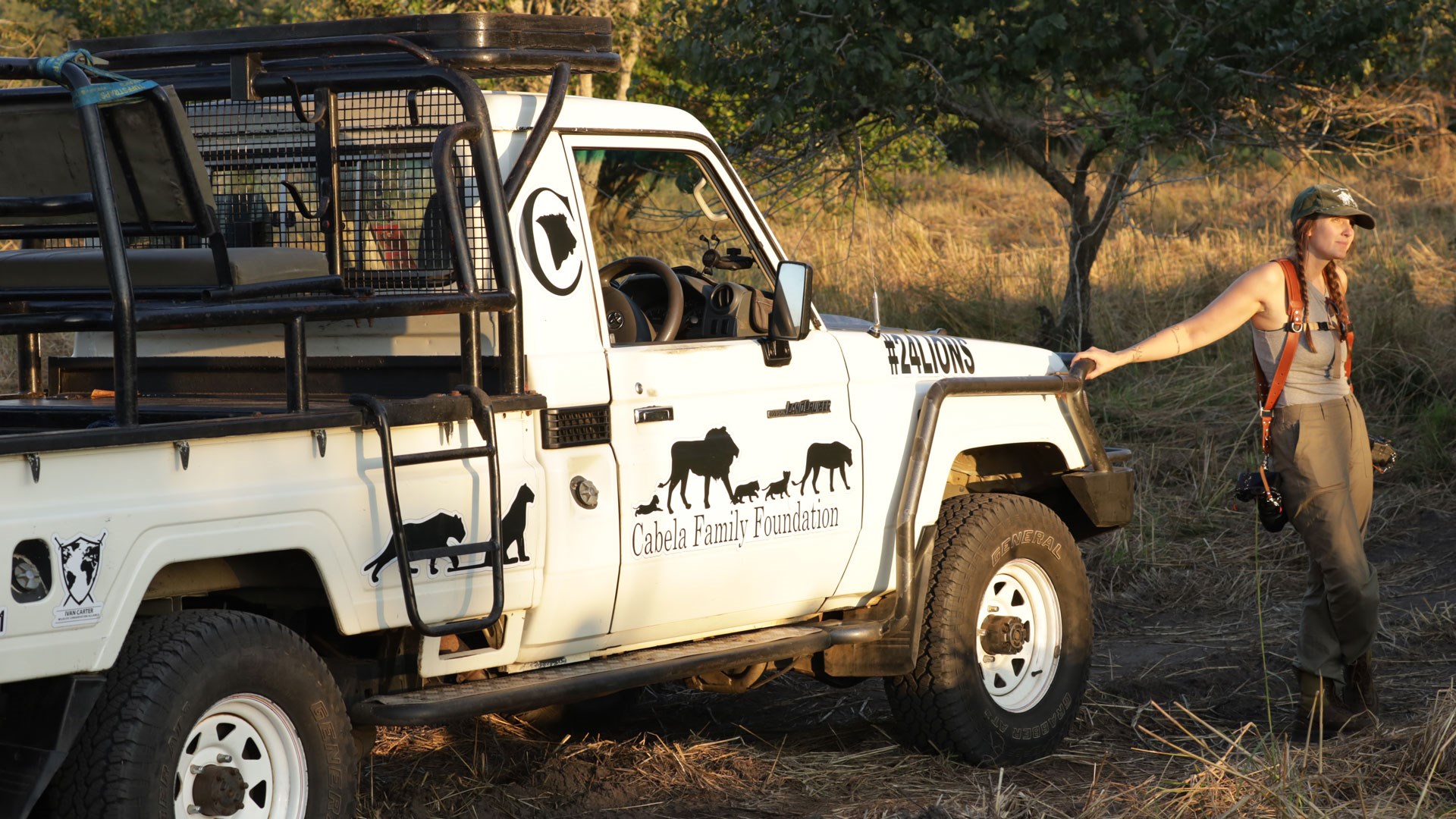
You can watch Hard Truths of Conservation on Discovery and Animal Planet or learn more by visiting their website at hardtruthsofconservation.com.
Most Popular