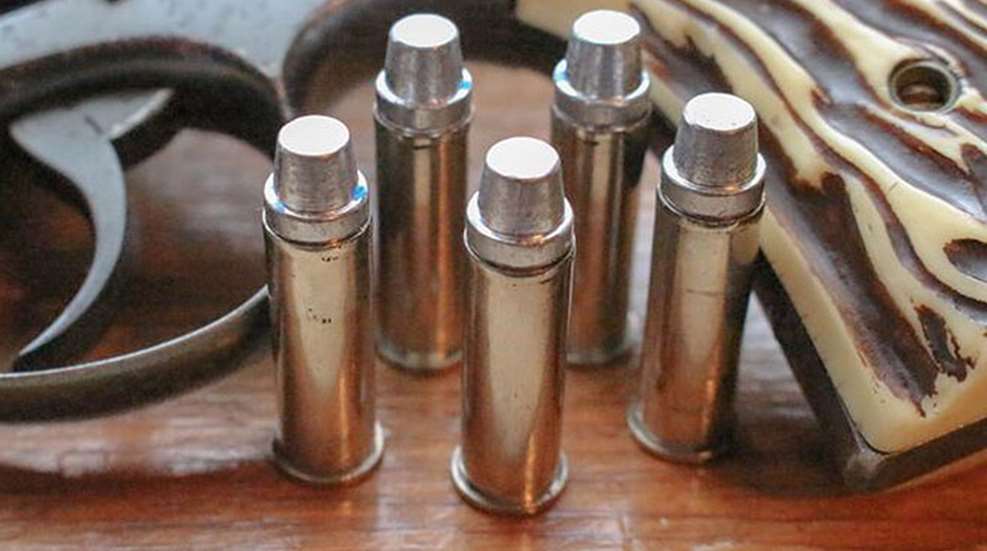
If you’re a fan of Mario Puzo’s The Godfather, you’ll probably remember the scene where Michael Corleone heads to the restroom to retrieve a pistol to sort out Solozzo. If so, you’re familiar with the .38 Smith & Wesson Special. It was the chosen round of law enforcement, FBI Agents and criminals alike, and has become an icon among handgun cartridges. The .38 Special was used by Lee Harvey Oswald to kill Officer J.D. Tippet, and in turn by Jack Ruby to kill Oswald. It was issued to the U.S. troops as a sidearm during both World Wars, and Great Britain even adopted it as their service cartridge for a time.
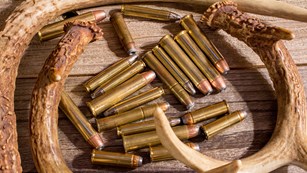
 Derived from the .38 Long Colt—the U.S. Army’s chosen sidearm cartridge from 1892 until 1909—the .38 Spl. came onto the scene at about the turn of the 20th century. The case is simply an elongated .38 Long Colt, stretched from 1.031” to a length of 1.155”, firing a bullet of .357” diameter. The “.38” designation hearkens back to the predecessor of the .38 Long Colt—the .38 Short Colt—which used a heeled bullet of .375”. This style of bullet starts at the inside diameter of the neck, yet extends out to the diameter of the case, which in our case rounds up to .38; so the name is a carryover from an older parent case, and it stuck.
The load that made the .38 Spl. famous was a round nosed, lead bullet weighing 158 grains, driven to a muzzle velocity of just about 800 fps. Throughout the years, bullets from 110 grains all the way up to 200 grains have been loaded in the .38 Special, with the 158-grain jacketed bullet load being the most popular among law enforcement officials.
What is it about the veteran cartridge that still appeals to shooters to this day, when there are so many more powerful cartridges available, including the Elmer Keith-upgraded .357 Magnum? Well, in my opinion, it just plain works. Looking at the ballistic data of the .45 ACP and 9mm Luger, regarding muzzle velocities and striking energies, the .38 Spl. falls short of both; the .45 has much more throw weight, and the 9mm has the velocity advantage with almost every similar bullet weight, due to the higher allowable pressures. Nonetheless, hordes of shooters rely on the .38 Spl. each day as both a defensive sidearm and target pistol every day.
The .38 Spl. is a classic for a reason; the low recoil makes for a very comfortable shooting experience, yet the terminal ballistics are enough to save your bacon. Pushing that 158-grain slug at 850 fps, you’ll generate just about 250 ft.-lbs. of energy at the muzzle, which is enough to stop a threat and get you to safety. Many of the Law Enforcement Agencies had a desire for a powerful load for the .38 Spl., and that inquiry had led to a number of +P loads, using lighter, tougher bullets at a higher velocity. The Hornady Critical Defense +P load, using a 110-grain FlexTip bullet at 1090 fps will definitely work well in a .38 wheelgun, as will the Federal Personal Defense 129-grain Hydra-Shok +P; as these bullets are engineered for proper terminal ballistics. Check out the Winchester Defender load built around the PDX1 bonded core 130-grain hollowpoint bullet, as it will both open up reliably, yet give deep penetration. I also like the Speer Gold Dot +P 125-grain load; I feel comfortable using a Gold Dot bullet in just about any handgun cartridge—they are that reliable.
There are many lighter practice and training loads available as well, and they are a great choice for training a new handgun shooter. The .38 Spl. cartridge also makes a really solid practice round for the owner of a .357 Mag.; the .38 is just a shorter, less-powerful version of the magnum round, which can safely be fired in the .357 chamber. Becoming familiar with your handgun, using a lighter load is an invaluable training tool, as well as adding to the flexibility of the already versatile .357 Mag.
Loading for the .38 Spl. is pretty straight-forward, as it will run on very little powder, and so long as you provide a good roll-crimp—in order to ensure that the projectiles don’t work their way forward during recoil and jam up the cylinder—you’ll have no problems. Classic powders like Unique, HP38 and Bullseye, and some modern powders like TiteGROUP will give excellent accuracy and consistent velocities. For target work, there are many wadcutter bullets and loads available; it’s nice to use these is a wheelgun without the feeding worries associated with autoloaders and wadcutters.
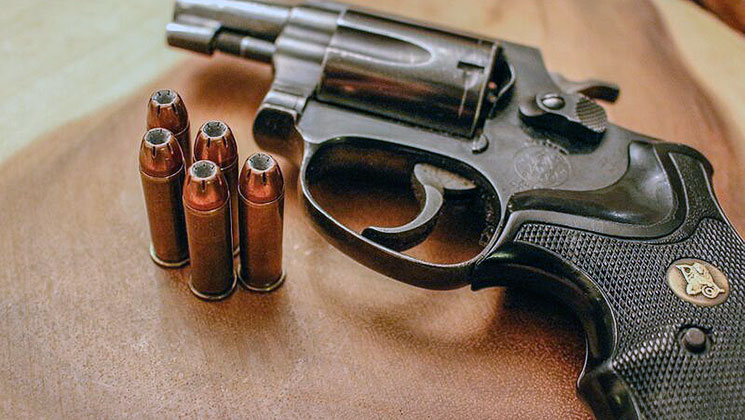
My own carry gun is a Smith & Wesson Model 36 in .38 Spl.; it’s a five-shot snub nose with Pachmayr grips that both fits my hand well and is at the same time concealable. While I'm not quite comfortable with 30-yard shots, I do know that at defensive ranges I can hit what I'm aiming at, and the .38 Special will hit with authority. I carry it while surveying in remote areas, with both a couple of rounds of snake shot, and a handful of handloads built around the 158-grain Hornady XTP or Speer Gold Dot when in bear country. The short barrel and slim contours of the Model 36 make for a gun that is not cumbersome, yet is powerful enough to settle the argument; I feel that best describes the .38 Spl. Though many of our Law Enforcement Agencies have opted for other cartridges and handguns, I feel the .38 Spl. will still have the loyal following it has for another century and more.
Looking for previous installments of Behind the Bullet? We've got you covered.
• 7x57mm Mauser
• 9 mm Luger
• .35 Whelen
• .454 Casull
• .375 H&H Magnum
• .45 Colt
• .22-250 Remington
• 10mm Auto
• .308 Winchester