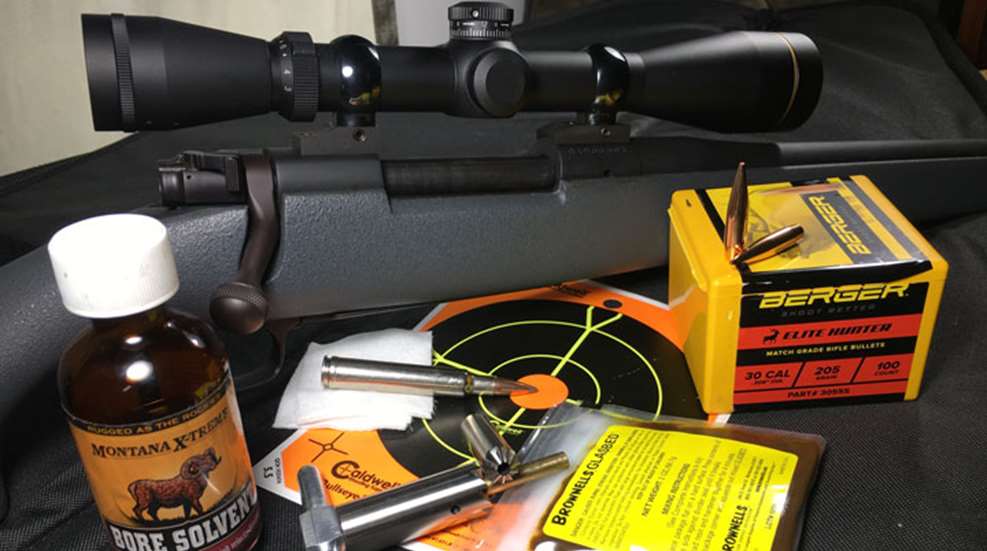
Rifles often get wrongly accused. It’s goes something like this: “My rifle used to shoot … (insert super-tight group measurement here) and now it doesn’t shoot worth a darn. The barrel must be shot out.”
Barrel erosion can—and does—happen, but it requires one or more of the following: frequent, extensive shooting sessions (especially if the barrel isn’t permitted to cool properly); the aforementioned with a poor (or no) cleaning regimen; or a high-intensity cartridge that’s utilized heavily. Each of these will certainly shorten a barrel’s life, however, metallurgical advancements and treatments are such that even the most erosion-prone cartridges can still have a fruitful existence. So, what is causing your rifle to show a loss of accuracy?
Diminishing or inconsistent accuracy can be traced to several all-too-common issues that are frequently overlooked. Remedying them is usually quick, easy and inexpensive. Here are some steps to take to bring your rifle back to life.
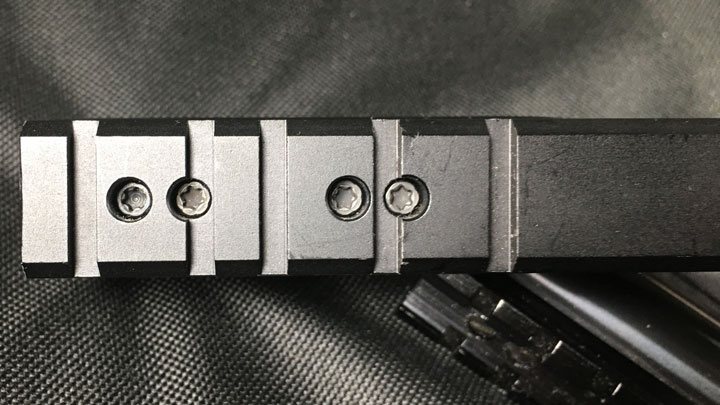
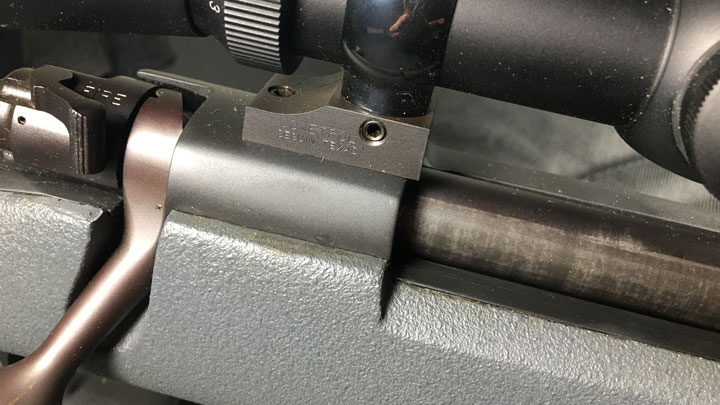
1. Loosened Screws: As ridiculous as it might sound, your accuracy woes could be the result of loosened screws. Even with the use of a mild thread-locking compound, screws can loosen as the result of recoil, and transport in the vehicle and afield. Unless your rifle has taken a hard blow, a shift in zero is an indicator that something has loosened. As much of a hassle as it is to remove a scope and tighten base screws (on non-integral bases), as well as those on the rings and the action screws, and then confirm the zero, it’s a necessity. Nothing is more frustrating than missing an opportunity due to untightened screws. Don’t risk it—snug the screws.
2. Use a Trusted Scope: If you’ve done the abovementioned procedure and accuracy is still inconsistent, then it’s reasonable to question the scope. Scopes often get falsely blamed for inaccuracy, but they can and do “give up the ghost” occasionally. Try removing the questionable optic and replacing it with a trusted unit. If the accuracy loss disappears, it was the scope’s fault. Most optics manufacturers now offer a lifetime service or replacement. Utilize that service and return it for a diagnosis. The shipping fee is a small price to pay for peace of mind. One other word of note: buy the best scope you can afford. Consider it a far-sighted investment.
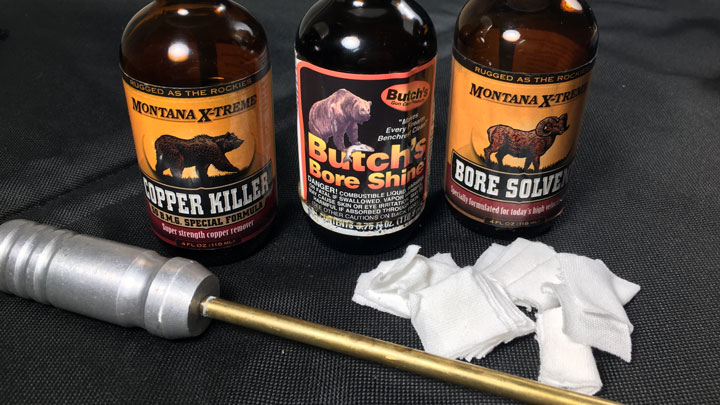
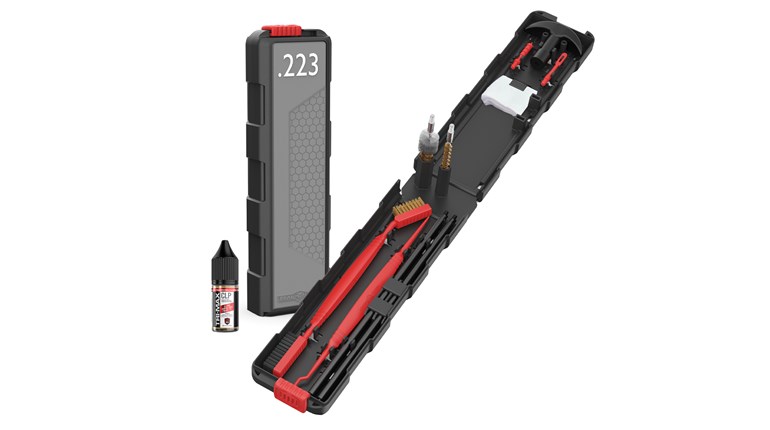
3. Do a Deep Cleaning: A change in accuracy can usually be remedied with a deep cleaning. To remove stubborn fouling, you’ll want to use a solvent capable of cutting the crud teamed with patches and brushes. I prefer Montana X-Treme Bore Solvent or Butch’s Bore Shine for the solvent, as well as the former’s (and Eastern Maine Shooting Supplies) cleaning rods, jags, and brushes. I’m partial to Southern Bloomer Mfg. Company’s patches. If gilding metal or all-copper bullets are used, a copper-removing agent such as Barnes CR-10 and Montana X-Treme Copper Killer can reduce the cleaning time and effort, too. Once I’ve finished cleaning the barrel, I apply a light coat of Montana X-Treme Bore Conditioner. Just a word of caution: if you use an aggressive cleaner, prevent spillage onto the stock. Some can negatively affect finishes.
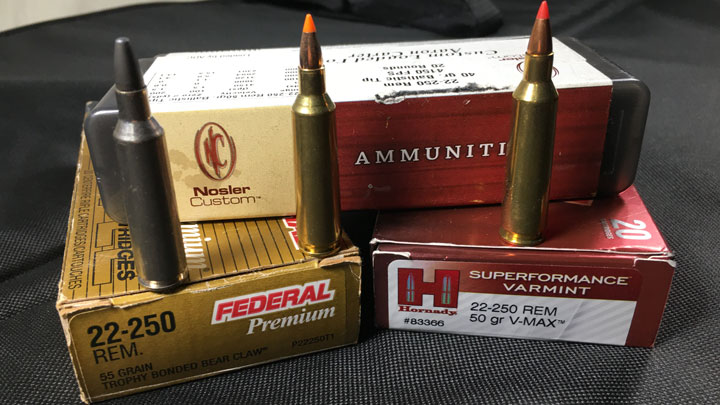
4. Change Ammunition: With the current circumstances, this is a difficult one to do. Finding any ammunition is an exercise in futility and can be overly expensive. However, if the above steps haven’t brought back the accuracy, and especially if you’re using a high-intensity cartridge, such as the 6.5x284 Norma or similar, the throat (or leade) very well could have been lengthened through continuous shooting. If you’re a non-handloader, you might have to experiment with a range of lead-core and leadless loads in varying weights and profiles to find the new, just-right combination. Be sure that the rifling is of sufficient speed to stabilize the bullet you’re using.
Another possibility is a change in the ammunition. There can be slight differences in production lots due to variances in the components themselves. Companies strive for consistency, but absolute uniformity is difficult, if not impossible. If you find a load (and lot) that shoots really well, stock up on it.
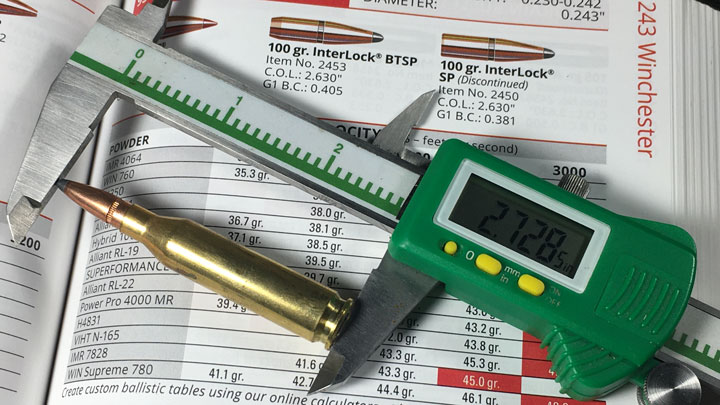
5. Adapt the Load: If you’re a handloader, the abovementioned problem can be remedied much easier and cheaper. Supposing your rifle now does have a lengthened leade, you can adjust the cartridge overall length (C.O.L.) with your favored bullet to account for it. Keep in mind that if your rifle is anything other than a single shot, you’ll still need to account for the constraints of the magazine, but you generally have some flexibility. You can also experiment with other bullet brands, designs, profiles and weights to find one that delivers the best accuracy.
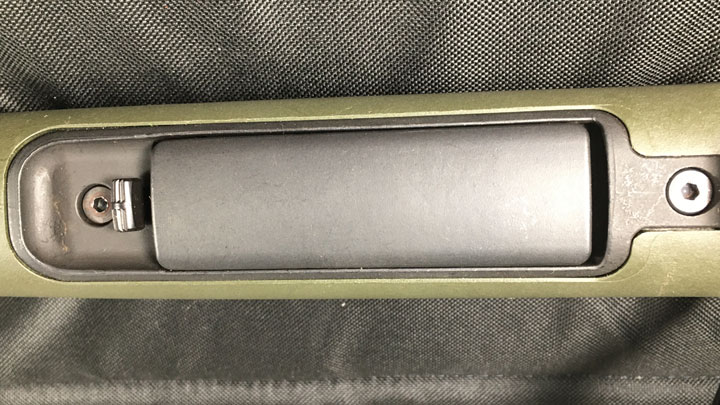
6. Stock Work: While synthetic stocks are impervious to changes in conditions (i.e. moisture), non-laminated wood stocks aren’t. Swelling of the wood can change the point of impact. This was more prevalent in the past, as some companies preferred the stock’s barrel channel rest against the barrel. Nowadays, nearly all rifles have free-floated barrels to prevent unanticipated changes. If you’re encountering a change in impact and accuracy, it could be the stock. Before sanding away at the barrel channel—which removes any protective finish as well—have a gunsmith look at it. He or she might suggest removing material, but you don’t want to needlessly ruin a serviceable rifle.
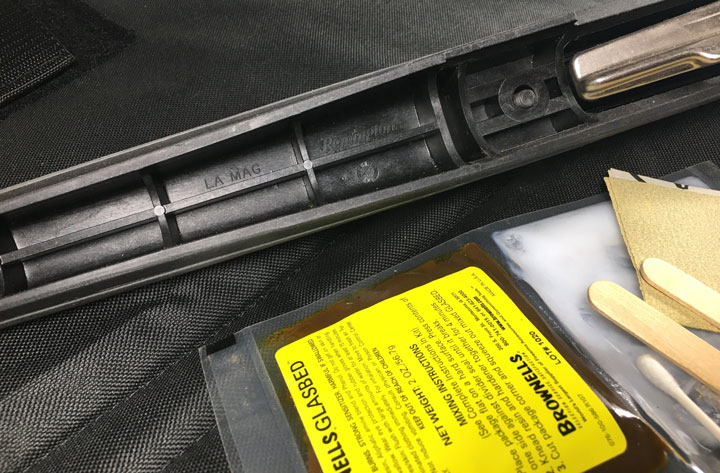
Is there any back-and-forth or side-to-side movement of the barreled action in the stock? If there is, your rifle could benefit from a glass-bedding job. Why? Movement of the barreled action in the stock affects shot-to-shot consistency, and consistency is accuracy. The glass-bedding process isn’t difficult or expensive—kits are available from Brownells, among other places—but it requires attention to detail to achieve the desirable results. A gunsmith can do this if you’re uncomfortable.
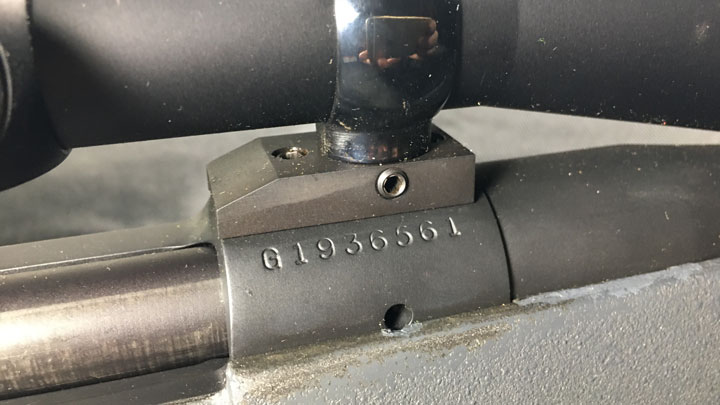
7. Rechamber: If the leade is lengthened, it can be remedied by rechambering the barrel. Obviously, this should be left to a qualified gunsmith. Because ’smithing time is costly, and one or more reamers will be necessary, this could be a costly endeavor, and the rifle still might not shoot like it did. Nonetheless, it’s an option for a cherished rifle.
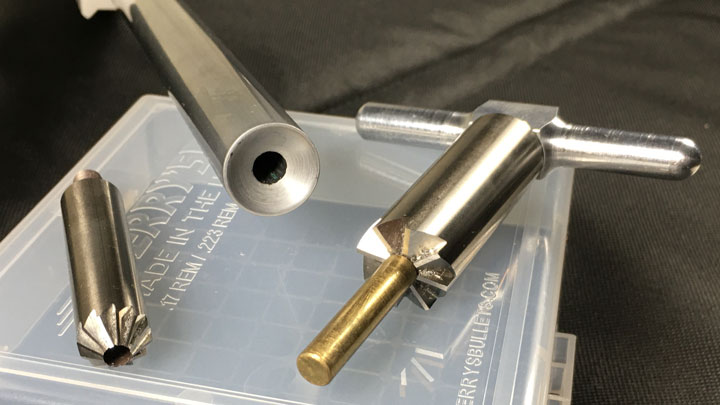
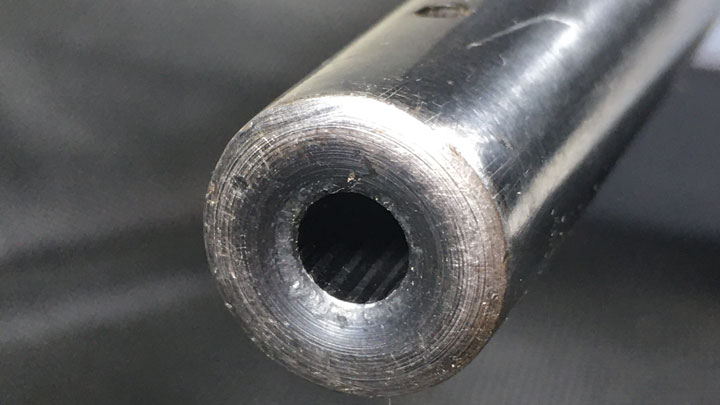
8. Recrown: Most rifles have a barrel crown that protect the rifling from accuracy-robbing nicks, dents and gouges during time afield, or when situated barrel-down in a bouncing truck. But at times damage can still occur, and accuracy will be affected. This is a speedy and inexpensive fix by an experienced gunsmith, but you can do it at home as well. Brownells sells everything the home ’smither needs to do it. I’ve used the company’s tools to recrown the damaged muzzle of a .270 Winchester and it restored its accuracy. And once the tools are purchased, you’ll have them for future use as well.
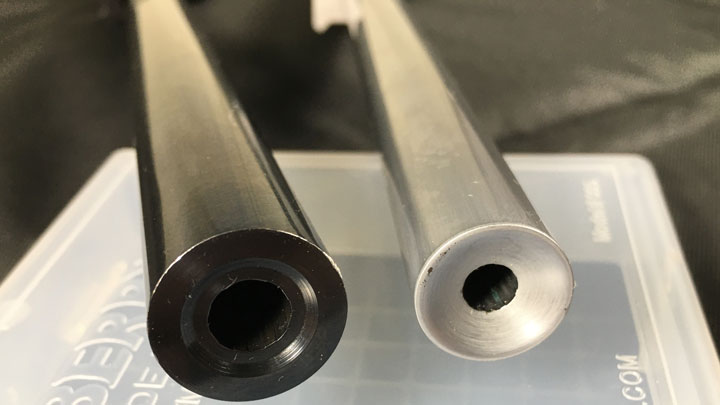
Most degradation in accuracy can be remedied through these eight steps. Try them to see if you can your rifle back to where it was. Bet you can.