Imagine a cartridge that has the hallmark characteristics of competition-winning classics, such as a short, squat case—this time, based on the .404 Jeffery—for uniform propellant ignition and consumption, a sharp, 35-degree shoulder angle and minimum body taper.
Now, also consider that the abbreviated case can propel a 200-grain, .323-inch-diameter projectile to 2950 fps, producing more than 3,800 ft.-lbs. of energy at the muzzle. And yet, with an overall length of 2.860 inches, it’ll fit in a handy, short-action rifle with a shorter bolt throw. Sounds like a recipe for success, right? Wrong.
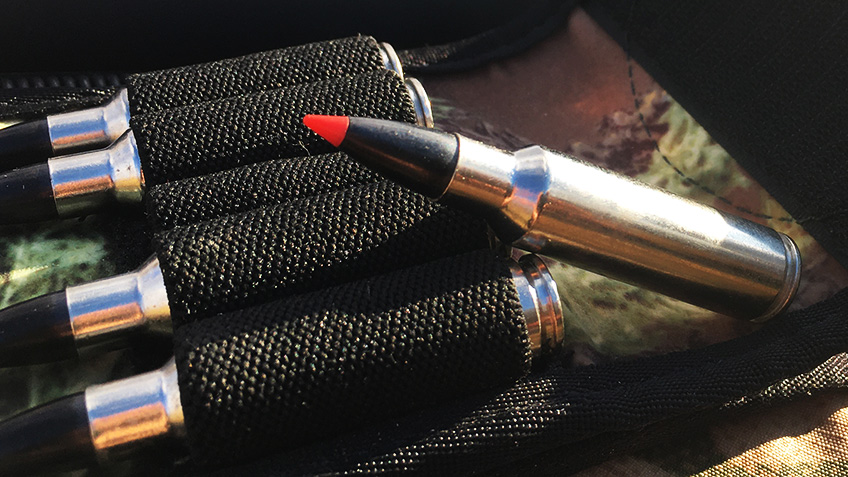
Introduced in 2005, the .325 Winchester Short Magnum (WSM)—described above—was the fourth and final cartridge to join the industry-changing WSM series. Its .270, 7mm and .300 WSM siblings were unveiled in 2002, 2002 and 2001, respectively. Unlike the .270 WSM and .300 WSM—the latter, in particular—which generated much buzz and sales when debuting, the .325 WSM received little more than a yawn from anyone but true tinkerers. Exactly why is up for speculation, but there are some sound theories.
Most attribute its failing primarily to the .325 WSM’s atypical 8mm bullet diameter. Many hunters assumed that the natural succession of the series was to be the introduction of a .338 WSM; however, through extensive testing, Winchester found that loading the WSM case with a .323-inch (8mm) diameter bullet more closely approximated the performance of the stalwart .338 Win. Mag. it was supposed to resemble ballistics-wise. Problem is, 8mm cartridges had historically proven to be unpopular with American shooters. Case in point: the 8mm Rem. Mag.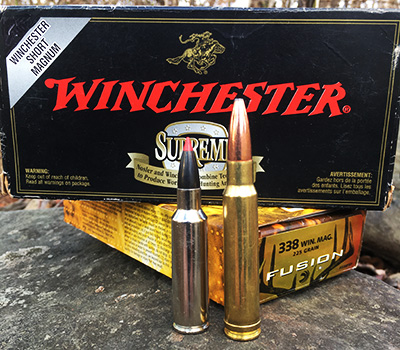
Debuting in 1978, the 8mm Rem. Mag. utilized a full-length .375 H&H Magnum case loaded to the hilt behind a 0.323-inch-diameter bullet. Although it initially found some success, that quickly waned. Drawbacks of the 8mm Rem. Mag. included: a heavy, magnum-length action was needed to accommodate the 3.600-inch cartridge; excessive recoil in the typical hunting rifle was excessive; loaded ammunition was few and costly; and component bullets were narrow on selection. A small contingent still relish the 8mm Rem. Mag. The same applies to the .325 WSM. But, those who understand the cartridge’s capabilities are likely to own one for the long haul.
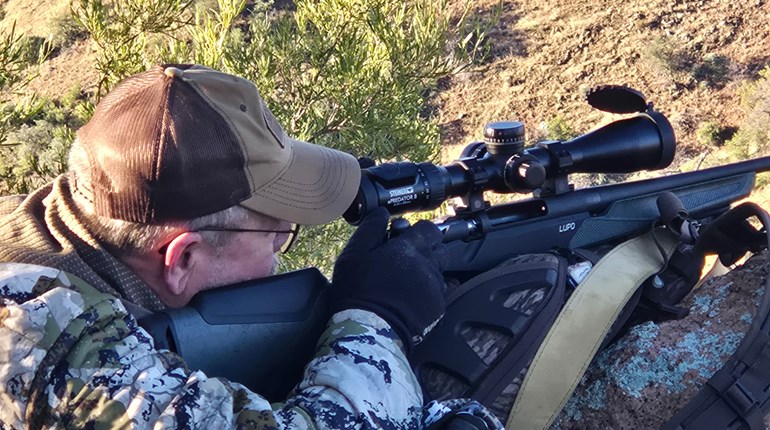
When released, there were a flurry of new rifles and loads in .325 WSM. Such is no longer the case. New rifles are generally relegated to semi-custom and custom rifles; fortunately, there’s no shortage of used .325s. In fact, a quick search revealed .325 WSM-chambered rifles from Kimber, Nosler, Browning, Winchester and others. Most had surprisingly affordable prices given the models, too. That’s due to the chambering. Such a deal netted me a gently used Kimber M8400 Montana for less than half the price of a new one in any other chambering.
Best of all, since the .325 WSM does generate a noticeable jolt (especially in the ultra-lightweight Montana), these rifles seldom see much use outside of zeroing and a few shots while hunting, so the barrels are likely to be in excellent shape. To help soften the recoil of my Kimber a smidge, I had mine ported by Mag-na-port International.
As with other low-demand cartridges, .325 WSM ammunition is exceedingly expensive. More on that shortly. But, reloading components for it are priced comparably with other high-performance cartridges, so it pays to handload. For example, I was able to find Winchester .325 brass at Graf & Sons for $32.99 per 50, which is only $2.00 more per bag than the same brand of .300 Win. Mag. brass. Dies are widely available as well.
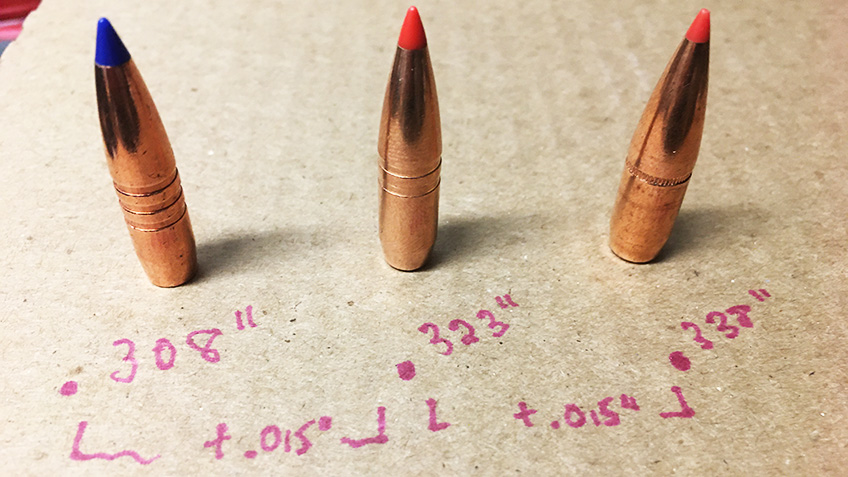
Although premium, 8mm (.323-inch) bullets were once limited in selection, such is no longer the case. Companies have also improved the ballistic coefficients of 8mm bullets—a longtime complaint. Hornady, Sierra, Lapua, Woodleigh, Norma, Barnes, Nosler, Speer and Swift offer bullets suitable for the .325 WSM. Typical weights are 150 to 220 grains. As a rule, those for the 8x57mm Mauser are too fragile for hunting heavy game with the .325. Better choices are those that are designed for the 8mm Rem. Mag., which the .325 approaches in performance. Additionally, to extract the full advantage that the .325 WSM offers over its brethren, as well take full advantage of its power, best bullets are those from weighing from 175 to 220 grains. I’m partial to those between 200 and 220 grains.
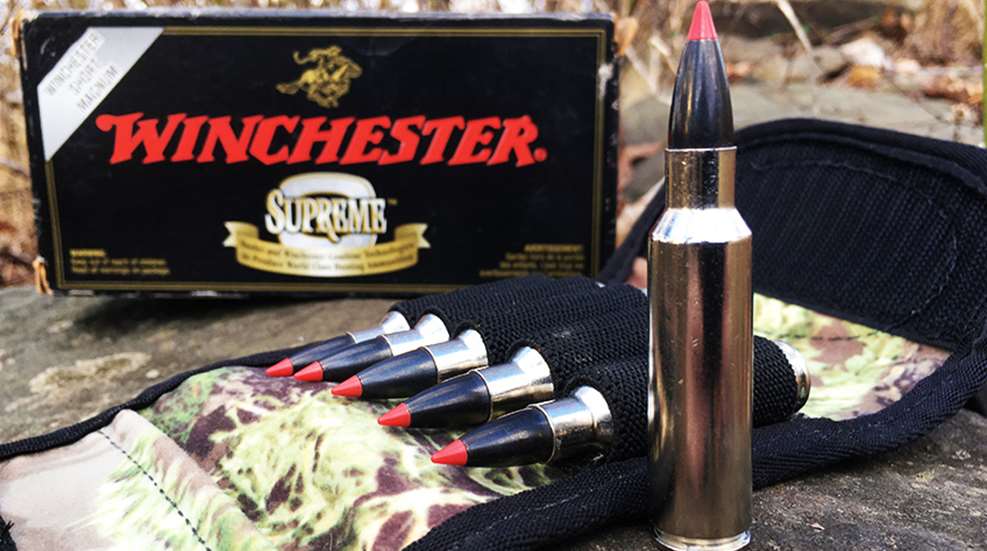
Non-handloaders will find that Winchester’s three offerings nicely cover the breadth of species and situations that the .325 WSM is meant to handle. In its Expedition Big Game series, the company loads a 200-grain AccuBond CT bullet propelled to 2950 fps. With a 200-yard zero, the projectile is 1.5 inches high at 100 yards and 19.9 inches and 39.9 inches low at 400 and 500 yards, respectively. At the latter distance, the AccuBond CT still packs more than 2,000 ft.-lbs. of energy. Talk about the perfect option for distant elk and moose! In 220-grain projectiles, the company has a bonded, rapid-expansion PHP at 2840 fps in the Power Max Bonded series, as well as a Power Point load in the Super-X line. Don’t dismiss the latter; in my rifle, the economical round will consistently shoot sub-MOA groups at 100 yards. It’s my go-to for Virginia whitetail and black bear in the timber.
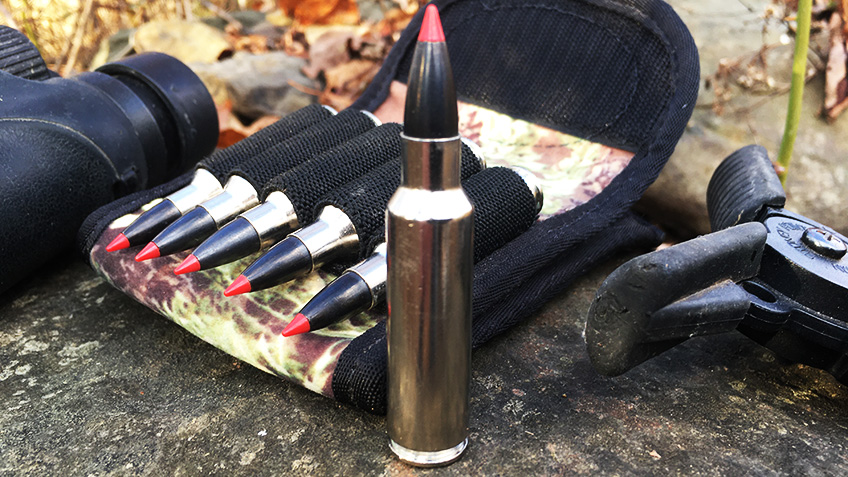
Other makers of .325 WSM ammunition include: Nosler, DoubleTap, Hendershot’s (Extreme Custom Ammunition) and Custom Reloads of Dallas. Custom loads such as those produced by the latter can get very costly, but it’s an option for those without the time to craft handloads.
Hunters and shooters can be nit-picky at times. This is especially evident with criticism of the .325 WSM. Rather than pile on about the .325 WSM’s perceived deficiencies, I ask you to study its capabilities. If you do, you’ll see as I did that the short cartridge produces big results.
Want to read more from Aaron Carter? Check out the following articles:
• Tips and Tactics for Hunting Diver Ducks
• Tested: Excalibur Micro Axe 340 Crossbow
• Top 5 Buckshot Loads
• Tested: Federal Upland Steel Loads
• 7 Ways to Prep for Waterfowl Season
• The Pros and Cons of Hunt Clubs
• Tested: Nosler Model 48 NCH
• An Ode to the .17 Mach 2
• Top 5 Upland Loads
• An Ode to the 16-Gauge Shotgun
• Tested: CCI Clean-22 Ammo
• Top 6 Sub-Gauge Turkey Loads
• Tips for a Successful DIY Pronghorn Hunt
• Top 5 Calibers for a Youth Deer Rifle
• Tips for Buying a High-Quality Used Bow
• Top 6 .17 HMR Hunting Loads
• Review: Nosler Model 48 Long-Range Carbon Rifle
• Top 6 .22 WMR Hunting Loads
• Turkey Guns: 5 Tips for Extending Your Effective Range
• Top 6 Subsonic .22 LR Loads for Small-Game Hunting
• Top 7 Deer Bullets for the .308 Win.
• How to Choose the Perfect Powder for Your Muzzleloader
• Field Test: Excalibur Micro Suppressor Crossbow Package
• Crossbow Bolts 101
• 7 Top-Tier Hunting Bullets for the .243 Win.
• Review: Federal Premium Black Cloud FS Steel with FliteControl Flex
• 5 Steps to a Successful Spring Turkey Season
• Unconventional Hunting Hotspots
• How to Choose the Perfect Crossbow
• A Quick Fix: The Last-Minute Duck Boat