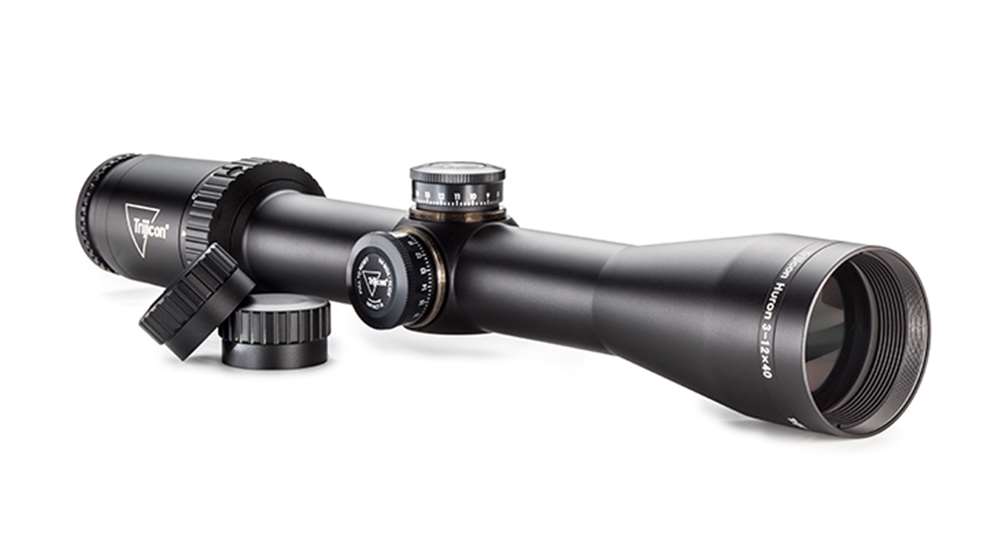
The first time I used a Trijicon riflescope, the illuminated reticle seemed magical. The fine, bright dot was a laser pointer for the rifle. So, when Trijicon announced the new Huron series of riflescopes, with a non-illuminated reticle, I was eager to see if they held up.
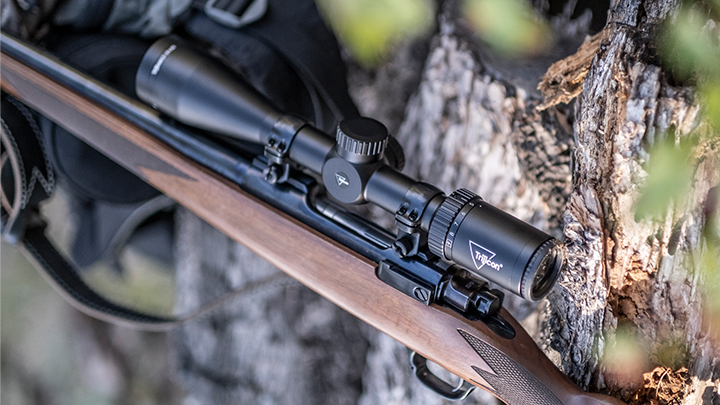
The Huron line was designed to provide a value-priced optic for deer hunters who desire the premium glass, durability and performance Trijicon is known for, without the added cost of illumination. The range of magnification and 30mm tube provides an excellent field of view and quick target acquisition. The same rugged and durable construction in existing Trijicon optics is shared in the Huron line, including premium anti-scratch glass. The clarity and brightness of Trijicon optics are well established—there is a reason every U.S. Marine has a Trijicon optic. The same glass used in the Advanced Combat Optical Gunsight (ACOG) is also integrated into the new Huron models.
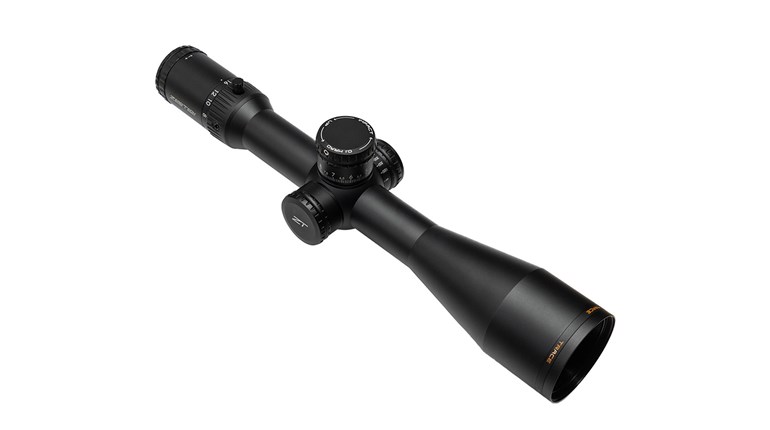
The Hurons’ turrets are capped and have distinct .25-MOA click adjustments. The windage and elevation adjustments require no tools and pop up for setting zero. Hashmarks on the turrets read from zero to 17 and represent an available 70 MOA adjustment range. If messing with caps and turning turrets isn’t your style, the BDC Hunter Holds reticle, designed to cover most popular deer-hunting calibers and cartridges, provides holds for fast target acquisition out to 500 yards. The Huron is a second-focal-plane riflescope and needs to be set on the maximum power for the holds on the reticle to align downrange. The 3x-12x model I tested has a square around the “12” on the power ring to indicate the second-focal-plane alignment.
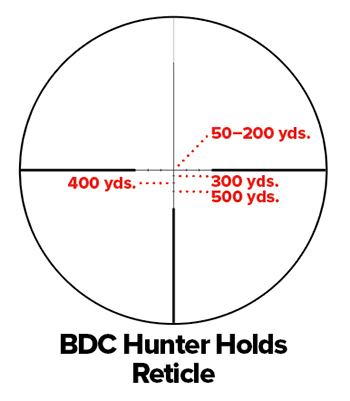
To use the BDC Hunter Holds reticle, zero the center reticle at 50 yards. The theory is, most cartridges zeroed at 50 yards will then also be zeroed at 200 yards. The second hold on the reticle, below center, is for 300 yards, then 400 and 500 yards. Using this method, I was consistently able to place bullets into the “kill zone,” and determined the BDC Hunter Holds system was “minute of deer” at a variety of long-range targets.
The common saying “close only counts in horseshoes and hand grenades” should never be underestimated when hunting. The wise hunter will use the reticle for long-range accuracy, but only after it has been verified at the range. Better yet, a combination of ballistics calculator data and range-time verification is always recommended and would allow the user to create the “DOPE” for exact holdovers and increased accuracy.
Sighting in at 100 yards for accuracy testing and to “shoot the square,” I was able to keep groups tight and found the .25-MOA adjustments were precise and showed accurate and reliable tracking. The results proved consistent with three different shooters.
Trijicon temperature-tests its optics in extreme highs and lows, testing I duplicated by placing the Huron in a snowbank overnight in late winter then in the freezer for a day. The optic developed a thick coating of frost when brought back to room temperature, but continued to operate as designed. When the frost and moisture cleared, the scope, including glass, showed no sign of fogging or mistreatment.
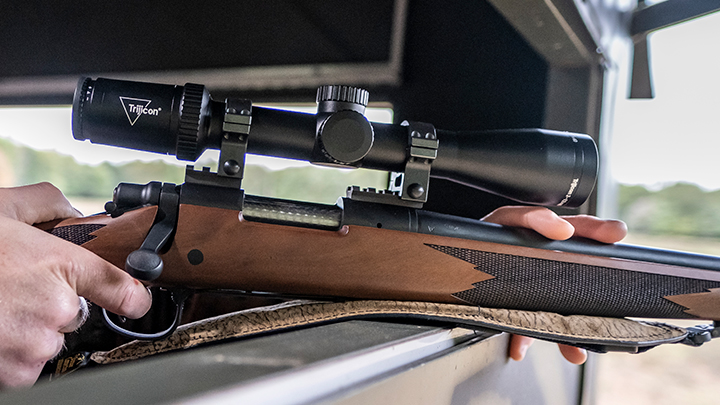
To test its waterproofing, I submerged the optic in a sink for five minutes. The components moved naturally, water did not hinder manipulation or purge the scope, and the glass repelled the water quickly. Although we could not submerge it at greater depth (Trijicon’s testing is done at a depth of 10 feet), I consider the Huron waterproof by any hunting standard.
To check durability, the rifle and attached scope were dropped from 3 feet and 4 feet onto a blanket placed on the ground (to prevent scratches or dents), and the riflescope held its zero. The riflescope did fall directly on the bell at one point, and it still showed no physical stress or malfunction.
Clarity is essential to reduce eye strain in challenging conditions. To test the riflescope for brightness, clarity and resolution, I put it to work from sunset to a full hour after, covering the low-light conditions hunters often experience. Deer, elk, moose and caribou antlers on a totem pole were observed, and antler points—even against spruce trees—were distinct and identifiable. The Trijicon’s fully multi-coated glass collected and dispersed light well after sunset and made it easy to locate different targets and objects without having to strain to see the definition of shape or color. Even after shooting light faded, targets and objects remained clear and identifiable.
The Trijicon Huron will appeal to deer hunters on a budget. The characteristics of premium glass, lightweight design and value price all stand out. When Trijicon produced its first non-illuminated reticle, the company dropped the price, but nothing else. With both turret and reticle shooting systems in place for downrange accuracy, hunters will know with confidence where their bullet is headed before pulling the trigger.
Technical Specifications
• Type: variable-power riflescope
• Magnification: 1X-4X, 2.5X-10X, 3X-9X, 3X-12X (tested)
• Objective Lens Diameter: 24mm, 40mm (tested)
• Eye Relief: 2.2"-3.2"
• Exit Pupil: .52"-.13"
• Field of View @ 100 Yds: 36.3' (3X) - 9.1' (12X)
• Reticle: second focal plane, non-illuminated, BDC Hunter Holds
• Adjustments: 70 MOA in .25-MOA increments
• Coatings: fully multi-coated, broadband, anti-reflective glass
• Dimensions: 30mm tube diameter; length 12.55"; weight 17.8 ozs.
• Construction: 6061 aircraft-grade aluminum tube; black satin finish
• Accessories: lens cap, scope coat
• MSRP: $650-$699; trijicon.com