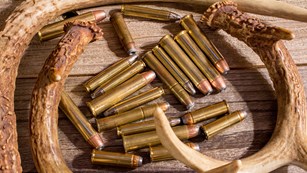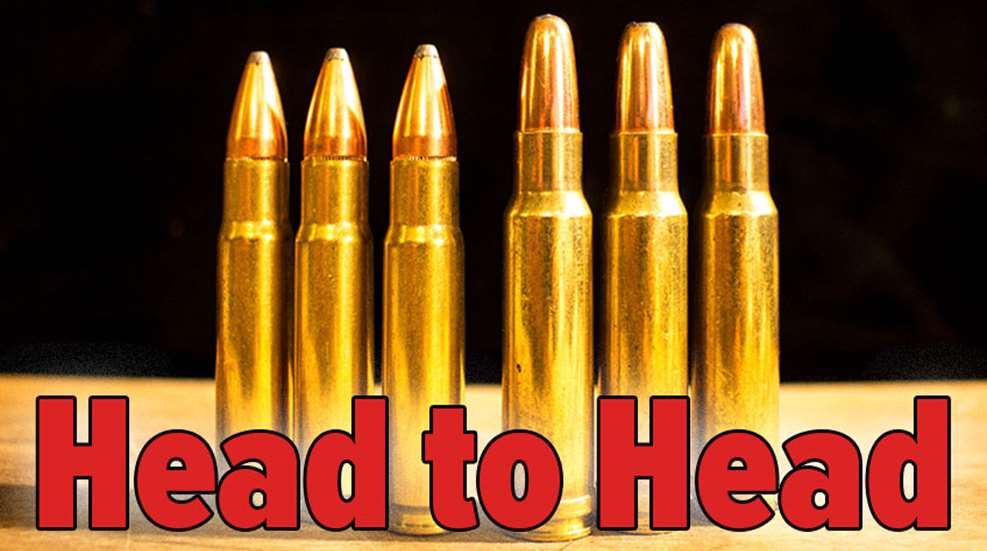
A reader of this series wrote in, asking for this one in particular. He is a big fan of .35 caliber cartridges, and was looking for a short, light rifle, but was torn between the .358 Winchester and the .350 Remington Magnum. So, let’s look at the battle between the short-action .35s and examine the pros and cons of each.
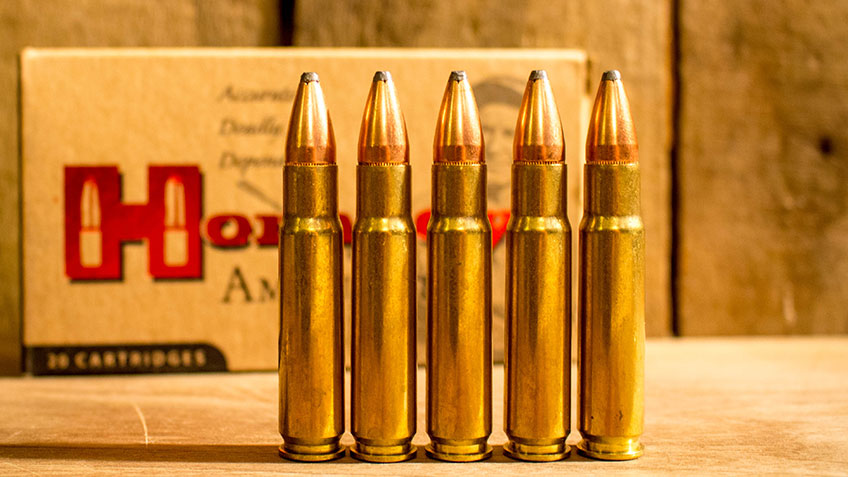
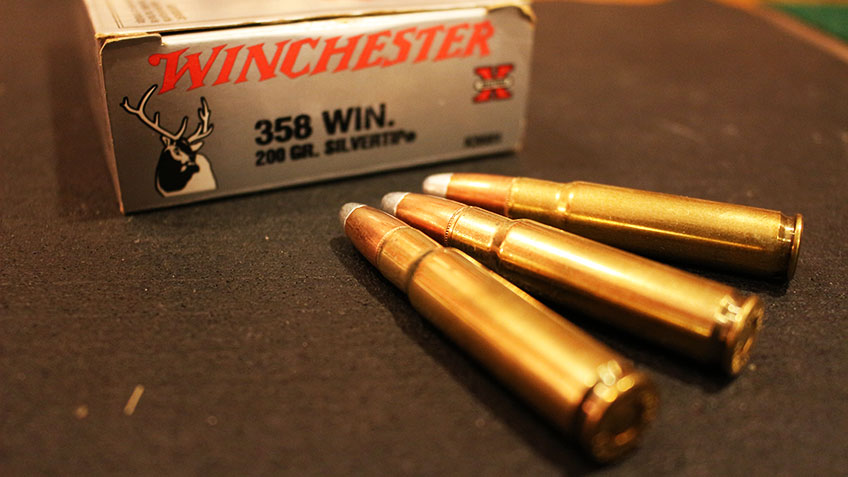
The 1952 release of the .308 Winchester sparked a short-action revolution; it compared well with the .30-06 Springfield in the game fields, and came in a shorter package that hunters appreciated. It wasn't long before Winchester took the cartridge and necked it up and down, resulting in the 1955 releases of the .243 Winchester and—on the other end of the spectrum—the .358 Winchester. Among the .35 caliber cartridges popular in the United States, the .358 offered a definite step up in performance; the .35 Remington—that popular woods rifle—is much slower than the .358, and though the .35 Whelen has been among us since 1922, it would remain a wildcat until 1988. Winchester’s design was simply the .308 case necked up to hold .358″ diameter bullets, offering 200-grain bullets at just under 2500 fps and 250-grain bullets at 2250 fps for a marked increase in both velocity and striking energy.
The cartridge was offered in the Winchester Model 70 bolt-action rifle and Model 88 lever-action rifle, and Savage offered it in the classic Model 99 lever gun. The .358 Winchester was not merely a deer/black bear cartridge; it gave the .35 caliber fans a cartridge valid for all North American hunting, including big brown bears. The cartridge is relatively easy on the shoulder, is available in a fast-cycling rifle, and while ammunition and rifles are definitely limited, owners of the .358 Winchester sing the praises of the cartridge.
While we’ve experienced a wave of short magnum-mania over the last two decades, the craze actually began in the mid-1960s, when Remington released in the .350 Remington Magnum and 6.5 Remington Magnum in 1965 and 1966, respectively. Based on the belted Holland & Holland case shortened to fit in a .308-length action, Remington released the pair in the Model 600 bolt-action carbine, and later in the Model 660, both of which had barrels on the shorter side; 18.5″ and 20″, respectively. The concept of a magnum-level cartridge in a short-barreled rifle usually doesn’t work out, as the additional velocity that the magnum cartridge is designed to achieve is lost in the short barrel. Needless to say, the original release of the .350 Remington Magnum was a flash in the pan.
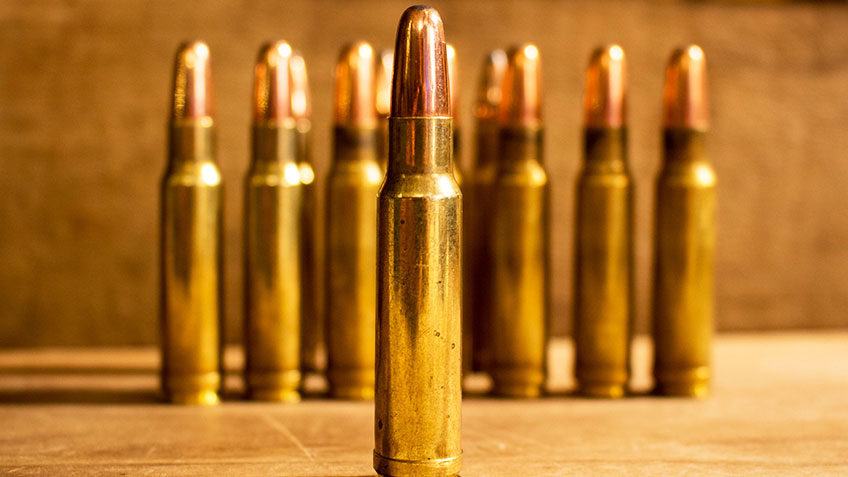
The 600 and 660 were all but gone by 1970, but the .350 remained an option in the Model 700 rifle. With a longer barrel, the cartridge delivers ballistics which are knocking on the door of the longer .35 Whelen, albeit in a shorter, fatter cartridge. The .350 Remington Magnum can drive a 250-grain bullet to nearly 2400 fps, and a 200-grain bullet to over 2700 fps. My good pal Dave deMoulpied has a Model 700 Classic in .350 Remington, and we’ve handloaded for that cartridge for well over a decade, achieving sub-MOA groups from 200-grain Hornady InterLocks, 225-grain North Fork softpoints, and 250-grain Hornady round nose softpoints. Components are readily available, but factory ammunition is as limited for the .350 Remington as it is for the .358 Winchester. Nosler offers excellent ammunition featuring their 225-grain Partition at 2550 fps, and there are other smaller companies, like Hunting Shack Magnum, that will provide quality ammunition for the owner of a .350 Remington. I can say that the .350 Remington Magnum—at least in the rifles I've shot—will definitely let you know it’s a magnum, especially from the bench, but its recoil can be managed by most shooters.
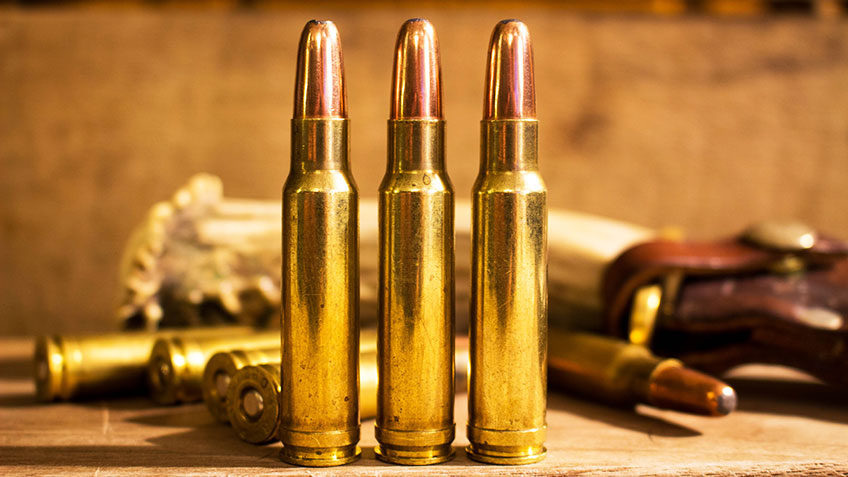
So which of the short .35s make the better choice for a prospective buyer? As much as I love the .358 Winchester, I feel a shooter would be better served with the additional velocity of the .350 Remington Magnum, in spite of the fact that the magazine capacity will be compromised by the fatter case. Both cartridges will have issues with the longer spitzer bullets, as the magazine limitations won’t allow those bullets to be seated out far enough so the case mouth is on the shank of the bullet. Accordingly, both of these cartridges are best served with spitzers which have shorter, steeper ogives, or by round-nose bullets. At sane hunting ranges, this isn’t a huge handicap, but anyone looking into these cartridges should be aware of the issue. Both cartridges are an excellent choice for bears of any species when loaded with the heavier 250-grain bullets, and make a good choice for the larger species of African plains game. While I’m a fan of the .350 Magnum, I definitely feel a rifle with a barrel of at least 22 inches will give the best performance; those 600 and 660 carbines—while they have their own devoted followers—just don’t do the cartridge justice.
By this time, the Whelen crowd is screaming at the screen, “Why not just shoot a Whelen and solve all the problems?” There is a certain attraction to those stubby .35s; they offer plenty of power in a compact package, and there is certainly room for these cartridges in a highly-competitive market.
Looking for previous installments of our "Head to Head" series? Click here.