With a suggested retail price of just under $400, the new bolt-action Compass is Thompson/Center’s entry into the budget-friendly hunting rifle market. Accurate and rugged, the Compass has a number of features usually relegated to rifles costing twice as much, and as such represents a very solid value. But it’s also a bargain-priced production rifle, so there are some tradeoffs vs. pricier models.
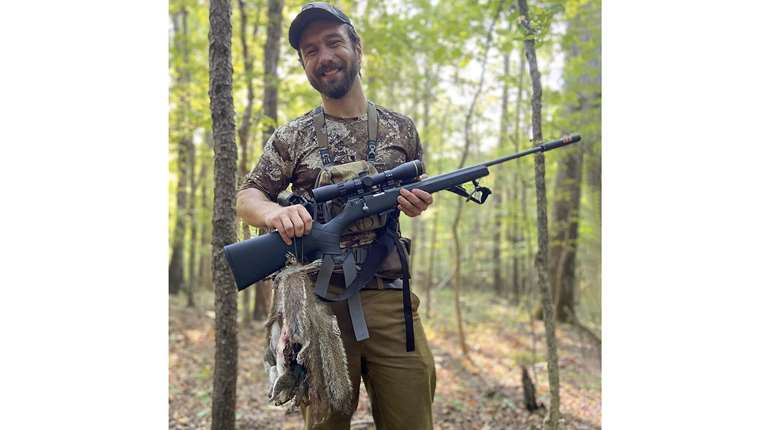
I recently received a Compass chambered in .30-06 Sprg., and it didn’t take long to recognize the value T/C builds into the rifle. After I gave the rifle a good cleaning I installed an optic, a Bushnell Trophy 4X-12X-40mm scope that I had recently used on a bear hunt with great success. Mounting that optic highlighted the first of many refreshing features T/C has incorporated into the Compass: The rifle comes with Weaver-style scope bases already in place.
Yes, I am thoroughly tired of the hassle that frequently occurs when mounting an optic on a new rifle. Rings are easy enough to find. But when it comes to bases, you often have to consult a chart very similar to one for finding a spark plug for a Ford pickup, 1965 to 2003—consult and hope. I’ve had gunsmiths tell me the only way to mount a scope on certain rifles is to buy the bases technically marked for a different rifle, use the rear base as is, but spin the front base around. And how many times have I finally, finally found the “right” set, only to spy in the dreaded small print: “Fits square receiver models only. Rounded receivers take Bases ABC123,” which the retailer does not have in stock!
None of that foolishness and runaround with the Compass. Using the star wrench that was included with the rifle, I tightened the bases, slid new rings on the Bushnell Trophy and mounted said scope. Done.
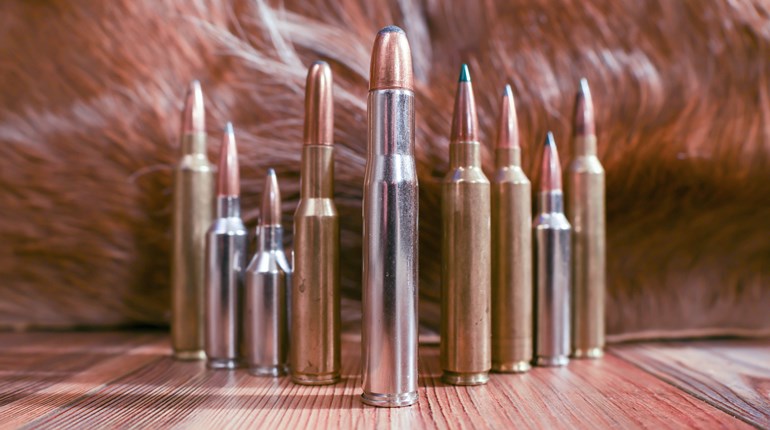
At the range, I fired three different brands of .30-06 Sprg. ammo through the Compass: Browning BXR Rapid Expansion with a 155-grain Matrix Tip bullet, Remington Core-Lokt with a 165-grain pointed soft-point and Winchester Super-X with a 150-grain Power-Point. Once I was done shooting one brand of ammunition, I used bore solution, a copper brush and patches to clean the bore, and I let the rifle cool for 10 minutes.
T/C puts faith in the rifle’s free-floated barrel with 5R rifling and its aluminum pillar-bedded action, and rates the Compass as providing minute-of-angle accuracy with premium ammo right out of the box. I found this claim to be true, at least with the Browning ammo. Once the rifle was sighted in, I put three Matrix Tip bullets into an inch or better multiple times. Three-shot groups with the Remington and Winchester loads were larger, though still well within the kill zone of any big-game species.
Accurate though the Compass was, its bolt worked stiffly, even with a good cleaning and thorough lubrication. Cycling smoothed up a bit as I ran more rounds through the rifle (and I assume it would keep doing so with additional use), but even at the end of my shooting time the bolt would occasionally bind and require additional force to chamber a round. On the plus side, the bolt’s three-lug push-feed design locked up solidly, and the 60-degree bolt lift provided plenty of scope clearance.
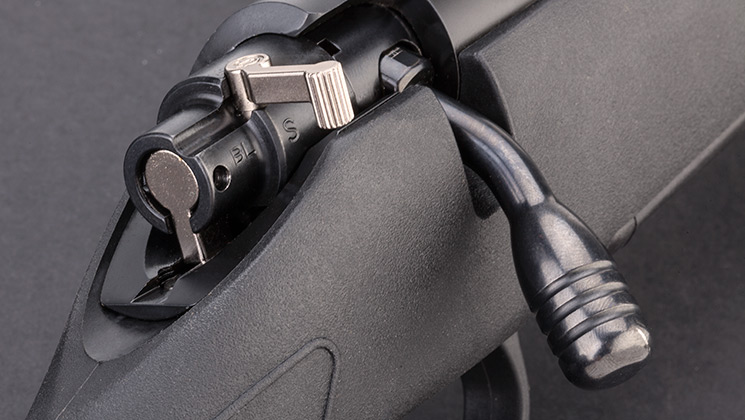
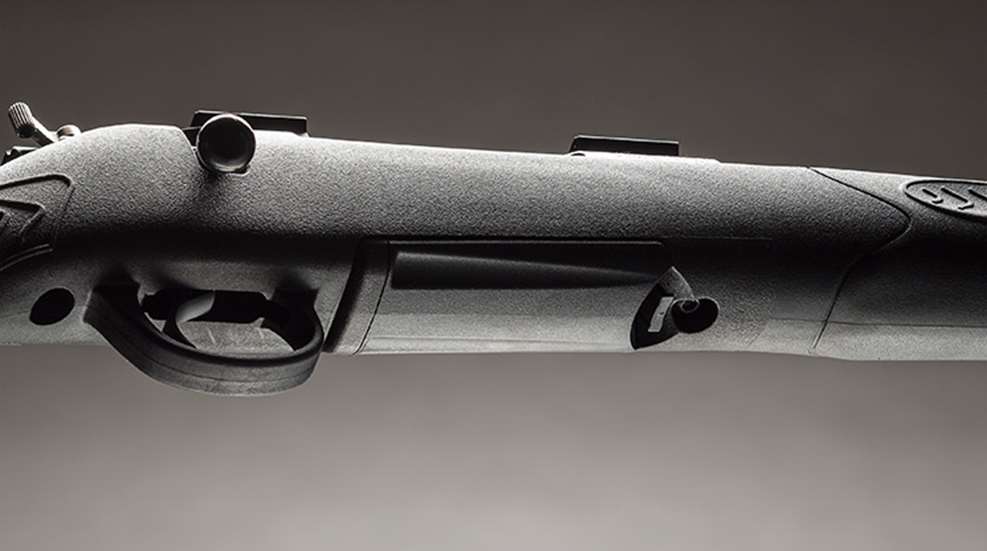
The Compass employs a wing-style safety located at the rear of the bolt on the right side. This is a three-position safety—an uncommon feature on a budget rifle. You can tell what position the safety is in at a glance, and each is marked on the bolt: “BL” is the rearmost position and stands for “Bolt Locked-Safe”; “S” is the middle position and allows the bolt to be cycled while the rifle remains on “Safe”; and the fully forward “F” position is “Fire.” The safety moved easily from rear to front during my testing, but it was hard to push the wing back, especially from the forward “F” position to the middle “S” position. Ease of use improved only slightly over time and with some strategically placed lubrication.
The single-stage trigger in the Compass is user-adjustable for 3.5-5 pounds of pull weight. In my sample, the trigger was precise and snapped off shots cleanly; it felt closer to the light end of the pull-weight spectrum than the higher.
Another first-rate feature of the Compass is its detachable rotary box magazine. I’ve used a fair number of the new, price-friendly bolt-actions lately, and the polymer magazines are often a sticking point. Literally. Either the magazine is a pain to load, or it’s difficult to place into the magazine well, or it fits but doesn’t want to release. Not so with the Compass. Five rounds slid into the polymer magazine very easily, and it snapped securely into the magazine well. It sat flush with the belly of the stock and popped right out when I pressed the release tab.
The Compass is also a winner in ergonomics. It shouldered well, and the slim fore-end fit the cup of my hand nicely. The composite stock has stippling molded into the pistol grip and along the fore-end, and its texture promotes a solid hold.
Another noteworthy feature: the Compass comes standard with a threaded muzzle (protected by a thread cap) to attach a suppressor or muzzle brake. Where I live, that’s a $100 savings right there. Plus, sling swivel studs are installed on the rifle.
T/C lists the suggested retail price of the Compass at $399, though in a gun shop or on the Internet, prices will likely be $30-$40 less. That’s a very reasonable price for an accurate hunting rifle loaded with hunter-friendly features. T/C is headed in the right direction with the Compass.
Technical Specifications:
• Type: bolt-action centerfire rifle
• Caliber: .204 Ruger, .22-250 Rem., .223 Rem., .243 Win., .270 Win., 7mm-08 Rem., .308 Win., .30-06 Sprg. (tested), 7mm Rem. Mag., .300 Win. Mag.
• Barrel: 22"; 5R rifling; 5 grooves, 1:10" twist; 5/8x24 threaded muzzle w/cap
• Trigger: single-stage; user-adjustable pull weight 3.5-5 lbs.
• Magazine: polymer rotary, detachable box; 5-rnd. capacity
• Sights: none; Weaver-style scope bases included
• Safety: three-position wing
• Stock: straight comb w/cheekpiece; black polymer w/aluminum pillar bedding; LOP 13.25"
• Metal Finish: blued
• Overall Length: 41.5"
• Weight: 7.25 lbs.
• MSRP: $399