Oil Spill Silver Lining: Money for Duck Habitat

by
posted on November 20, 2013
** When you buy products through the links on our site, we may earn a commission that supports NRA's mission to protect, preserve and defend the Second Amendment. **
dogs_ah2015_fs.jpg (43)

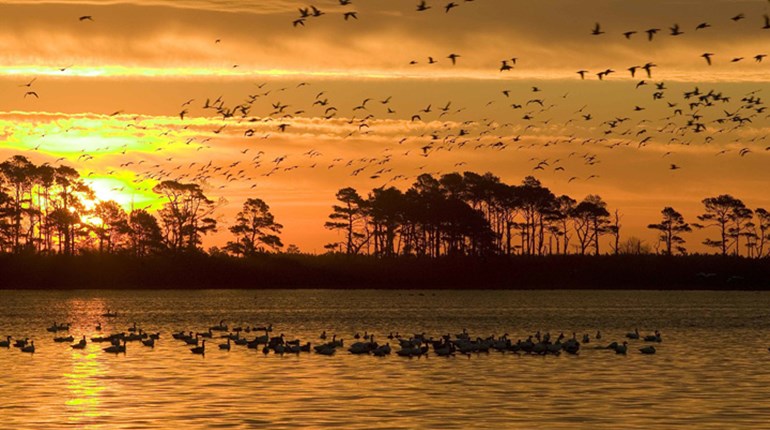
The 2010 Gulf Coast oil spill posed two key threats to waterfowl in its immediate aftermath: Direct mortality in the forms of starvation and oiled birds, and the destruction of some of the continent's most important wintering habitat. Fortunately the worst-case scenarios didn't come to fruition, but a variety of major duck habitats were impacted—namely the oil killed a variety of aquatic grasses, exacerbating an already troubling rate of coastal erosion.

The spill was an absolute environmental disaster, but, at least for ducks there is a silver lining: According to Ducks Unlimited, waterfowl are among the first beneficiaries of the criminal settlement being doled out by Deepwater Horizon. DU wrote in a press release:

The National Fish and Wildlife Foundation (NFWF) recently announced five projects to restore and enhance habitats for species impacted by the 2010 Deepwater Horizon Disaster, including the Gulf Coast Migratory Waterfowl Enhancement Project. These projects are funded through the NFWF-administered Gulf Environmental Benefit Fund.

The $1.25-million grant will be provided to the Texas Parks and Wildlife Department (TPWD), which will work with Ducks Unlimited to restore and enhance Texas coastal wetlands.The project intends to improve wetland health and water availability on private lands (95-percent of Texas is privately owned). A second portion of the project will create "seasonal surface water" (i.e. flooded fields) in agricultural areas to provide food for all sorts of migrating fowl.

Latest

Ledeinterior Department

Funding Authorized to Conserve Critical Wetland Habitat

The Department of the Interior has announced that $44.79 million in North American Wetlands Conservation Act (NAWCA) funds have been approved by the Migratory Bird Conservation Commission. They will provide the U.S. Fish and Wildlife Service—and its partners—the ability to conserve, restore or enhance 185,203 acres of critical wetland and associated upland habitat for migratory birds across the United States.

Behind the Bullet: The .30-378 Weatherby Magnum

Curious about one of the original wonder cartridges? A cartridge that literally broke the 6000 fps mark with specialized, lightweight options? Follow along with Phil Massaro as he dives into the .30-378 Weatherby Magnum.

New for 2026: Muddy Cloak OZ3 and OZ5 Ozone Generators

Muddy Outdoors has launched the Cloak OZ3 and OZ5 Ozone Generators—two high-output scent control solutions designed to give hunters a true edge in the field.

Varmint Hunting 101: Tips and Overview

Looking for a way to spend your offseason that scratches your hunting itch? Try varmint hunting. Follow along with Tim Hovey as he discusses how to get into the pursuit, and some basic tips to get you rolling.

MDT Expands ACC Elite Compatibility to Savage 110 Short Action and CZ 457 Platforms

MDT has expanded its ACC Elite chassis system, adding compatibility for the CZ 457 and Savage 110 short action platforms.

Looking for Hogs vs. Hunting Wild Boars

There is no right or wrong way to hunt hogs. But in the author’s opinion there are methods that are more rewarding than others if sporting challenge, and not merely eradication, is the goal.

Interests


Get the best of American Hunter delivered to your inbox.