The Barnes X Bullet

by
posted on March 18, 2010
** When you buy products through the links on our site, we may earn a commission that supports NRA's mission to protect, preserve and defend the Second Amendment. **
2010318141658-barnesx_f.jpg

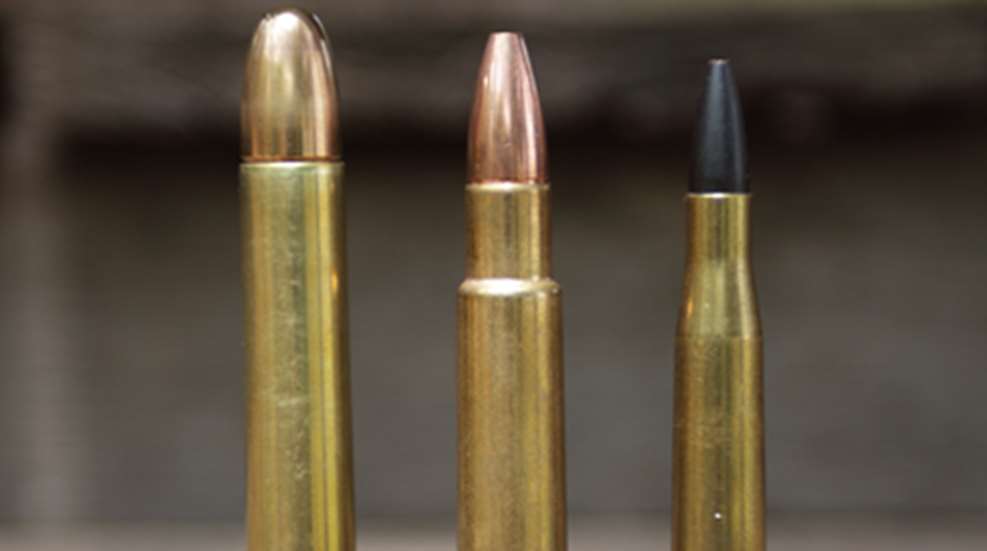
For African rifles and cartridges, there are very few absolutes. The closest I’ll come to making a flat-out blanket endorsement is for a product I’ve never seen nor heard of failing, a product so highly regarded that many professional hunters specify it by name to their clients. It is the Barnes X bullet.

In its updated guise as the TSX (for the triple driving bands) or the tipped TSX (with a polymer tip), the X bullet has been proving itself on tough African game for nigh on a quarter century. I’ve campaigned with X bullets on a dozen safaris and I’ve yet to have a single problem.

An X-bullet is an expanding bullet, often called a “soft” in African parlance, going back to the original lead-tipped or soft-nosed bullets of the Kynoch era. As an expanding bullet, the goal of an X bullet is to retain good penetration of heavily boned, thick skinned game like Cape buffalo, yet also mushroom to create a larger wound channel.

It stands to reason that the faster and more violently a “soft” expands, the better. I recently saw a graphic real-life illustration of just how quickly a Barnes TSX bullet in .416 Rigby (400 grains) expands.

We saw a nice zebra stallion a good distance out and my PH told me to hold on the top of his back. I did, and fired. He ran off but we caught him again at closer range and a shoulder shot put him down. When we examined the zebra, my first shot had hit exactly where aimed—not as much drop as my PH said to allow, obviously. The bullet had hit just at the top of the back, above the spine, where the skin is only about two inches thick.

The entrance hole was caliber sized, but the exit—after only two inches of tissue—was the size of a silver dollar. That was proof positive than a Barnes TSX opens up almost immediately on impact.

On the flip side, I shot a Cape buffalo last year and hit the bull with a quartering-on shoulder shot, again using a .416 Rigby with a 400 grain Barnes TSX handloaded bullet. The penetration was perfect, breaking the massive shoulder joint and plowing on through several feet of tough buffalo muscle.

I’ve hunted with Barnes X bullets many times now and it’s one of the few absolutes I’ll swear to in African cartridges. Pick whatever caliber you like, but make sure you’re shooting for the X.

Latest

LEDEM3500 Waterfowl MOOBL

New for 2026: Stoeger M3500 Waterfowl Mossy Oak Bottomland

Stoeger has expanded its M3500 Waterfowl Special series with a new model finished in Mossy Oak Original Bottomland camo. Paired with a Patriot Brown Cerakote receiver and barrel, the M3500 Waterfowl Special in Mossy Oak Original Bottomland is purpose-built to blend into flooded timber while standing up to harsh, wet environments.

Can Hunting Become Cool Again?

Is hunting becoming "cool" again? In an era when America’s top podcaster and cage-fighting commentator, Joe Rogan, talking hunting with Yellowstone superstar Luke Grimes seems almost commonplace, you'd have to think that the popularity of hunting is on the ascendency. How can we help it along? Read on, for Frank Miniter's thoughts on breaking hunting back into the mainstream.

Head to Head: 7x57mm Mauser vs. .308 Winchester

The 7x57mm Mauser and the .308 Winchester are two of the most versatile and popular cartridges to make the jump from military to field use. Which makes the more sensible choice for the big game hunter? Follow along as Phil Massaro takes a dive into this pair of classics.

New for 2026: Winchester Long Beard Tungsten

Winchester Ammunition has added Long Beard Tungsten to its turkey hunting lineup of shotshells in 2026.

RMEF Grants $400,000 to Support WAFWA Wildlife Movement Projects

The Rocky Mountain Elk Foundation (RMEF) recently awarded a $400,000 grant to the Western Association of Fish and Wildlife Agencies (WAFWA) to fund three state-led projects aimed at conserving, restoring and enhancing big game seasonal habitat and migration corridors in Nevada, Washington and Wyoming.

Suppressor Etiquette: Is It Rude Not to Use One When You Can?

If you legally can use a suppressor, is it becoming rude not to? A recent hunt in New Zealand, where suppressors are almost required equipment, got Brad Fenson thinking about the question. Follow along for the pros and cons of cans, as well as a discussion of the changing cultural norms surrounding their use.

Interests


Get the best of American Hunter delivered to your inbox.