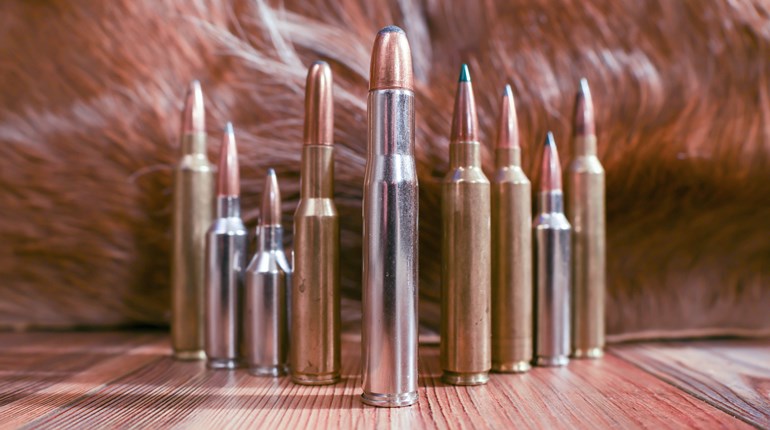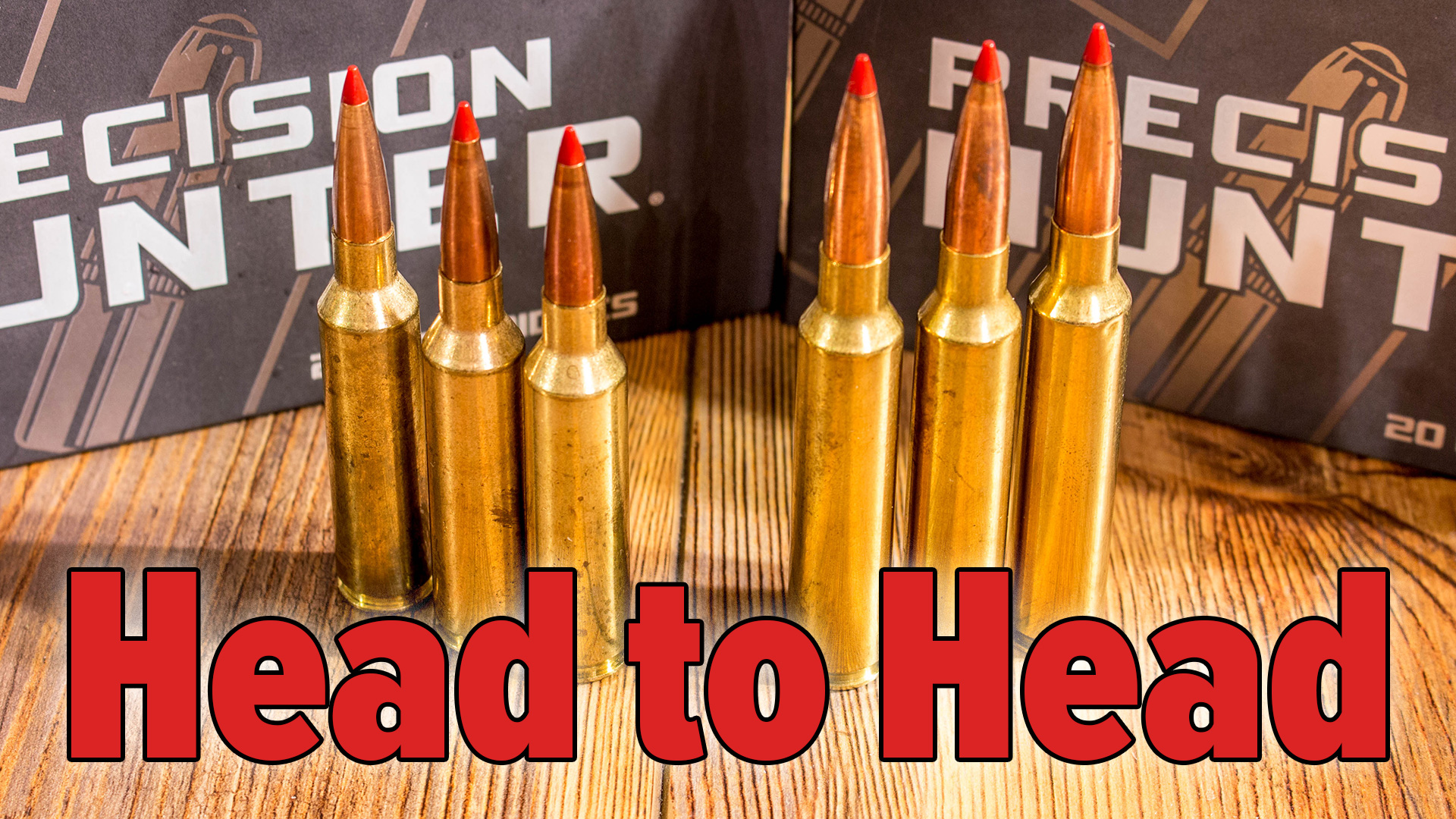
There’s no doubt that Hornady’s Precision Rifle Cartridge family has caught on well; from the release of the 6.5 PRC the shooting world has embraced these dual-purpose cartridges. The 6.5 PRC—considered by many to be the “big brother” of the 6.5 Creedmoor—came first, followed by the 300 PRC, followed by last year’s 7mm PRC. All offer long, heavy, high Ballistic Coefficient bullet which are just as suitable for long-range target work as they are for hunting purposes, yet all require different action lengths. It is also well-known that among the all-around bore diameters loved by American hunters, the 7mm and .30-caliber are at the top of the list. I've had quite a few inquiries about comparisons between the 300 PRC and 7mm PRC, so let’s put the two in the ring and see which comes out victorious.
Both these cartridges are based on the .375 Ruger case, being a rimless design using the .532-inch-diameter case head common to the Holland & Holland belted cases, but headspacing off the shoulder. The body diameter is that of the H&H belt, so there is plenty of case capacity in this family of cartridges, and they utilize that extra room to wring out all the velocity they can.
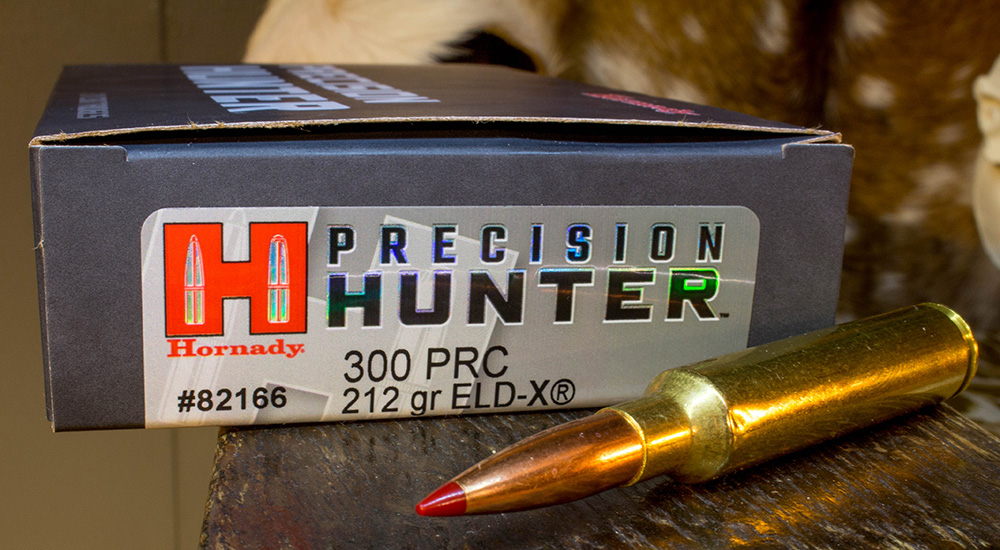
The 300 PRC came first, so we’ll look at it first. Using the same case length as its father—measuring 2.58 inches—and the family shoulder angle of 30 degrees, the 300 PRC surpasses the .375 Ruger in cartridge overall length (COL). Where the 375 Ruger has a COL of 3.34 inches, so as to fit in the common and economical long-action rifles, the 300 PRC has a COL of 3.700 inches—even longer than the .375 H&H Magnum. Therefore, it should be housed in a magnum-length action, in order to allow the long, sleek bullets to be loaded properly.
Hornady certainly loads those long, sleek bullets, with the factory loadings starting at 190-grains, and that is the monometal CX bullet. The Precision Hunter line uses a 212-grain ELD-X, and the Match ammo loads a 225-grain ELD Match, so it’s rather evident as to what Hornady intended with this cartridge. Federal loads a 215-grain Terminal Ascent, and Berger loads both the 205-grain and 245-grain Elite Hunter in their ammo. Bottom line: this case is designed for projectiles that will best retain energy at long ranges, and best resist wind deflection.
Even that 225-grain ELD-X is cruising at 2810 fps, and despite the additional bullet weight, it offers a trajectory nearly identical to the .300 Winchester Magnum at common hunting ranges, and when ranges get truly long, it just pulls away. But that velocity and trajectory comes at a price: recoil.
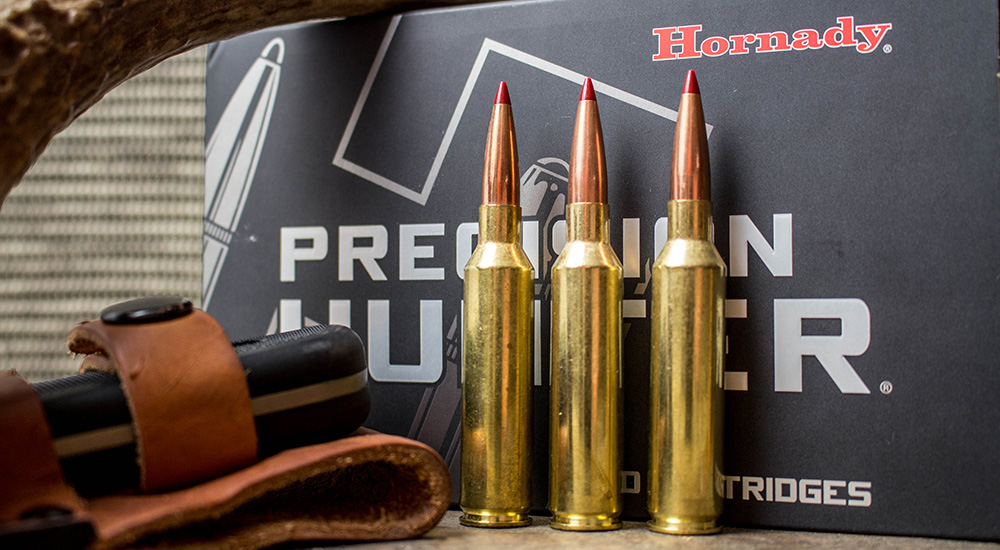
The 7mm PRC is the youngest of the PRC family, and sits in the middle between the short-action 6.5 PRC and the magnum-length 300 PRC. It has the same case head diameter, same 30-degree shoulder, and same base diameter of the 375 Ruger and other PRC cartridges, but a case measuring 2.28 inches and an overall cartridge length of 3.34 inches. This is designed specifically to maximize the potential of a long-action magazine, while using the high-BC projectiles so common to the PRC family. The 160-grain CX bullet and 175-grain ELD-X leave the muzzle at 3000 fps, and the 180-grain ELD Match is doing 2975 fps, for a trio of useable bullets suitable for numerous hunting and target situations.
I've used the 7mm PRC for a couple hunts—a pronghorn antelope at the Lander One Shot Challenge, and a black bear in British Columbia—as well as stretching its legs at the SAAM Shooting Course at the FTW Ranch. In all situations, I came away seriously impressed. As one might expect, a 175-grain 7mm bullet handled both the antelope and bear without issue. At the FTW, we walked the cartridge out to 1,400 yards, and were making consistent hits. I found the cartridge/bullet combination to be wonderfully balanced, offering a tolerable recoil level, even after spending the day in the prone position at the range. In the hunting field, the recoil wasn’t an issue at all.
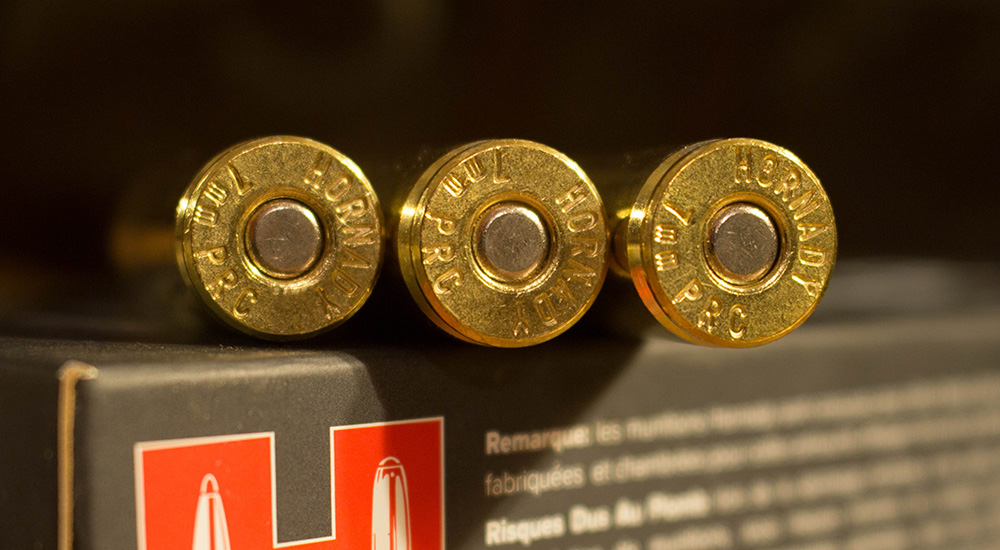
Though both cartridges were developed and released by Hornady, other companies have begun producing ammunition already, with Federal offering loads for both cartridges, and Berger making loaded ammo for the 300 PRC; this is a good indication that both are here to stay. Comparing and contrasting the two, I am giving the victory to the 7mm PRC, for a few reasons.
First, the fact that it is housed in a regular ol’ long-action receiver makes rifle choices open up. Second, the fact that the 7mm PRC will handle some of the lighter projectiles better than the 300 PRC will makes for a more versatile choice for the hunter. Third, when looking at the ballistics out past a mile, the 180-grain 7mm ELD Match will actually outperform the 225-grain .30 ELD Match in the 300 PRC. The 7mm fares better in the wind (two feet better at 2,000 yards) and shoots flatter, so if you’re looking for the cartridge to pull double duty, I prefer the lower recoil of the 7mm PRC combined with the better downrange ballistics. The 300 PRC does generate more energy, and has a larger frontal diameter, so if you were serious about using one of these cartridges for brown bear or the like, I could see where the .30-caliber bullet might be more attractive. But, contrary to most hunting situations, this is one instance where I truly believe the 7mm comes out on top. Hornady hit their stride with the 7mm PRC; it offers more bullet weight than the 6.5 PRC, and much less recoil than the 300 PRC. As Goldilocks said: just right.
Looking for previous installments of our "Head to Head" series? Click here.