Did you know there are 13.7 million hunters in the United States alone, according the U.S. Fish and Wildlife Service’s National Survey of Fishing, Hunting and Wildlife-Associated Recreation? Did you know that in 2015, 43.1 million Americans lived in poverty (13.5 percent of the U.S. population), and 42.2 million Americans lived in food-insecure households? The NRA’s solution? Start an initiative to assist in providing food to the needy by capitalizing on the millions of active hunters we have here in the United States.
This initiative is called Hunters for the Hungry (HFH). It’s been around since 1993, and currently 47 states have a program or affiliate of this initiative. Program names can vary by state, but the idea is that hunters who fill their hunting tags, licenses or permits have an opportunity to donate any unwanted game meat to those struggling to make ends meet. Hunters get to continue doing the recreational activity they enjoy, and processors who are affiliated with their state’s version of the HFH program will process the meat either at a discounted rate or free, depending on the state. Then the low-fat, high-protein meat is donated to the local food bank, ministry, etc., for distribution. It is in this way the hunter can give back to his immediate community by fulfilling his or her passion for hunting. Simply put, all a hunter needs to do to contribute to the program is fill a tag, license or permit, and find a drop-off location for the meat. Still need an incentive to donate some game meat? Depending on the state, some donations are tax deductible.
The NRA was the first national organization to launch HFH and work with state and local groups. We did fundraisers with governors from Virginia, Georgia and Mississippi, and raised money for those state programs back in the mid-1990s. Since the start of HFH, 2,029,353 pounds of game meat have been donated annually nationwide on average, which translates to 8,117,412 distributed meals throughout the country. In 2016, the top five states for meat donations were Virginia, Missouri, Maryland, Ohio and New York.
Essentially, the NRA’s major role with HFH is to act as a clearinghouse of information to connect hunters with participating programs. We have updated our website, hfth.nra.org, and have included an interactive map to provide interested hunters with the location and contact information of their nearest HFH-affiliated processors.
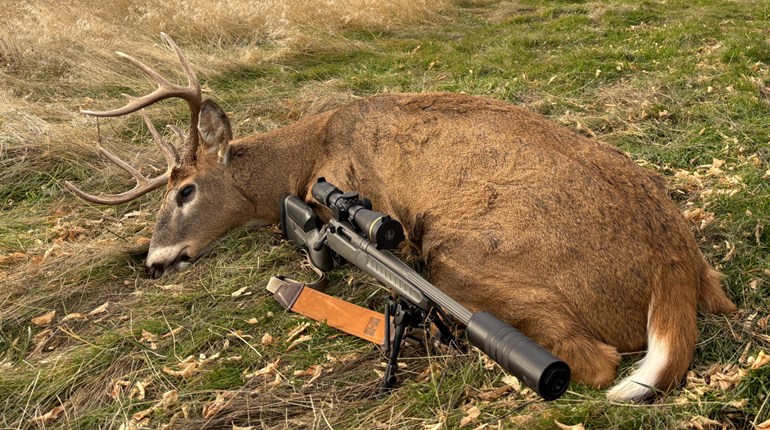
The NRA also has a smaller role in HFH where some staff members from headquarters participate in a controlled hunt in Maryland. Annually, the Maryland National Capital Park and Planning Commission in Montgomery County conducts a hunt under its White Tail Deer Management Program. The NRA staff participates by assisting in hunting for population-control reasons in parks that are around urban areas where the deer population has become an issue. This hunt lasts for two weeks, and the deer that are taken are tested for diseases and for other Department of Natural Resources (DNR) research purposes. After the DNR inspects and approves the game meat as clean, the venison is donated to local food banks and missions.
Furthermore, the NRA provides assistance to groups in covering the costs of large-scale processing, packaging, storage and distribution by working closely with The NRA Foundation, which contributes tax-deductible donations to an array of firearm-related activities. The organization can only give grants to incorporated non-profit organizations that are registered and recognized by the organization’s state. In this case, those organizations that operate each state’s HFH program are eligible to apply for these grants if they meet the required non-profit organization status above. Friends of NRA is the program that raises the money for the shooting sports by organizing and planning community events for firearm enthusiasts. All net proceeds from Friends of NRA events are then given to The NRA Foundation. The NRA also works year-round to help publicize the program on a local, regional and national scale by providing media releases and public service announcements.
But the program isn’t limited to hunters only. Meat processors can also join the ranks. If a processor were interested in becoming affiliated with HFH, the processor should find its state’s program. Most states’ programs provide some funding to cover the butchering costs associated with processing game meat. Every state differs in the types of game meat it accepts in donations. Venison is the major donated meat, but elk, bear, goose and livestock are also accepted, depending on the state. If a state is interested in starting a HFH program, we suggest representatives contact their state’s wildlife department.
The biggest question we’re often asked is, aside from donating harvested meat, how else can people help the HFH program? Those wanting to help the cause can make not only a monetary contribution to The NRA Foundation or their local HFH program (where applicable), but they can personally volunteer with their local or state program.
The take-away from all of this? The impact of HFH is dependent on the efforts of the entire hunting community. You have the chance to help simply by doing what you love, support your local community while carrying on the hunting tradition, show that you and your fellow hunters care about your community, and share spare game meat with families in your area. With your support, the NRA’s HFH program will have the necessary resources to continue the fight against hunger.