In the spring of 1922, Charles L. Horn took control of a small plant in Anoka, Minnesota and Federal Cartridge Corporation. Now, nearly 93 years later, Federal Premium produces some of the most well-regarded ammunition in the industry.
When you've got nearly a century under your belt, some interesting factoids tend to slip between the cracks and get forgotten. After a little detective work—and assistance from the folks in Anoka—we were able to assemble 10 facts that you might not know about the company.
Check out our list below, and be sure to weigh in with your own additions in the comments.
10. Federal Premium Ammunition uses almost exclusively recycled lead. Given the company's production numbers, that's taking going green to a whole new level.
9. The doors to Federal Cartridge Corporation officially opened on April 27, 1922, under the guidance of Charles L. Horn. The original 9,600 square foot building served as a production facility for shotgun shells. Today, Federal's plant operates with more than 500,000 square feet, and produces products for every discipline: rimfire, shotgun, handgun and muzzleloader. All told, the company offers more than 1,000 ammunition options.
8. As a yearling company in 1923, Federal faced an uphill battle in introducing its products to potential consumers. Company president Charles Horn launched a distribution strategy that placed his wares—then only shotshells—on shelves in barber shops, gas stations and grocery stores.
7. In the 30s, Horn helped institute the 4-H Club Conservation program, and Federal was the first company to sponsor camps nationwide in 1934. The company has been supporting the organization ever since. 2014 marks Federal's 35th consecutive year of support for the 4-H Shooting Sports Program. The company also sponsors numerous 4-H youth shooting camps that teach safe hunting, shooting and wildlife management techniques.
6. A dedicated conservationist, Horn had Federal Cartridge lobby congress to pass the Pittman–Robertson Federal Aid in Wildlife Restoration Act. Among other sweeping reformations, the act created a self-imposed excise tax on ammunition and firearms, which has, in time, raised billions of dollars to help preserve the environment.
5. In 1941, the company earned an $87 million contract from the U.S. government to build and operate the Twin City Ordnance Plant—a war materials production program established by the War Department during World War II.
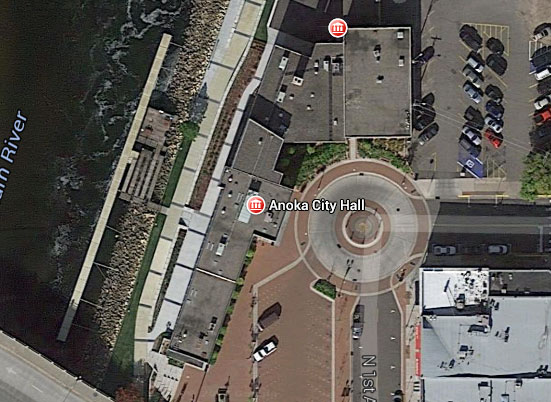
4. In 1954, the Anoka-based company helped finance the Anoka City Hall. It's not a coincidence that the building looks a bit like a handgun when viewed from above. Don't believe me? Check out the satellite image embedded below.
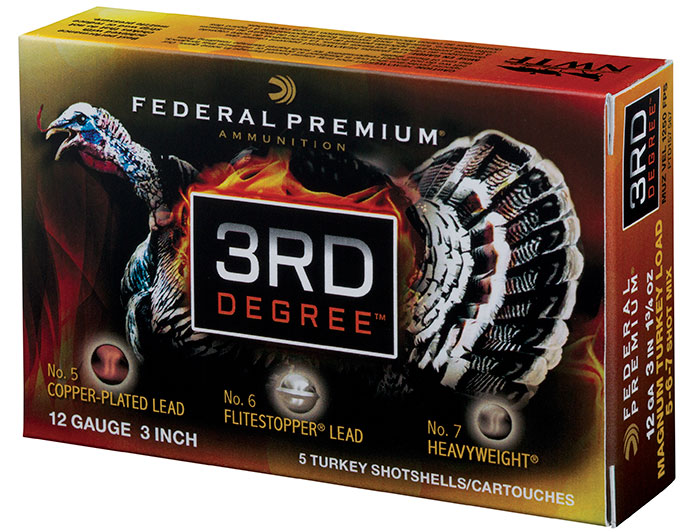
3. Nowadays there's no shortage of turkey-driven shotshells—if a company produces ammunition for scatterguns, it probably has at least one brand that it markets to turkey hunters. That wasn't always the case, though, and it was Federal Premium that broke new ground when it introduced a turkey-specific load in 1992. Some 23 years later, it's preparing to release its brand-new 3rd Degree shotshell—which you'll see on shelves later in 2015.
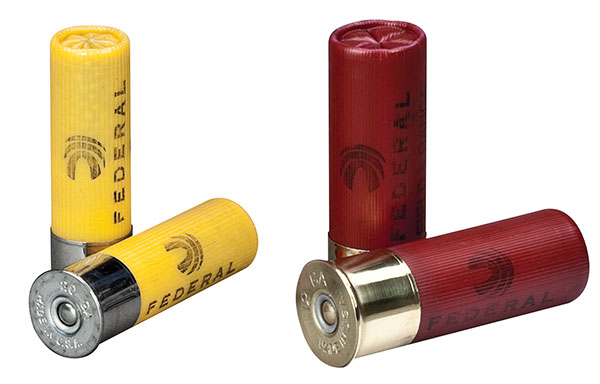
2. Any hunter can tell you the easiest way to identify the gauge of a shotgun shell: the color-coded exterior. Though some companies have gotten away from the traditional approach, it's a point that's still hammered home to youngsters in Hunter's Education courses each and every year. But where did such a practice get its start? At Federal, where the safety-driven initiative—long an industry standard—was launched in 1960.
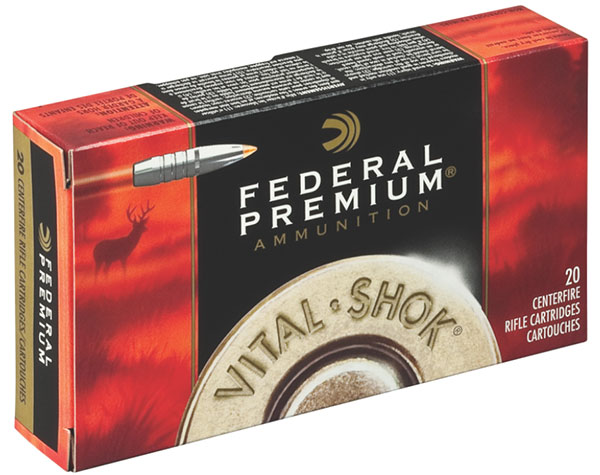
1. In 1977, Federal invented its Premium line of centerfire rifle and shotshell ammunition—the same line that now serves as the heart of the company. The Premium line began with the Nosler Partition and the Sierra BT-HP, which brought handloader-level accuracy and performance to the masses. In 2015, Federal continues the will expand its Premium line with loads like the Trophy Bonded Tip in .223 Rem and Trophy Copper in .30-30 Win.