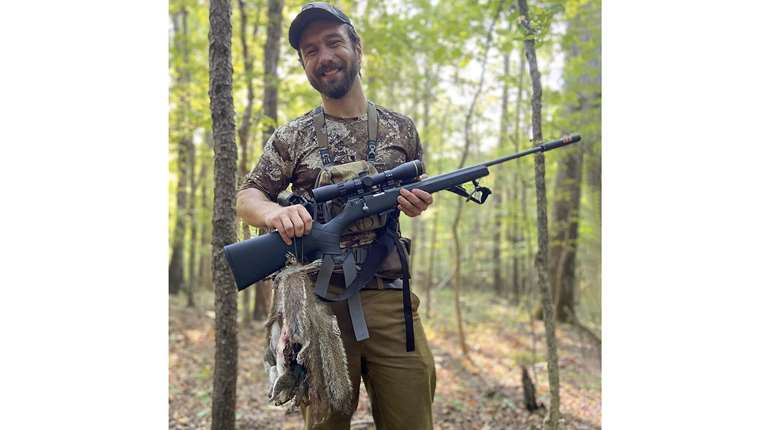
Back in the 1500s, early Spanish settler Old MacDonald had a farm. And on his farm he had some hardy Eurasian pigs. Some pigs escaped and established wild populations. In the 1800s, British settlers introduced more pigs for hunting. Now mass numbers of feral pigs root, wallow and trample pastures, row crops and wildlife habitat relentlessly in search of food, threatening agricultural production, water quality, and native flora and fauna across the United States. This might be the “The End” … if not for hunters.
As America’s top conservationists, we recognize that few species need to be managed more than the wild pig. But here’s the trick: This non-native, invasive animal matures at 6 months of age, reproduces at alarming rates (females having two to three litters per year), has no natural predators, eats almost anything and thrives in any habitat. And because wild pigs are mainly nocturnal, by the time they are spotted in an area, the population is already large enough for individuals to find mates and reproduce regularly—at which point they require even more resources to control. In the 1980s in South Carolina, for example, wild pigs were reported in only 26 counties. By 2008, sightings were documented in all 46.
Today pig hunting is as much about population control as it is the sport of hunting. In 1900, only a few Southeastern states had significant wild pig populations, but today numbers exceed 5 million in at least 39 states. Texas, the state with the nation’s largest pig population, cites $52 million in agriculture losses each year. States as far north as Wisconsin promote “aggressive removal” wherever pigs are reported. Cooperative Extension Services at Mississippi State, Clemson University and other research institutions have created task forces to address wild-pig management and control. No wonder state fish-and-game agencies broadly classify wild pigs as nuisance animals rather than protected game and permit hunting them year-round with no bag limits and, in some states, without a hunting license on private land.
These non-native omnivores are not fussy eaters and compete heavily with native wildlife for a limited food supply—particularly with whitetail deer. Full-grown pigs can weigh 500 pounds but are usually in the 300-pound range. Either way, they’re eating a lot of food. Fortunately, if we know where the food is, we know where to hunt and trap them.
Hunters’ best bets include stand-hunting over baited areas or stalking or still-hunting through natural food sources. Places indicating recent pig activity, such as wallows, are also good bets. States such as Florida, which ranks No. 2 in wild pig populations, allows hunting with dogs and issues “gun and light at night” permits enabling night-hunting with a spotlight in areas with excessive crop damage.
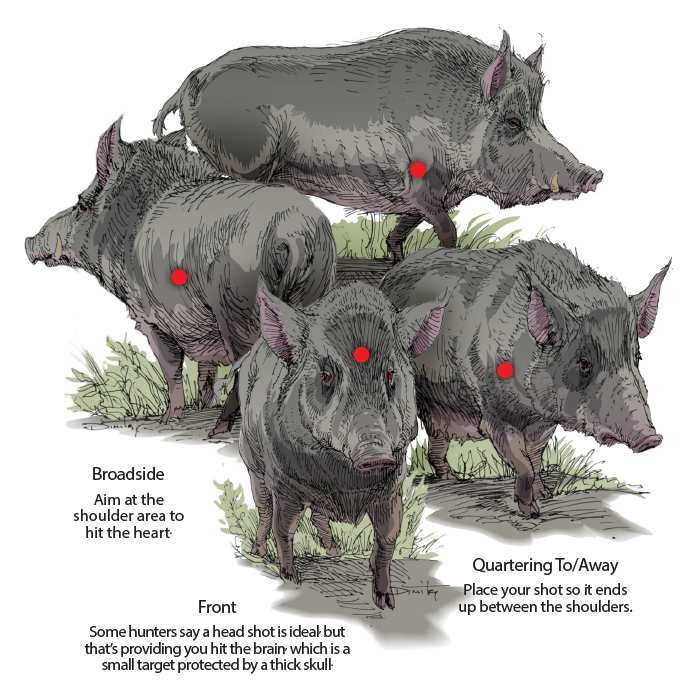
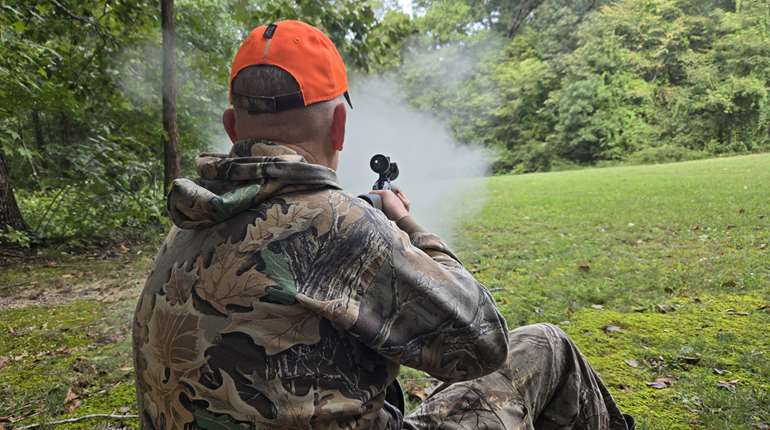
Of course, one of the first lessons hunters learn is that pigs are tough targets. They feed at twilight or after dark, and those you do glimpse during daylight hours are typically foraging in thick brush. Compared to whitetails or other big game, their vitals are farther forward and tougher to reach. And being crafty critters, they aren’t about to stand around after the first shot. Knowing they’ll spook and split, hunters can quickly gain the upper hand by using a sound suppressor where legal, such as in major pig-hunting states like Arkansas, Oklahoma and Texas. In addition to the benefit of reducing the sound of a shot to that of a pellet gun, they also cut back muzzle flash on nighttime hunts, making for the ideal companion when you’re sporting night vision.
All things considered, the wild pig is quite the quarry. Long tusks and a fierce appearance not only make for an interesting trophy, but the quality of meat can be quite good. What’s more, pigs provide a great offseason challenge while we wait for favorite big-game seasons to start. And then there’s our chance to protect wildlife habitat and America’s No. 1 big-game animal, the whitetail deer. So save a deer: Pop a pig! Stem the tide before increased hunting and trapping is no longer enough to control their populations.