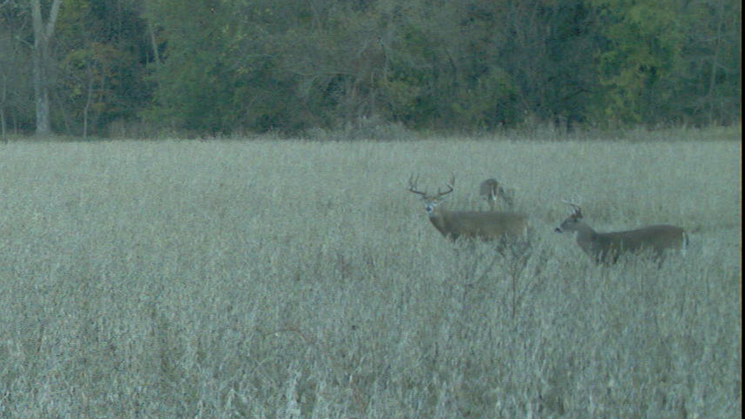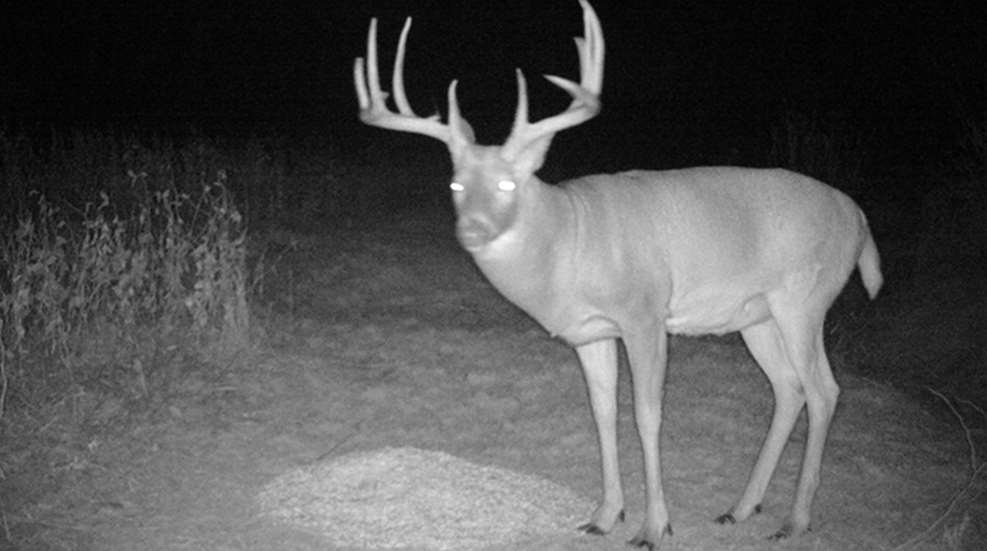
Now, getting back to the matter of patterning a buck named Big Jr. As you may remember, I jumped the cameras several hundred yards from where I was getting nighttime-only photos of the deer. I moved them in the direction he was coming from when he approached the original camera. That first photo of a buck during an evening sequence tells you a lot about where he might be living.
I had to come in to the new area from the opposite side of a large creek in order to approach it quickly and easily with an ATV. I put out four cameras. The first was on the edge of a soybean field on a small ridge top overlooking the creek. The second hung parallel to the creek but down in a valley, on the edge of a small food plot. The third camera was about 200 yards farther from the site of the first photos—a short ways into a seven-acre bean bottom. That one was likely 400 yards from the original camera. I placed number four in a small clover plot another 200 yards farther west.
I had cast a wide net and felt he had to show up on one of those cameras. I could drive easily to all four of the new sites making it easy for me to check the cameras and refresh the corn in front of them quickly.
Immediately, I began getting dozens of photos of the buck on the camera in the seven-acre bottom each evening. He never showed on the two that were closer to the original camera site, but he was popping in occasionally on the camera in the small plot farther west. You have to be a little bit careful when using bait in front of your cameras because the deer may be coming for the bait but not normally using that area. When you stop baiting, they stop coming.
Obviously, though, with the number of photos I was getting of the buck in the big field, I was closing in on his core area. I had no doubt he was living in the cover surrounding it.
It is tough to bowhunt a big field, but I had an idea where I would hunt those timber areas around it. The plan was starting to come together. All I needed was to see some daylight photos of the buck and I would start to hunt him.
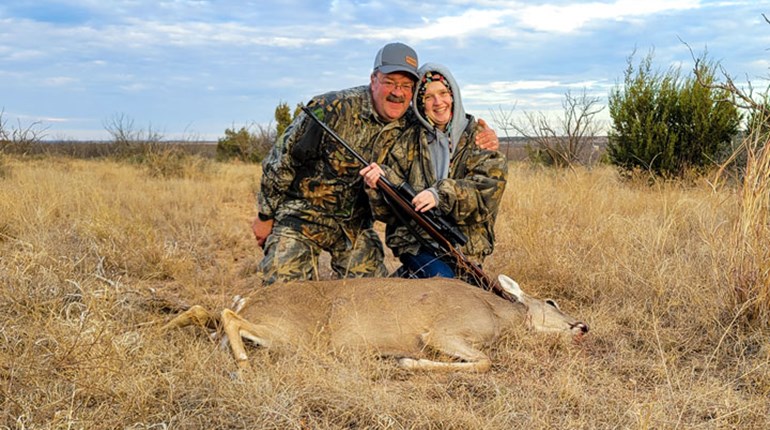
As is common, the first daylight photos came with a cold front. This one was in mid-October. Unfortunately for me, that front also coincided with Iowa’s early muzzleloader season. My neighbor to the south shot Big Jr. that very first weekend with a muzzleloader.
Just as soon as I decided it was time to make my move, it was already too late!
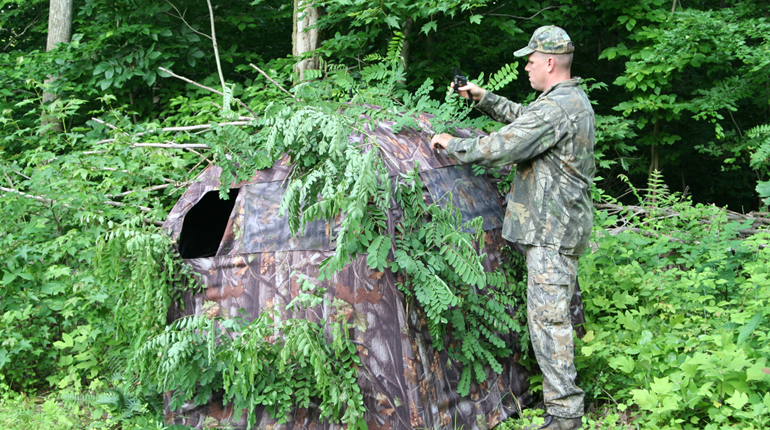
Had I been hunting the buck with a gun I would have likely killed him Saturday evening (the first day of the cold front and opening day of the early muzzleloader season). I had daylight photos of him walking across the big field on another camera I had placed on my ground blind and set to take a photo every minute of the afternoon. The neighbor killed him the next evening. I had a one-day window; not nearly enough time with a bow.
Though I didn’t kill the buck, the process did work. And I have used this method several times to pinpoint the best starting point when hunting a specific buck. You don’t always get them – the bow is a very limited range arm after all—but at least using this method, you are in the game most of the time.
Now the rut is over and I have the cameras back out trying to find another buck to chase. Once I do, the process starts over again.