I was sitting down at Tanya Blake’s booth at the Dallas Safari Club convention, ironing out the particulars of a leopard safari. As we discussed and debated the possible concessions we could hunt around Zimbabwe, Tanya was showing me various trail cam videos of beautiful male leopards from a number of different areas, showing me the differences between cats in livestock areas versus cats in the more remote blocks. What became glaringly obvious—in addition to the awe which leopards inspire—was how much leopard hunters rely on trail cameras to determine both the sex and age of the cats that are feeding on a particular bait. Across the majority of Africa, only older male leopards are to be taken, and while a track can be an indicator of age, visual confirmation is unparalleled. Having a time stamp to indicate exactly when a cat is coming in to feed, and equally important, when he or she is leaving the bait site, is an important piece of information. Having a detailed photo or better yet, video, of a particular cat is just icing on the proverbial cake.
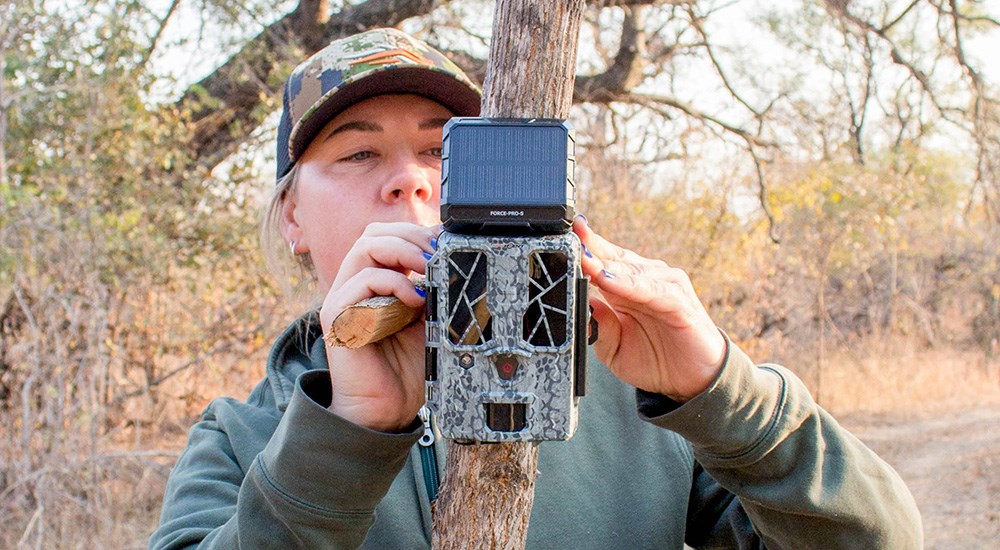
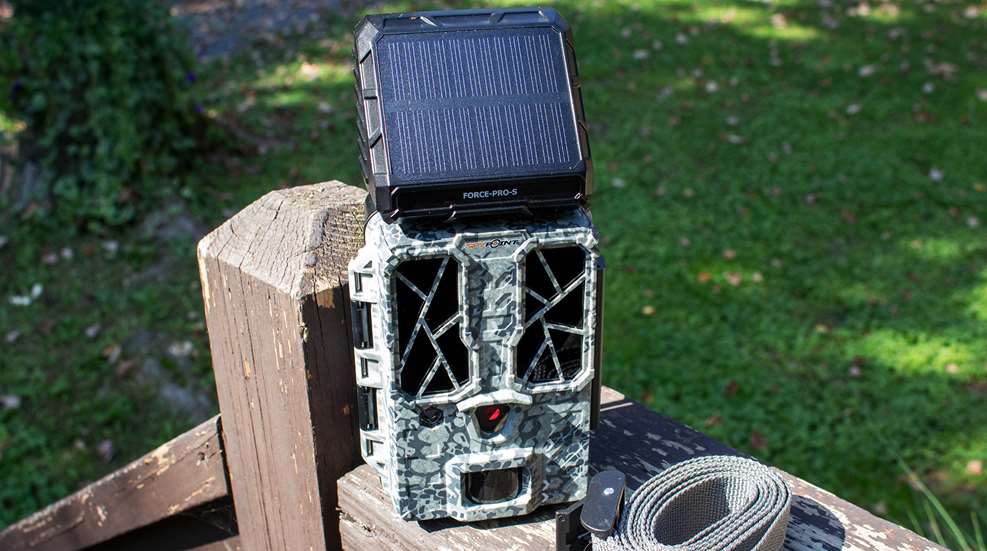
Anyone who has relied on trail cameras has also relied on copious amounts of batteries, and in Zimbabwe batteries can be difficult to obtain at best, and undoubtedly expensive; they can cost up to three times what we pay here in the States. In order to prepare for my leopard hunt, I sought out a trail camera which would run on solar power, and it wasn’t long until I found a model which checked all the boxes: Spypoint’s Force-Pro-S.
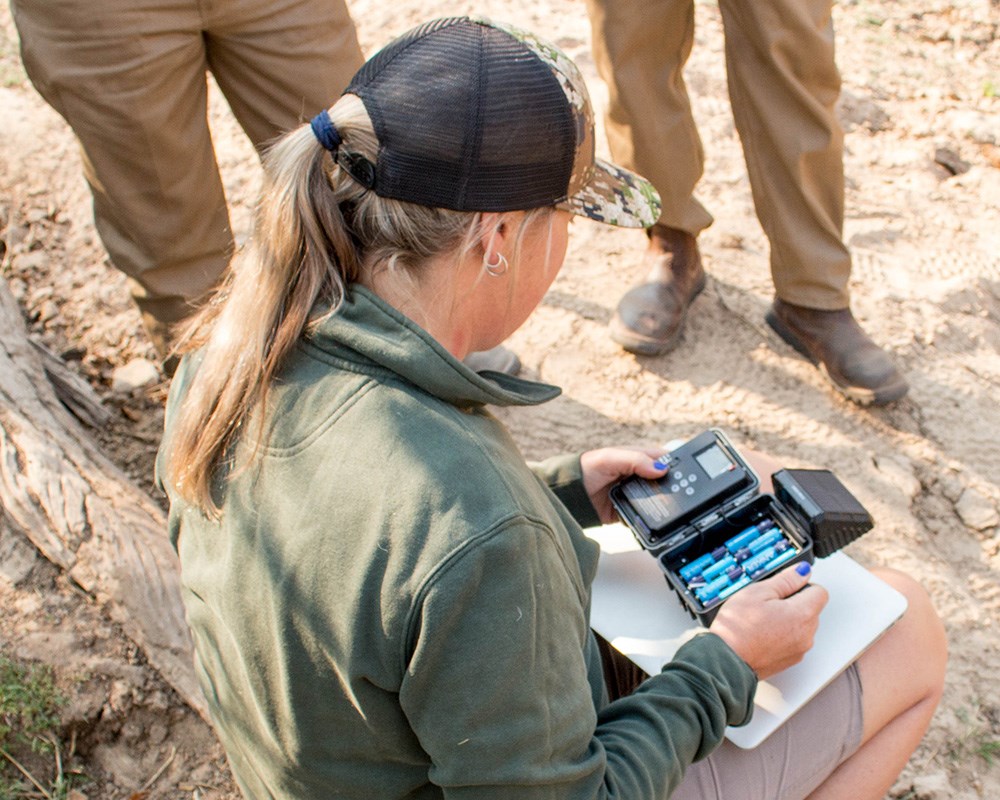
With an integral lithium battery pack and solar charging panel, the Force-Pro-S does have the capability for conventional AA battery backup (the unit takes eight AA batteries), but in the African sun, there was no need for them. In fact, in the month since I’ve been back from Zimbabwe, I’ve run the Force-Pro-S here in New York—admittedly less sunny than Africa—and have yet to install any batteries in the unit, and it runs like a clock, with no lapse in capturing images or video. Spypoint provides a DC charging port and cable to charge the unit initially, or even subsequently, but the solar feature handled all the image capturing. And it captures both photos and videos wonderfully.
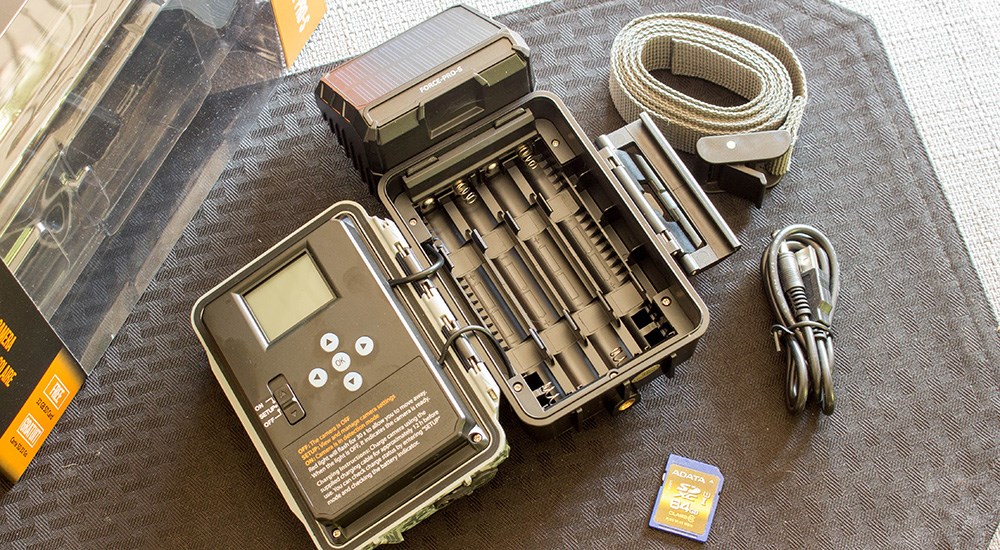
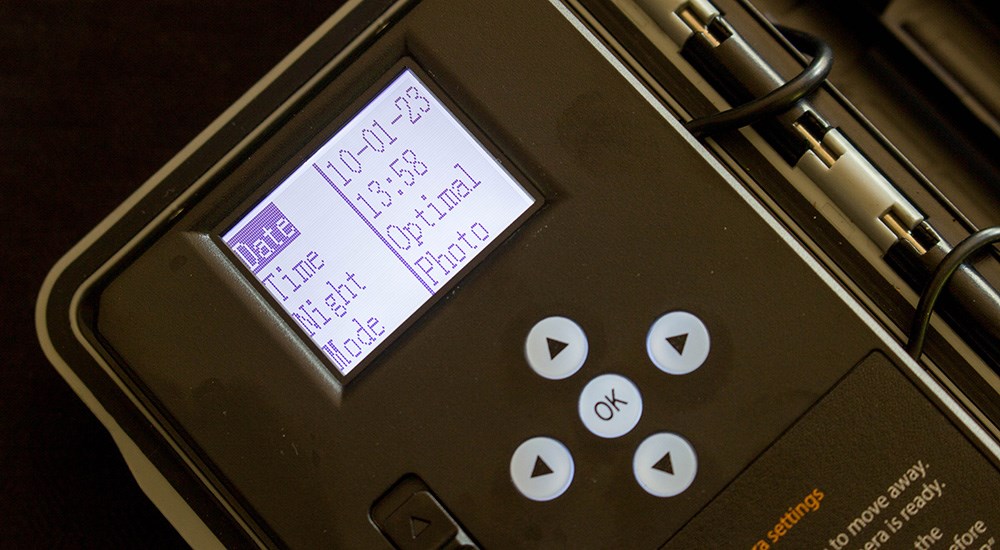
Video is shot in 4K, so animals are clearly defined, and photos are 30 megapixels. Spypoint provides a premium SD card, optimized to perform with the camera. There is a three-position switch inside the unit, marked On/Setup/Off—rather self-explanatory—and the Setup of the camera is simple and straightforward. A 1x1¼-inch LCD screen and a set of buttons (Up/Down/Left/Right/OK) allows the user to scroll through the parameters and customize the unit, choosing one of three languages (English/French/German) and all the environmental, time and date unit choices. The user chooses between photos and video—and the associated parameters, including night preferences, photo quality from 4MP to 30MP and more—and can name the unit with a short customizable tag. The Force-Pro-S features a 90-foot flash range, and a detection range of 110 feet; a trigger speed of 0.2 seconds assures that even running animals can be recorded.
The electronics and SD card are all housed on the inside of a small door which holds the lens, infrared light and flash; the door closes over the cavity where the backup AA batteries are held, and the latch which closes the door has room for a small lock if you so choose.
The housing measures 7½ inches high, 4 inches wide and 2¼-inch thick, and weighs exactly one pound without the AA batteries installed; I like the lightweight when carrying several cameras into remote places. Spypoint provides a strap to attach the unit to a tree, fence post or whatever, and has a threaded receiver for attaching to Spypoint’s Adjustable Mounting Arm (sold separately).
Though I was very fortunate to take a good tom leopard just three days after we had the bait hit, Tanya Blake’s use of multiple trail cameras is an important part of her leopard routine, and seeing the amount of batteries she went through was astonishing. Using a trail camera with a solar-charged lithium battery makes all the sense in the world, not just in Africa on a leopard or lion bait, but here in North America on a bear bait station as well. While I’m aware that legislation has been passed banning the use of trail cameras in certain states, areas or provinces—sometimes just during certain times of year, sometimes altogether—I do feel that when hunting a baited animal, a trail camera allows for the clear identification of that animal. It can prevent the taking of an immature male or a female animal, especially in the instance of a bear or leopard which has no antlers to judge; these animals often come to the bait at last light, and have some sort of visual clue ahead of time can be a game changer.
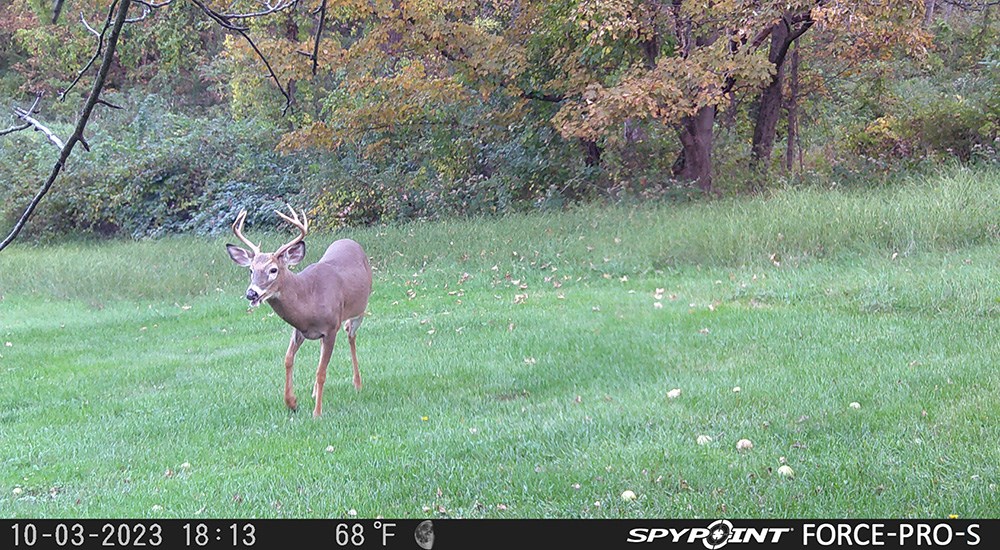
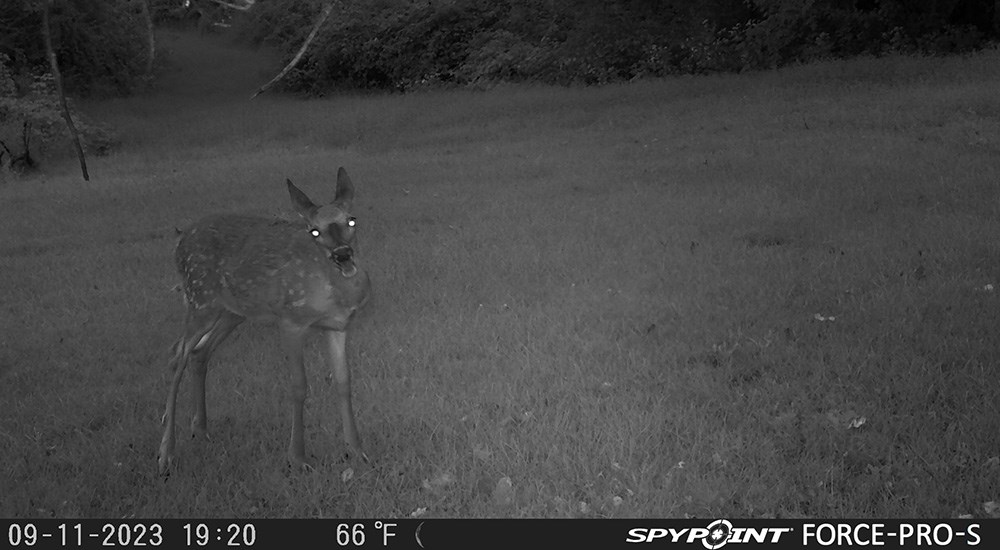
Among the myriad choices of cameras available to the hunter, I appreciate the Force-Pro-S for its balance of simplicity, ruggedness and reliability. I left my test model on the tree for a month straight, through rain, fog, sunshine and temperatures ranging from the high 40s through the high 80s, and it delivered without a hiccup. It was fast enough to grab images of my dog chasing her ball at Mach II, sensitive enough to grab the reflection of a gray fox’s eyes at 50 feet in the dark, got good video of the whitetails that come to eat the little apples off the tree in my yard, and wonderful images of Yours Truly checking the card. If I had to find a fault with the unit, it is that is most definitely not hyena-proof; one of those furry sharks attacked a Force-Pro-S in Zimbabwe, tearing it off the tree and rendering the unit useless. Shy of the brute force of hyena, bear or elephant—all seem to love to abuse trail cameras—the Force-Pro-S is a great choice for the hunter. You can find it at spypoint.com, with a street price of $189.00.