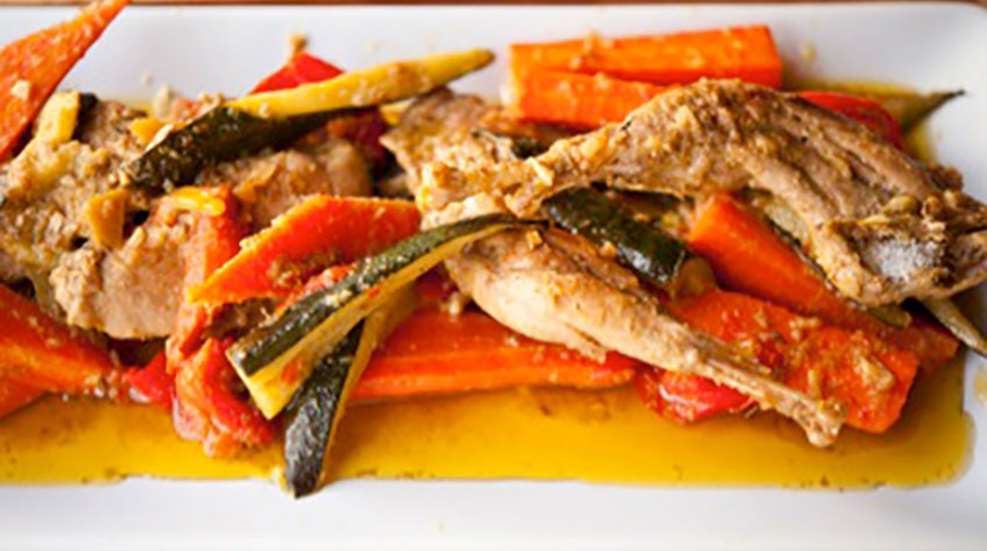
Wild-game tagine brings me back to my days cooking in France when I made a version of this recipe in little cast iron pots and it was sizzling and made the kitchen smell like Morocco. In the south of France, the cuisine is heavily influenced by the Mediterranean, because the climate is dry and hot, which means bulls over cows, and olive oil over butter. In true Mediterranean fashion, this dish is light and tangy, indeed using only olive oil, not butter, and a good dose of lemon in two forms. If you’d like to go the traditional route, you will need to preserve some lemons in advance or buy them from a specialty spice shop. But if your cooking is a last-minute inspiration, then lemon zest will work as well.
The traditional way to make atagine is actually in a tagine—a clay pot with a deep cone-shaped lid, which is designed to keep the moisture within the dish. Once the cover is removed, the base can be used to serve at the table. I tend to use a skillet, though, instead of a traditional tagine, because it browns the meat and vegetables better and can also be served tableside. It is also easier to use around a campfire.
Because this dish is about the spices and aromatics, it is also versatile. I have used pheasant in this recipe, but a whole host of other game meat could be used—try brant, coot, duck, gallinule, goose, grouse, prairie chicken, partridge, pheasant, pigeon, ptarmigan, quail, rail, snipe or the beloved venison. You can even try it with fish, with less cooking time of course, and smaller cuts of vegetables so that they cook faster.
As the perfect accompaniment, I recommend couscous. It soaks up the spices of the tagine beautifully. Give this dish a try; it’s a departure from your typical wild-game recipe, but so worth the adventure.
Ingredients
8 pheasant legs, or 4 legs and 4 breasts, bone in (or other wild game of your choosing)
4 medium-size carrots, peeled, halved lengthwise and cut into 3-inch pieces
4 medium-size zucchini, halved lengthwise and cut into 3-inch-long pieces
2 large red bell peppers, seeded and cut into 3-inch-long thick pieces
1 whole preserved lemon, rinsed well, pulp and pith removed, sliced into strips or diced or 1 tablespoon lemon zest
2 tablespoons grated fresh ginger
1 tablespoon ground coriander
1 tablespoon ground cumin
1 teaspoon cumin seeds (optional)
2 cloves garlic, minced
Juice of 1 lemon
1/2 cup olive oil, plus extra for browning
1/2 teaspoon sea salt
Freshly ground black pepper
Directions
1. Combine all of the ingredients in a bowl and let marinate for 20 to 30 minutes.
2. Heat a tagine, large skillet, or heavy-bottomed casserole dish until very hot. Brown the pheasant parts in a bit of olive oil until browned on both sides, about 5 minutes.
3. Add the vegetables and sauté with the pheasant.
4. Deglaze the pan with the marinade from the bowl and then lower the heat. Cook, covered, over low heat or in the oven at 350-degrees °F for 45 minutes.