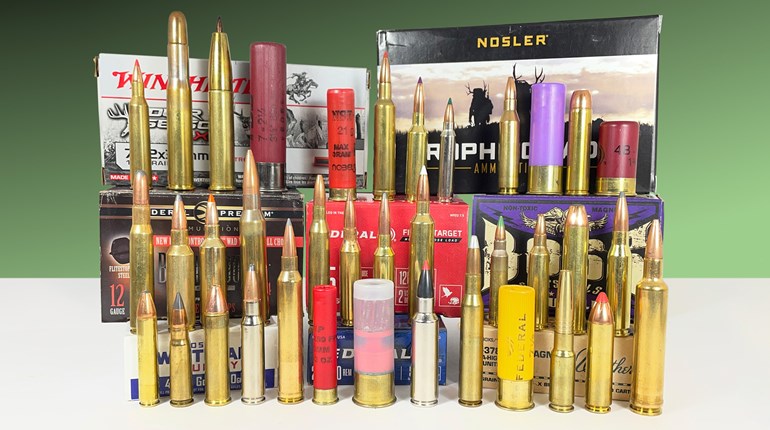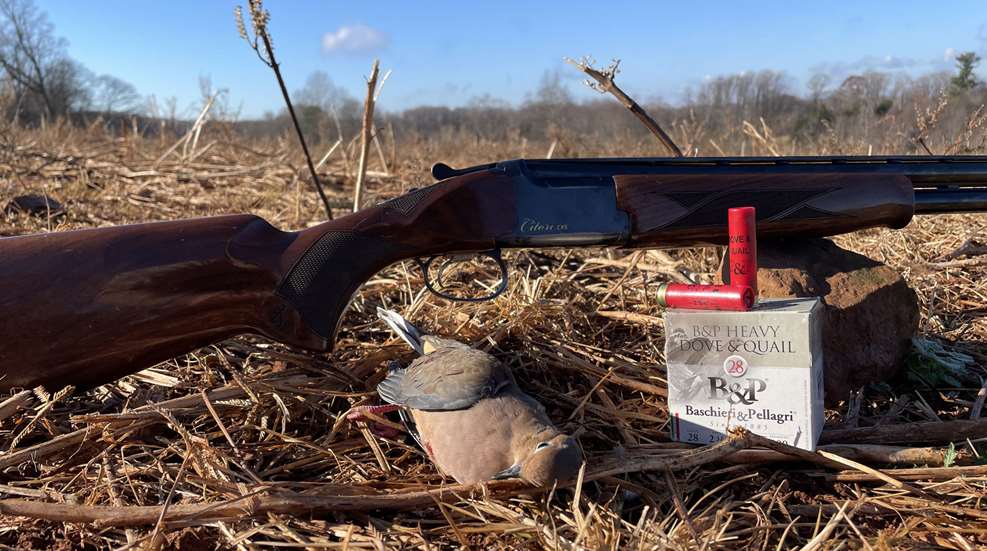
Shopping for shotshells is a stupefying struggle. Why? There’s a seemingly endless selection from which to choose—ie. MidwayUSA’s website lists 57 for “upland, dove, and small game” alone—and an equal number of diverse, and, at times mystifying monikers, such as: “upland and small game”; “sporting”; “Universal”; “Golden Pheasant Extreme”; “Hi-Bird”; “Upland”; “Heavy Dove”; “Gun Club”; “Prairie Storm”; “Nitro Magnum Extended Range Buffered”; “Premier Royal Flush”; and “Last Call,” to name but a few. Based upon the name, clearly some have an intended quarry; however, is there crossover, and what makes one a better choice than the other for upland hunting? All good questions, to be sure.
In the subsequent sections, I’m going to first define “upland loads,” and then differentiate between standard or utilitarian loads, and those aptly described as “premium.” Are the latter worth the elevated cost? Read on.
“Upland” Load Definition & Considerations
An imperfect definition of “upland” load would be a shotshell that’s appropriate for hunting small game, along with particularly the vast variety of winged quarry. Utilitarian “field” and dedicated “pheasant” loads generally represent the opposite ends of the “upland” spectrum, though target-type shells—for hand-thrown clays on the back forty or the World English Sporting Clays Championship—can be employed, too. Species generally considered affiliated with “upland” game include: woodcock; quail; chukar; grouse; pheasant; squirrel; and rabbit. Some might throw in pigeon, too. Therein lies the problem; a shell that’s well-suited for woodcock would be considered reckless for late-season pheasants, or downright foolish for pigeon.
Just as there’s no rifle bullets that’s ideal across-the-board, an “upland” load that is a perfect match for all of the abovementioned species is pure fantasy. Ideally, a shotshell configured—especially shot size—for a particular animal (think pheasant or dove) would always be employed, but that’s simply not reality; for instance, if there’s a dedicated woodcock option, I’m unaware of it. Therefore, a serviceable, albeit not faultless, shell must be sought.
Regular or Premium?
Even when the correct gauge and length, shot size and payload are selected, one must consider whether he or she wants regular (i.e. no-frills) or “premium” shells. Like gasoline, airline seating, food, cellphones, lawncare equipment and nigh most other things, there are multiple grades of upland loads. That being said, we’re not splitting hairs here with the full gamut of tiers; rather, we’ll focus on run-of-the-mill and “premium.”
According to collinsdictionary.com, “Premium products are of a higher than usual quality and are often expensive.” That’s a fitting definition. But, when it comes to shotshells, do the gains of a “premium” product offset the higher price? Not always. But, there’s no disadvantage to using them, either.
Envision the following scenarios. You’re kicking brush, seeking to startle a well-hidden cottontail rabbit into the open, or walking a creek bottom hoping to flush a wary woodcock. Or, maybe you’re preparing to engage a covey of quail mere feet ahead of a statuesque pointer. The quarry is small and the shot(s) close. As long as the pellet size and payload are appropriate for the quarry, nearly any shotshell would work.
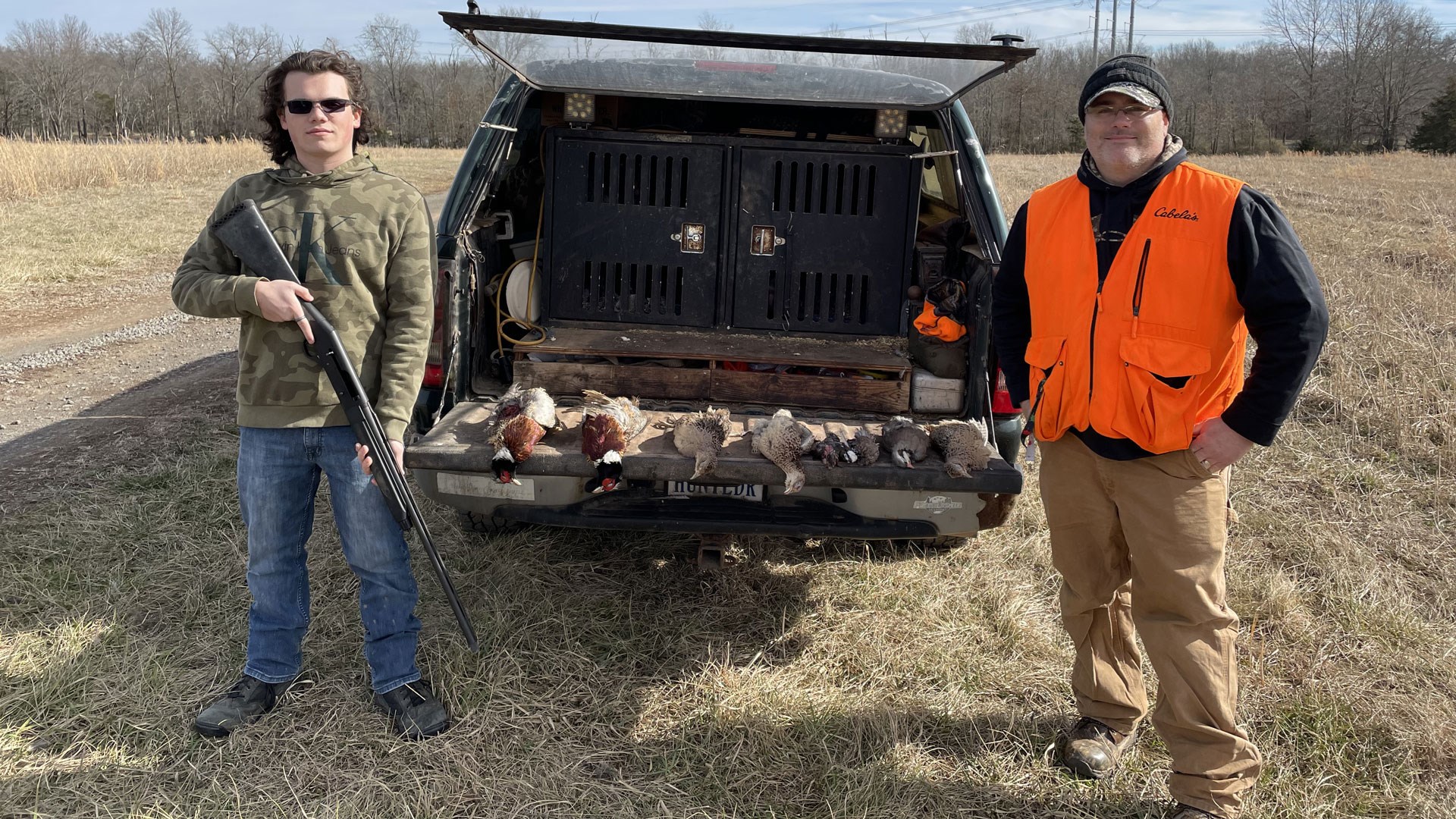
Now consider an end-of-season, far-flushing South Dakota pheasant. Surviving the initial onslaught of hunters has taught it to run, or at least flush well ahead of the dog, and it’s more heavily feathered to survive the cold. When the opportunity at this bird comes, is that the time you want to be a penny pincher? Didn’t think so. You want the best.
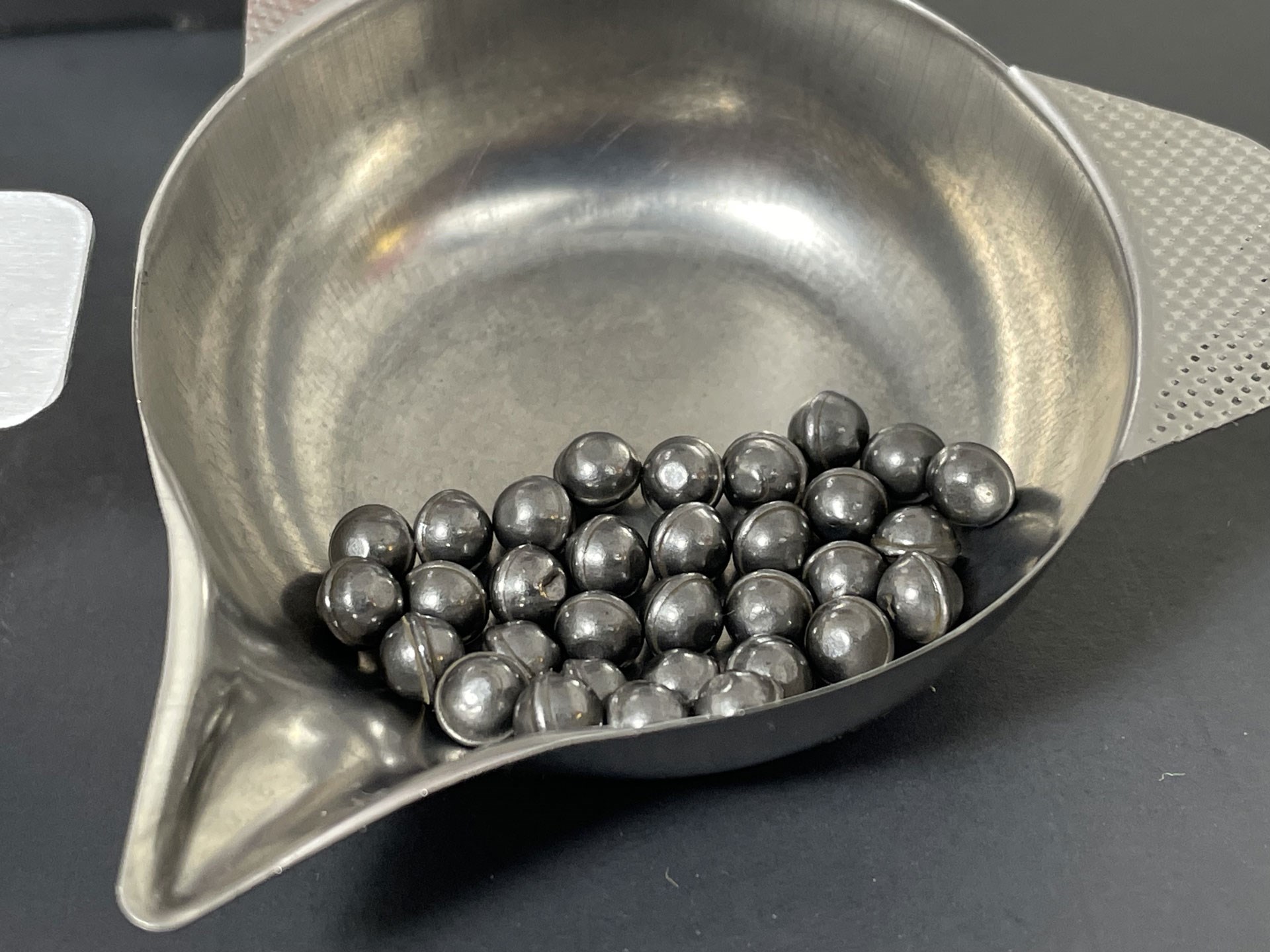
Lead-Alloy Shot: Making a Difference
The foremost selling point of top-tier upland, or game, loads is the shot. Unknown to many hunters, pellet configuration varies greatly, and it’s on-game performance is the prime factor in governing success in the field.
Cut-rate shotshells, which are oftentimes sold in bulk, feature economical, low-antimony shot. Used primarily as a hardener for lead, antimony is a pricy metalloid element; therefore, the more used, the higher the price. Additionally, as the percentage of antimony increases, so does the pellet’s hardness. Meanwhile, this decreases the density, and thus weight. Why does this matter? Resilience, patterns, and penetration.
During setback and while traversing the barrel and choke, harder lead-alloy shot maintains its spherical shape better, and therefore creates patterns with denser cores. This extends the load’s effective reach and enhances penetration—all else being equal, round(ish) shot drives deeper—which is the key to killing small game. Being less dense lessens the on-target energy a smidge, but it’s a worthwhile tradeoff for any hunt requiring reach to bag game.
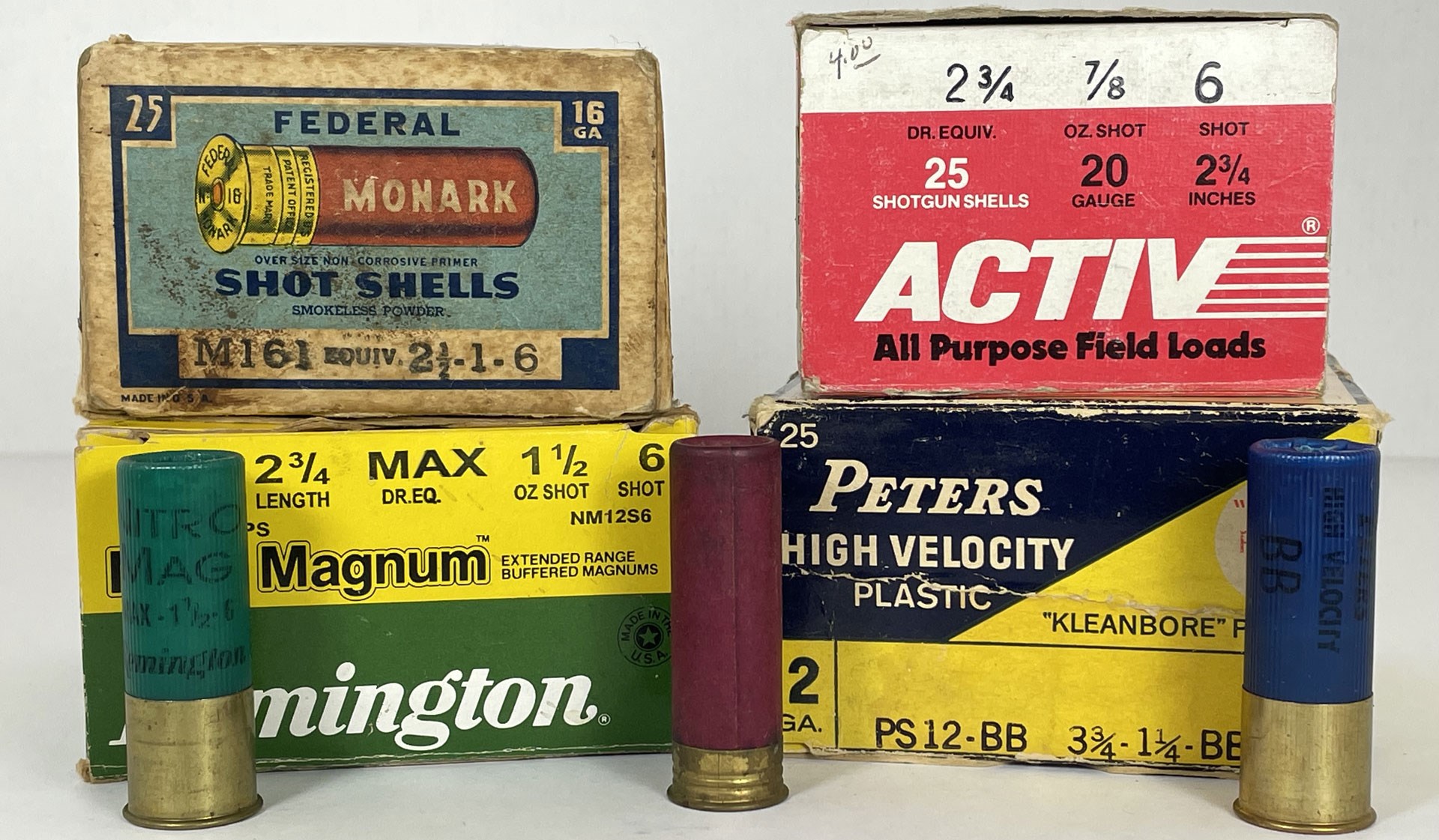
Pure-lead shot isn’t practical and thus is seldom encountered. “Chilled shot” generally has 2-percent antimony. As you’d expect, with little hardener added, the lead-alloy is quite soft and thus deforms readily during the firing process. With the non-spherical pellets rapidly migrating to a pattern’s fringes—thus wider patterns—shells brimming with chilled shot are best suited for close-in and mid-range hunting. A benefit, though, is that the malleability of the pellets allows them to deform upon impact, thereby imparting more of their energy on-target—exactly like rifle bullets. Most utilitarian, or economy, shells are loaded with chilled shot, or an antimony percentage somewhere between 2- and the high 3-percents. This number is seldom disclosed to consumers.
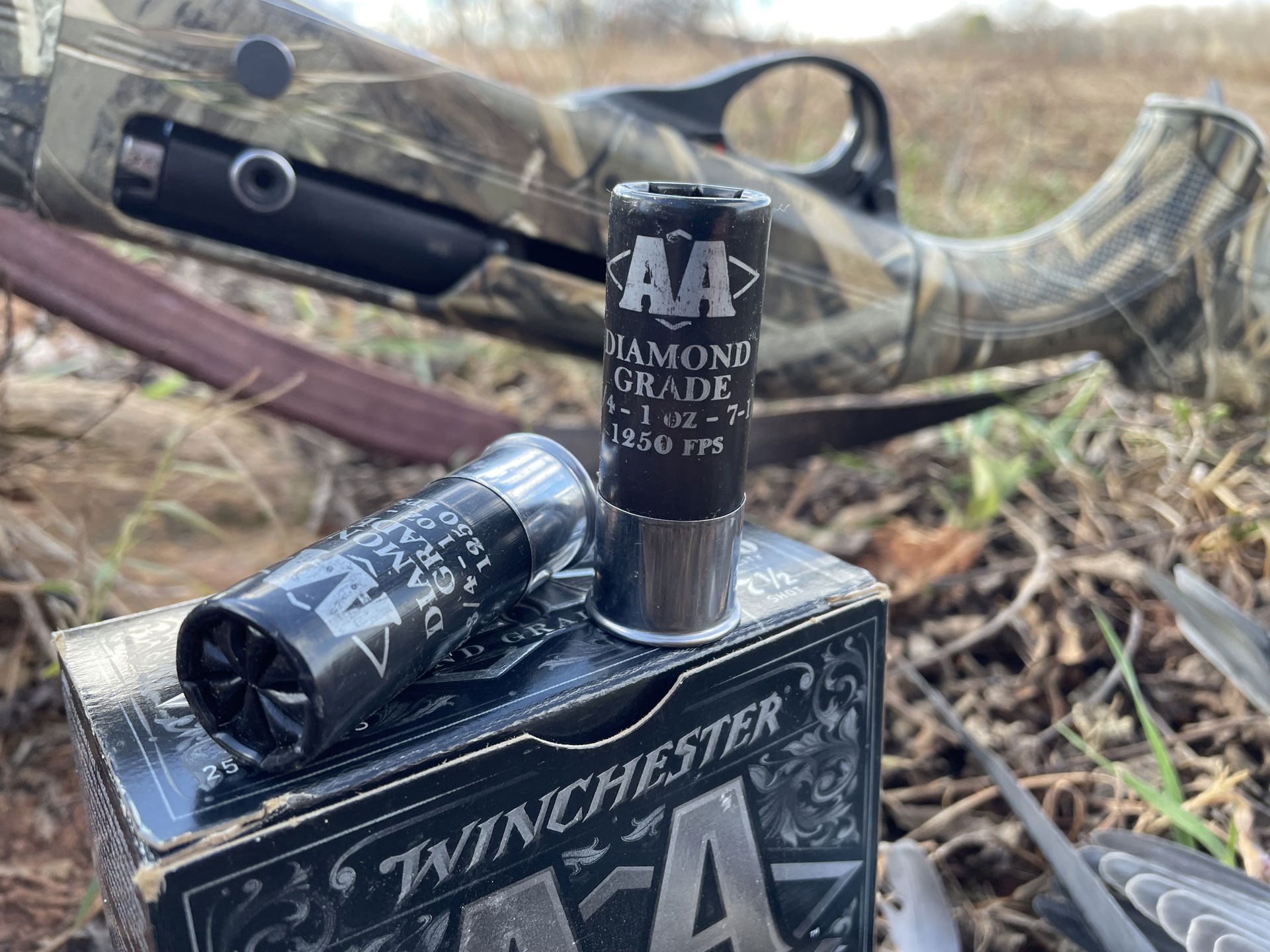
“Magnum” shot, on the other hand, typically contains between 4- and 6-percent antimony, making it significantly tougher. Winchester’s AA Diamond Grade target loads and Super Pheasant Diamond Grade lead the pack, as the copper-plated, lead-alloy shot has 8-percent antimony. The result is improved, predictable patterns and greater reach, hence the reason the best clays shooters, such as the matchless Vincent Hancock, use them. First-class target loads such as Remington STS; Winchester AA; Federal Gold Medal, High Over All and Master Class; Fiocchi Exacta and others use high-antimony shot. Winchester’s Magnum Dove shells contain a blend of magnum No. 7½ and 9 shot—a novel merger. “Premium” field and pheasant loads use magnum shot as the standard.
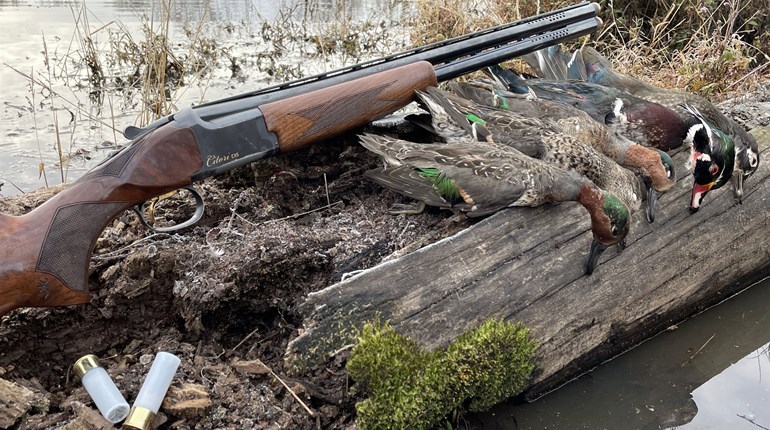
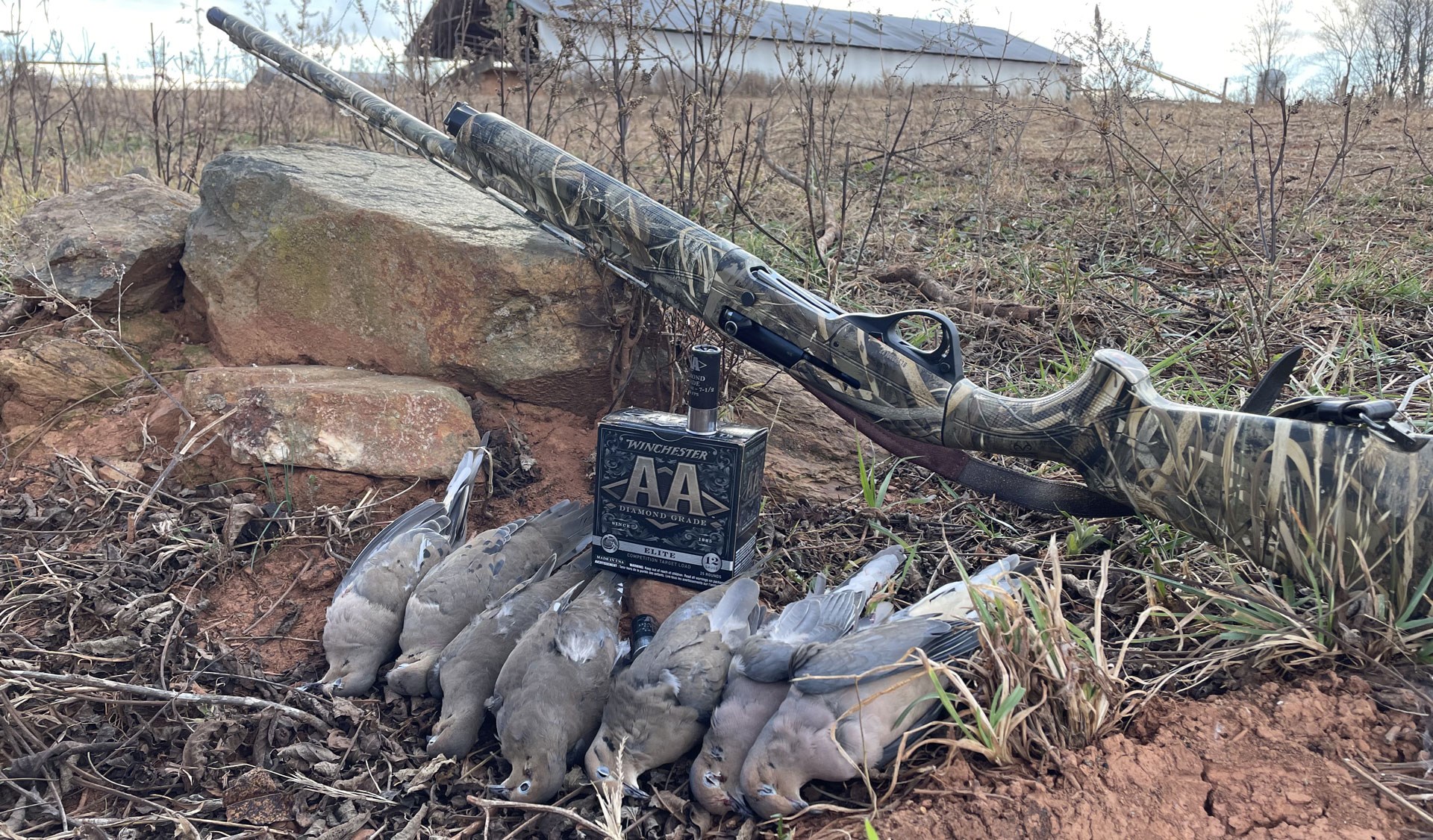
The abovementioned target loads can easily pull double-duty for doves, quail, and woodcock, too; in fact, mere days before this was written, I used 12-gauge, 2¾-inch Winchester AA Diamond Grade ammunition with 1 ounce of No. 7½ shot propelled to 1,250 fps in my Franchi Affinity 3 for Virginia’s second segment of the dove season. It worked phenomenally on even those skittish birds that flew wide of the Mojo Voodoo Dove decoy and its static comrades.
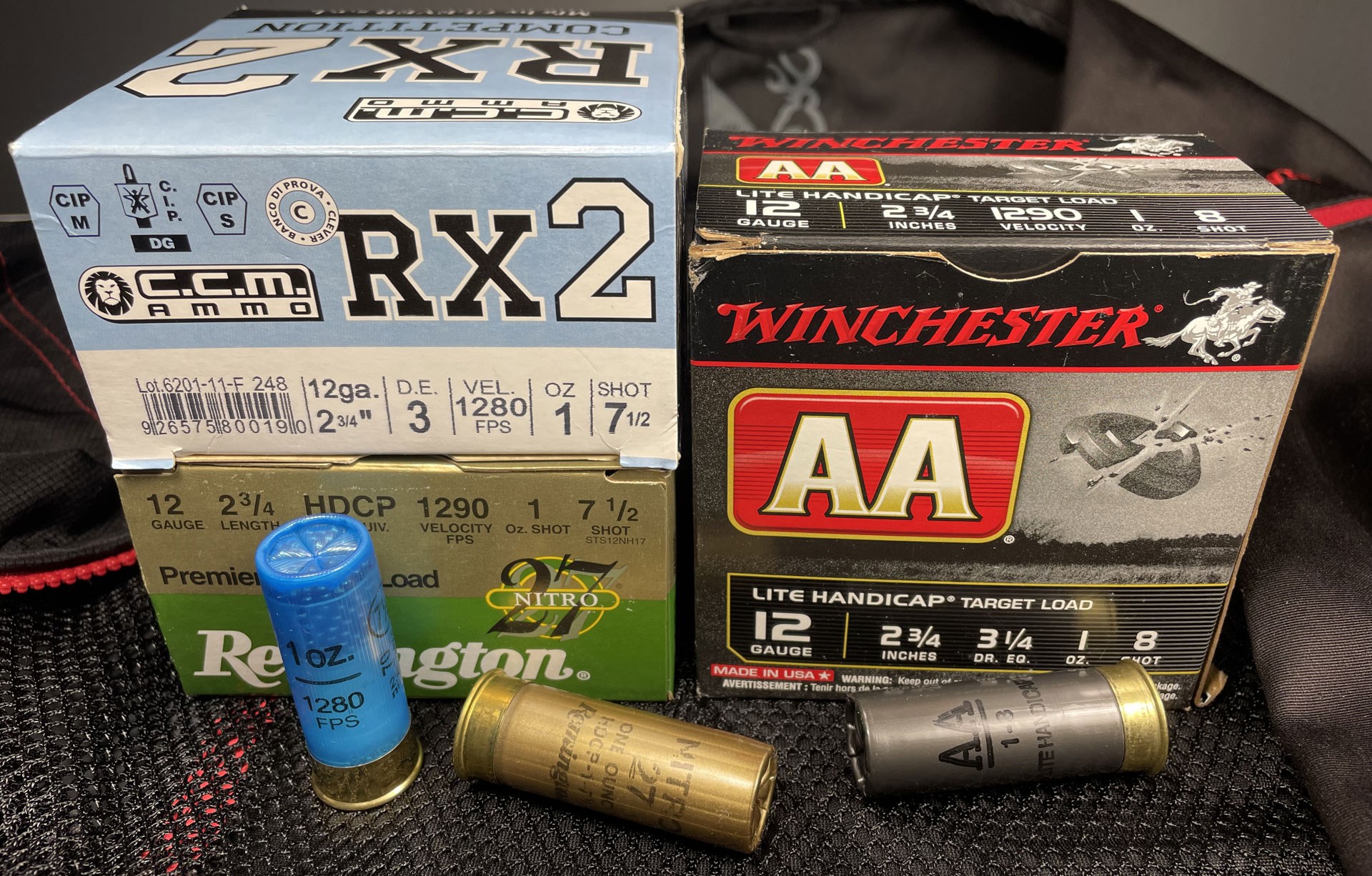
Concerning antimony percentages and cost, pleasant surprises can occasionally be found; in fact, I’ve uncovered target loads using a lead-alloy approaching the 4-percent antimony mark, and yet are priced near identically to those with half of that percentage. However, as a rule of thumb, you get what you pay for. Ammunition makers aren’t charities, and thus the extra cost associated with using extra of an expensive metal is simply passed on to you.
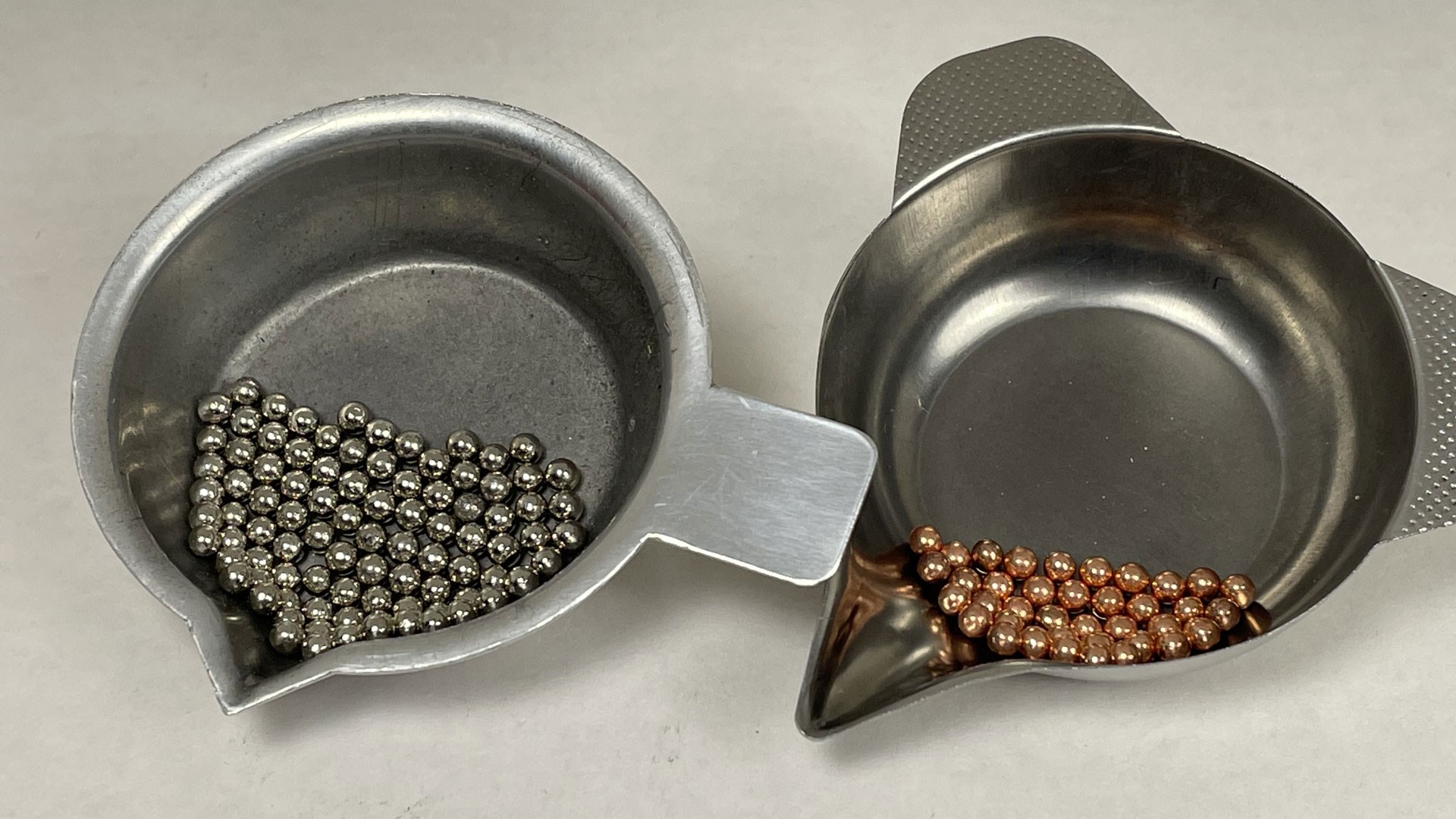
Copper- and nickel-plated shot are the best bets when lead is preferred. Copper-plating shot dates to at least the mid-20th century, and the process hardens the lead-alloy (magnum) pellets for improved patterning. What’s more, it creates a slicker surface, thereby reducing friction and enabling the pellets to penetrate deeper. Feather-snagging is less likely with copper-plated shot and it’s pricier counterpart, nickel-plated shot. Interestingly, nickel-plated shot begins with copper-plated pellets that are then coated with nickel, which further improves penetration—hence the reason that they’re widely considered the best lead-alloy option for hunting (where permitted, of course).
The cost of plated shot is significantly more than non-plated magnum shot. As an example, at MidwayUSA.com, Federal’s Wing-Shok Upland, a 12-gauge, 2¾-inch shell with 1 3/8-ounce of copper-plated shot, lists for $38.99 per 25. Meanwhile, the maker’s Hi-Brass Upland load, which is comparable—it uses 1¼ ounce of non-plated shot—has a retail price of $25.99 per box. Is it worth the extra $13 per box? Considering what goes into hunt planning (especially when traveling great distances), are you willing to sacrifice success for an extra $.52 (per shell)? Didn’t think so. Again, premium isn’t always needed, but it’s never a bad decision.
Shot: Leadless Options
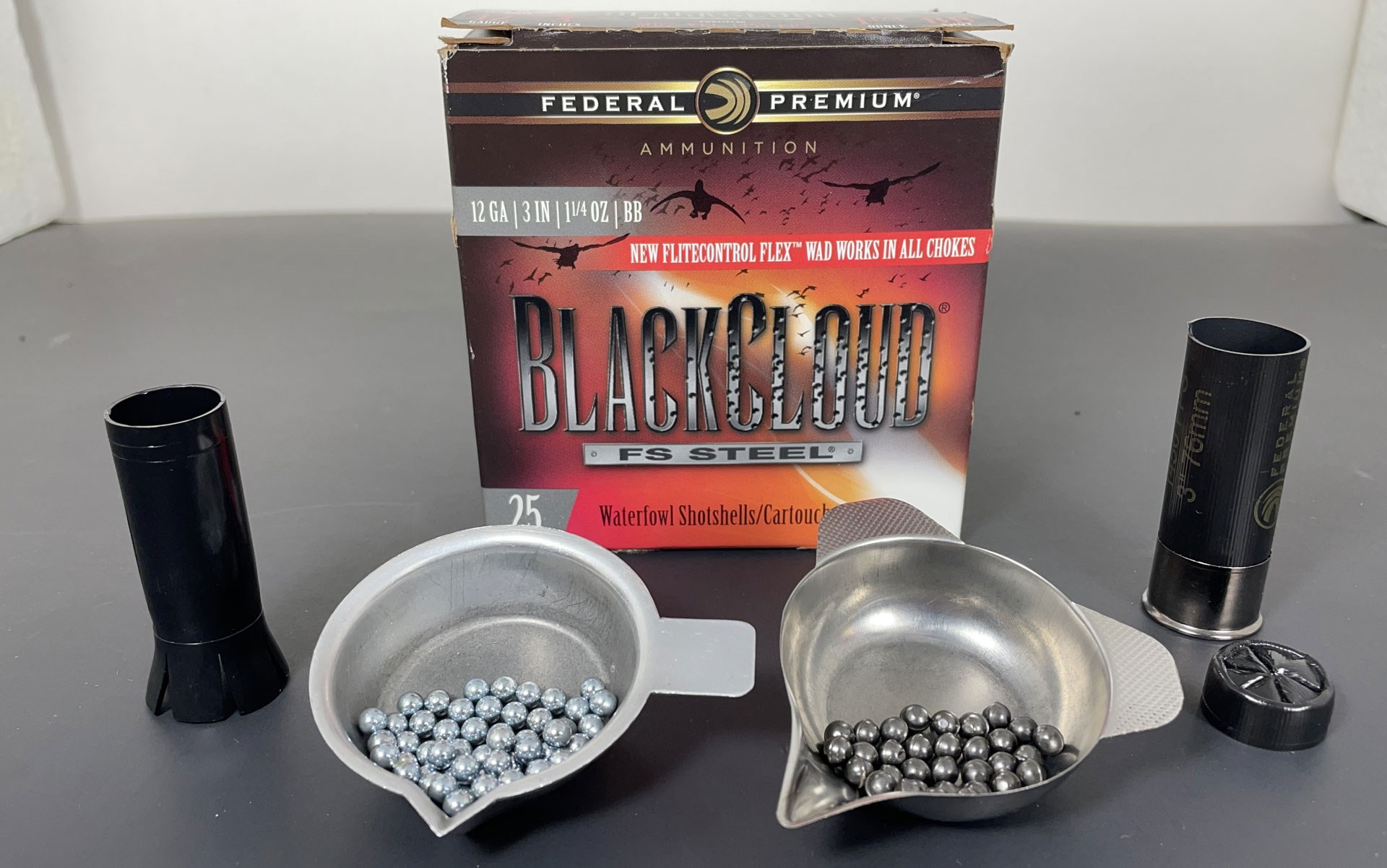
With the increasing ban—whether by law, or landowner or hunter preference—on lead shot, alternatives must be sought. Consider all of these to be “premium” by default. The most economical option is steel. As waterfowlers know well though, steel isn’t the best substitute. Thanks to its low density—about 7.85 g/cc—steel’s velocity and energy loss is rapid, thereby shortening range. Yes, you can increase its speed and/or pellet size in an attempt to counteract it’s deficiencies (to a point), but it’s not ideal. Dedicated upland loads featuring steel are available, such as Federal’s Upland Steel and Prairie Storm; Boss’ Unleaded; Winchester’s Xpert Pheasant, Super-X Game & Target (steel) and E-Tech Game & Target; as well as the swelling number of steel target loads that can serve two roles. Still, for the tougher-than-nail species, better options exist.
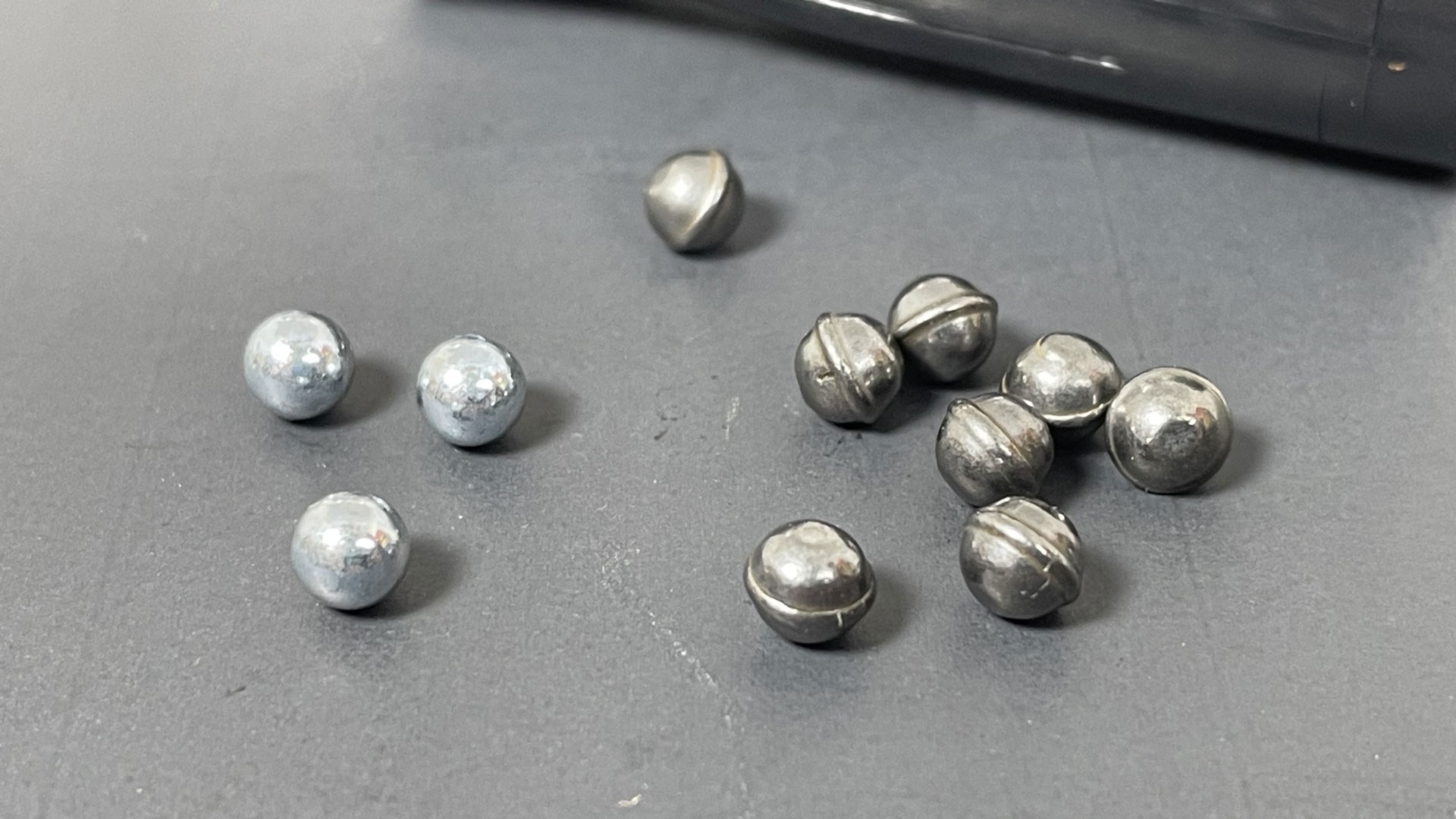
It must be mentioned here that Federal’s Prairie Storm uses a mixture of spherical steel and FliteStopper (FS) pellets, which have a raised ring circumventing the shot’s midsection. These atypically shaped shot migrate to the fringe of the pattern but create devastating wound channels. The result: rapid expiration of game. Federal also uses its renowned FliteControl wad. Of course, such shells are expensive, as they’re a true “premium” product. Be aware of value-priced steel, as it tends to be inconsistent in size and shape. FS lead shot is made by Federal, too.
But, there’s a problem. Most leadless, non-steel alternatives are tungsten (19.3 g/cc) based or use bismuth (9.78 g/cc), and those metals, by in large, are imported from China. Our strained relations with that nation, along with its self-imposed limits on exporting tungsten, have led to shortages and significant price hikes. Some companies, such as Boss Shotshells, have switched from its bread-and-butter material, bismuth, for the consistency of American-sourced copper, which has a density of 8.93 to 8.96 g/cc, depending on the source. All of these metals create pellets that are superior to steel. If lead-alloy shot isn’t an option, and tight patterns, extended reach and high on-target energy are your non-negotiables, opt for tungsten based shot or a blend of TSS (18.0-18.1 g/cc) and steel.
Wads: Old Versus New
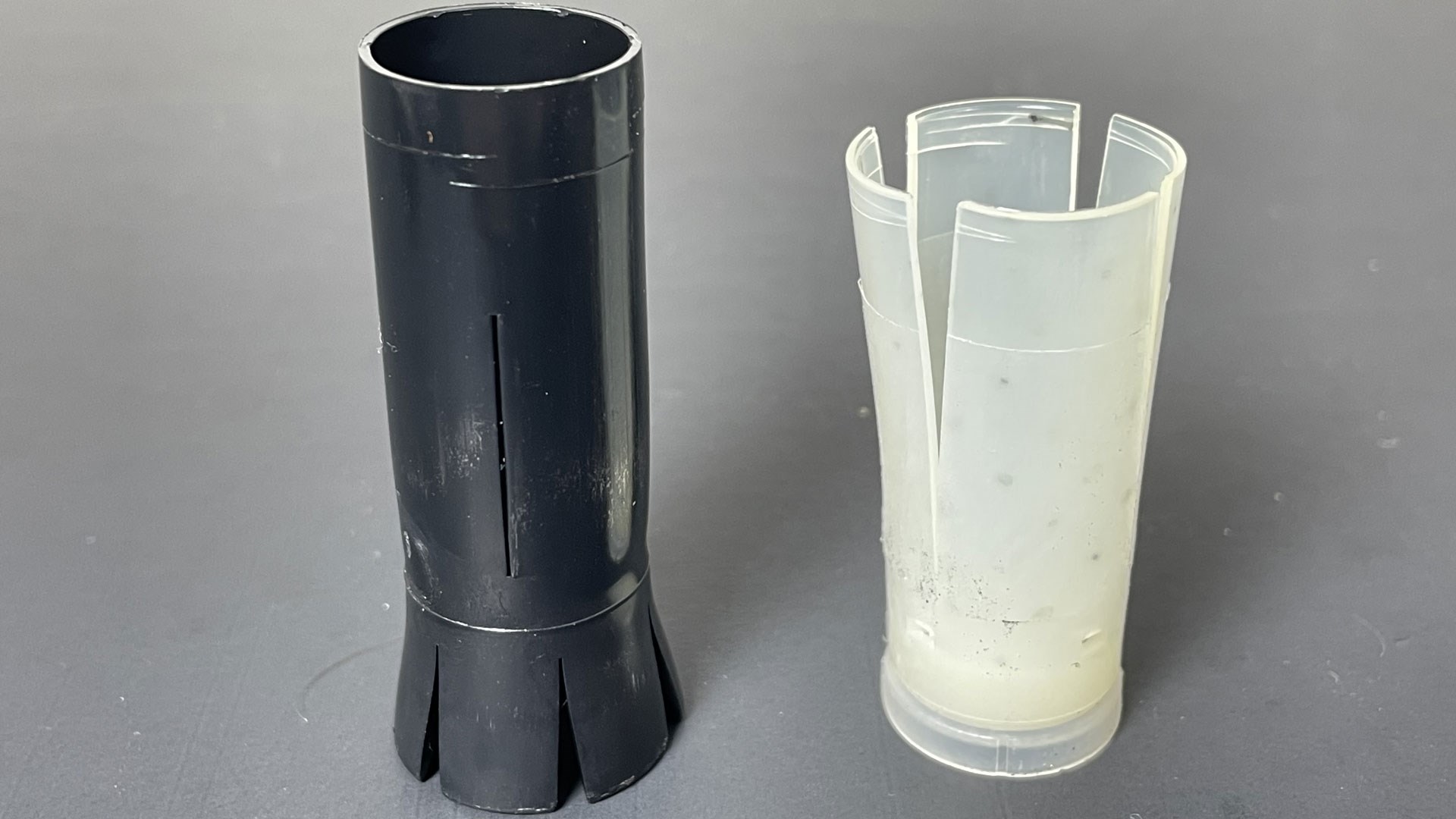
The typical plastic wad features as few as two petals and, outside of a few used in target loads, upward of four. Upon exiting the muzzle, these petals peel back upon themselves, or bloom, to facilitate a clean release of the shot. Most upland loads—especially when lead-alloy shot is used—feature these traditional-type wads. Exceptions include Federal’s FliteControl and Winchester’s Diamond Cut Wad, the latter of which would be encountered if steel waterfowl loads are crossing over into the pheasant fields.
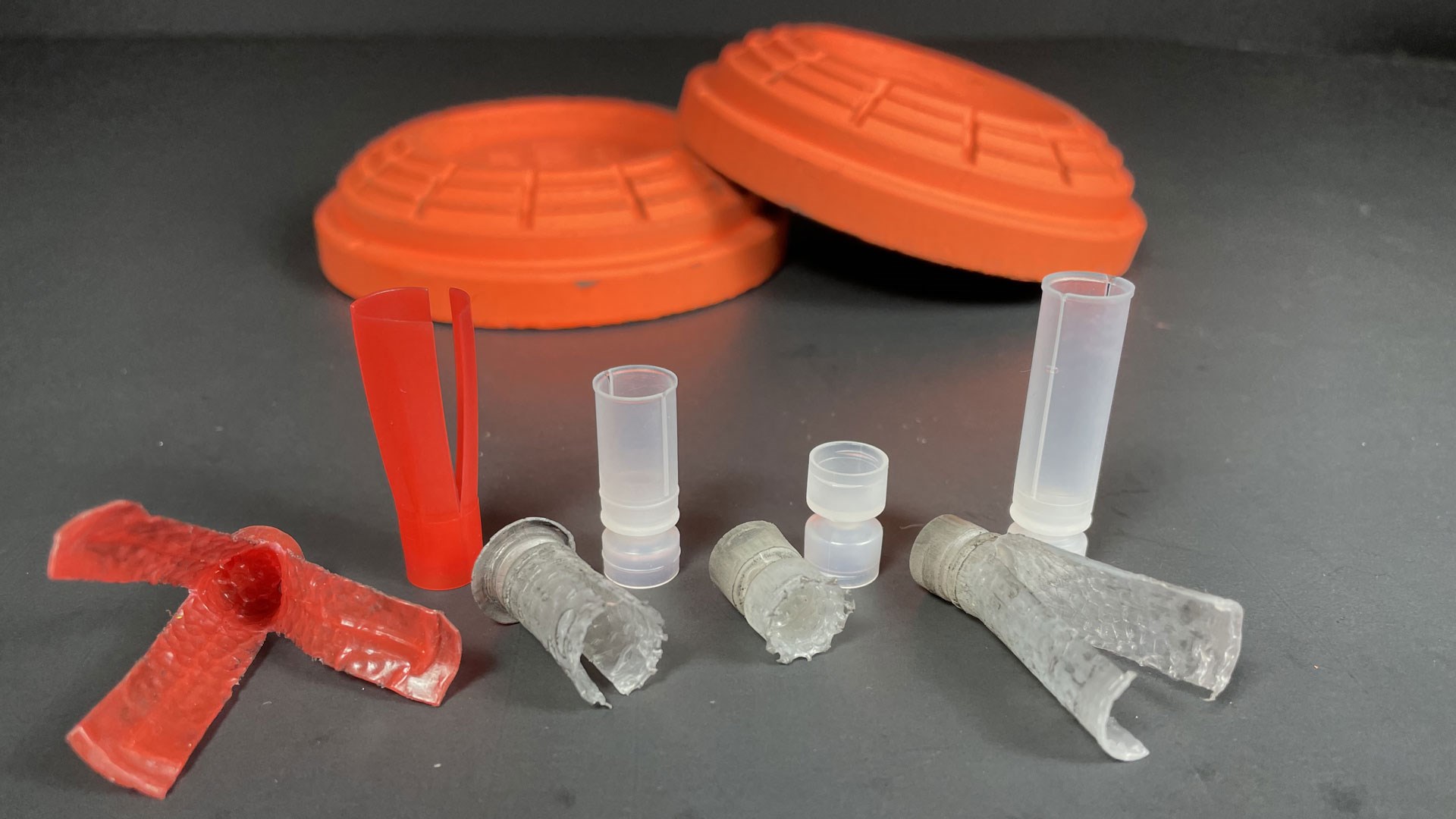
Besides petal count and method(s) to slow forward momentum, wad design differs with regard to length (overall and shotcup), crush section (if present) and gas seal. Material and thickness of the shotcup is dictated by the pellet-making material; shot that is made from steel or tungsten-based require extra width to protect the barrel and choke from scoring. TSS shot is particularly damaging if not contained properly. Spreader wads are especially helpful for close, fast-moving species, such as quail and woodcock, but only when dogs aren’t present or shots are carefully chosen.
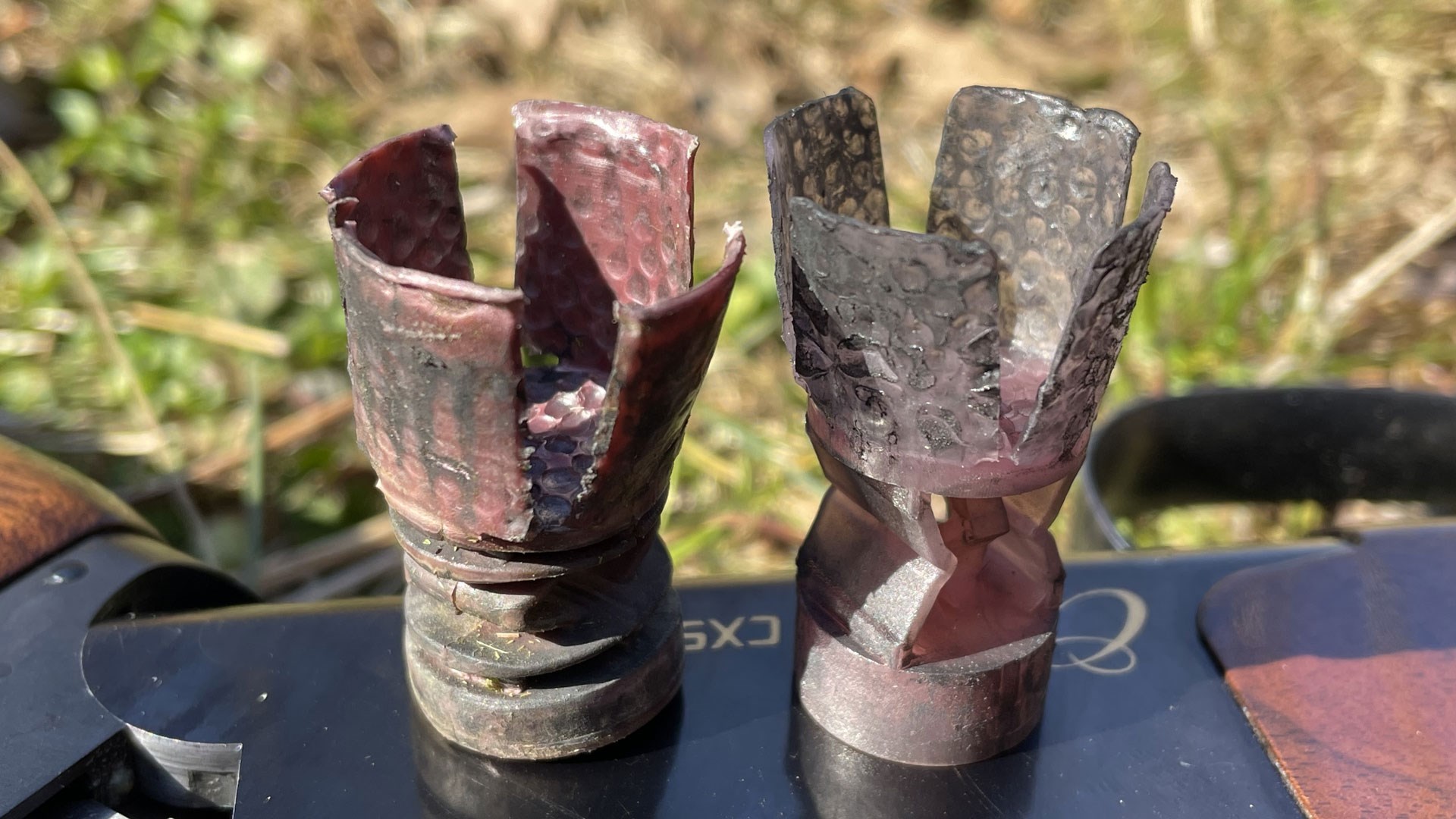
There is movement from across-the-pond making its way to the American countryside, and that’s the use of non-toxic, biodegradable materials. Due to the exceedingly long life of wads and their decomposition into microplastics, increasingly shooters, hunters and landowners alike are seeking environmentally friendly alternatives. Several materials are currently being offered, with some even being water soluble. Advancement has been rapid.
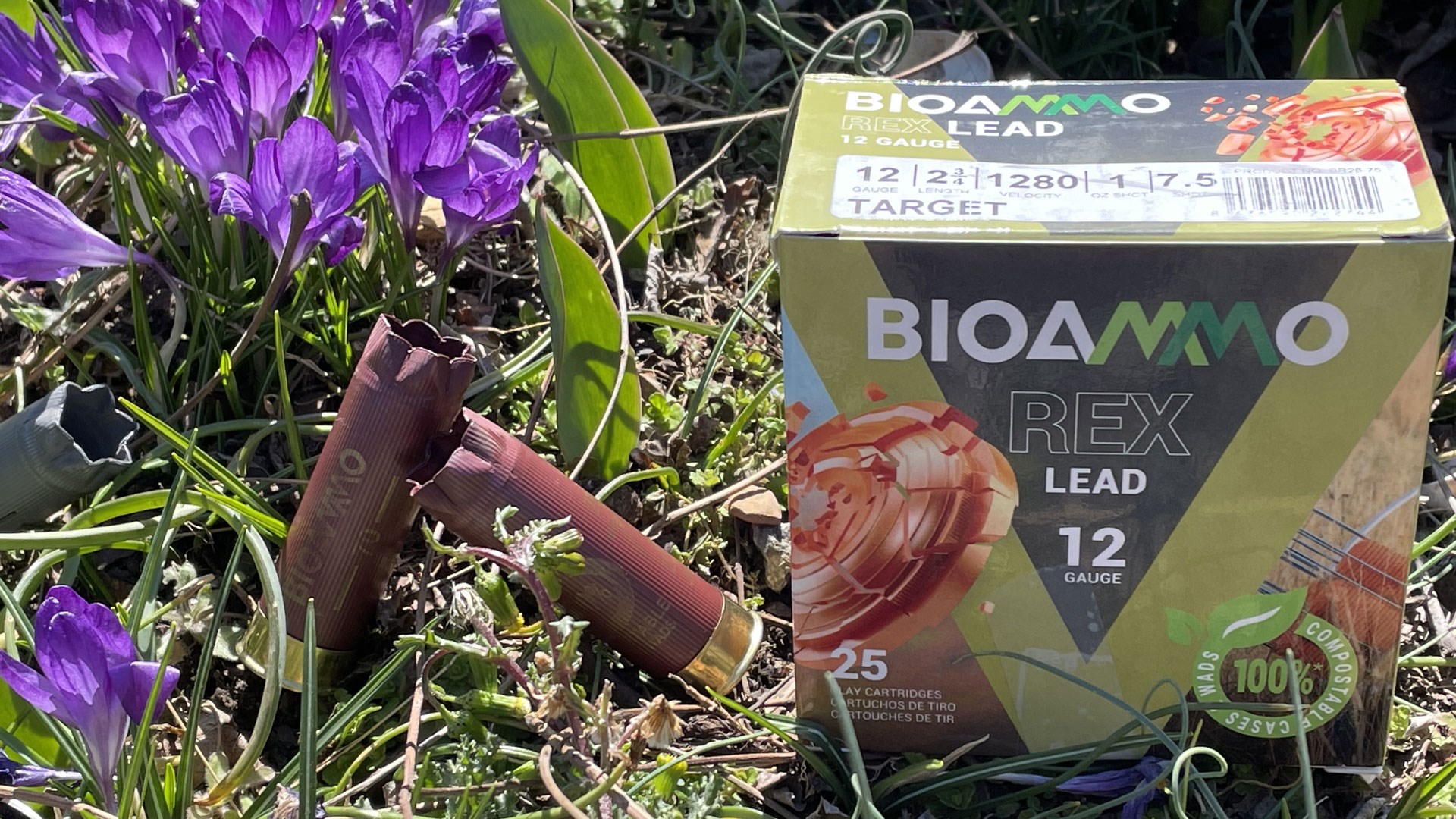
Naturally, the newfangled wads are found in higher cost (a.k.a. “premium”) shells, but the benefits are obvious. For the hunter seeking permission, this can be a great selling point, too. Just remember that the hull isn’t compostable and must be properly discarded. BioAmmo challenges this truism, though, as it’s hulls and wads are compostable. Couple steel shot and these ecologically friendly wads and/or hulls and you’re leaving much less waste behind.
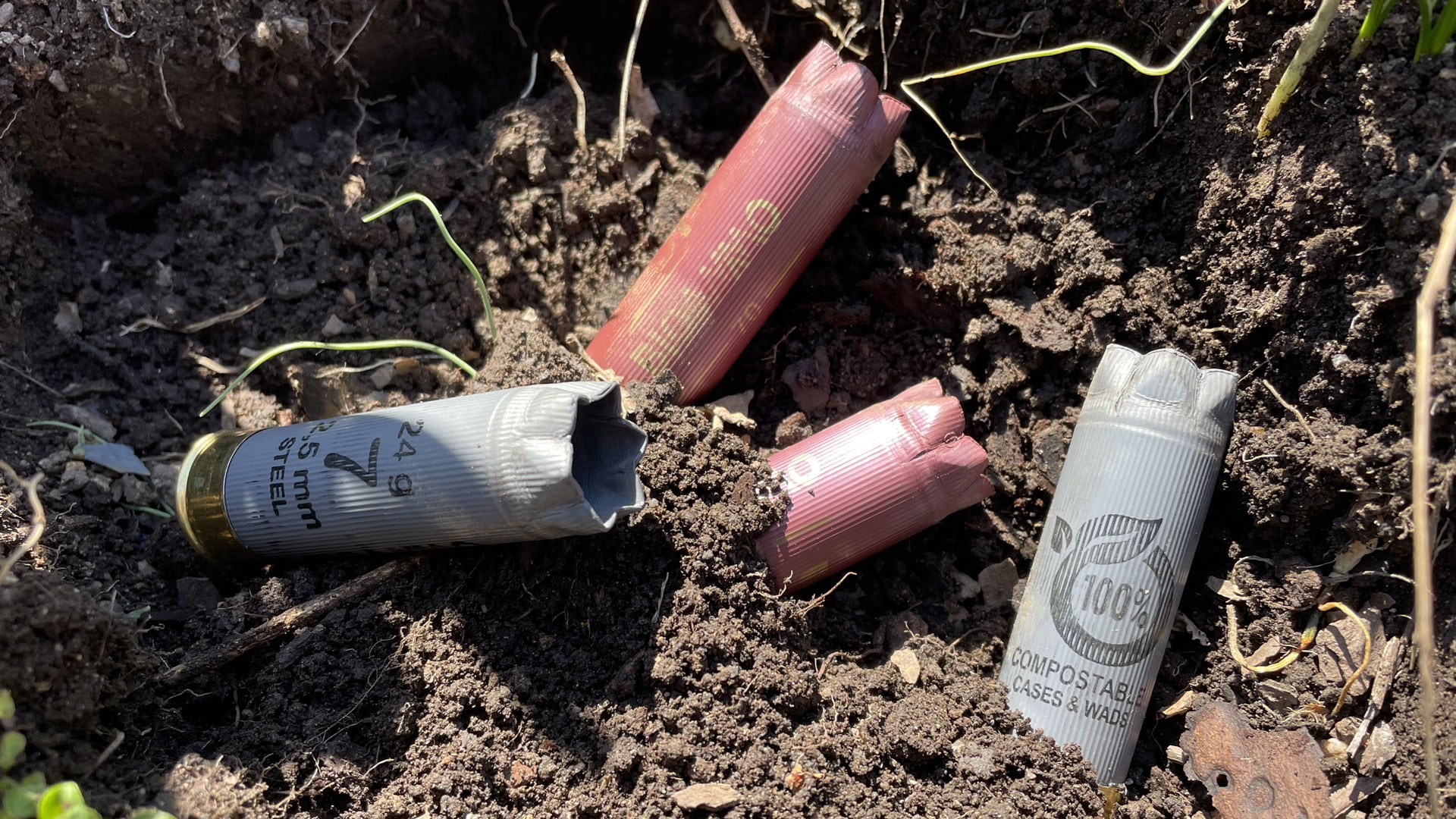
The Hull Truth
When paper hulls were in widespread use, the height of the brass mattered. After all, the metal prevented burn-through and aided extraction; there was simply less paper to swell and lodge in the chamber if wet. In modern plastic hulls, head height is solely for marketing. Still, “high brass” denotes more power, though handloaded shells of the same design with different head heights can be loaded equivalently. So, don’t get caught in marketing.
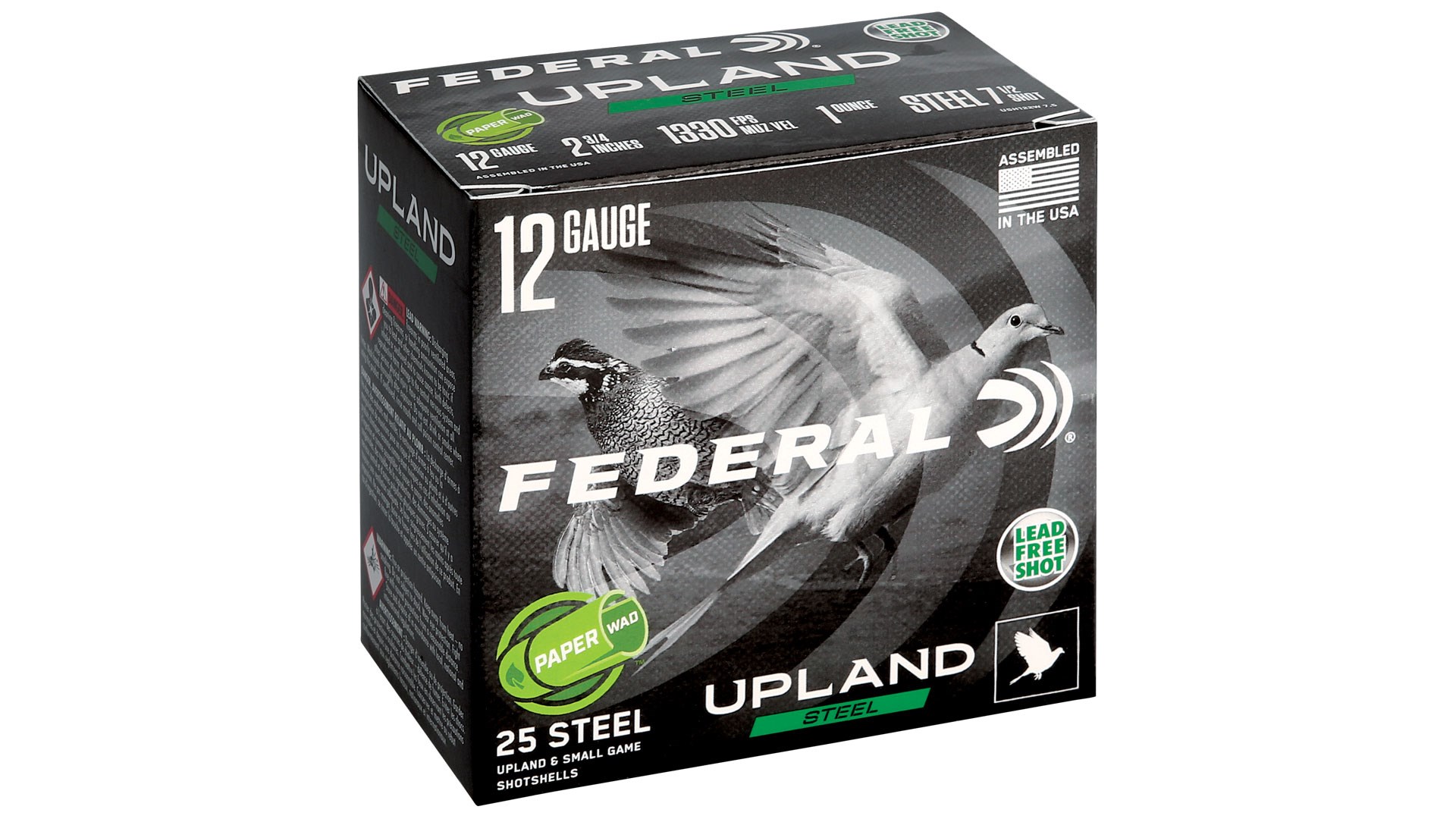
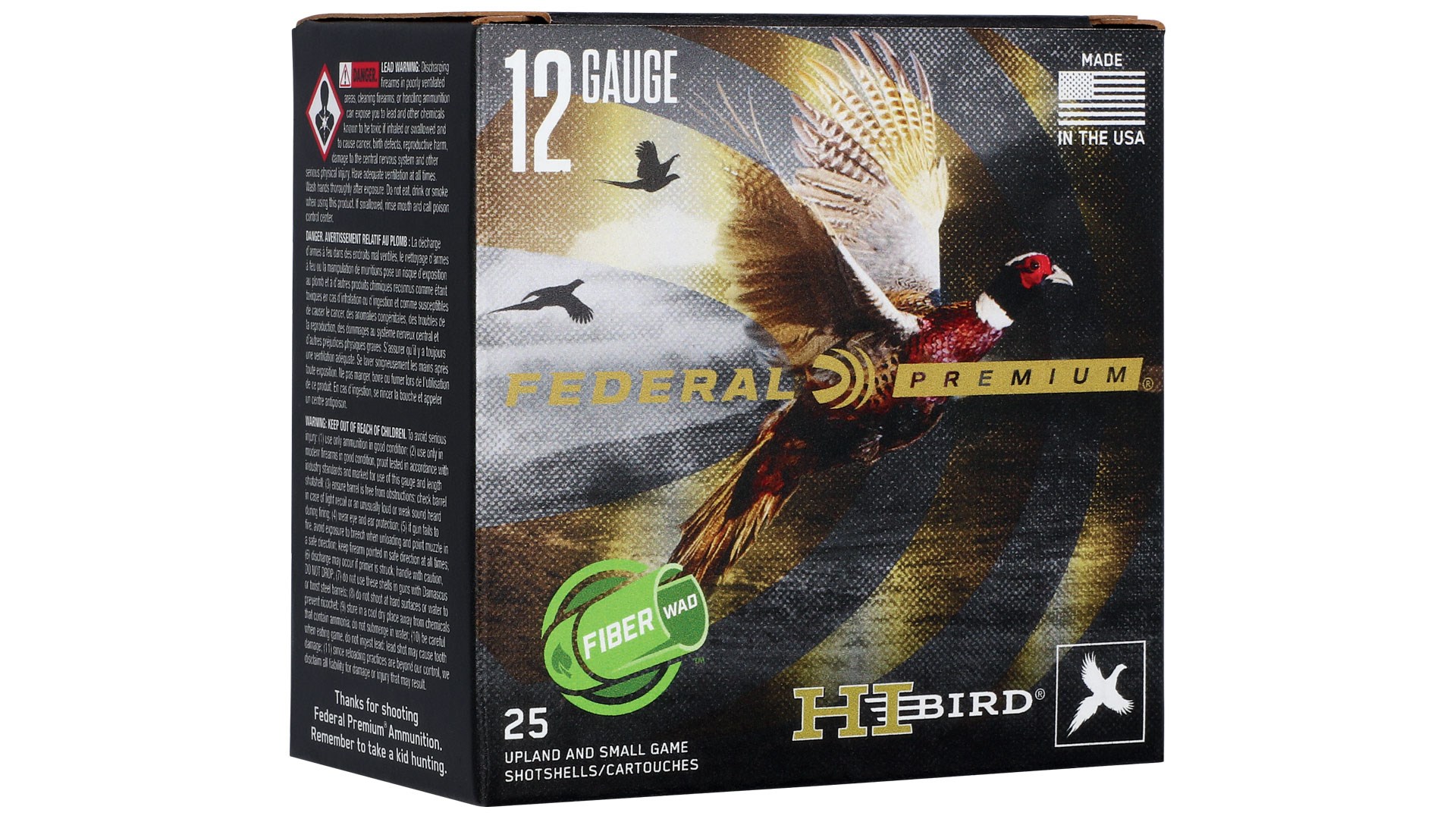
Concerning paper hulls, few U.S. companies manufacture them, but they’re an environmentally friendly option—particularly if a fiber wad is used in conjunction—as paper readily breaks down when exposed to the elements. Given the time-consuming manufacturing process, shells with paper hulls are notably more expensive.
Lastly, know that whereas in yesteryear the “brass” was indeed made from that material, most shotshell heads are now simply brass-washed steel. Use a magnet and you’ll quickly realize this fact. All-brass heads are a rarity but offer advantages, including being more resistant to corrosion and easier reloading. Nickel-plated heads also provide enhanced corrosion resistance, and like those made from brass, are found on “premium” goods. You’re likely not buying the shell for the configuration of the head, but an improved design is desirable.
Extra Touches & Final Thoughts
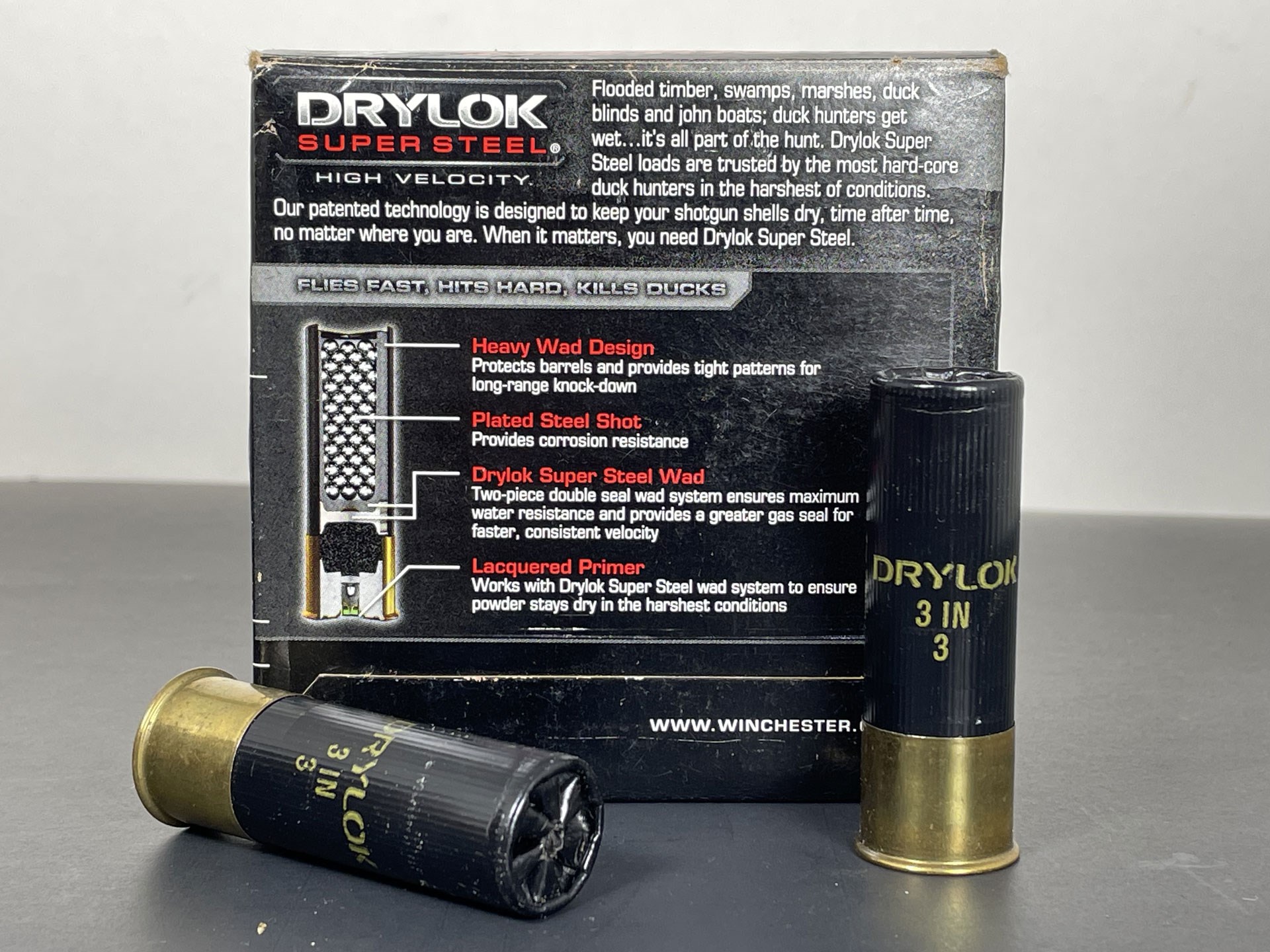
Just as meticulousness is ordinary in luxury vehicles, it can be found in first-class shotshells as well. For instance, to protect the lead-alloy pellets from deformation or to improve simply patterns with leadless shot, polymer buffering or another filler is added. Some loads even have measures taken to prevent intrusion by water, improving reliability.
It should be abundantly clear by now that premium upland loads offer clear advantages over their no-frills counterparts. They are more reliable, pattern more consistently (not to mention better), have greater reach, and offer improved terminal performance due to the pellets’ augmented penetration and/or shape (Federal FS). Whether or not you truly need them depends on the specifics of the hunt; sometimes being frugal is fine; other times it’ll sacrifice success. You can roll the dice, or simply eliminate the “what ifs” by chambering premium upland loads.