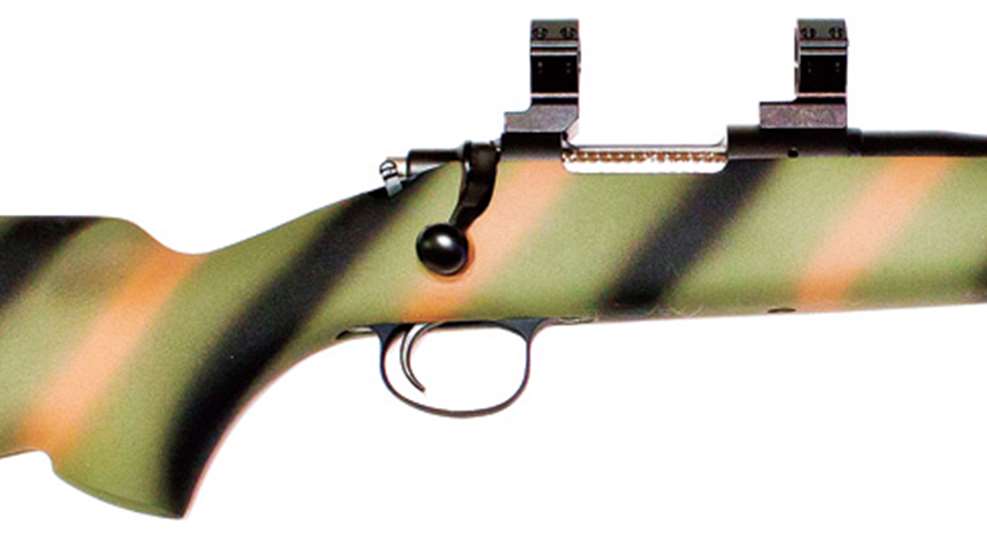
As much as firearms have changed since our ancestors crossed the Appalachian Mountains carrying flintlocks and walked into a new world full of wild critters and Shawnee Indians, a hunter's desire for a rifle that's easy to carry and capable of knocking the cents off a nickel at 100 paces has not. In 1984 a high school shop teacher conceptualized a design that would forever change hunting rifles. From his garage, nestled between the Monongahela and Ohio rivers—waterways once traveled by hordes of mountain men, trappers and homesteaders—Melvin Forbes built a bolt-action rifle that weighed less than 5 pounds. It was the origin of the modern, lightweight, bolt-action hunting rifle; virtually all similar rifles from that day forward have been inspired by his design. In fact, Forbes received NRA Publications' prestigious Golden Bullseye Pioneer Award this year because of his influence on the entire lightweight hunting rifle industry.
On the shoulders of this rifle, a company known today as New Ultra Light Arms (NULA) was founded. The original rifle was chambered in 6mm Rem., but the magazine box was 3 inches long, making it perfect for cartridges like the .257 Roberts and .284 Win. The barrel was slim and trim and the action was sort of a miniaturized version of a Remington 700. The bolt was just as slender and similar to one from the Sako Vixen rifle. It utilized a Sako-style extractor and a Remington-type plunger-ejector.
The stock, and the way the stock was almost integral to the barreled action, gave the rifle its magic and gravity-defying heft. Ignoring the conventional approach of building synthetic stocks using technology from the fiberglass boat industry, this hillbilly utilized aerospace synthetic material manipulation techniques. By weaving Kevlar and carbon fibers together he created the most rigid and lightest rifle stock ever manufactured. It's as rugged as a Shawnee war club but as light as an eagle feather tied in a brave's hair.
Forbes is a hunter, a hunter who prowls the steep hillsides of West Virginia. He specifically designed his concept rifle to meet the needs of genuine hunters. It had to be lightweight, dependable and always accurate. Forbes found the perfect combination by combining a meticulously machined action and barrel to a stock that's stiffer than steel. Today, he's been building that rifle for 25 years. The only modifications have been slight design tweaks so it perfectly fits different size cartridges.
NULA differentiates between its cartridge-specific actions by model number. The model number represents the weight of the action in ounces. For example, an action sized for the .308 Win. is the Model 20 because it weighs 20 ounces. A .30-06 action weighs 24 ounces so it's the Model 24. These two models are the bulk of the rifles NULA sells but the most overlooked is probably the Model 20 Short.
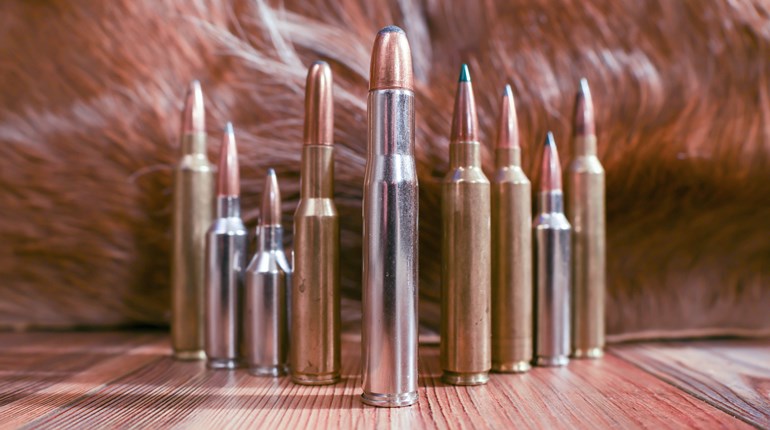
The Model 20 Short has a magazine box measuring 2.5 inches long. Originally designed for the 7mm BR, it works perfectly with other diminutive cartridges like the .204 Ruger, .22-250 Rem., 7.62x39mm Russian and even the new .30 Rem.AR. Most manufacturers offering rifles chambered for cartridges this size simply block the magazine box of a rifle they already manufacture for the .308 Win.
Forbes' overall approach is basic. He believes that the exact and cohesive mating of materials produces the perfect hunting rifle. He believes in no wasted space and in no unnecessary weight. This is why every rifle NULA builds is—for lack of a scientific description—just the right size and weight for the cartridge it's chambered in and for the hunter who will carry and shoot it.
NULA rifles are fundamentally built from the front guard screw outward. That's the point where the rifle balances. It's also the point between your hands when you have the rifle shouldered. The Model 20 Short, like all other NULA rifles, is not muzzle heavy, so you can hold on target until the shot is presented. And it's not butt heavy, which makes a rifle difficult to keep on target.
My test rifle is a NULA Model 20 Short chambered for the .223 Rem. It has a No. 1 contour, 22-inch barrel with a 1:8-inch twist so long, heavy bullets can be stabilized. The barrel is from Douglas, another West Virginia maker. The trigger is built by Timney, but it's a Forbes design. When you place the rifle on safe the bolt is locked down. This keeps it from accidentally snagging and lifting while you're crawling up or falling down that mountain. But if you push down on the safety when it's in the rear position the bolt is freed to allow for safe unloading.
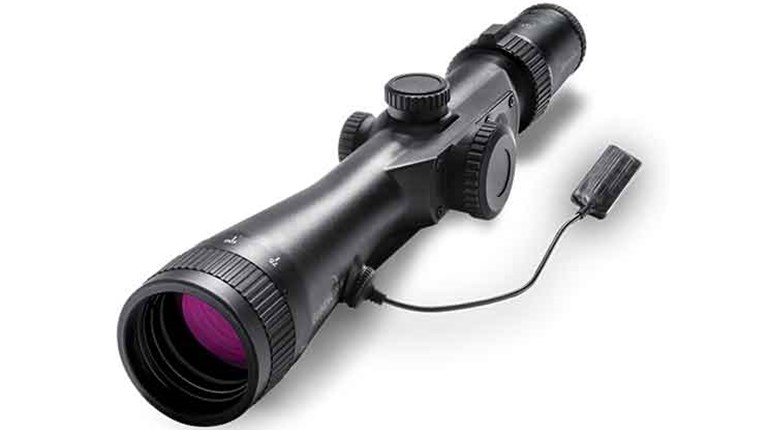
I mounted a Leupold VX3 4.5X-14X-40mm riflescope in the 2-ounce, Talley Lightweight rings that come with every NULA rifle. (They are a Forbes design, too.) From a sandbag rest, I fired 30 five-shot groups (five groups with six different loads). Bullets ranged in weight from 45 to 75 grains, and the overall group size averaged .91 inch! This was not a gentle test where the rifle was babied. The barrel was not allowed to cool between groups and it was never cleaned. Other than when I switched targets halfway through the test, I never stopped firing. Groups remained small and point of impact did not change. As a matter of fact, the point of impact for all six loads was within 1 inch.
How can a rifle this light, with a pencil thin barrel, shoot this consistently? It's the precision machining of actions made in-house to a stock prepared in a still-undisclosed method that no one else has been able to copy. This mystifying stock is actually built around the barreled action with full contact from the tang to the tip of the forearm. The stock actually adds stiffness to the action and barrel and mitigates barrel whip, action movement within the stock and uneven pressures.
The Model 20 Short handled smoothly and surely when shooting offhand, too. My 11-year-old son even found it lightweight enough to manage. This would make a great combination varmint/ deer rifle, especially since it can handle the heavier, premium bullets that are proven deer killers even in .223. It would also make a great youth gun, if you deem your child's grades worthy of the custom-rifle price. NULA can build the stock with a thin butt pad to a minimum length of pull of 12.25 inches. Later, a thicker pad can stretch it past 13.25 inches.
Does the high performance and uniqueness of these hand-crafted rifles have a downside? Everything has a downside. Recoil with a featherweight rifle, of course, is snappy. And then there is the price—$3,000—and the wait—six to eight months.
But be warned, Melvin will tell you two things when you write the check. First, while patting you on the shoulder he'll say, "Most of my clientele are return customers, so start thinking about your next one." Then, with a grin, he'll add, "You know that's still my rifle, you're just paying me to let you use it." That's why I and a lot of other hunters call our favorite rifles "Melvin Rifles."
Type: bolt-action repeating centerfire rifle
Caliber: .223 Rem. (tested), any centerfire cartridge less than 2.5" OAL
Barrel: 22" (tested); Douglas button-rifled, chrome-moly (stainless available)
Trigger: NULA-designed Timney
Magazine: blind box, 5 + 1 capacity (.223 Rem.)
Sights: none; drilled and tapped
Safety: two-position
Stock: hand-laid Kevlar and carbon fiber (painted on request); LOP per customer request
Overall Length: 411/4" w/137/8" LOP, 22" barrel
Weight: 5.25 lbs. (w/scope rings)
Metal Finish: matte
Accessories: hard case and scope mounts
MSRP: $3,000