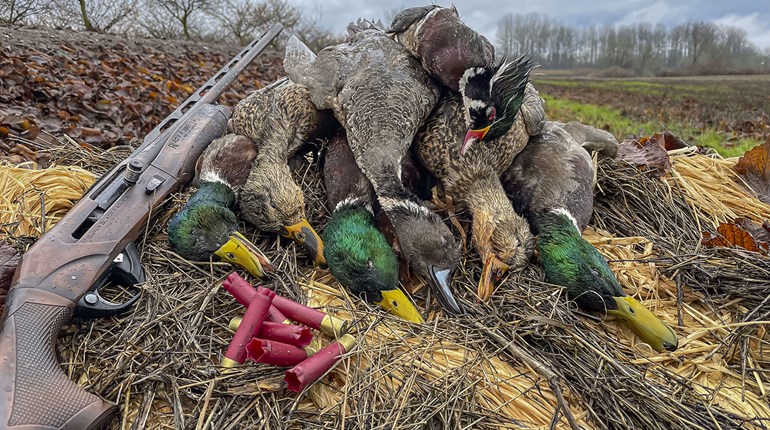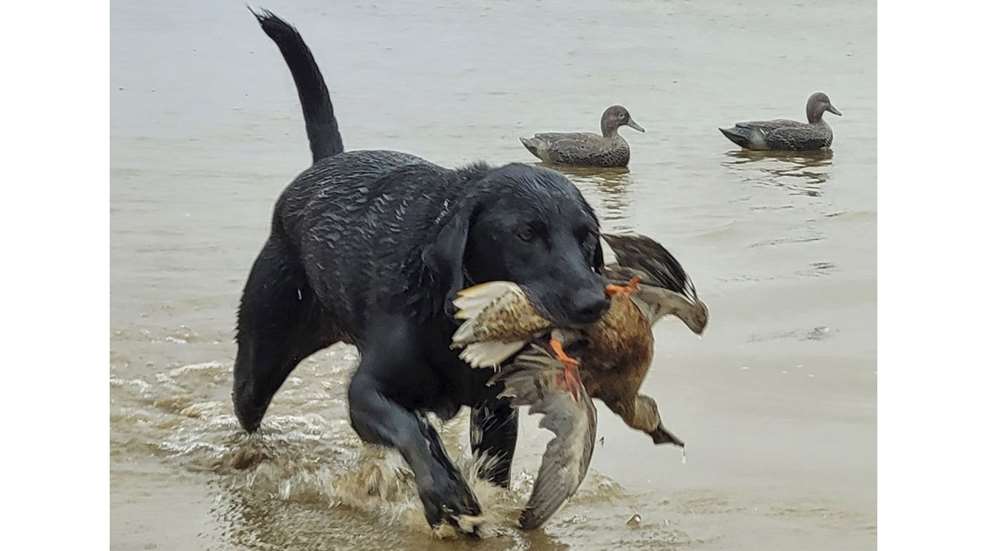
Labs really are the do-it-all hunting dogs—the true utility player when you have multiple hunting preferences. We got our Lab, Fender, almost eight years ago, and while his day job is a family pet in constant search of a snack and a belly rub, there has never been a more driven field dog when there’s a bird to bring back. By 11 months, Fender had completed basic obedience training, had been around guns and he could retrieve launched bumpers, but he’d never worked live or even dead birds. Nonetheless, my breeder encouraged me to bring him to the blind anyway, and that began his hunting career. All it took was watching the other dog get ducks for a couple hours and he was ready to go. We gave him a try, and he bolted out like a champ, but got confused in the decoys. After I walked with him to the edge of the layout and he saw the downed duck, the light went on. That was never a problem again! Fender has since marked every downed duck, never failing to bring them back.
A couple years later, my duck-hunting buddy invited me to hunt quail at his place. Fender had never seen or smelled a quail, but he was able to sniff them out right away. Pointing was not his strong suit, but he had the flush part down. My son knocked down the first quail, and Fender brought it right back! That must have been beginners’ luck, I thought. He could see where it went down, but surely he’s not a quail dog too? A few coveys later a bird went down behind a tall hedge. The guide’s two dogs trotted after it, and Fender followed. Guess who came back around the hedge with the quail? Fender! Another game bird conquered.
That same knack for getting ducks and quail has extended to pheasants and doves—he had never seen them before, but brought them back when they went down a few rows away, charging them down in the woods, and generally never giving up. He has followed ducks diving away from him, found lost teal across ditches and everything in between.
The same was also true with hand signals. Fender was never trained on them, but one day out of curiosity while working bumpers, I stopped him with a whistle command and yelled “Over!” waving to my left. He just did it! Once he got confirmation I was helping him find his prize, he just trusted me and started going where I told him the bird or bumper was.
Eight years later, I thought I’d seen all the hunting tricks this dog had, but apparently I had not. I was deer hunting last fall, and I had a buck step forward right as I shot him with the crossbow. The bolt went straight through, but it was too high and back. There was no blood. After an hour I called my wife: “Bring Fender. He’s my only chance to find this buck.” Now, Fender has seen many deer and has been around them at the skinning rack, but he’s never blood-trailed one, and this deer didn’t even leave any blood to find. But I let him sniff the bolt, and he headed off in the general direction the buck went. About 150 yards away, he stopped and was snuffling around. He tracked it to the one blood spot that deer had left! I wish the story had a better ending, but unfortunately we never found any more blood or that deer. I can say with confidence, though, that without my utility player, Fender, I would not even have found that. He earned some steak that evening.
Watching him snuggle down on the bed at night, you would never know he’s a high-drive field dog—truly an amazing dog, pet and companion for the whole family, and a testament to the species. If you want one dog that can do it all and will never quit, get a Lab!