Most of the country’s big-game seasons are winding down or are closed by now. If you did not get enough hunting in this year, the closure may mean some frustration; if you got enough hunting in, you’re probably looking forward to being able to sleep in a bit. In any case it’s not too early to start scouting for next year.
Scouting might not be the best term here. More accurately, it is a lot like taking inventory. Which bucks survived the hunting season? How many are “up-and-comers,” and are there some new faces—racks—in the crowd? Of the ones that survived, do any of them look to have been injured during the rut, and do those injuries pose a threat to their winter survival? All of this is good information to have as you evaluate and plan your hunts for next year.
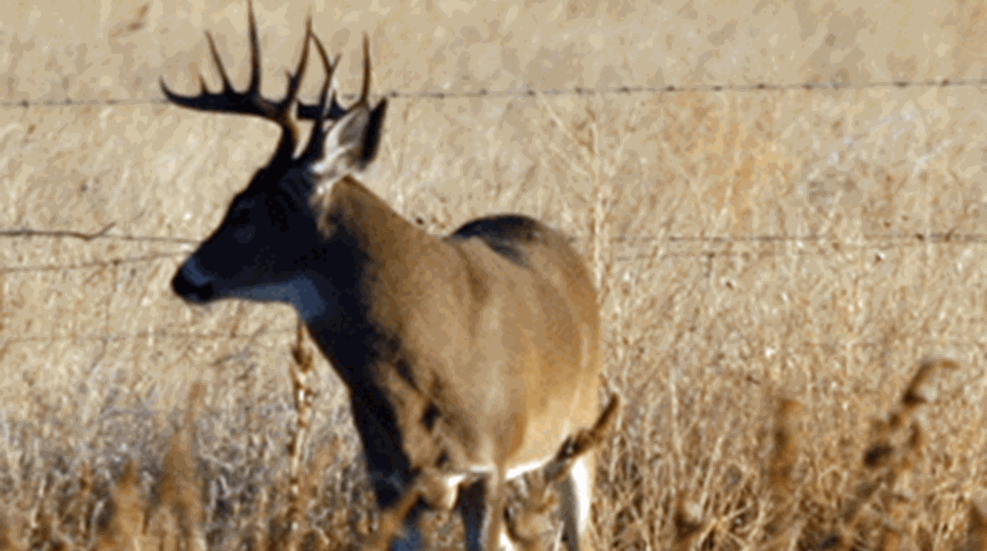
A buddy and I went out last week in the evening to check an area where an outstanding mule deer buck was seen and hunted this season. We didn’t see him this time, but that doesn’t necessarily mean he was killed. In fact, we’re pretty sure he made through the season because he’s such an outstanding buck we would have likely heard about his demise if it occurred. However, we did see a darn good whitetail buck chasing a doe, and we’ve put that info into our mental file for next year.
On my place I deliberately did not shoot a buck this year. There were three mature whitetail bucks frequenting my property throughout the summer and fall. These bucks are no more than 3 1/2 years old; two are eight-pointers and the other a promising ten-pointer (eastern count). I want to give them another year or two and see what the genetic potential is for these deer. One of the eights is MIA, but he could have been run off during their two-week party in November.
Winter is a great opportunity to evaluate the bucks in your area or to explore some new lands for hunting. Deer and elk are on winter range—a western term; “yarded up” is the term often used in the east—and more accessible for observation. Just be sure that you observe them from a distance and resist the urge to get “just a little closer.” The animals are stressed from the rut and the winter, and you don’t want to further stress them to the point that their survival is in jeopardy.