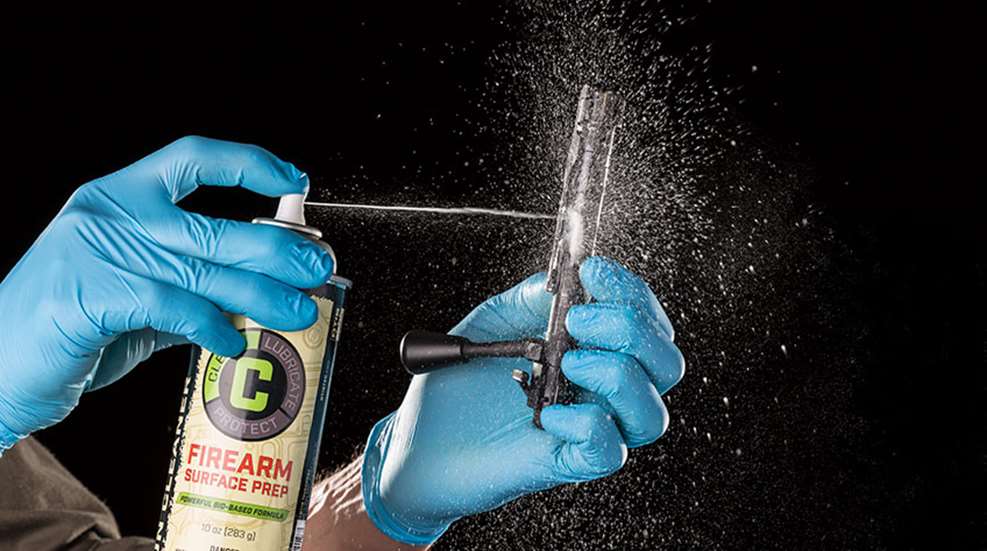
No hunter enjoys putting his guns away for the year. It proves the season is over and, besides maybe a few range sessions during the summer, long months will pass before a deer rifle or duck gun will fire a round again. Perhaps more dreadfully, it means the time has come to attend to the task of cleaning those firearms.
The process doesn’t have to be painful. Proper tools and preparation go a long way in making gun cleaning easy. There’s more good news: Smartly designed cleaning products offer additional help, and some even do most of the work for you. I can’t guarantee you’ll look forward to cleaning your guns, but following these tips will make the chore less burdensome.
Secure the Gun
Holding a gun in one hand while trying to guide a jag and patch through the bore with the other leads to bent cleaning rods, damaged rifling and chambers, and a whole lot of frustration. Yet this is the balancing act many hunters attempt when they sit down at the kitchen table to “clean the barrel.” In their haste to get it over with, they stand a chance of doing more damage than good. The worst part: A few patches will remove loose fouling but not caked-on carbon and copper build-up, and so much of the effort is wasted because the bore never really
gets clean.
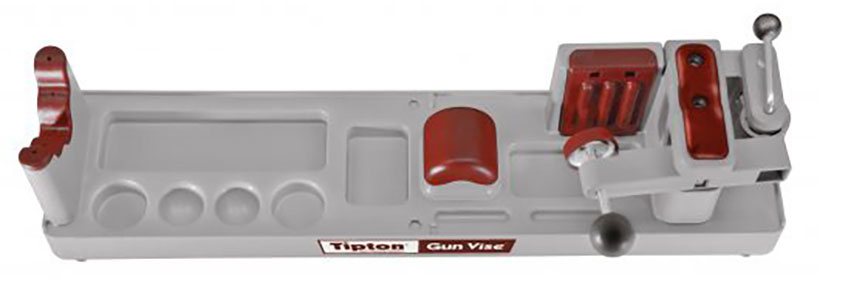
Start the cleaning process correctly by securing the gun in a cradle or vise that rests on a solid surface at a comfortable working height. This leaves both hands free to apply cleaner to a patch, place that patch on a jag and carefully guide the rod down the bore. Scrubbing the bore with a brush to remove stubborn copper fouling is all but impossible when the only thing supporting the gun is your hand. Lock the firearm down in a sturdy fixture like the Tipton Gun Vise. The $50 or so you’ll spend on a vise is well worth the increase in cleaning efficiency and effectiveness.
Use the Right Tools
Multi-piece cleaning rods that thread together are OK for light duty in a pinch such as removing moisture from the bore while at camp, but solid rods are much better for deep cleaning that requires numerous passes through the bore. The portability afforded by multi-piece rods creates joints with sharp corners. The joints allow flexing, and under pressure the corners of some multi-piece rods can scratch the bore. That scratch, depending on its severity, will accumulate fouling or ruin accuracy all by itself if it appears in a rifled bore.
Get a one-piece coated spring-steel or carbon-fiber rod from a maker like Montana X-Treme or Hoppe’s. Neither spring steel nor carbon fiber will bend, and unlike softer brass and aluminum, grime won’t permanently embed in these materials. Choose a size closest to (but not larger than) the caliber of your bore for maximum rigidity. With shotguns one diameter fits all, but just make sure the rod is long enough for your barrel.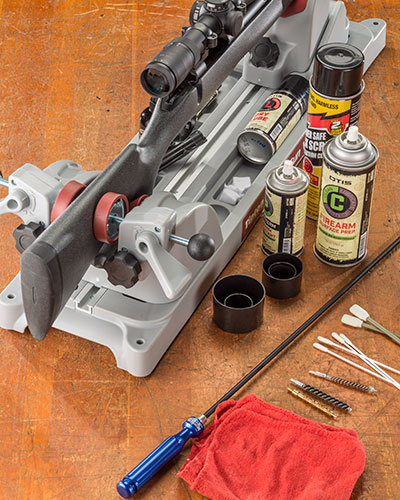
Add a caliber-specific jag or bore brush to the rod for cleaning rifle bores. Jags with pointed tips hold patches better than those with flat faces. Many jags and bore brushes are made from brass and bronze. Remember these alloys contain copper, and they can provide a false-positive reading in the form of blue-tinted patches when trying to rid a bore of copper. Options include aluminum jags from Dewey and nylon bore brushes. Using a bore guide when cleaning ensures the rod makes a straight transition from action to bore, reducing the chance of marring the chamber and throat.
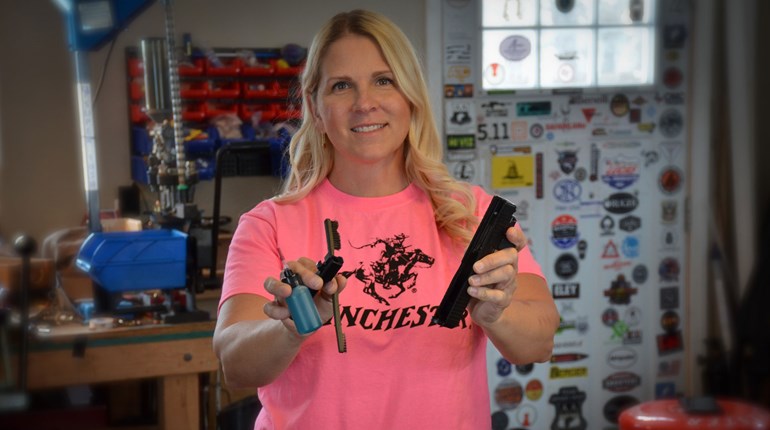
Other must-haves include a gunsmithing screwdriver set with bits that are sized appropriately for action screws so they won’t slip and tear up screw heads, bottom metal, stocks, etc., along with brass punches for drifting out pins that hold trigger groups and other assemblies. All-purpose cleaning brushes (toothbrushes for guns) are handy for scrubbing smaller parts like bolt faces and extractors. Swabs help clean hard-to-reach corners in actions, locking recesses and chambers. I like the foam Gun-tips from Swab-its because they come in all sorts of shapes and sizes, don’t leave wisps of cotton behind, have flexible stems and are reusable.
The easiest way to clean small, heavily fouled parts like bolt-carrier groups from ARs, breechplugs from muzzleloaders and gas-piston assemblies from semi-auto shotguns is with a sonic cleaner. It’s basically a tub filled with cleaning solution that’s agitated by ultrasonic waves produced by a transducer. The waves create bubbles that collapse with energy to attack carbon fouling and other junk without harming the gun part. (The process is called cavitation if you want to impress your buddies, and it’s the same thing jewelers use to clean diamond rings.) Cleaning takes just a few minutes and only requires you to wipe the solution from the part when finished. Hornady offers the Lock-N-Load Sonic Cleaner 2L that will hold parts up to about 7 inches long and 6 inches wide; it costs about $100.
Clean, Lube, Protect
Despite what marketers claim, there is no one perfect solution that thoroughly cleans, lubes and protects every gun component. Cleaning, lubricating and protecting are three separate steps that require at least three different formulas. Some cleaners are designed to remove propellant fouling, while others remove copper. There are also cleaners for removing plastic fouling left in bores from sabots and wads, and lead build-up from shot pellets and rimfire bullets.
Lubricants can be thin oils or heavier greases; an over/under’s locking lugs require one type of lube while the threads of a muzzleloader’s breechplug need another. Protectants guard against moisture and corrosion but may not provide adequate lubrication between moving parts. They are best for treating external metal surfaces that don’t contact other metal surfaces.
Knowing where—and where not—to use specific formulas comes down to understanding your firearm’s parts and how they function together. Owner’s manuals typically provide maintenance recommendations; take time to read them. Go a step further and learn basic disassembly, such as how to separate a barreled action from a stock, remove a firing pin and spring from a bolt, and drop out a trigger assembly from a receiver. All these things need routine attention, and there’s no better time to give them some TLC than now.
Dry Storage
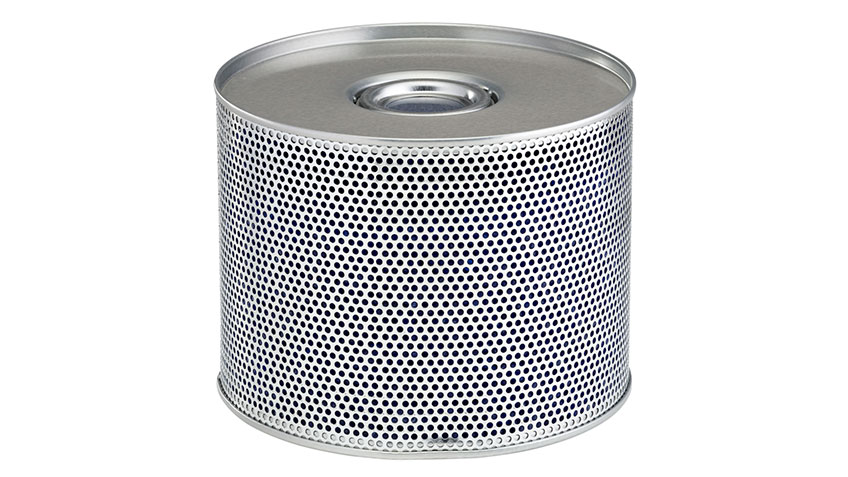
Once they’re clean, firearms should be stored in a dry environment. Over time high humidity can cause corrosion on metal and mildew on wood. A simple guard against humidity is the SnapSafe Canister Dehumidifier, which absorbs moisture in the air, requires no batteries and is “rechargeable” in the oven.