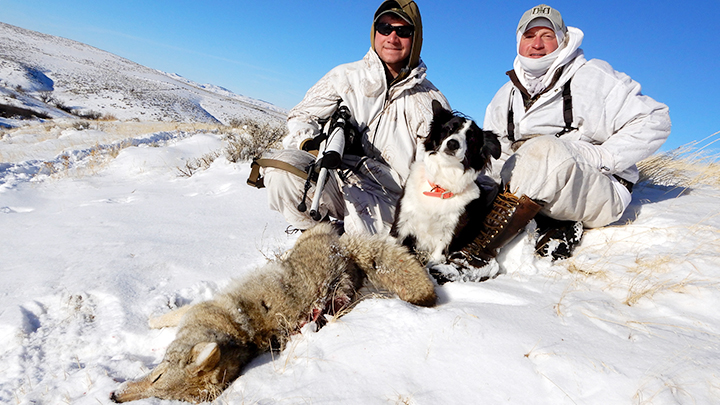
You want to kill more coyotes this winter … right? For now, set aside the off-the-wall strategies and gizmos. The simplest answer to more coyotes is to hunt with a partner. Here’s why.
360-Degree Coverage
Coyotes are sneakier than anti-gun organizations attempting to slide more legislative gun control under the radar. You know coyotes tend to circle downwind, but setups don’t always give you the best seat in the house. A partner allows you to either sit back-to-back or split up and eyeball more country. Avoid the temptation to sit side-by-side and watch the same shooting lanes. You can catch up on town gossip later. One of you should keep eyes glued on the downwind alley. The other should watch in the upwind direction while paying special attention to gullies, creek bottoms or terrain folds that could hide an incoming coyote. Check your hunting app to view all terrain-concealing travel features.
Multiple Success
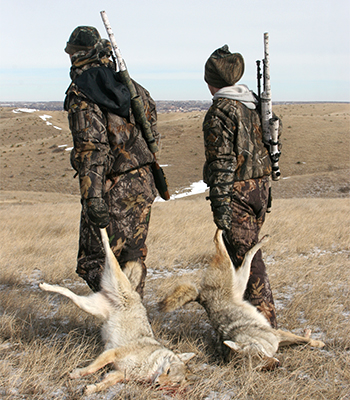
Another sound reason to hunt with a partner is to solve the issue of multiple coyotes. One coyote may frazzle your nerves. A sprinting pack could short-circuit your shooting abilities. Although terrain may separate you and your partner too much to waylay pairs coming in, you could be privy to the same vantage point shootout or pick up an escapee on your side of the berm once the shooting starts.
If you are both watching the same general area, discuss who shoots first and what coyote should be targeted first. A good rule of thumb is to shoot the guaranteed coyote first, but if one stops a bit farther out, shoot the farther one and that gives you time to aim on the second, closer animal.
Close-Quarter Shootout
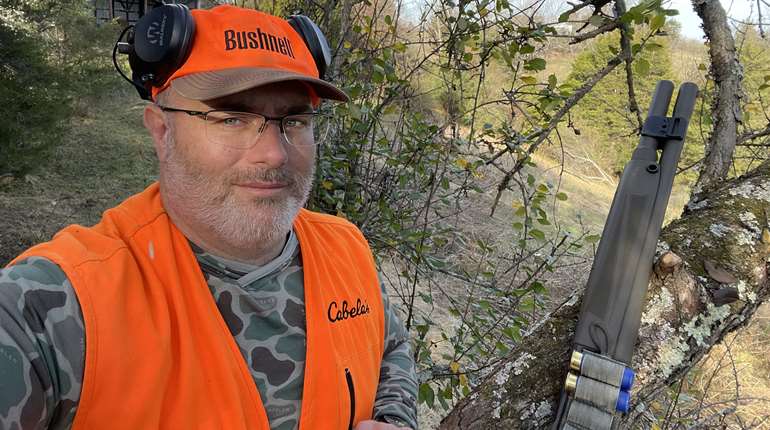
Some calling areas could provide long-range and close-rage shooting opportunities. These sites are excellent for a partner match-up. One shooter should tote a rifle and acquire a sniper perch overlooking a broad expanse of calling ground. The second shooter should bring a shotgun and cover any brushy, downwind areas where encounters could be less than 75 yards. Set up safely with exact knowledge of where the other person is located. It’s always advisable to also confirm how long you plan to stay on a stand to ensure you are looking for each other’s movement at the designated time.
Exchange of Ideas
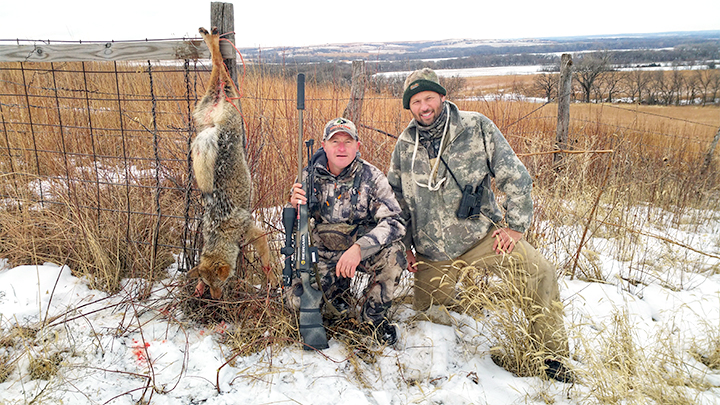
An exchange of ideas in any situation—the workplace or a coyote setup—is another reason to consider hunting with a partner. Like conservatives and liberals, you might see things differently than your partner. Compromise could lead to a consensus on how to execute a setup in a particularly tricky tract of terrain. And based on experience, you or your partner may suggest more vocalization over prey distress depending on what’s played out in the past. A new perspective from a partner at an old calling location could suddenly bring coyote excitement to your hunt.
Share of Expenses and Work
Finally, hunting with a partner can ease the strain on your budget. Regardless if you alternate who drives or you share fuel expenses per trip, it saves you money. You can split the cost of an expensive electronic caller or even a trespass fee if it is required to hunt a gated property. And if you do tip over one or more coyotes, you have a partner along to help you drag out coyote casualties for the day.
Partner up on your coyote hunts. You stand to kill more coyotes and possibly even save a buck (pun intended) along the way.