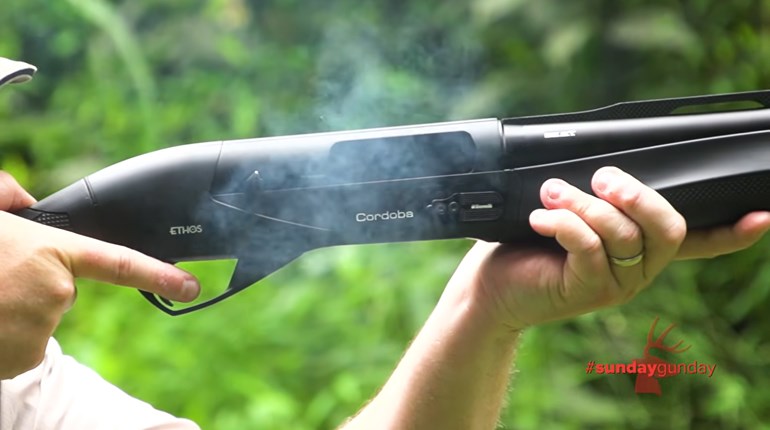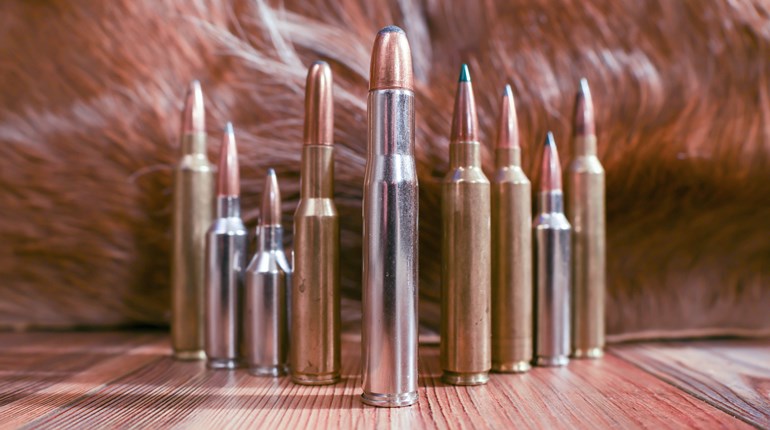
Shoot long enough, and it will happen to you. You might be trying to work up a load for a fire-breathing magnum, or you may be attempting to speed up your shooting with a more moderate chambering. It can sneak up on you, or it can smack you right in the face. If it’s sneaking, you might be blowing off the odd flyer that is 3 or 4 inches out of your group. But when you get a failure to fire and the gun jumps in your hands as if somebody hit you with a cattle prod just as you broke the trigger, there’s no denying it. You have a flinching problem. Ignore it at your shooting peril. Flinching does not go away on its own. You need to treat that problem in order to cure it.
About three years ago I caught myself flinching at the Media Day event just prior to the SHOT Show. I was trying out the latest iteration of a Kimber 1911. A couple of guys I know were there, and we were chiding each other—good naturedly—about our shooting. I thought I’d show off a bit and mow down the plate rack quickly. The pistol had been shot a lot that day and was a bit warm. It needed some lube, but I wasn’t paying attention to that, as I was focused on showing off. About three or four rounds into the string the dry pistol failed to chamber. I didn’t notice it because I was shooting pretty fast, and when the sights flashed onto the steel plate and I pressed, it didn’t go bang. But the pistol flipped down pretty good. “Wow!” chided on of my buddies, “That was a Boone and Crockett flinch Campbell!” Yup, it was, and I knew I had some work to do when I returned home.
Curing a flinch is pretty simple, but, depending on its severity, it can be excruciatingly tedious. If it’s not too bad, simply slowing down a bit and concentrating on the basics will put the smack-down on that evil malady. A session or two at the range is often good enough. However, if after a couple of range sessions you haven’t seen much improvement, stronger medicine is needed. This is especially true if you are trying to tame some heavy magnum load or round. It’s time to throttle back on the power.
If you are shooting a magnum rifle or shotgun, try a lighter load or a more moderate chambering. You may have to go all the way back to a rimfire. Ditto if your flinch was found on a semi-auto pistol. Don’t try to blast your way through in a single marathon shooting session. Two or three sessions of, say, 20 to 25 rounds each are better than trying to get it done in one session of 100 rounds. To cure a flinch you need to retrain yourself to concentrate on sight picture, breath control and trigger squeeze. Shoot each practice round as if your life depended on making a perfect shot. If you are truly concentrating on each shot, you’ll be ready to quit after 20 or 25 rounds, perhaps less if shooing a powerful rifle or shotgun.
To test yourself, have a shooting buddy load each round and hand you the gun to shoot. You won’t know whether he loaded it or left it empty. Consider yourself cured when each time you get a click instead of a bang, the gun doesn’t move off target.