Call it a primal hunger to experience violence firsthand or merely an interest to see if the underdog has a chance, but humans have a desire to see a fight. From fights celebrated at the Roman Colosseum to sold out UFC fights in Las Vegas, hostility attracts a crowd. The same principle transpires in the wild. Prey may not run to the sounds of a fight, but predators have no aversion to a ringside seat and occasionally even jumping into the ring for a round.
Use this premise on an upcoming coyote hunt. Add a fight to your coyote routine if your standard-operating-procedure calls fail to garner a response. By midwinter, make a bet that coyotes have heard and escaped one or more predator hunter attempts on their life. The growing interest in predator hunting has widened across the nation, following the expansion of coyotes themselves. You might hunt a property that has not seen coyote hunting pressure, but the odds are against you. And since most hunters start with the basic calling routine of using a distressed rabbit, another sound might be in order. Give fighting sounds a fighting chance.
Fight Club
Fight Club coyote calling works for a variety of reasons, and you do not need to wait until the heart of winter to put it into play. I have used this method in all seasons with good responses. Nevertheless, winter represents a time when pressured coyotes require a change. Fight sounds have three main categories. First, coyotes, like you and your siblings, bicker. You may not throw a punch at your relation, but you cannot tell me you have not raised your voice during a heated debate. Coyotes occasionally bicker and during a disagreement may nip, bite or all-out brawl with each other.
The second reason a fight could spark is over love. Across coyote country, most breeding occurs in February. Pairing and fighting for mates plays out beforehand. Think back to your younger years and the fights you witnessed. Boys fighting over a girl or fights between females fighting, well, for whatever. Animals fight for love and breeding rights. I am sure you have a deer or elk rack in your hunting collection with points snapped off from breeding season combat.
Lastly, predators occasionally find themselves defending food, territory or merely self-pride. They get in spats with other coyotes, bobcats, raccoons, foxes, bears, scavenger birds and others. During harsh conditions, when everyone needs calories, food fights break out. When another predator enters territory, dominance fights ensue. And when someone just gets in your way with attitude, lessons must be taught.
Fight Club Strategy
Adding the sounds of canine bickering is as easy as pressing the button on your electronic caller that says “canine fighting.” Coyotes yip, growl and bark during a squabble. Barks and growls represent challenges while yips signal someone caught a tooth in their bum. Bursts of coyote-in-distress also work, but minimize the sound for brief periods. The one sound to absolutely use reservedly is the bark. Too much barking and it signals something is not right. A few barks mixed into the setup adds realism.
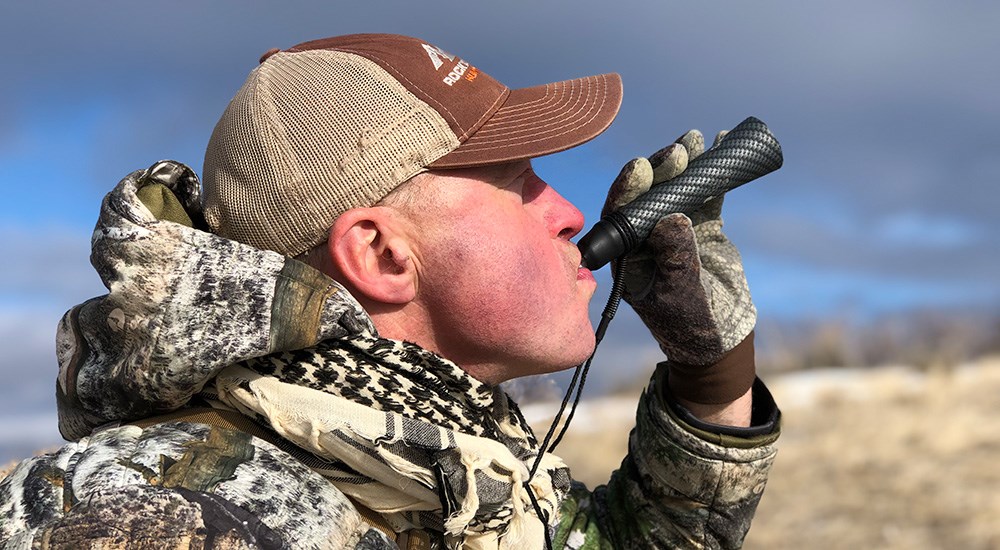
With practice, you can make most of those sounds with a diaphragm call and a tube, like the Rocky Mountain Hunting Calls Stealth Yote Howler. Using mouth calls gives you immediate opportunity to change volume, inflection or to shut down the production when you witness a hot coyote trotting your way.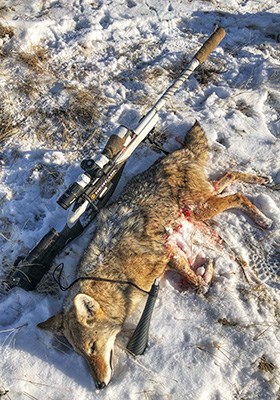
As an opener, begin your setup with a lone or group howl to let coyotes downrange know to expect company. Wait 10 minutes as this alone could trigger a response, especially for a coyote looking to find a mate. Before you start the faux fight, you can add in a prey-in-distress of your liking. Who would not fight for the last wing at Buffalo Wild Wings?
If nothing arrives, start the bickering. Begin with a couple of barks, followed by growls and then yipping to audio illustrate the argument has gone from verbal to a toothy confrontation. Wait five minutes or so between spats, but continue this for up to 30 minutes and even after putting the calls down, keep watching for up to 45 minutes or more for a nonaggressive coyote to show. It might want to watch, but not step into the ring.
Love spats also make the top 10 play list for coyote fight sounds. Love speaks all languages, and sometimes the conversation turns confrontational. Males may battle for a female and females may nip at a male indicating an unwillingness for cuddling now.
A lone howl also provides a starting point to this setup. Your howl might be taken as a male or female sending out an invitation for companionship. After 10 minutes, send a message of love with female whimpers. Most electronic call libraries include this sound and the chirping noise can be mimicked on a diaphragm with practice. Visit YouTube and listen to some examples.
Those two may not garner action so begin the sounds of deteriorating marital bliss. Go back to barks, yips and growls. Keep the spat reserved, but loud enough to broadcast a message that either two males have locked antlers over a female or simply a female’s aversion to a male’s attempt at second base. Quarrel for up to an hour, on and off, before throwing in the towel.
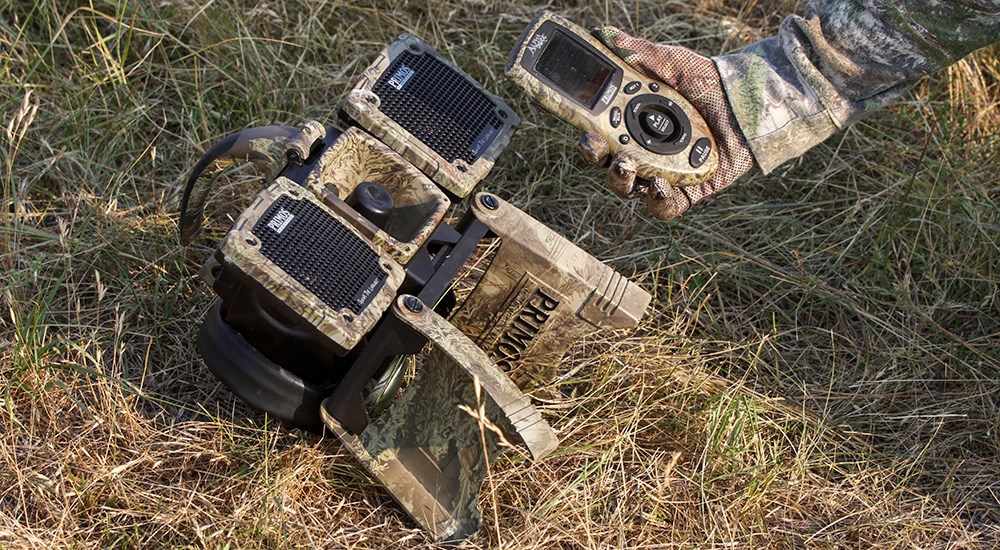
Lastly, scan your caller’s library for coyote fights with other animals. Common quarrels involve gray foxes, raccoons and domestic cats, among others with fangs. In America you have freedom, so skip howling or add it in to start your setup. It is your choice. The same goes for adding in prey distress squalls. After making those difficult decisions, start a real fight. My go-to has been coyotes fighting with raccoons. It works from the Midwest to sagebrush basins where few raccoons roam. Nevertheless, the sound of the knock-down, drag-out fight spurs even the most dispassionate coyotes to drop their guard for a peek.
In any of these situations, a good decoy bolsters coyote confidence further that the drama is authentic. When my coyote dog does not accompany me, I prefer the lightweight, 2D collapsible Song Dog decoy from Montana Decoy Company.
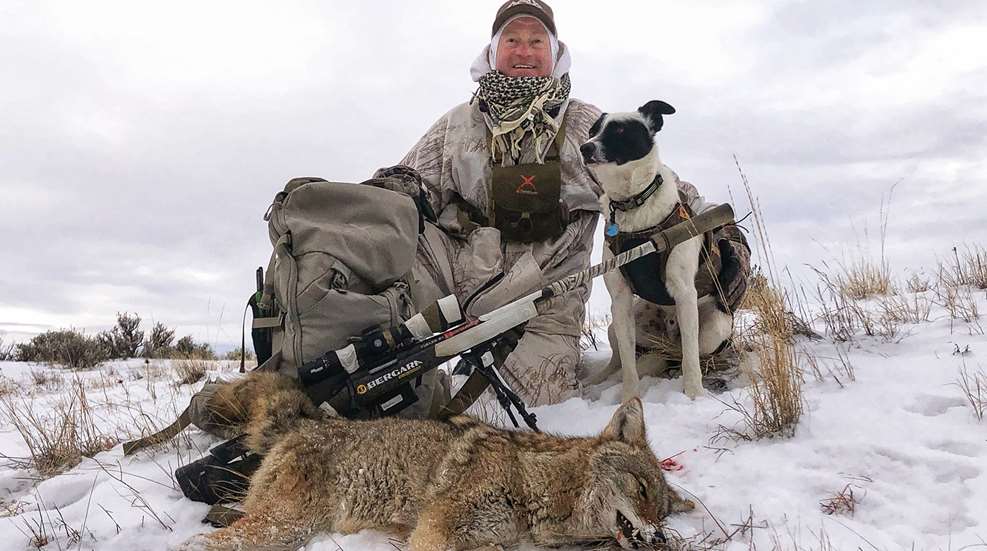
One early morning I rolled through a variety of sounds before I added Fight Club into the setting. More than 45 minutes later my dog Sully raced from my side, and I knew we had a junior featherweight contender onsite. The action was 180 degrees away as the coyote, angry from hearing a fight, kept on pace to meet up with my dog. I hissed, “Sully come,” and he started back with the coyote glaring angrily behind him. I ended its mean streak with a dispatch from Hornady.