You saved, you scrimped until you could afford an actual guided hunt. No more building your own campfire from half-wet wood … this time you’re going to be the pampered one, your every whim will be satisfied, your socks washed, your boots dried, your sleeping bag fluffed while you relax by the fire.
A guided hunt can be comparatively luxurious because you’ve hired someone to arrange things for you, to do the packing, wrangling and cooking, but that doesn’t mean you should act like Leona Helmsley and let the “little people” do all the dirty work. So then, what is expected of you as the client? Are you supposed to pitch in and help or is that considered tantamount to the Queen of England washing her own car? What exactly are the standards for excruciatingly correct behavior on a guided hunt?
Types Of Hunts
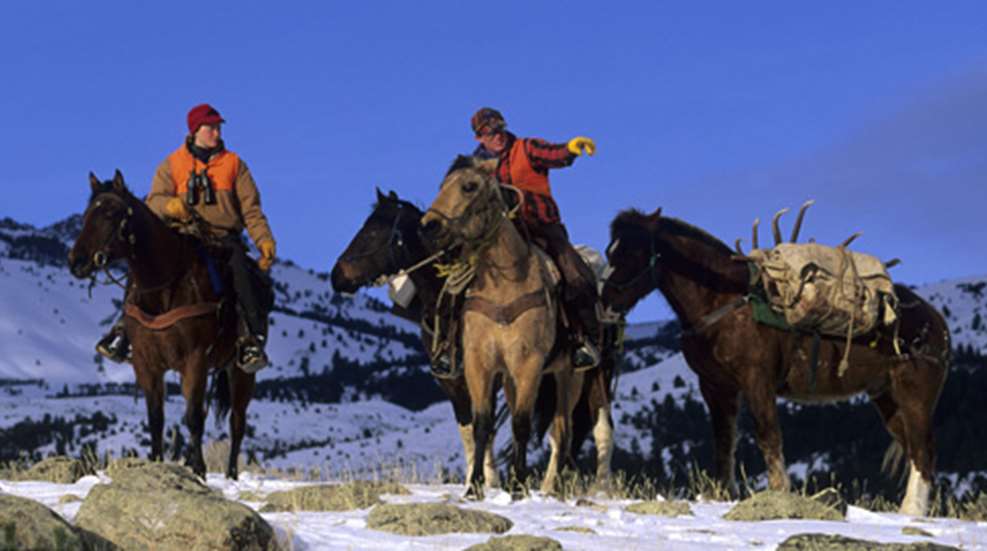
There are two categories of outfitter-hosted hunts in North America, fully guided and semi-guided. A fully guided hunt usually includes a personal one-on-one guide, although you and a buddy can share a guide. It typically includes a cook or wrangler who stays in camp and prepares meals while you and your guide are out hunting.
Outfitters also offer semi-guided hunts in which a backcountry camp is provided, but not an actual guide; some semi-guided hunts come with a cook, some are totally do-it-yourself adventures. What you’re paying for is the convenience of having a camp set up in a remote area you couldn’t ordinarily reach yourself. Semi-guided hunts are found in the Western U.S., in Alaska and, to a limited extent, in Canada.
Outside of the U.S. in Canada and Africa, fully guided hunts are normally what you’ll find. There’s just too much involved with turning an American loose without supervision—everything from legal issues to plain, old getting lost.
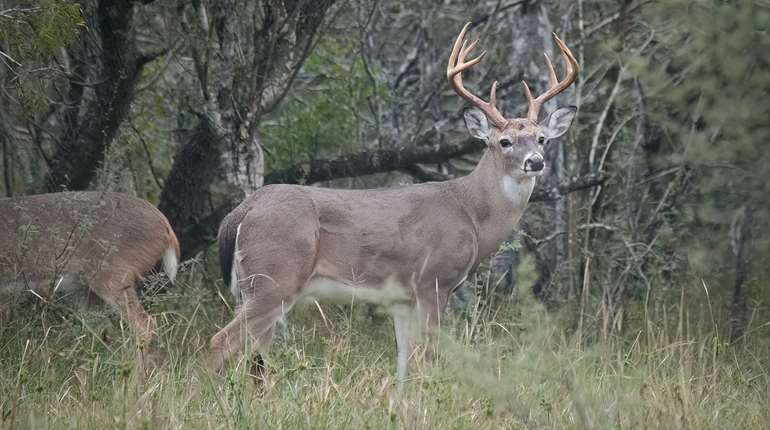
A fully guided hunt is also the order of the day on game ranches and private preserves, like some of those whitetail sanctuaries in Michigan and high-fence ranches in Texas. There are even Old West-style outfitters who take you out in a chuck wagon and sleep you in canvas wall-tents, complete with cowboys as guides and beans for dinner! Typically, a guided hunt like this caters to bison and deer hunters who are looking to inject a bit of nostalgia and recreate the feeling of the frontier.
To Help Or Not To Help
The degree to which you should pitch in and actually work varies with how remote and spartan the camp might be, and what sort of help is on hand. I once hunted in a lodge in Alaska, far up the Mecons River in the Alaska Range, which was definitely remote but not bare bones. The camp boasted a big screen TV, a collection of hunting DVDs, hot showers, a full-time cook, a resident caretaker and a guide. No one person was busting a hump to take care of me, so I didn’t feel any need to help. I would’ve been more of a nuisance anyway.
On the other hand, I once went on a backpack sheep hunt with only myself and a guide. We carried a two-man tent on our backs along with freeze-dried food, a small kerosene cook stove and a couple of changes of socks and underwear. While Arno Krum, my guide, pitched the tent, I gathered firewood. In such a circumstance, it would be the height of Winfreyness to sit and watch while Arno worked.
The rule simply is this: The more isolated the camp, and the fewer the hired hands, the more you might need to help out. It’s really common sense and basic manners.
Packing Your Own Load
There’s another aspect to being a good client that doesn’t so much have to do with simple good manners as it does with a man’s dignity. I refer to your obligation as a hunter to carry your own load. Frequently in Africa, where there are typically two or three trackers plus your professional hunter, you’re asked to relinquish your daypack and let one of the trackers carry it. I have always steadfastly refused their kindness, not because I want to offend them but because it’s not right to let another man carry my personal belongings.
It’s one thing to get some help with packing out meat or shouldering a share of camp equipment, but when it comes to your own stuff, you need to carry it.
This accomplishes two things: first, it allows you to keep your self-respect and, second, it forces you to be more selective in what gear you stuff in your pack. It would be all too easy to throw in five candy bars, three apples and two liters of water if you didn’t have to schlep it.
Tipping: A Touchy Subject
One of the aspects to a guided hunt is tipping the guide and other camp staff. This is always a touchy subject because, unlike waitresses or bellhops, there’s no fixed standard for how much to tip a guide.
The first thing to get straight is that the size of your tip should have no correlation to the success of the hunt. The guide works just as hard for a raghorn as he does for a Booner, so the size of the trophy—or lack thereof—is neither his fault nor credit. Similarly, the weather isn’t his doing.
A generally accepted baseline is 5 percent of the cost of the hunt. That sounds simple enough, but is that 5 percent of the actual hunt or does it include your out-of-state license, flights, government fees or taxes or other miscellaneous charges? The answer is … it depends. Sometimes a lot of these charges are rolled into one flat fee; for instance, when I hunted sheep in Alaska, the charter out to camp was included, while the license was not. In Africa, the license was included but the charter was not. Also in Africa, trophy fees are charged for each animal shot and the question arises if these should be taken into account with the 5 percent.
I’ve never met a guide who drives a Mercedes or wears a Patek, so I tend to err on the side of over-tipping. Like anything else with being a good client, do whatever you think your grandfather would approve of and you’ll never go wrong.