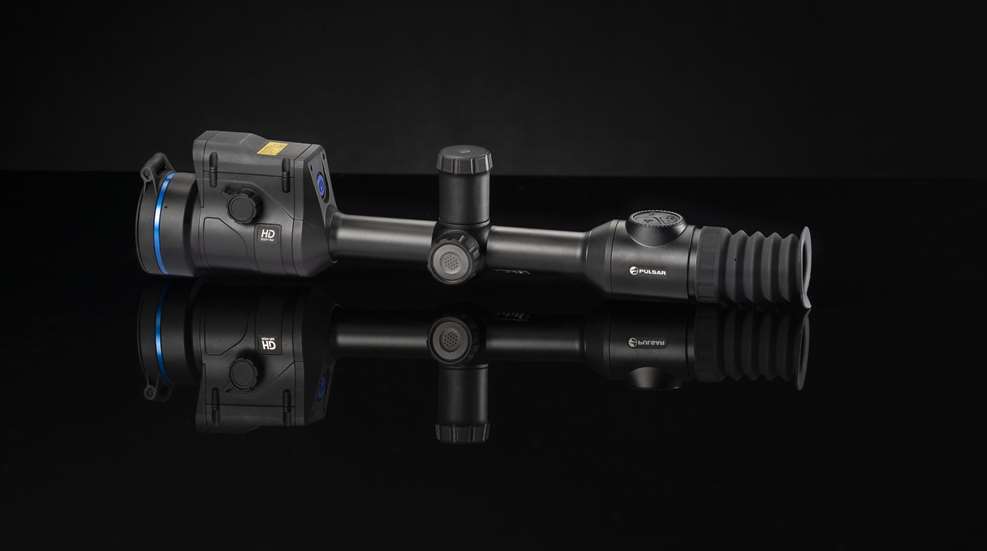
Simply put, thermal weapon sights represent the greatest technological advantage a hunter or home protector can have since the advent of the firearm itself. The whether buying one worth the money is for you to decide, because they aren’t cheap. For now, I’d like to focus on one unit I tested recently, Pulsar’s Thermion 2 LRF.
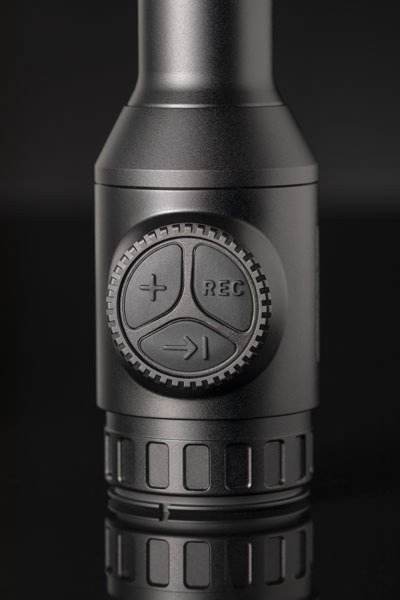
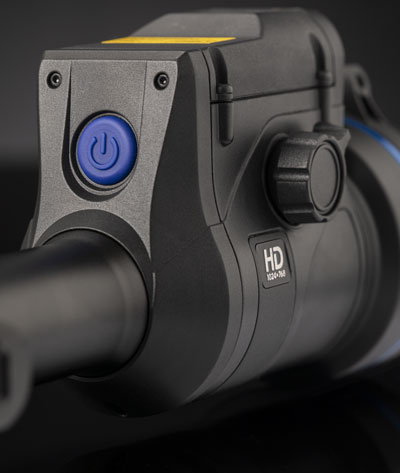
First, you should know that though the Pulsar Sellmark company of Mansfield, Texas, designed its Thermion models to look similar to a traditional riflescope, it is closer in relation to a cell phone or perhaps a GPS unit than any variable-power optic. Its “turrets” are fugazis, used for other purposes than windage and elevation adjustments. Its plentiful buttons are electronic, where features and functions are accessed within the scope’s extensive computer menu through which the user must navigate to set up the scope for use. So don’t think you are going to simply buy this scope (or any other thermal unit at the moment), mount it to your rifle, quickly zero and go hunting. I’ve found that if I continually compare a thermal scope to the familiarity of a traditional scope, I quickly get frustrated. Translated: You must take time to read the instruction manual (or watch how-to videos online) and then learn the controls until they become familiar. Do I wish it had a simple on/off toggle switch, a reticle that was controlled by windage/elevation turrets and an easy button to go hunting? Sure, but none do because of the nature of a system that is wholly digital rather than telescopic. However, Pulsar has made great strides with this Thermion to make it easier than others.
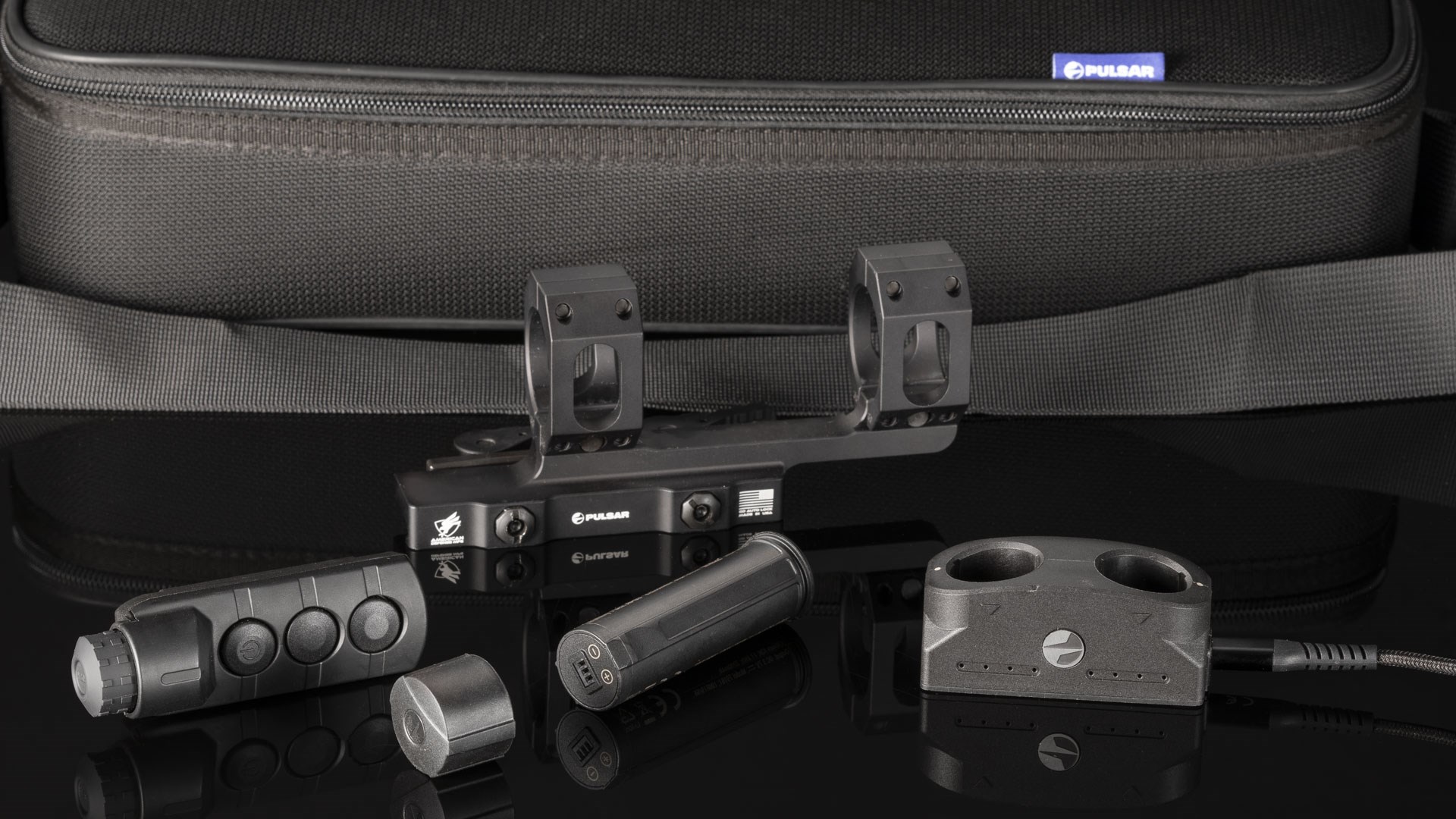
For example, it can be connected via Wi-Fi to your smartphone via Pulsar’s Stream Vision 2 app so you don’t have to look through the eyepiece of the scope the entire time while navigating the menu or panning the field for targets; your cell phone will show exactly what is being shown in the eyepiece, including the target, reticle and menu options—menu options that become easier to navigate via the app. Secondly, its dual battery system is the best I’ve seen yet; it features an internal battery that can be charged via a USB cable along with a swappable battery (that cleverly fits in the top “turret”) to give the unit two battery sources that power the scope in unison. This means that you should never run out of power in the heat of the moment—as has happened to me on multiple occasions with other thermals. The kit also comes with a third battery and a dual charging station that can plug into a vehicle so you can always have a fresh battery handy. These two features alone mitigate the biggest complaints I’ve seen with thermal scopes of the past. But now we should talk about the Thermion 2 LRF’s myriad other features that, when combined with the unit’s overall quality (it’s made in the UK, not China) and extremely high-definition 1024x768 sensor, make it one of the most advanced thermals available.
Think of a thermal scope’s sensor and display in terms of how you would choose a flat screen TV. (Certainly, a TV doesn’t have a sensor that gathers bits of data—heat signatures—from the environment and processes them into usable data via a computer chip, but please humor my analogy anyway.) Basically, the more pixels a TV or a digital scope has, the higher the definition of the image. If it has a low number of pixels, the image will seem pixilated, or square. This is exacerbated as magnification, or digital zoom, increases. So while a less-expensive thermal scope with an older 320x240 sensor and low-definition display, for example, might appear good at 2X, or a 640x480 model at 6X, the body shape of a deer will begin to look pixilated and not well defined as the magnification is increased. At short range, it’s no big deal, but at longer range where magnification is needed, a hog can look like a dog and a possum like a raccoon. That’s the reason for paying for a top-end, high-definition sensor and display. This Thermion’s 1024x768 sensor and 2560x2560 Micro-OLED display allows this unit’s 2.5X-20X zoom to be usable. Animals are well defined—you can see the contrast of their hair—even at mid-range magnification such as 10X. Pulsar touts this sensor/scope as being capable of detecting heat signatures as far away as 3,062 yards. I could not verify that number due to my more limited testing fields, but I do not doubt it. I found that it can detect animals much farther than I can shoot. Finally, this unit’s 60mm objective increases field of view, something very important for scanning nighttime fields.
Feature-wise, the Thermion 2 LRF, like most modern thermal scopes, contains too many to list here, and that is why reading the instruction manual is so important. Frankly, it seems like all computer engineers get carried away in their geekish zeal for options, but then again perhaps it’s better to have them than not. I’m talking about features like optional reticle styles, color pallets, 10 programmable ballistic profiles for use with other loads/rifles and so many more options that it can seem overwhelming at first. Zeroing can also be a frustrating endeavor when first attempted, but it’s actually easy with practice and the use of the scope’s screen freeze mode. The good news is that once you get this Thermion set up initially, all the major controls that you’ll use in the field—such as its manual, dual focus levers, zoom, record (it can record whatever you see through the scope), power on/off, and most importantly the rangefinding button—can be accessed externally on the scope. It just takes practice to familiarize yourself with them as you’re on the rifle amid the dark of night. (In addition to being able to use these on-board buttons or the cell phone app, the scope’s controls can also be manipulated via an included wireless remote.)
The laser rangefinding feature is a big deal on thermal scopes and one I’d recommend paying the extra money for, because in the dark with very few visible references it’s near impossible to judge the range to an animal. After all, you are looking at the animal on a computer screen where depth perception is minimal. It’s also impossible to use your traditional laser rangefinder at night. With the Thermion, however, simply center the reticle on a target and press the rangefinding button located on the front of the eyepiece. It will project an exact distance on the screen that you can then use to adjust your reticle or your hold. I ranged animals instantly to 800 yards.
Although I’ve dispensed many words telling first-time thermal buyers what to expect—as is my duty when reviewing such an expensive item—those who have used them before will only be delighted by this unit’s major features, quality build and stunning resolution. I can tell very little, if any, difference in this model and that of a few I have tested that cost twice as much. But I can discern a difference between this model and those with lesser sensors/displays costing half as much. Mainly, however, I like the simple, replaceable battery system, its incredibly defined images, and its cell phone viewing/recording capability. And that’s why, if you are serious about varmint eradication and truly ruling the night, I’d suggest taking a hard look at this one from a great American company, Pulsar.
Pulsar Thermion 2 LRF XL60
- pulsarnv.com
- Type: variable-power, thermal-imaging riflescope
- Magnification: 2.5X-20X
- Objective Lens Diameter: 60mm
- Eye Relief: 2.5"
- Field of View @ 100 Yards: 67' (2.5X)
- Sensor: 1024x768
- Video Record Resolution: 2560x2560
- Reticle: multiple options
- Dimensions: tube diameter 30mm, length 17.3", weight 2.5 lbs.
- Construction: aluminum-alloy housing; impact-resistant electronics
- Operating Temperature: -13° to 122° F
- Battery: dual battery source; internal and external (two included) 7-hr. runtime
- Memory: Internal; 64gb
- Warranty: five years
- Accessories: eyecup, scope cover, USB cable, lens cloth, case, charger, spare battery, cantilever scope mount
- MSRP: $7,199