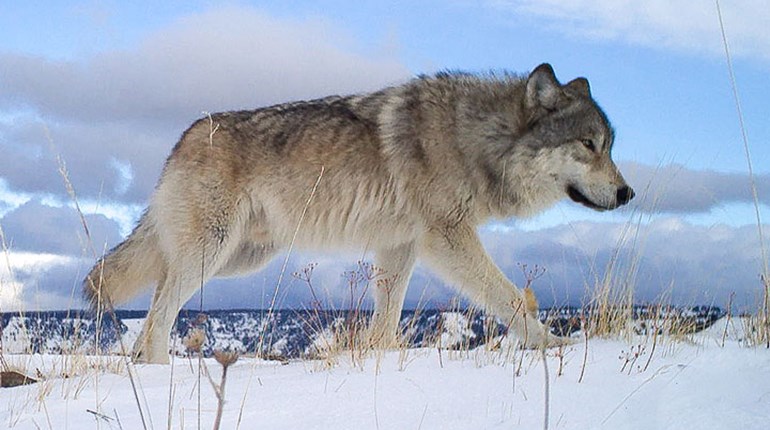
As posted all over social media early on March 23, a Wyoming wolf pack slaughtered 19 elk in one fell swoop in the elk winter-feeding area near Bondurant, Wyo. According to Wyoming Game and Fish, the elk were killed the previous evening in what was ruled a "surplus killing" by a known “rim” wolf pack that left 17 calves and two cows untouched except for three that were partially consumed. The fact is, problems with wolves in several Western states have gone on for some time, and the elk population in this entire region has taken a major hit. In some cases, outfitters have gone out of business while do-it-yourself elk hunters are being forced to find new areas to hunt as many remaining elk won't even bugle during the rut to remain undetected to wolves. The growing number of wolves even affects hunters of other predator species. In states where it is legal to use hounds to hunt black bear and mountain lion, for example, wolf packs have learned to associate barking hounds with an easy meal as some houndsmen report they lost their entire kennel of hounds to wolves in a single hunt. In the time it takes for the hunters to get to the treed predator, wolves have already killed many—or all—dogs at the tree.
Why does this problem persist? Because the U.S. Fish and Wildlife Service (USFWS)—the same group that reintroduced the wolves—will remain in control of wolf management as long as the species remains listed under the Endangered Species Act (ESA). Various reports show increasing numbers of hunters, other conservationists and state wildlife agencies are now putting pressure on the USFWS to allow states to manage their own wildlife populations as it is difficult to manage an ever-changing population of any species from Washington, D.C.
Following the Wyoming attack, I reached out to John Lund, regional wildlife supervisor for the Wyoming Game and Fish Department in Pinedale, Wyo., who said he was inundated with media calls from local newspapers to Fox News and CNN. Lund openly shared his frustration over the department's limited ability to address the problem due to wolves' ESA protection.
As confirmed by Lund, on March 23 multiple wolf-killed elk were discovered on the McNeel elk feeding grounds near Bondurant—only three of which were partially consumed. With the exception of one adult cow, all elk were in good health and body condition. Three additional elk were found that appeared to have been killed a few days earlier. Since mid December, about 75 wolf-killed elk have been documented on the feeding grounds. Additional mortality in the vicinity is likely but cannot be confirmed.
"This is the first year wolves have had a significant presence and impact on this particular feedground,” Lund said, adding, ‘Surplus killing’ is uncommon, but we have observed it on other occasions with wildlife and domestic livestock. It is unknown what triggers this instinct.”
Lund said they've never documented an incident with this many kills. I have personally had outfitters and hunters in Idaho and Wyoming tell me they have encountered such scenes but usually the numbers are fewer.
What is amazing to me is, according to the USFWS, the “rim” wolf pack is comprised of an estimated 9 wolves. If nine wolves can do this kind of damage in a single night, the general public can only imagine the impact wolves are having across the three states surrounding Yellowstone National Park: Wyoming, Idaho and Montana.
The term "surplus killing" struck me as wrong because there is no surplus of elk. The department's definition, however, refers to the pack killing more elk than it could eat. The rest was simply wasted.
Hunters and conservationists can only imagine how Lund feels as this is an extremely frustrating situation for wildlife managers as well as sportsmen who work and hunt in the states inhabited by wolves. While Lund's department will continue to explore remedies to deal with wolves, their federal-level protection limits options. His department asked the USFWS to address this issue several months ago, but federal officials cited legal issues as reasons for not taking action.
"We will continue to the extent possible to relay our concerns to the USFWS and to request assistance with this problem," says Lund. "The department continues to believe wolves are best managed under state authority. Our track record during the period wolves were delisted is strong and demonstrated our ability to manage wolves responsibly and well above established recovery criteria. Management authority would allow the department to address localized issues via directed hunter opportunity, agency removal or other options while still maintaining viable recovered wolf populations."
For background, Wyoming Game and Fish operates state feeding grounds to reduce transmission of the infectious disease brucellosis to domestic livestock; to prevent damage to stored crops; and to provide recreational opportunities for hunters and non-hunters alike as elk are easy wintertime targets for wolves. As one of the most efficient predators, wolves have little trouble taking their share of elk in areas where they are naturally dispersed.
A Personal Twist on Predators
Being a lifelong Colorado resident, I realize that as wolves continue to expand and new packs arise, it is only a matter of time until my home state—with the nation's largest elk herd—soon will fight the same battle. There are already reports of wolf sightings by credible outdoorsmen in northeastern Colorado along the Wyoming border, and I heard of one collared wolf being hit and killed on I-70 in the Colorado foothills.
In describing predator issues to those who do not live in the Rocky Mountain West, right now in western Colorado our mule population is taking a hit from a totally different predator: the mountain lion. If you add unmanaged wolves to the mix, it could be devastating to our huntable wildlife populations.
I agree with John Lund that states should manage their own predator populations to keep them at sustainable numbers that won't so heavily impact our prey species. But such control must reside in the hands of the wildlife biologists, with public input, rather than be decided by ballot measures at the voting box. Years ago Colorado lost its spring black-bear hunting and baiting season when the issue was put on the ballot and voted down, though biologists considered hunting a sound management tool. Today instead of having hunters help to manage bear populations and boost the economy through a spring bear season, Colorado pays government trappers and their own people to eradicate problem bears, amounting to a huge net loss in revenue.