The successful hunters I know do not get hung up on one tactic. They constantly float between strategies in an ever-changing hunting environment. Quite simply, they’re flexible. It’s a practice I’ve followed since I started hunting in a nonhunting family: Hunt with an adaptable mindset regardless of set institutions. I take that improvising nature to heart even for coyotes, particularly when they shun my calls for whatever reason. When that occurs, I continue the hunt, but modify my strategy to fit the scenario.
 A Page From the Whitetail Playbook
My big-game hunting journey kicked off with whitetails (what else?) and I go back to my whitetail roots often for all game, including coyotes. As an avid stand hunter for decades, the hours of sitting also revealed coyotes follow routes just like the whitetails I pursued. Not all routes are easy to identify, but surprisingly, coyotes use many of the same habitat characteristics as deer. This pattern likely came about from a combination of path of least resistance and cruising through areas harboring abundant prey … like whitetails. Many of my observations saw coyotes following the exact edge or trail the deer used. Oftentimes they duck into brush just along an edge for camouflage, but still parallel the route. Regardless, the consistent copycat presence of coyotes in deer areas stayed with me.
Whitetail treestands, permanent blinds and ground blinds staked for a period of time all offer stand hunting opportunities for coyotes. You likely already have everything set for a coyote stand hunt from whitetail season. After tagging a buck in Kansas recently, I spent a couple days calling coyotes and for some reason, they were off duty. Seeing them on whitetail trail cameras sparked an idea: Sit a stand.
The next morning, I arose early and climbed into a treestand, this time armed with my CVA Cascade rifle (cva.com). A trail along a hillside that split into multiple trails coursing through a wetland was the view. An hour later a pair of coyotes silently appeared, one on the trail and the other paralleling in the timber. I settled my sights on the chip shot and tallied one coyote without a squall.
A Walk With a View
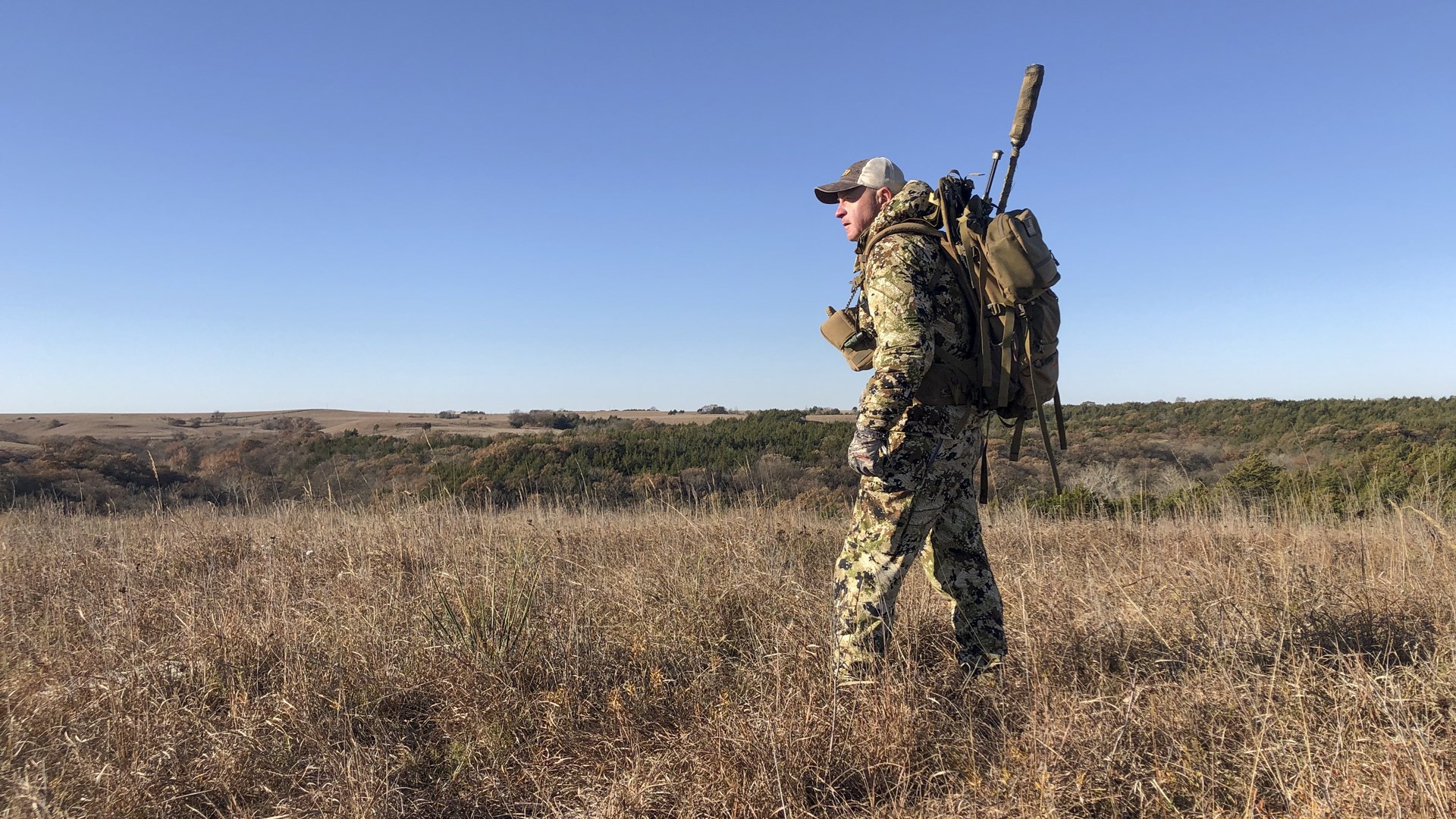
My still-hunting heritage also kicked off with whitetails as I worked the edges of picked cornfields with my old Bear bow. Today, I use still-hunting everywhere and rely on it heavily to find small bands of bachelor bulls in post-rut repose. It also plays a major role in my coyote pursuits when calls fail. From past hunts and scouting, I understand where the bulk of coyote activity occurs, hence the stand approach. When you have ants in your pants and cannot sit in a stand, roam slowly while scanning ahead.
Coyotes have sharp eyesight akin to a pronghorn. They may not have the magnification of a pronghorn, but they rarely miss anything new in their homeland. I’ve been successful sneaking up on coyotes in dense cover, but timber with openings, field edges, brushy plains and open prairies get my nod for the best still-hunting areas. To get the jump on a coyote while still-hunting, hike a cautiously sluggish pace. When you reach ridges, rises, hilltops or field corners, peek prudently with a slow-motion gander. I like to crouch as I come to any rise or corner, and then slowly raise up or around for my initial look-see.
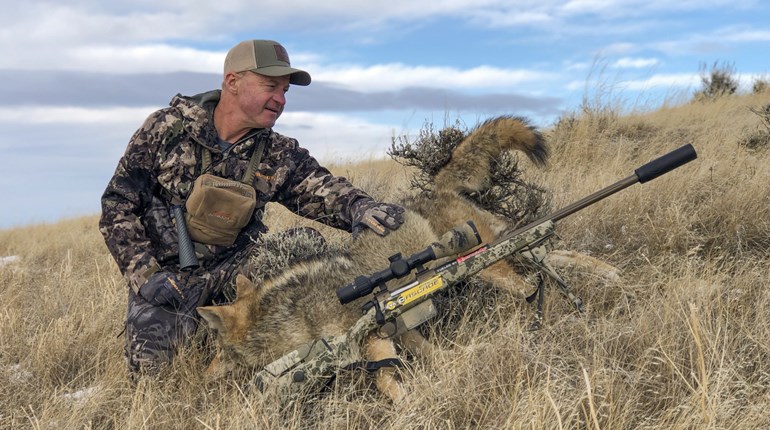
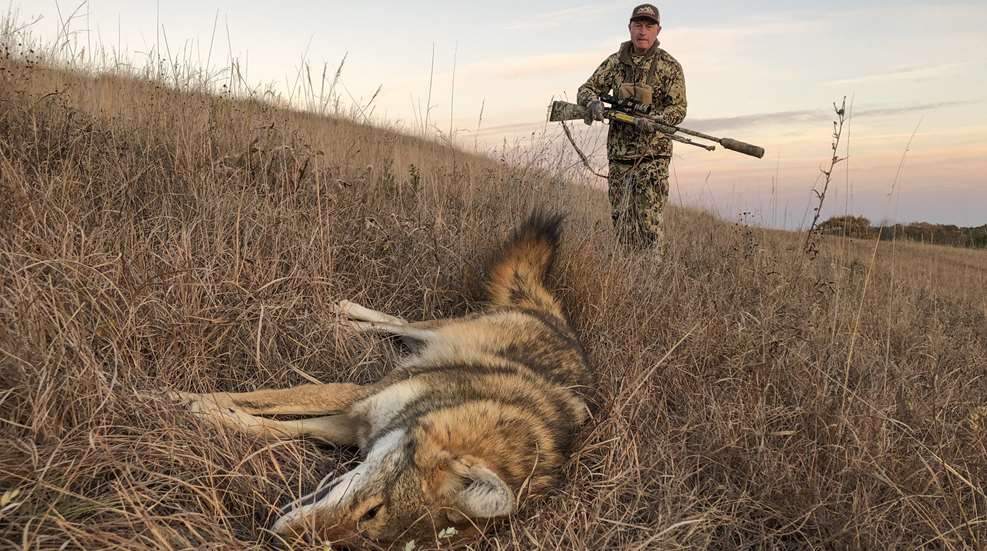
Last winter I came to a ridgetop with a broad valley a mile wide below. On my first peek I spotted a light-colored object. My 10X binocular confirmed it as a coyote walking toward me in an adjacent draw. I ducked out of sight, hustled, then crawled to the head of that draw and waited. Ten minutes later I introduced the coyote to V-Max technology.
That Smells Delicious
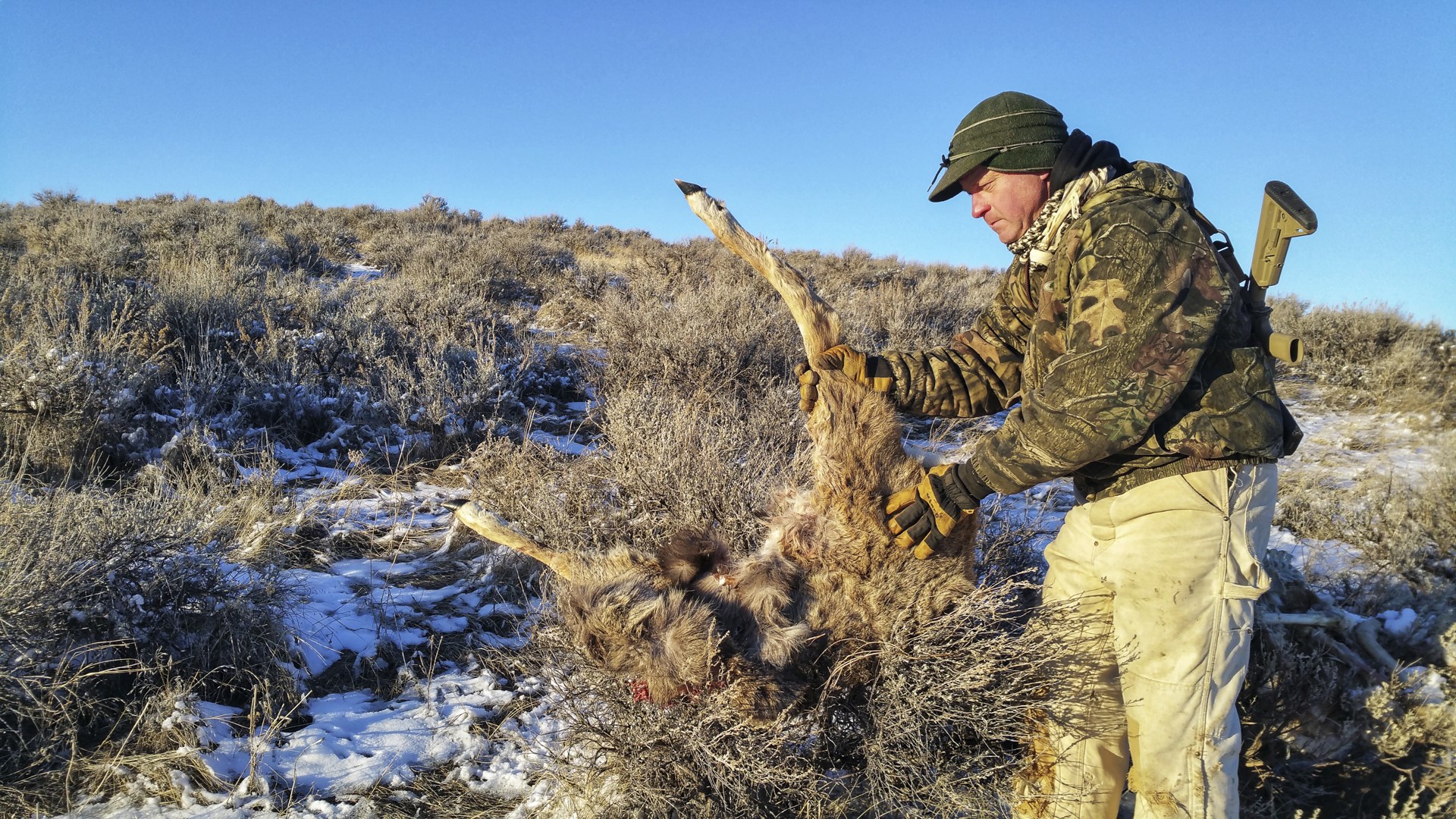
Baiting works for whitetails and bears with precision. Where legal, consider it for coyotes as well. Most years I keep a bait pile going in my horse pasture and when hunting various Midwest locations for whitetails, my partners and I set up baits for coyotes in case we tag out early. All scraps from deboned deer success get added to the bait pile along with a trail camera for monitoring coyote business hours. I have even sat over naturally occurring baits such as a dead cow or elk carcass found in the middle of nowhere. Crow and magpie activity are great at giving up the dead.
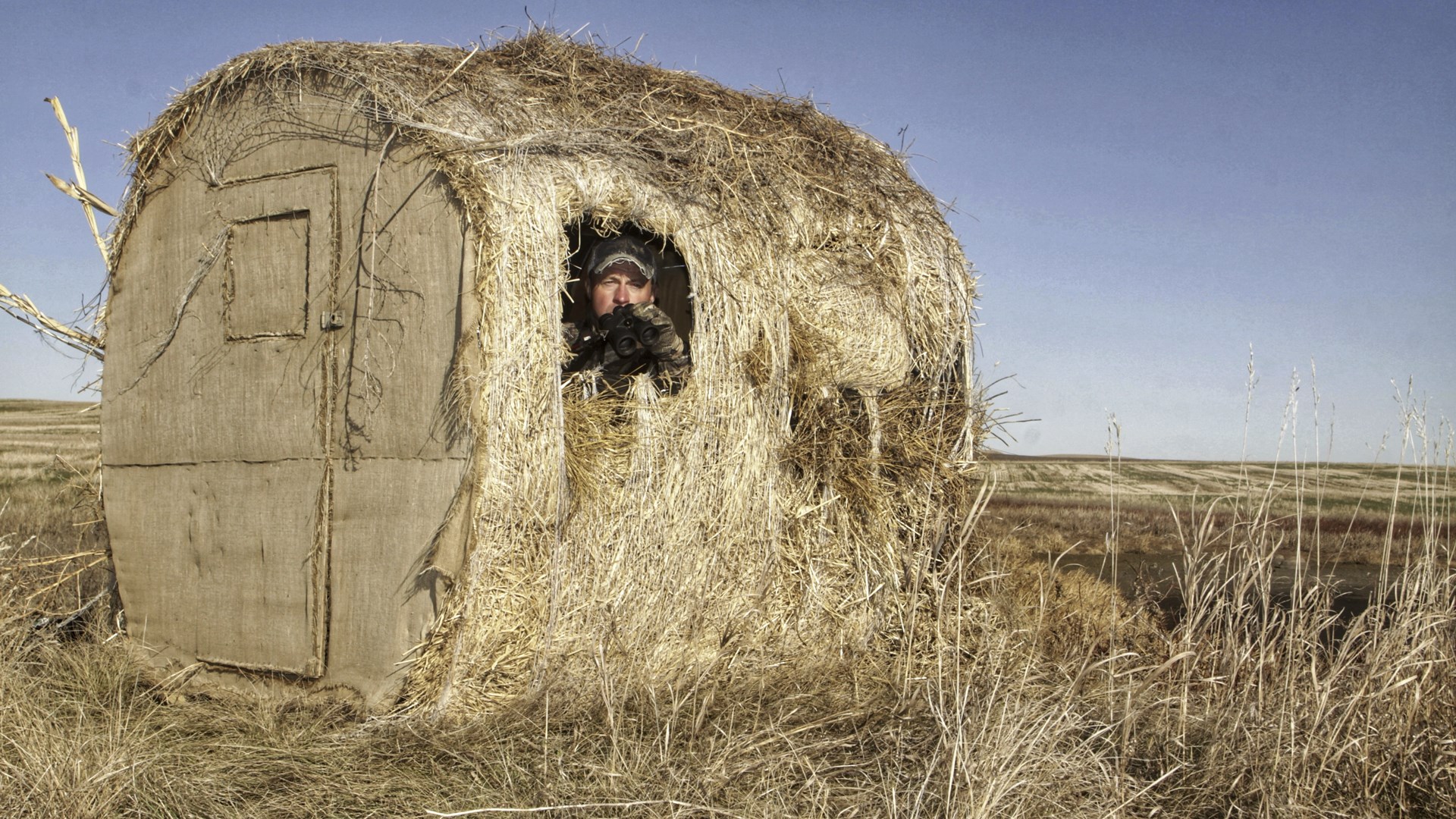
Your bait may vary, but as scavenger opportunists, coyotes rarely scoff at any free meal. Depending on the bait or whether it occurred naturally, you may want to utilize a blind for waiting comfort. Over the years I have sat blinds, laid prone on cliffs and hunkered in nearby brush to monitor a bait for coyotes. Whatever your choice of a hideout, get comfortable for at least an hour or two of waiting, with dusk and dawn prime times.
A favorite bait memory of mine took place after an early morning of coyote calling with no success. I wanted to see what lay beyond the peak on a new parcel of public land I hunted. At the summit I spotted a flurry of magpies below. While watching the magpies feast on an elk carcass, a pair of coyotes appeared and entertained me with a quick squabble over banquet booty rights. After the short show, I crawled to a better prone shooting position and one coyote had its last meal.
A Different Route Home
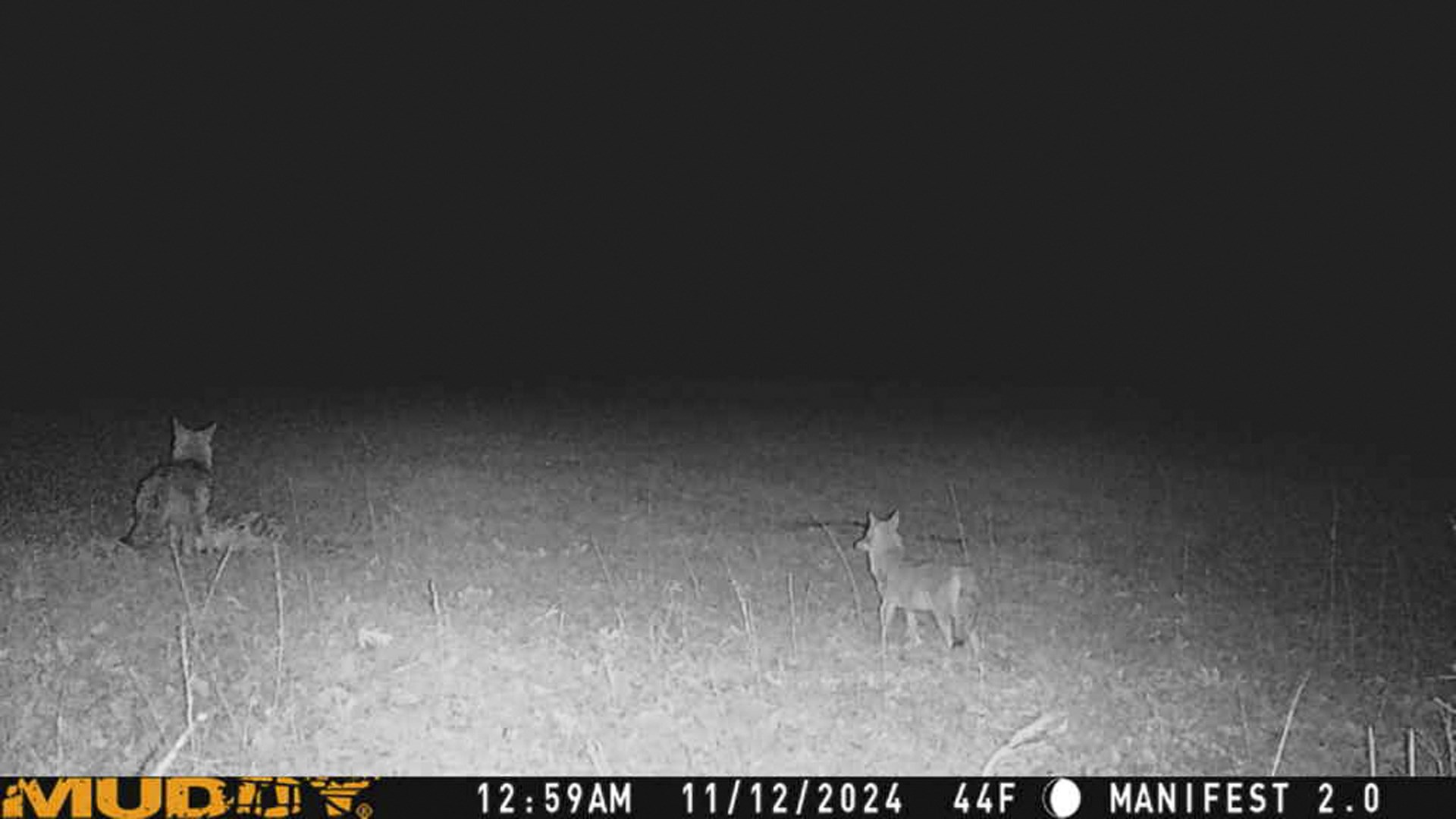
Think of this last section as still-hunting, but as a before and after thought. Unless I am hiking to a calling site in the dark, I constantly glass around me for any coyote activity on the way in. On the way out, I put myself on unwavering high alert looking for coyotes. On the way in you may stumble on a coyote busy mousing in an opening that may give you a chance to sneak closer for a shot as it occupies itself with the hunt. On the way out you really have a high chance of meeting a lackadaisical coyote that had interest in your calls, but a lack of enthusiasm to run to the sounds. Coyotes oftentimes just walk in suspiciously or with a laid-back attitude, and not from gummies.
I have lost count of the number of times I inadvertently walked right into a coyote opportunity, especially after calling. One all-time favorite included my first border collie, Sage. We called for an hour and then packed up to leave. I had hiked maybe 100 yards when I noticed my boot was untied. I knelt to retie the boot and Sage bounded ahead. My next sight was a coyote standing on a ledge watching Sage (oblivious to the coyote) pawing under a pine.
With the coyote’s full attention on the peculiar canine presence, I went prone, racked a cartridge and made fur work for myself. Every coyote happy ending does not have to be the result of traditional institutions. Stay flexible. Improvise.