Under most hunting conditions any quality bow sight attached to a decently tuned bow will deliver satisfactory accuracy provided the archer does his part. But if you shoot at long range or extreme angles, are a competitor or just a bow geek, you should level your bow sight’s various axes for max accuracy. Here’s the lowdown.
A bow sight has three important axes, and all should be properly adjusted so that you can use the sight’s bubble level while shooting. Accidentally canting the bow can ruin accuracy. While there are some hacks for precise sight leveling at home, the task is best accomplished with tools such as the Hamskea Easy Third Axis Level ($59.99) or Brite Site 3rd Axis Leveler ($85). Or you can drag your compound into the local bow shop.
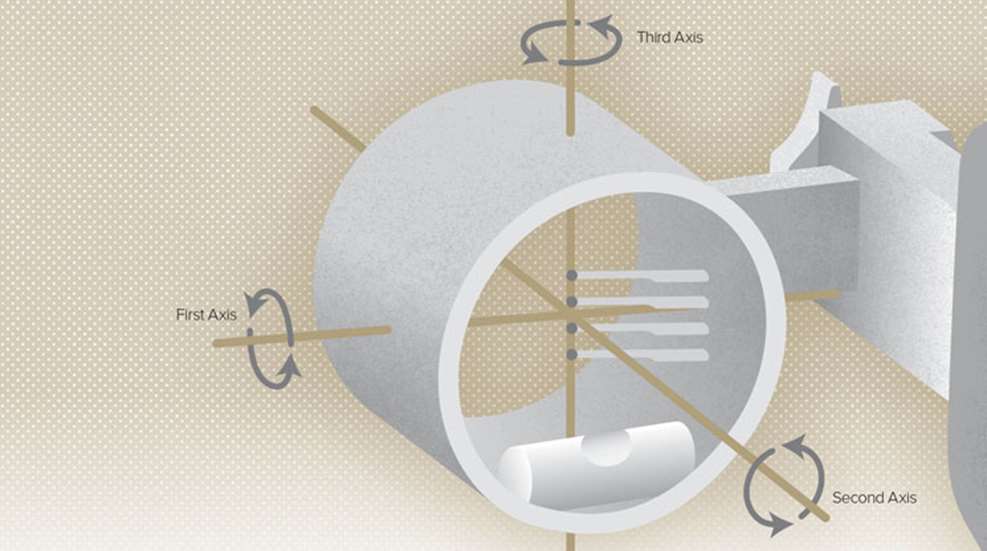
To understand what’s called the first axis, imagine a line running through the bow sight from left to right, around which the bottom of the sight would rotate toward or away from the archer like a doggie door. This axis should be perfectly perpendicular to the riser before the next two axes can be properly adjusted.
The second axis is vital to precision accuracy. Imagine a line running from the target plane, through the bow sight, to the archer’s eye. All of the sight pins should fall in the same vertical plane as this line, parallel to the bow’s riser. It’s important the plane containing the second axis be parallel to the bow and perpendicular to the sight’s bubble level. That way you know when the bubble indicates the sight is level (not canted), the sight pins are plumb and the arrow will strike on or very near the same vertical line no matter the pin with which you aim.
The third axis is non-vital unless you shoot at long distance, or extreme uphill or downhill angles—as Western bowhunters sometimes do. Imagine a line running vertically though the sight that would allow it to rotate like a revolving door. If the sight is pushed or pulled around this axis, and then angled up or down for an uphill or downhill shot, the relationship between the sight and the bow can change. Regardless of how level you think the first and second axes are, there might be a disparity between the bow’s levelness and the sight bubble’s reading. This can cause you to wrongly cant the bow to compensate, and in actuality induce error around the second axis.
The third axis is best evaluated while at full draw. Torque placed on the bow by the shooter’s hand and by the cable guard can affect the third axis. To check, draw a vertical line at the bottom of a wall. Place a bubble level on the bow. Facing the wall, draw the bow, aim toward the floor at a 45-degree angle, and make sure the bow is level by checking the bubble. The sight pins should line up perfectly on the line you drew on the wall. If they don’t, you need to adjust the third axis.
While some expensive bow sights have third-axis adjustments, most hunting sights do not. For these, a small shim such as a strip of duct tape or a length of business card placed between one side of the sight mounting bracket and the riser can often tilt the sight’s third axis enough to do the trick.