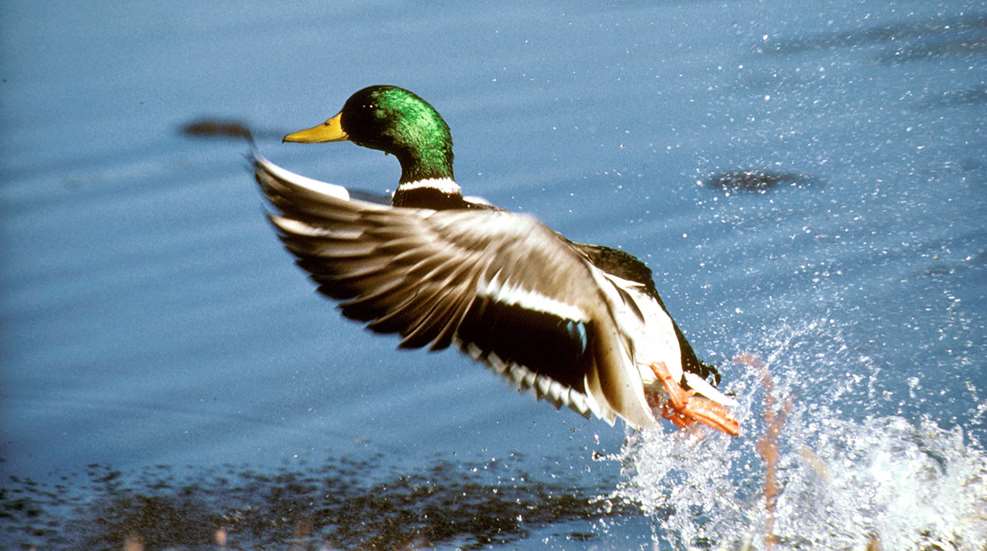
The California Department of Fish and Wildlife (CDFW) has completed its 2025 waterfowl breeding population survey. The results of the annual survey show that, when compared to 2024 numbers, both mallard and total duck species have increased.
The breeding population of mallards increased from 177,828 to 265,640, which is a 49 percent increase. Total ducks—all species combined—went from 373,864 to 474,495, reflecting a 27 percent increase. Mallards remain below the long-term average by 16 percent.
“The survey indicated an increase in mallard abundance, and habitat conditions were good in northern California, so we expect average to above-average production for all waterfowl species,” said CDFW Waterfowl Program Biologist Melanie Weaver.
Since 1948, CDFW biologists and warden-pilots have conducted this survey annually using fixed-wing aircraft. The population estimates are for those areas where the majority of waterfowl nesting occurs in California, including wetland and agricultural areas in northeastern California, throughout the Central Valley, the Suisun Marsh and some coastal valleys.
Most of the state’s wintering duck population originates from breeding areas surveyed by U.S. Fish and Wildlife Service (USFWS) in Alaska and Canada. Results of surveys there should be available by late August. CDFW survey information, along with similar data from other Pacific Flyway states, is used by the USFWS and the Pacific Flyway Council when setting hunting regulations for the Pacific Flyway states, including California.
California Duck Stamp Winner
A painting by John N. Harris of Groveland, Fla. has been chosen as the winner of the 2025 California Duck Stamp Art Contest. The painting, which depicts a cinnamon teal, will be the official design for the 2025-2026 stamp.
Judged deliberated in June and were immediately struck by the realism of the painting, almost as if the bird were alive. They noted the spot-on dimensions, specifically the shape of the head, and the perfect, finely detailed feathers. This attention to detail was also seen in little additions throughout the painting, such as the faint reflection of the teal’s eye in the water, its indistinct leg visible beneath the surface and the patches of bubbles in the swells.
Harris, who is now a three-time winner of California’s Duck Stamp Art Contest, was excited for this year’s stamp. He had never painted a cinnamon teal before, though they had been on his radar for some time.
“Over the last few years, we’ve had a few cinnamon teal overwinter at our local Merritt Island National Wildlife Refuge, so I was able to observe a couple individuals and take some beautiful photographs of them,” he said. One particular bird, however, caught his eye. “The color was amazing when the sun hit it right and it just glowed. How can an artist have any better inspiration than that? He was an absolute jewel to watch, feeding and jousting with all the local blue wings.”
Since 1971, the California Duck Stamp Program’s annual contest has attracted top wildlife artists from around the country. The contest is open to artists from all 50 states to ensure a wide pool of submissions. All proceeds generated from stamp sales go directly to waterfowl conservation projects within California.
“I knew it was one of my most outstanding waterfowl paintings yet,” Harris said. “It will be a great honor to have my artwork help conservation work and protect waterfowl and habitat in the great state of California once again.”
In the past, hunters were required to purchase and affix the stamp to their hunting licenses. Today, hunters are no longer required to carry the stamps because California’s modern licensing system prints proof of additional fees paid directly onto the license. However, CDFW still produces the stamps, which can be requested from CDFW.