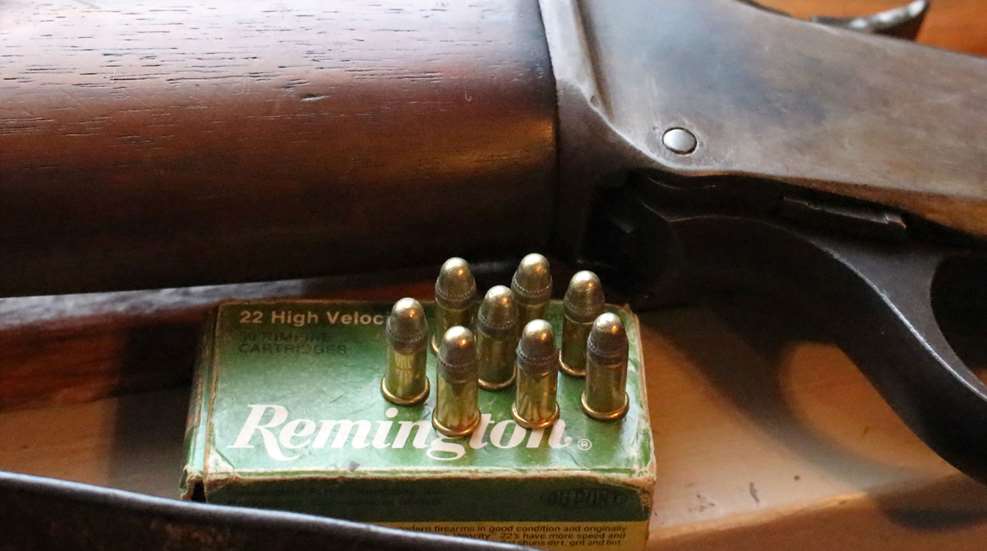
What is the first American metallic cartridge? I’ll save you the Google search—it’s the .22 Short, though it wouldn’t have that last name until its 14th birthday. When you mention a “twenty-two” (or a “two-two” for so many across Europe, Africa and Australia) odds are a hundred to one that you’re talking about a .22 Long Rifle, and rightfully so, as it has become the most popular rimfire cartridge anywhere, ever. But the .22 Long Rifle was certainly not the first rimfire cartridge, not the first .22-caliber rimfire cartridge even. That distinction belongs to the .22 Short. While many of you may not have even heard of it, let alone shot it, the miniscule cartridge deserves a place of honor, if for nothing more than inspiring the ballisticians to develop our beloved .22 LR.
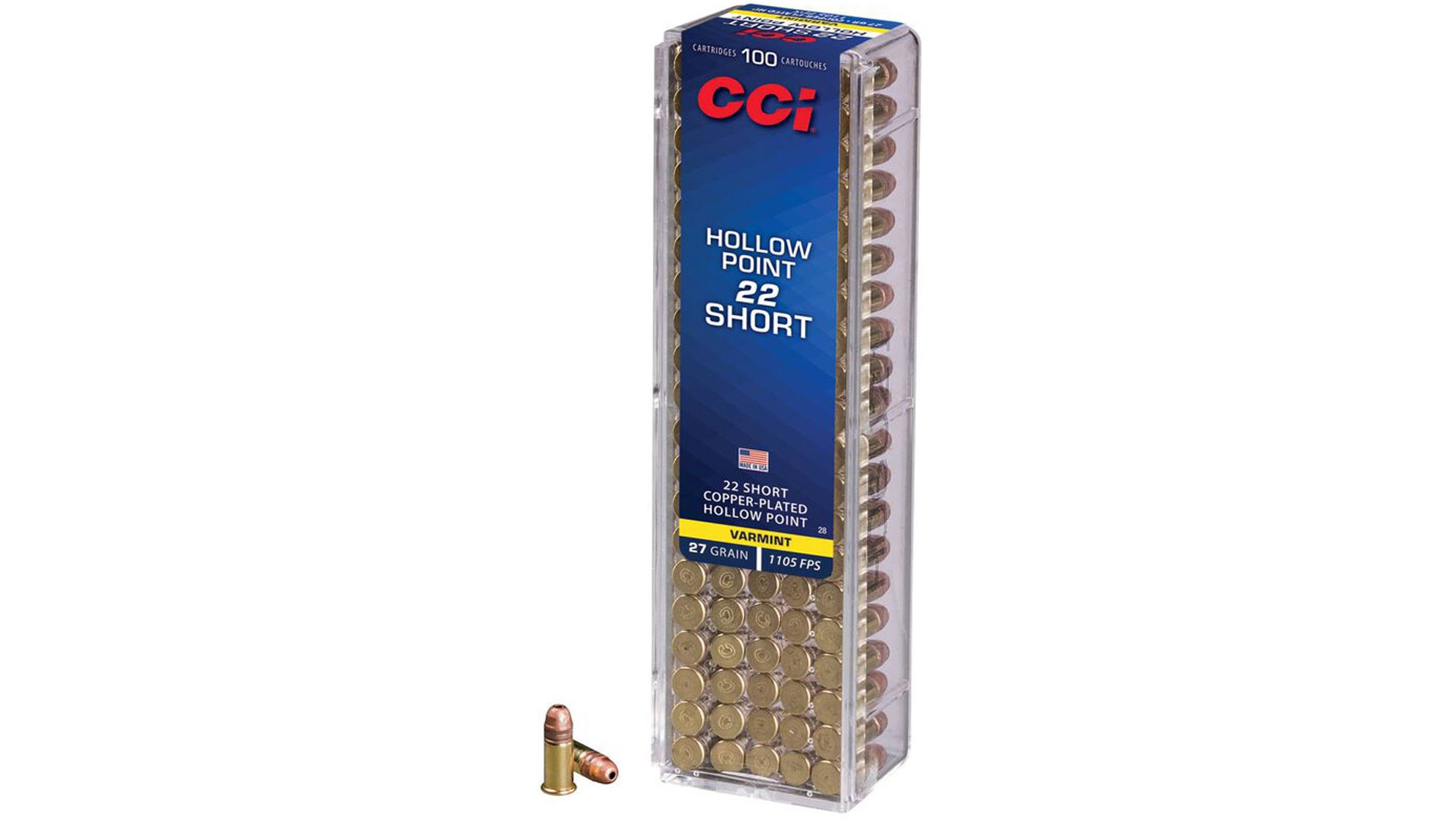
The Smith & Wesson Model 1 had the distinction of being the first defensive revolver chambered for what would become the .22 Short; it was released in 1858 along with the revolutionary new cartridge. Being the first rimmed case—the rim contained the priming compound—for proper headspacing and extraction, the .22 Short used a heeled bullet of .224-inch-diameter with a straight-walled design. The case itself measures 0.421 inches, with a cartridge overall length of 0.695 inches. The original loading saw a 29-grain bullet seated over 4 grains of black powder, and modern loads see either a 27- or 29-grain bullet at a muzzle velocity ranging from 830 fps for the target loads up to 1,105 fps for the CCI target load. The .22 Short has the same rim, case body and bullet diameter of the younger .22 Long, .22 Extra Long and .22 Long Rifle; all that differs is the case length, and any firearm chambered for any of the younger cartridges can fire the .22 Short, though the semi-auto crowd needs to be aware that the little cartridge will almost always lack the power to cycle an autoloader.
Imagine in an era where .44- and .45-caliber cap-and-ball handguns were the norm, and along comes Smith & Wesson to introduce a defensive revolver chambered for the diminutive .22 Short; there must’ve been more than a few confused folks wondering just what was going on in the cartridge world. Looking at the rimfire world which was about unfold—the Winchester Yellow Boy, chambered for the .44 Henry rimfire—the .22 Short should’ve spent a month or two on the market before fading into obscurity, but that was not the case. The .22 Short would go on to inspire three larger, faster cartridges, including the .22 Long, the .22 Extra Long and .22 Long Rifle. Ironically, the .22 Long Rifle rules the roost as the youngest of the lot, but the .22 Short somehow survives, 168 years later. The reason may lie in the utter lack of recoil and very mild report.
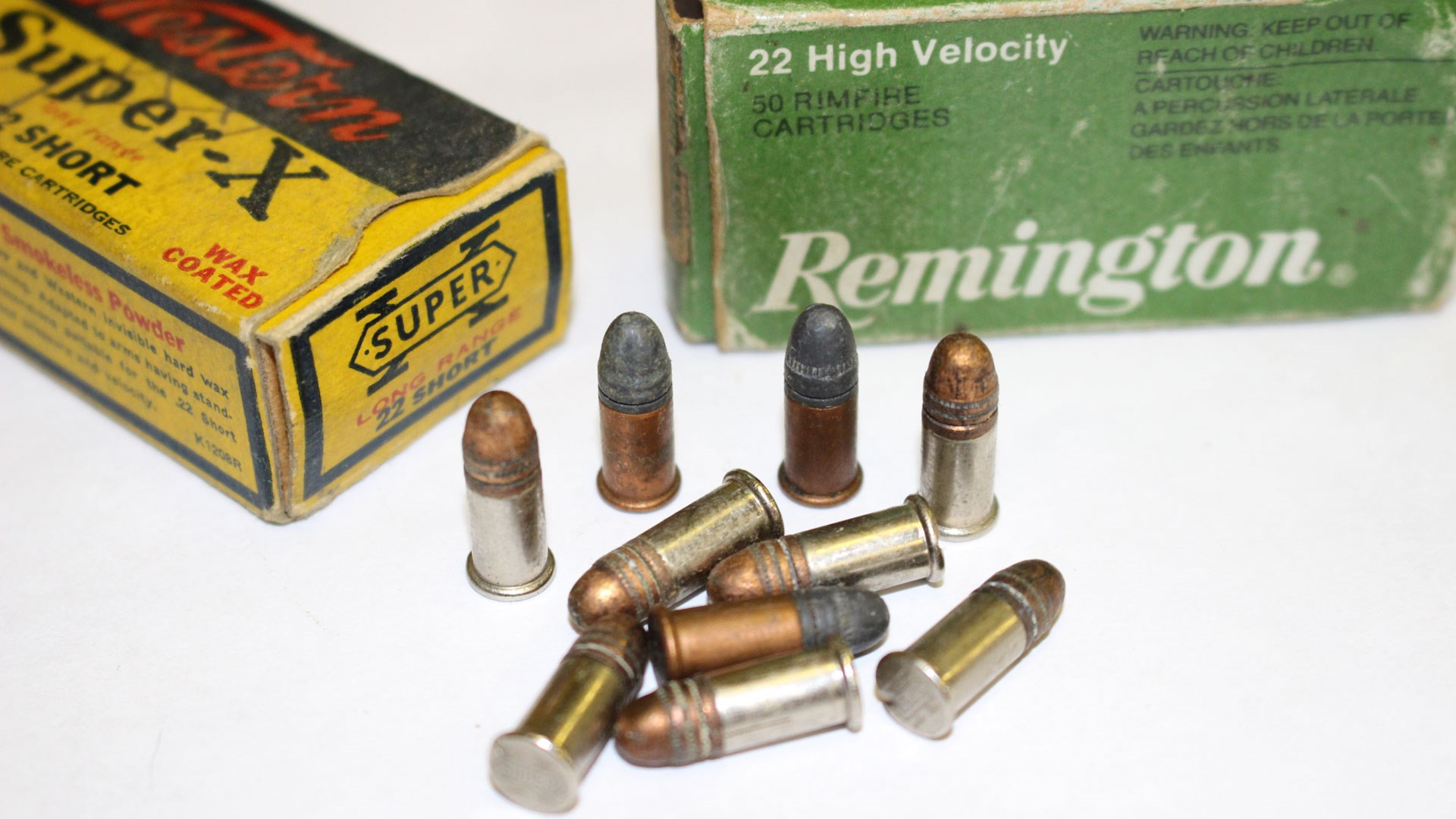
To say that the .22 Long Rifle has some sort of excessive recoil or a report which might pose an issue to the shooter is mildly silly, but in comparison the .22 Short does have less of both of those attributes. Until 2004, the .22 Short was chosen as the cartridge for the 25-meter rapid pistol event in the Olympics, and the .22 Short also served the multitude of parlor rifles throughout the late 18th and early 19th centuries. In his youth, my Dad opted for the .22 Short, as it was cheaper than a box of .22 Long or the .22 Long Rifle, and despite the lower power level, it gave him and his buddies more shooting opportunities. Surprisingly, Dad and his cronies made the .22 Short work, racking up squirrels, rabbits, woodchucks, foxes and more. Their rifles were labeled “.22 S-L-LR” indicating that the gun could handle the .22 Short, .22 Long and .22 Long Rifle cartridges alike. In my experience, those guns chambered for .22 LR show a degradation in accuracy when shooting the .22 Shorts, probably due to the longer bullet jump from the shorter cartridge, but it does work.
Factory ammunition for the .22 Short is offered from Winchester, Aguila, Remington, and CCI. The Winchester stuff sees a 29-grain bullet at just under 1,100 fps, and the Aguila mirrors the Winchester load. CCI offers two loads for the .22 Short: a 29-grain plated round nose bullet at 1,080 fps, and a 27-grain plated hollowpoint at 1,105 fps, giving the hunter a bit more expansion on game animals. Remington has two loads for the .22 Short, including a 27-grain copper hollowpoint bullet and a 29-grain lead round nose, at the same respective velocities as their CCI counterparts.
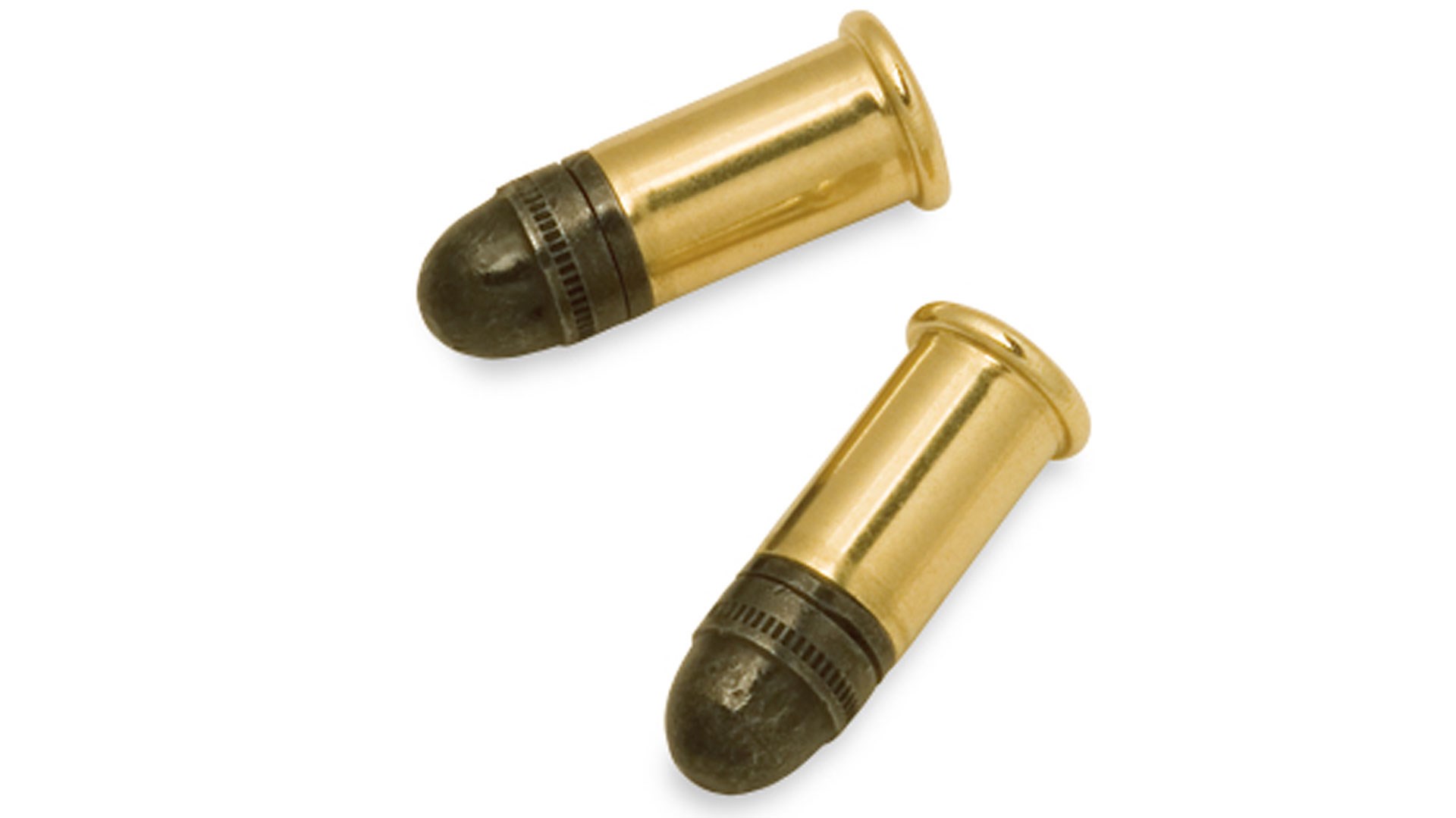
Should you want to train a young shooter, a rifle chambered to the common 22 Long Rifle yet fed with .22 Shorts makes an absolutely perfect tool. Should you need a solution for garden pests, close-quarter varmints, or the like, the .22 Short still makes an effective choice. Are we going to see many new firearms chambered exclusively for the .22 Short? Probably not, but that doesn’t mean that our oldest metallic cartridge is going to vanish anytime soon.