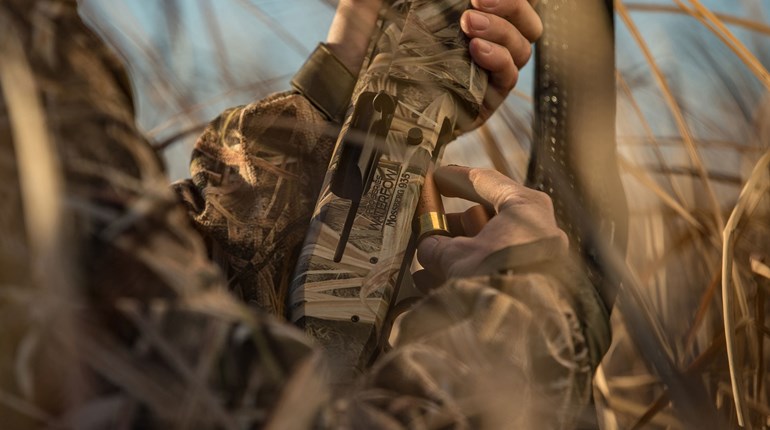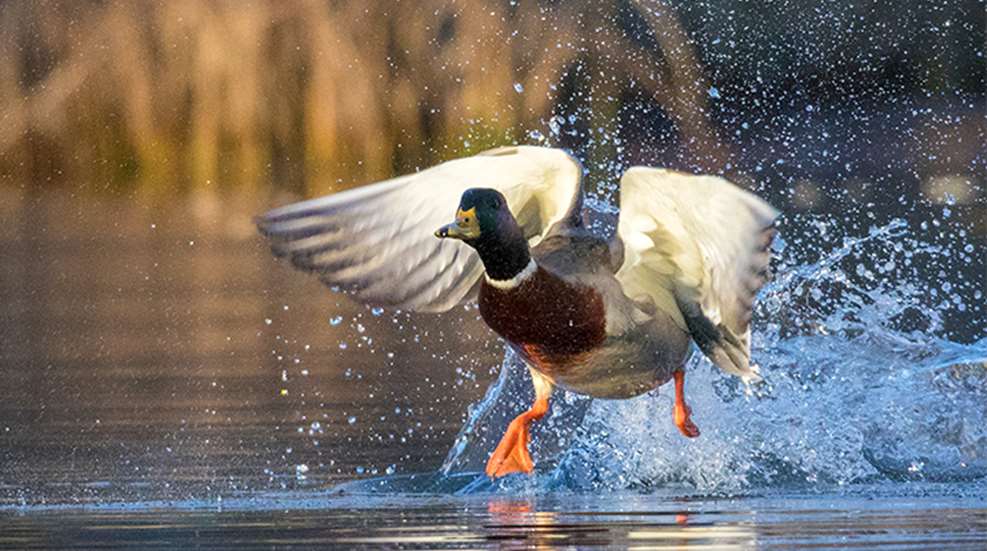
Toward the end of the season, after ducks have been called, decoyed, shot at and repeatedly fooled, those that are lucky or cagey enough to survive are, by this point, awfully wary. Late-season ducks are known to circle decoys numerous times, looking for any hint of danger before they commit. So hunters must be extra savvy with their setups and may even consider employing the following three high-tech tactics to get more limits, even as birds get wiser.
1. Add More Motion
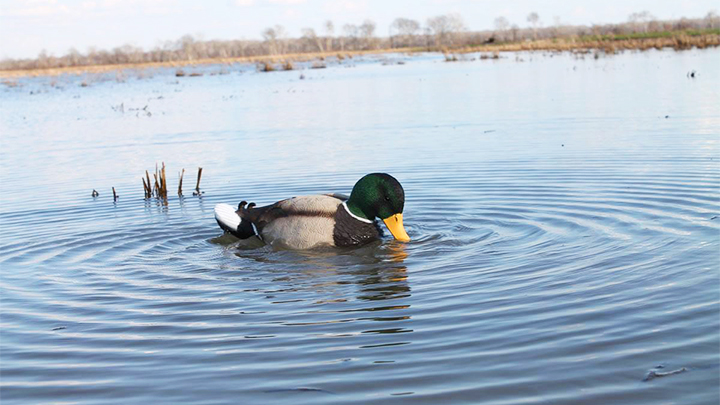
Most duck hunters know overhead birds key on motion to attract their attention and imitate the realism of birds feeding on the water, but often one little rippling decoy in a vast watershed isn’t enough to do it. If you watch a bunch of undisturbed ducks doing their thing, you’ll see motion everywhere. So, especially if it’s a calm day, consider adding a dozen or more ripple-producing decoys such as Mojo's Rippler. Place them evenly around your dekes so the ripples will cause your entire spread to move. This will look more natural to overhead ducks and will often entice them to land when nothing else will.
2. Check Your Hide
If time after time birds circle but won’t commit, it often means something is spooking them. Problem is, from your view looking up, it may be impossible to find. So, if anyone in your family or friend circle has access to a drone, ask them to come hunting with you one day. Ideally it should be a sunny day, because the sun generally highlights any problems that may be alarming birds. Ask your hunting buddies to dress and act just like they normally do when hunting, and to pretend the drone is the ducks. Send up the drone, circle it around your setup a few times then review the video as soon as possible. Look for anything that stands out—maybe the seat of a jon boat that’s had the green paint worn off and now flashes silver in the sun. Perhaps the blind’s cover is too thin and the ducks are seeing you against the background, or maybe you didn’t realize you’re being silhouetted at certain angles. Heck, maybe it’s your buddy’s lucky black beanie that stands out like a wart on a nose. The point is, the blind and all hunters should melt into the surrounding habitat while the decoys should be visible. A drone will give you a duck’s eye view to remedy any alarms your setup may be sending.
3. Start Scouting, Again
Sometimes it isn’t the birds themselves that have changed but rather the food sources or available cover. Plenty of times what used to be a hot spot suddenly goes cold, and often we assume it’s due to birds simply moving south. But before assuming anything, consider purchasing a satellite-based hunting app such as HuntStand Pro to see if you can find any crop fields or bodies of water near where you hunt. If so, find out, via scouting or by talking to landowners, if the crops there are drawing birds. If so, look for nearby water and try to gain permission to hunt there. In actuality, often the ducks have not yet moved south, they have just moved to another location. Use technology to make finding them easier.