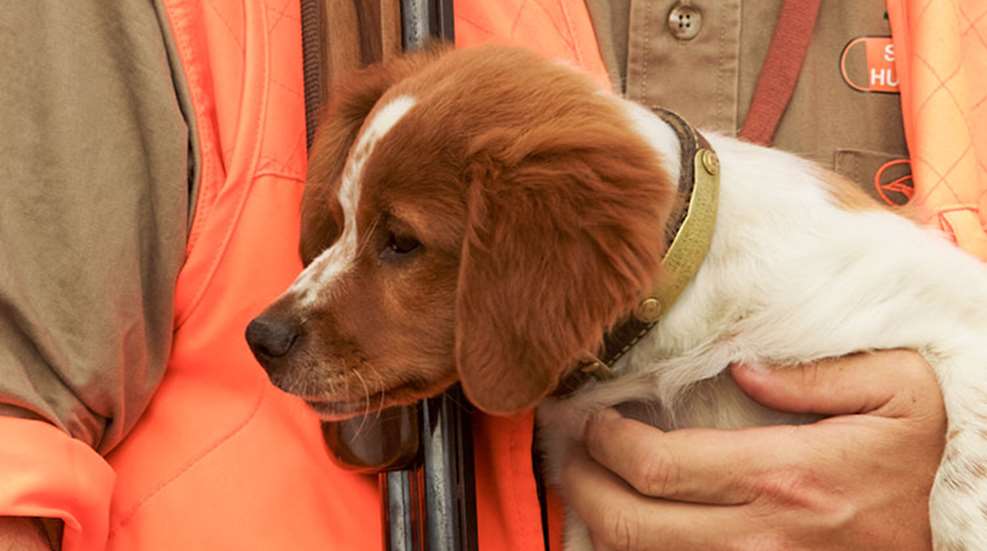
The problem with new puppies is they have no clue how to prepare for you. Think about it. Here’s this cute little pup with just eight weeks of life in the rearview mirror, and suddenly a stranger rips her away from familiar surroundings, siblings, dam and literally everything she knows, except food and water and the ground she crawls on. Then that stranger throws her in a car and even the ground is suddenly moving.
Puppy can’t prepare for you, but you can prepare for her. It will make her move less traumatic for both of you. Here are some suggestions.
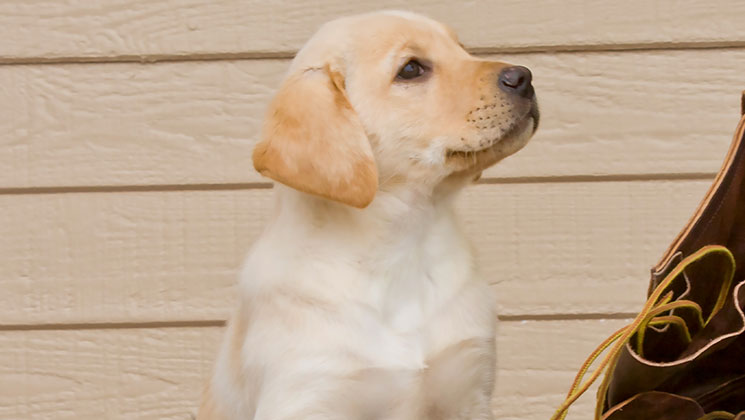
• No punishment. Puppy knows nothing, so punishing for normal puppy things like chewing, puking and pooping only serve to confuse and stress the dog. Be patient and tolerant. Negative reinforcement is only for dogs that know and intentionally ignore commands.
• Keep the atmosphere cheerful and pleasant. Before you bring Pup home, instruct the kids on safe and sane ways they are allowed to interact with her: what rooms she’s allowed into, no ear or tail pulling, no human food …
• Prepare a place. Block off any rooms, gardens, etc., you don’t want Puppy to destroy. Have a kennel ready as Pup’s “security cave,” the place where she can sleep and escape boisterous kids when tired. This is also where you keep her out of harm’s way whenever you leave for a few hours or, later, when you travel. Have a potty area established where you want her to eliminate. Take her to this spot on arrival home. Bring a sample of her doggy-do from the breeder and plant it as a clue.
• Have a small supply of the same food she was eating at the breeder’s. Day by day you can mix in increasing percentages of the food you prefer. Some vets advise three or four feedings per day (all she can eat in one session), but the latest research suggests less is better for long life and health. Pups that grow slowly and on the skinny side have fewer health problems than rapidly growing, fat pups. Two all-you-can-eat smorgasbords per day might be the better plan after a month or two. Confer with your vet.
• Keep water available at all times except after 6 or 8 o’clock at night. Young pups need to eliminate about every three hours, so stopping intake at least that long before bedtime decreases how often you’ll need to wake to escort Pup to her designated potty spot.
• Take Pup to potty immediately after each meal, and encourage her to eliminate. As she begins to go, overlay a consistent “command,” i.e. “potty” or “squat,” that should elicit a Pavlovian response with time. Praise her the instant the job is completed. You have about five seconds for Pup to associate praise with the action. After that she has no idea what the praise is for. To gauge elimination frequency, add one hour to Pup’s age in months. That’s roughly how quickly her digestive system works through a load (about four hours for a 3-month-old pup, for example).
• Wear Pup out before her bedtime. Engage in lots of rambunctious play: wrestling, chasing, romping.
• Don’t reward crying for attention. If she whines after three or four hours of sleep, take her to potty. Any more often than that and she might just be crying for attention. If you reward that, you’ll fight the crying for months, perhaps years. Rewarding unwanted behavior encourages more of that behavior. Be firm. Say “quiet” in a startling way. Add a shake by the scruff of her neck. That’s how her dam would do it. This could result in some “accidents” if you guess wrong, but that’s part of your new puppy world.
• Determine where you want Pup to sleep (kennel crate is best) and stick with it for at least the first couple of months. Eventually you’ll want to mix up all Pup’s routines so she is adaptable to new experiences like sleeping in trucks, hotels, camps. Keeping her near your bed makes the first few nights easier, but don’t let her coerce you into taking her into your bed unless you want a four-legged sleeping partner for the next 14 years or so.
• Set your alarm clock for a wake up every three hours or so, if you prefer Pup sleep in another room. Keep Pup secure by adding one of your smelly shirts to her kennel box. A ticking clock or soft, soothing music at low volume might reduce her “alone” anxiety. You can also stay with her until she’s sleeping, then sneak away.
• Potty first thing on waking. A big part of housebreaking is getting Pup to her elimination spot often and regularly.
• Throw her to the kids. Young pups are malleable and fun-loving, just like kids. Let them romp and roughhouse within reason. Pup will quickly adapt to sudden and loud noises, high-energy activity and general chaos. You can rescue her when necessary by taking her to a quiet refuge, usually her kennel, but also your lap. This teaches her that you are the master, her best buddy, her ultimate security and her trusted friend.
• Play the name game. Pup doesn’t need a name immediately. You might want to let her earn one (Klutz, Goofy), or a stroke of insight might strike (Ron’s Rambunctious Rambler). But the sooner you fix on a name, the sooner she can begin learning it. Use it before every “command” and praise (“Good potty, Rambler! Good kennel, Rambler!”).
• Keep her safe. Puppies personify joy, youth, energy and reckless abandon. Let her rip, but keep her safe by making her environment free of potentially dangerous temptations. Provide chew toys for her to demolish while keeping her from eating the furniture and indoor décor. Close supervision is easier for both of you than disappointing discoveries.
• Mix it up. As Puppy grows in size and confidence, expand her horizons. The more places, people, other pets and things she experiences, the better she’ll be able to adapt and function throughout her life. Overly protected and sheltered dogs don’t excel any better than overly protected children.