Know-How: Shooting the Bull

by
posted on August 29, 2016
** When you buy products through the links on our site, we may earn a commission that supports NRA's mission to protect, preserve and defend the Second Amendment. **
shooting_the_bull_f.jpg

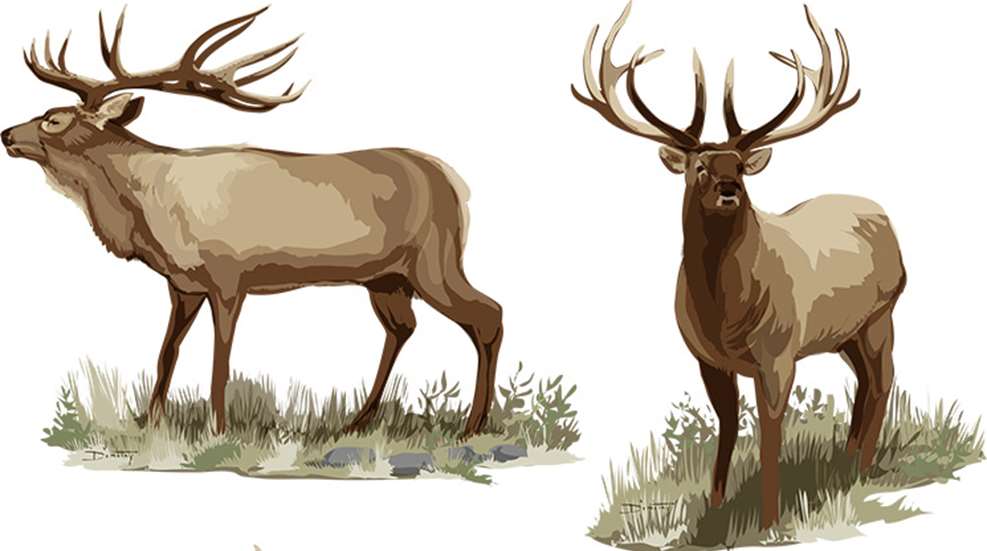
A bull elk weighs 700 pounds and doesn’t easily surrender its spirit. Mud-caked hide, massive bones, second-to-none cardiovascular efficiency and mountainous terrain make these beasts extremely tough to recover if not hit perfectly. So bowhunters should only attempt ideal shots.

The ideal bow shot and the one that offers the largest margin for error is taken while the elk stands broadside, slightly downhill from the shooter. Aim at the crease formed by the foreleg and chest, 3 inches below centerline. Perfectly executed, the arrow will destroy the aorta and perforate both lungs before exiting low behind the offside shoulder so that blood pumps to the ground. This animal will expire in seconds.

An elk’s lung area is roughly 12 inches wide by 12 inches high when broadside. An elk’s humerus (foreleg bone) does not run vertically from chest to backbone, but rather at an angle toward the neck before angling back and up to meet the scapula. This structure forms a pocket—protected only by ribs and the triceps muscle—that exposes the heart and lungs to arrows. Just don’t hit too high.

But what if the bull doesn’t turn broadside? Quartering shots are acceptable if the angle isn’t too extreme, as a one-lunged elk is often a lost elk.

“If I can’t envision a double-lung pass-through, I won’t take the shot,” says Oklahoman Bill Bolin, who’s taken 30-plus elk with his bow.

Yet elk often come in looking for the caller and present a head-on shot. This angle immediately reduces the vital zone to the size of a grapefruit. It’s not ideal, but it can be done.

“If the elk is downhill and facing me with his head up, I’ll aim at the base of the neck,” explains Bolin. “But it’s got to be close, so I know I can hit heart.”

Latest

009 Henusr25 R Gun Ready 01

Range Review: Henry's U.S. Survival .22 LR Takedown Rifle

This handy little rimfire from Henry is practical, portable and enjoyable to shoot! Check out our thorough review of the rifle here.

Saiga Antelope: Conservation Success in Kazakhstan

The Saiga (antelope) in Kazakhstan has rebounded from dangerously low numbers and has been recognized as a success by the international body governing threatened and endangered wildlife.

Hardware Review: Benelli Super Black Eagle 3 A.I. BE.S.T

The Benelli Super Black Eagle 3 A.I. BE.S.T. is, put simply, on the fast track to being considered a waterfowling marvel. Standing for Advanced Impact technology, the SBE 3 A.I. shoots its shot with  improved downrange results thanks to a very, very proprietary barrel technology that actually assists in energy retention for greater downrange velocity. Sounds crazy, right? That’s what I thought too; then I took the gun to Montana’s Bighorn River and had my mind blown.

Bowhunting Increases in Ohio, but a New Restriction Comes to Arizona

A crossbow harvest more than double the number taken by vertical bow in Ohio illustrates why Arizona recently repealed R12-4-216.

Story of a Lever Gun—The Red Plaid Project Part 1

Andi Bogard embarks on the quest to build, test and hunt with a classic lever gun in a classic way. Check out the first installment of the project here.

Moultrie Introduces A.I. Scouting

Moultrie has integrated its new A.I. into the Edge 3 and Edge 3 Pro cellular trail cameras.

Interests


Get the best of American Hunter delivered to your inbox.