Know-How: Does Your Bow Need Super-Tuned?

by
posted on May 24, 2016
** When you buy products through the links on our site, we may earn a commission that supports NRA's mission to protect, preserve and defend the Second Amendment. **
super-tuned_bow_f.jpg

Most target archers obsess over bow tuning, while hunters are often satisfied with whatever tweaking was performed on their bow moments after purchasing it. It should be the opposite.

Why? Because minimal tuning is needed to make target (field) points fly great, while broadheads exacerbate any slight tuning issue and therefore degrade accuracy. So it’s actually hunters who stand to benefit more by spending the time or money to have their bows “super-tuned.”

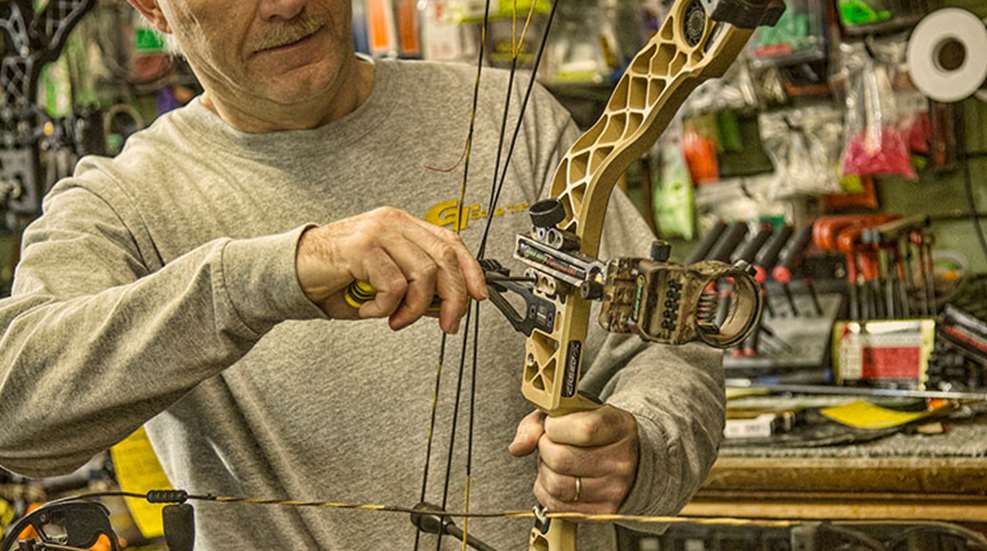
Super-tuning is a term for adjusting a bow and arrow until the pair is perfect. It takes knowledge, tools, time, and trial and error. While trained professionals spend years mastering the art, here are the basics:

With your bow set up as well as possible and your arrows spined properly, paper-tune using a bare-shaft arrow at 15 yards. (Fletching is used to correct minor flight errors, but the goal here is to allow the fletching no errors to correct.)

Using a paper-tuning chart for guidance, adjust the arrow rest until your fletch-less arrow makes a clean “bullet hole” and the shaft does not tear the paper. If this proves impossible, it means something else is out of whack. Perhaps the nock or the cable guard needs tweaking. Sometimes it’s due to cam lean, a problem that’s frequently remedied by twisting or untwisting one of the bus cables or adjusting the yoke. Often it’s a combination of all.

Keep in mind, however, that if your shooting form isn’t perfect, you’ll never get a bow to show that it’s perfectly tuned—even if it is. That’s why professionals often use mechanical shooting equipment, and they never attempt to tune bows outdoors in the wind.

Will super-tuning make you a better shooter? Probably not, but it can allow hunters to reap the maximum performance potential from their bow.

Latest

LEDERMEF Grants
LEDERMEF Grants

RMEF Grants $400,000 to Support WAFWA Wildlife Movement Projects

The Rocky Mountain Elk Foundation (RMEF) recently awarded a $400,000 grant to the Western Association of Fish and Wildlife Agencies (WAFWA) to fund three state-led projects aimed at conserving, restoring and enhancing big game seasonal habitat and migration corridors in Nevada, Washington and Wyoming.

Suppressor Etiquette: Is It Rude Not to Use One When You Can?

If you legally can use a suppressor, is it becoming rude not to? A recent hunt in New Zealand, where suppressors are almost required equipment, got Brad Fenson thinking about the question. Follow along for the pros and cons of cans, as well as a discussion of the changing cultural norms surrounding their use.

First Look: Winchester American Lever Range Ammunition

The Winchester legacy continues with American Lever Range ammunition, designed and optimized for its namesake platform.

Savings Worth Strutting Over

Several major ammo companies are running big savings for turkey hunters this season. Read on to find out how you can take advantage.

Full Camp, Filled Tags: An Elk Hunt in Utah

After years away from elk hunting, the author’s reentry into the pastime culminates in an awesome week in northern Utah where 11 elk hunters and 10 mule deer hunters fill their tags.

New for 2026: Bond Arms Snake Slayer

The Bond Arms Snake Slayer has earned its reputation as one of the most trusted and versatile defensive firearms for outdoor use, favored my backpackers and other outdoorsman looking for lightweight snake defense.

Interests


Get the best of American Hunter delivered to your inbox.