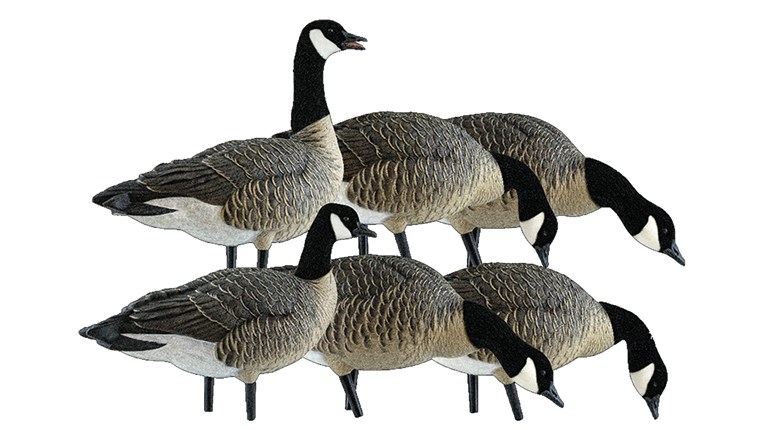
Contrast is what makes a decoy stand out, due not only to its color but also its size and the shadow it casts. If you want to increase your spread’s effectiveness, start with oversized, or magnum, decoys. Almost every top waterfowler I’ve interviewed advocates magnum decoys, including Kelley Powers.
“Oversized decoys are far more cost effective than standard-sized decoys,” says Powers. “At a certain elevation ducks have a hard time seeing standard decoys, but they can still see super-mags, in part due to the shadows they cast. In highly competitive areas, big decoys are a better draw initially, getting the ducks’ attention first.
“Any hunters who frequent Reelfoot Lake [Tennessee] in the early season have seen high-flying ducks pitch down to the beds of dried lily pads that stick out of the water as the lake dries up. When they get close enough, the ducks will see the pads aren’t other ducks and they’ll break away, but the lesson is clear: The big shadows cast by the tall lily pads create enough contrast to be visible from way up and look like they could be ducks.”
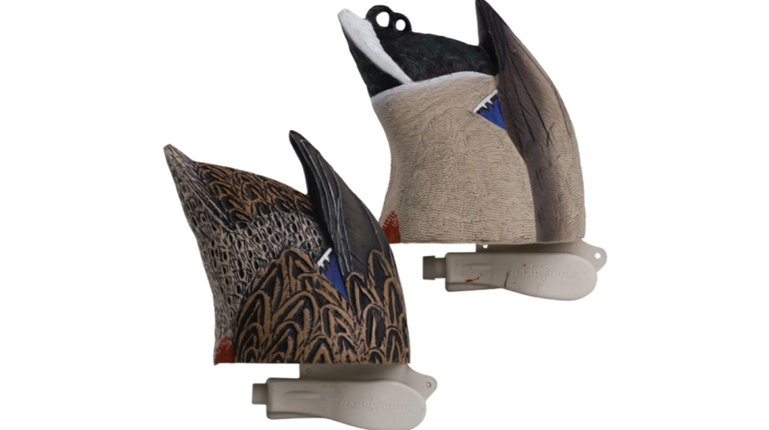
To increase your spread’s visibility, Powers suggests using drake decoys only. “We have 65 dozen decoys at our club, and do you know how many are hens? Not one. Hens are a waste of decoy-bag space. Their browns blend into the water too much, whereas the whites on a mallard drake really stand out. We also use pintail drakes, because of all the white, and also a lot of drake black ducks. Black is also visible from great distances, so use them even if you don’t have black ducks where you hunt.” If you’re wondering what to do with all those brown hen decoys, a can of flat-black spray paint could be your answer.