Can a Gobbler's Beard Rot Off?

by
posted on June 2, 2014
** When you buy products through the links on our site, we may earn a commission that supports NRA's mission to protect, preserve and defend the Second Amendment. **
bs_2015_fs.jpg (5)

undefinedThe Myth
I was in a turkey hunting camp this spring when someone spouted, “Yea, my gobbler would’ve had a 13 inch beard, but it wore off and so it’s only 10 inches.”

To which another guy then replied,” That’s B.S. Turkeys’ beards don’t wear off or rot off.”

And of course this comment spurred vigorous debate and copious name-calling. In the end we failed to find the answer. So I want to know: Can turkeys really wear off their beards? Can beards rot off or otherwise fall off?

The Long and Short of It
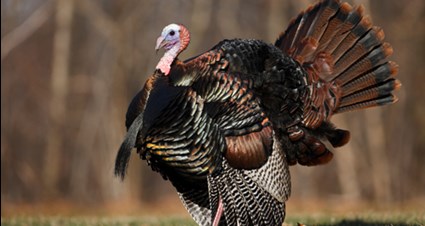
A simple Google search revealed a very good Frequently Asked Questions page about turkeys from the Pennsylvania Game Commission. It clearly states the following fact: “Turkey beards are actually comprised of bristles or filaments that appear to be hair-like, modified feathers known as mesofiloplumes.”

The fact page also says that turkey beards rarely get longer than 10 or 11 inches because the beard begins to drag snow or the ground and wears off. But it said nothing about rotting beards, so I called Mary Joe Casalena, the Pennsylvania Game Commission's chief turkey biologist/guru. She’s also a hunter.

“If a turkey has a vitamin deficiency it will show up in its beard like a rust-colored ring around the beard,” she said. “It will be brittle and can break off." She does not believe “rotting” is a common culprit of beard break-offs, but vitamin deficiency is. It's thought that hunters often mistake this rust-colored ring for rot.

The Answer
Turkeys’ beards can certainly wear off, be broken off, or be shot off! But they likely don't rot off. Regardless, if someone tells you their gobbler should have had a 15-inch beard if it hadn’t worn off, tell them that you would be the Jeopardy champion if their nonsense hadn’t worn off on you!

Latest

LEDE Bighorn
LEDE Bighorn

Copper Mine Helps Boost Arizona’s Bighorn Population

One of the world’s most productive copper mines is also one of Arizona’s most reliable sources of Rocky Mountain bighorn sheep. The bighorns are not shy about entering the Freeport McMoRan open-pit mining operation—near Morenci, Ariz.—but predators are. As a result, there’s no natural check on sheep population growth.

#SundayGunday: Savage Arms AC30 B.O.B. Suppressor

This week, Shooting Illustrated's Jay Grazio makes a guest appearance to showcase the Savage Arms AC30 B.O.B. suppressor.

Upland Birds of the Wild West

Big game attracts many hunters to the West, but the region is also home to some of the country’s best upland bird hunting.

Big Buck Business: Whitetail Gear Roundup

Have you noticed some holes in your deer kit this season? Some shortcomings that need addressing? Check out this roundup of whitetail gear tailor made for dropping big bucks.

NRA Foundation Donates $30,000 to Help Feed Missouri Families

The NRA Foundation has once again stepped up to fight hunger in Missouri, donating $30,000 to help feed children and families across the state through a partnership with the Conservation Federation of Missouri (CFM), Feeding Missouri, and the Share the Harvest Program.

New Video Demonstrates Benefits of School Programs on Conservation

The latest Partner With a Payer video released by the U.S. Fish and Wildlife Service highlights the impact of youth shooting sport programs and the role they play in long-term conservation funding.

Interests


Get the best of American Hunter delivered to your inbox.