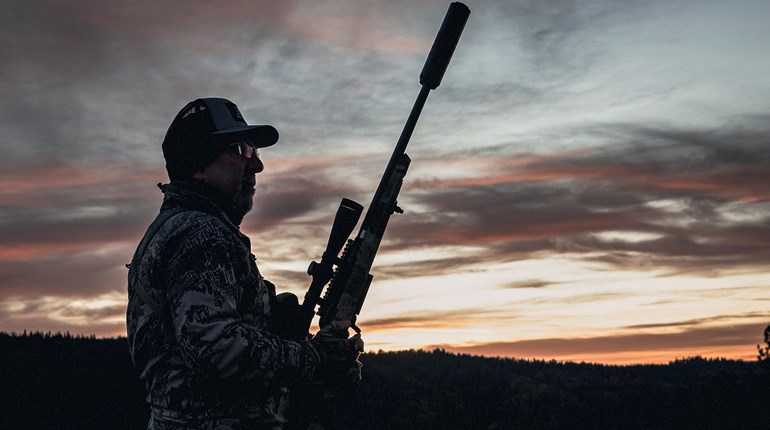
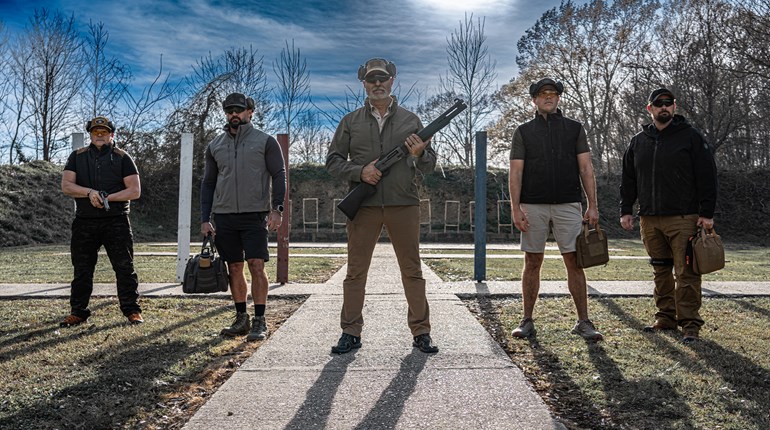
Chip Beaman is a 22-year Navy veteran, a former member of several SEAL teams and now a trainer for the U.S. government. He's also an instructor at Sportsman's All-Weather All-Terrain Marksmanship at FTW Ranch in Barksdale, Texas, where we met. A visit with him reveals just how far the majority of us need to push ourselves to make ready for the field.
The following interview is an excerpt from my book, "Make Every Shot Count," available at SafariPress.com.
"At SAAM our No. 1 goal is to be sure every shooter leaves the training facility understanding where his or her capabilities lie, given the situation. You should always train 20 percent farther than you'll hunt. If you determine your maximum effective range as a hunter is 300 yards, rehearse at 400 yards. Log everything in a notebook.
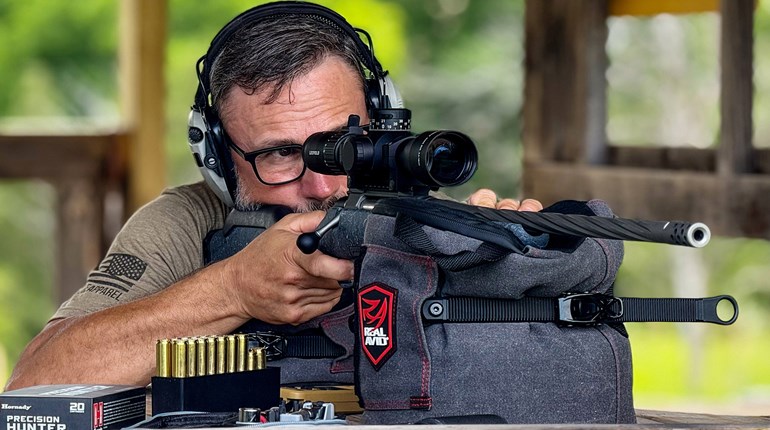
"Build your house first. You gotta build that foundation regardless which position you use. The first time you do it, it might take you 60 or 70 seconds to build your house. But that time will improve each time you do it. Don't forget about your chicken wing—your strong-side elbow. If you get that right elbow pinned down you can do amazing things. If you've built your house enough times, you'll know before you shoot whether you're ready. You'll think, ‘This house is not built properly. That wolf is gonna come and blow it down.'"Find your natural point of aim. Relax your muscles by using bone support. After that it's all about FBS—focus, breathe, squeeze. And don't forget to follow through.
"This all seems so simple, but when I started shooting seriously I didn't get it. I didn't accept the fact that the human brain can focus only on one thing at a time. After the shot broke I'd ask myself, ‘Where was your focus?' I figured out I was looking through the scope at the target. You've got to have crystal-clear focus on that reticle. It can melt away—and you can lose it. When that happens I move my eyes to the right, focus, then I move back to the center, to the reticle.
"Don't waste a dry fire. The purpose of it is to execute a perfect live fire. You have to understand what it is you're looking for. It's not just about seeing your reticle stay still when the trigger clicks. I'm always looking at my students, watching them roll their wrists, I can tell right when the trigger's gonna go. I can watch that wrist start to roll. They're not disengaging their trigger hand. You have to disengage.
"I always do a number of dry fires before loading my rifle. Some of them are dedicated solely to my hand. Watch your hand, get it loose. I mean, this isn't a monumental thing you're doing. Get it in gear. Sometimes ‘jerk drills' help. Have someone else load/not load your gun so you won't know whether you're squeezing the trigger on an empty chamber. Your reaction will tell you a lot about your state of mind.
"It breaks you of ‘farming a shot,' of firing and immediately creating an excuse for a miss. The bottom line is, when you walk into the field you've got to know the dope is on, that you're on, that you're ready to rock."