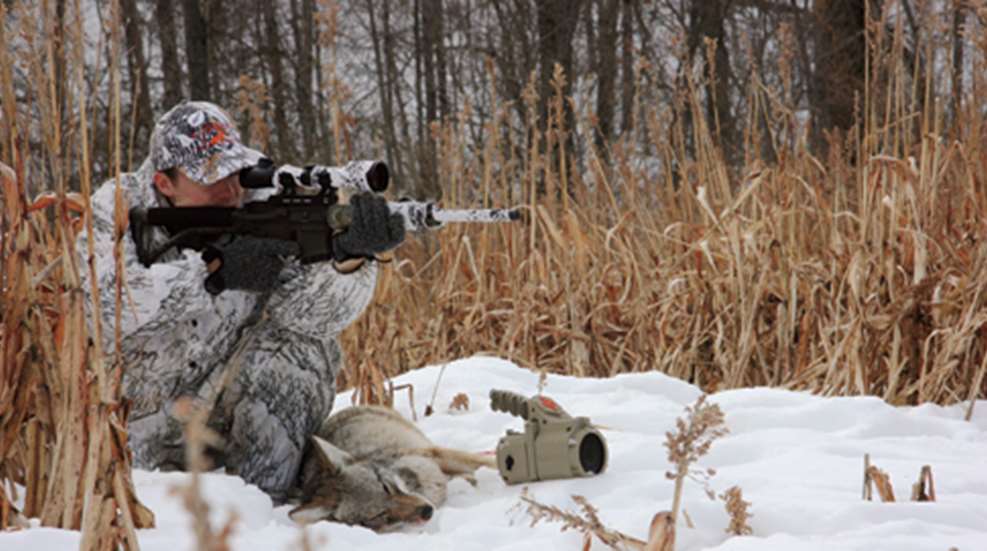
There is no question that Eastern coyotes are tough targets. Populations are relatively low, the coyotes interact with humans and become educated and the dense terrain favors them. But, unlike unicorns or Bigfoot, it is possible to locate and shoot an Eastern coyote.
Set Up and Call Often
The biggest problem is that there are simply fewer coyotes per square mile in the East. The more setups you make, the higher your odds of success. Too many hunters call from a couple locations, proclaim it hopeless and quit hunting. An Eastern coyote hunter must be persistent. Keep thinking the next stand is the one, and sooner or later it will be. Of course it helps to call in locations where there are coyotes. If none can hear your calls, it doesn’t matter, so first scout to locate coyotes.
Find Sign, Food Sources
Drive or walk back roads and trails while looking for tracks and droppings. Without snow, tracks are hard to locate in the East, so I mostly look for tracks in muddy areas or in the dust along dirt roads. Droppings can provide proof of life for coyotes and a clue to what they’re eating. Look for things like rabbit, mouse or deer hair. Figure out what they are feeding on that time of year and concentrate your efforts in locations with that food source. In northern areas with severe winters, mid-winter coyotes will be in the deer yards, particularly if the snow is deep. Yarded deer are easy targets and they provide a good ratio of protein-to-energy expenditure.
Try Locator Calls
Another good way to locate coyotes is to use a howler, particularly as the breeding season heats up in February and March. Prowl the back roads well before daylight, stopping every half-mile to howl. When a coyote responds, mark the location and drive on. By daylight you might have several coyotes located. Be careful when you return to that location, as the coyote may be close. Don’t go exactly where you howled from, but sneak into a spot a couple hundred yards away and try calling.
Respect the Dog’s Nose
Anytime you are calling coyotes you must be aware of where they could be at all times, including while you walk in to your calling location. Most hunters are aware of the wind direction when they are calling, but a lot forget about it when they approach their calling locations. A coyote trusts his nose above all else. If you let your scent drift to the coyote before you call, he will be on red alert and will probably not respond. Make sure you move into your calling location from a direction that does not betray you.
Use the Terrain
Another huge problem with calling Eastern coyotes is the terrain. While 200-yard shots are common out West, in the East a 50-yard shot is likely. Coyotes can remain hidden as they come, which is another reason success rates are so low here.
While a young coyote may charge in to the calls, an older dog will circle downwind to see what’s happening. If you have called coyotes much in the East then you have experienced the heartbreak of leaving a calling site only to find fresh tracks crossing your back trail.
The best site, like a river or a cliff, will have a barrier to prevent the coyote from circling downwind. Another good feature to have is open terrain, like a meadow, on your lee side so the coyote must expose itself.
One trick is to place scent 50 yards on either side of you. If the coyote circles it may catch this scent and follow it rather than continuing to your scent-stream. Position the scent so you can see the coyote approach. Rabbit scent is the obvious choice, but red fox urine works well too.
If you hunt with a buddy, try placing him downwind from where you’re calling. Many times this person will get more shots.
Lastly, wear camo that matches the terrain, sit back in the shadows and do not move! Coyotes are programmed to spot movement. Dress warm, shoot straight and bring a sharp knife. Fur prices are decent, and I’ll bet you know somebody who would love a nice coyote coat.