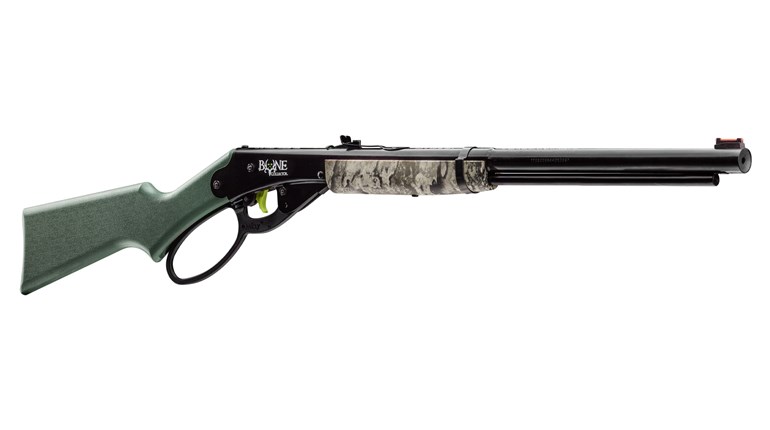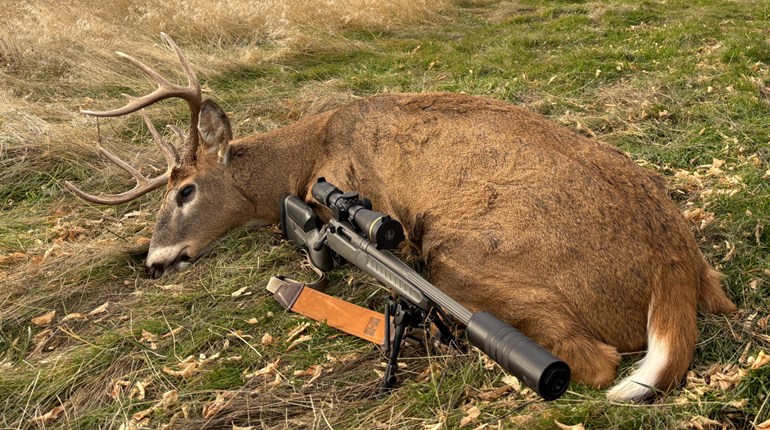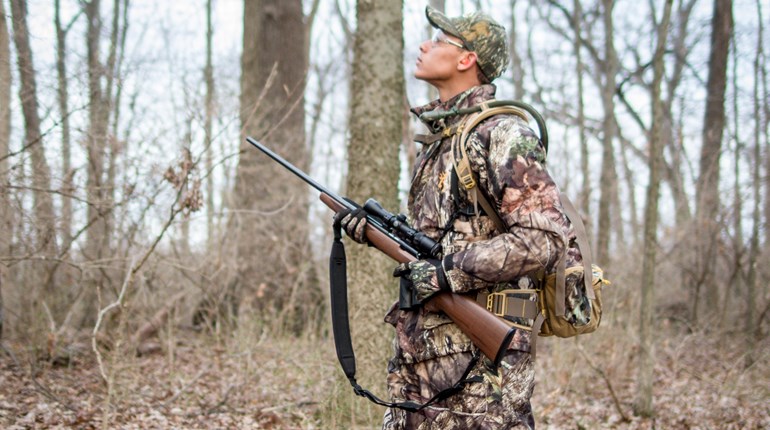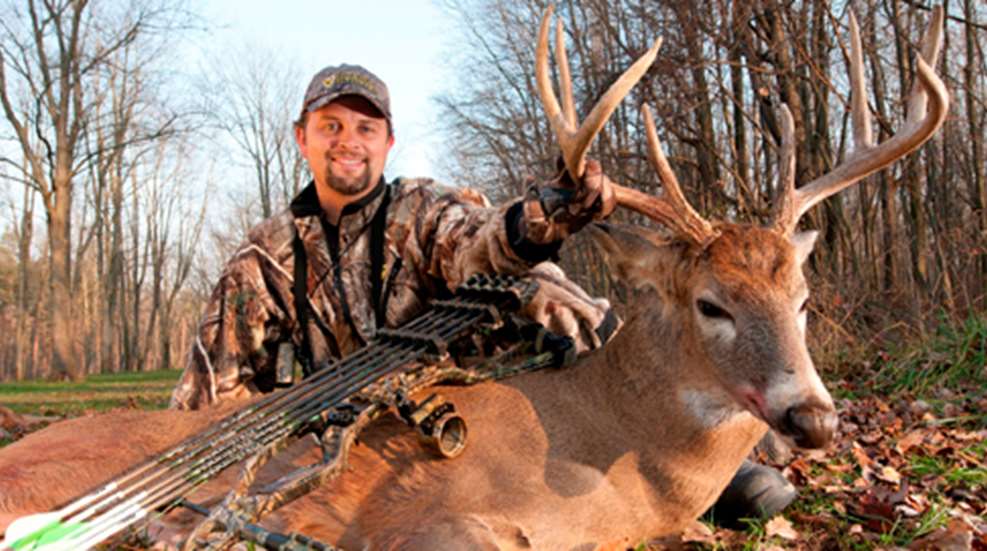
His face can be seen during virtually every commercial break on outdoor television and on display in almost every sporting goods store across America. Not bad for a good ol’ boy who proudly hails from a tiny place called Booger Bottom in the deep piney woods of Georgia. A former employee and accomplished cameraman for camouflage powerhouse Realtree, Michael Waddell’s star shot skyward when he stepped to the other side of the camera, initially on the long-running hunting show “Realtree Outdoors” and then as the star of “Realtree Road Trips with Michael Waddell.” Most notably, he’s now also the star attraction of his own branded creation, Michael Waddell’s Bone Collector, which, beyond the program on the Outdoor Channel, has its name attached to virtually every category of outdoor product on the shelves. From guns and knives to optics and blinds, there’s a Bone Collector model available.
So what pumps this high-energy outdoor fanatic up more than any other pursuit? In one word: whitetails.
“I have to say, I love hunting whitetails more than any thing else in the woods,” Waddell said. “Especially with a bow and during the rut.”
But deer could care less that your name is Michael Waddell or that you’re the host of some of the most popular outdoor shows in television history. So when it comes to strategy, Waddell has to calculate and plan like any other hunter. Following are thoughts on how he approaches the rut and ensures that every day in a stand during these precious few weeks counts for all it is worth.
Take Time to Scout
It doesn’t matter if it is the first day in camp of a five-day hunt or the first day in several weeks that you are revisiting your local hunting spot, if you haven’t been hitting the woods on a daily basis where you are about to hunt, Waddell strongly suggests you take time to survey the situation before plunging in.
“Since most guys will be hunting their home woods during the rut, hopefully they’ve been running a few trail cameras to monitor deer activity in their absence,” Waddell said. “First thing you want to do before hitting your stand is take a look at those pictures.”
Size up the bucks that you have in the photos and identify which stands they’re near, the time of day they’re showing up and if you have photos of does snapped right before to indicate whether bucks might be trailing hot does or simply wandering around.
“If you see a sudden flurry of bucks in the photos that you haven’t captured on camera before and they’re spread throughout the day, you know it’s game on and time to get in the woods as quick as you can,” he said. Even so, whether simply sitting with a binocular in his hands or toting the bow or gun with him, the first day Waddell hunts a certain spot, he wants to set up where he can see a lot of area. This allows him to catch more deer on the move, hopefully spot a buck worth hunting and figure out where the deer are comfortable traveling. Then he adjusts his stand accordingly to put himself in range.
Set Up on Travel Corridors
If bow season is still in, he’s going to choose setups that will put him within 30 yards of likely travel routes—particularly funnels—where bucks travel in search of does. If gun or muzzleloader season is in, obviously, he can set up in a spot that offers more reach for a shot, though he still wants to be set up along those funnels.
“From the pre-rut into the rut, as bucks are running all around in search of does, funnels and natural pinch points are the type of area you know they will have to travel through,” he said.
Get Aggressive
As the rut is heating up, it is the “best time to be a little careless,” Waddell said, particularly those days just before breeding peaks.
“Deer are on the move so a lot of hunters think now’s the time to just sit in a good spot and wait for ol’ big boy to come along so he can crush him, and certainly a lot of deer are killed that way. But I think this is the best time to crank it up and really make something happen,” said Waddell. “There is a three- to six-day window just before breeding where you want to be as aggressive as possible.”
Deer are running around like crazy right now, looking for hot does and ready to fight challengers, so the longtime deer hunter argues that it’s also the best time to decoy and call deer into easy range.
“I love a decoy during the pre-rut as it gives a crazed buck something to visually focus on as he comes to your calls,” Waddell said. He notes that hunters should never go into the woods without a call, particularly a grunt tube and rattling antlers or a rattling bag, at this time of the season. Estrous deer bleats can also produce, particularly when hunting bucks that are not as aggressive as others.
Waddell sets his decoy up in the open about 20 to 30 yards from his stand if hunting with a bow and within 50 to 70 yards with a rifle. Buck decoys work best as deer are more easily drawn to challengers at this time than they are to a doe, despite the fact that they are in search of breeding females.
He’ll then work at rattling one up with a series of rattles that typically last a few minutes in sequence.
“Like anything, it doesn’t always work, but when it does, it can bring a buck running, so you want to have your gun or bow ready and stay alert,” he said. If he spies a buck cruising within easy hearing distance, he’ll hit it with a grunt or two until he catches the buck’s attention. That’s usually enough to bring it in closer.
The Killingest Call
However, at this time of year, Waddell loves the snort-wheeze, a call a lot of hunters fail to add to their calling repertoire.
“I use a snort-wheeze all the time during the rut. It is the killingest call you can use,” Waddell said, recalling a recent hunt where he scored on a 4 ½-year-old 10 point. “He came from 100 yards to within 40, got suspicious of my decoy and was leaving. I could see his butt just turned to me when I snort-wheezed. Man, he wheeled around and came charging right on. I love that call.”
Deep Cover Feed
As breeding action picks up, buck visibility drops—particularly among big bucks—because they are locked down with hot does waiting for their chance to breed them.
“The peak of the rut can actually be the hardest time to kill a big buck,” Waddell said. “It can also translate into some of the slowest, most boring hunting of the season, but you can still score if you pull away from the feeders and food plots.”
Bucks may hang tight to a hot doe for a couple of days waiting for his chance, but in that time, Waddell says that does are still going to want to eat, even if the buck is interested in only one thing. For that reason, Waddell seeks out heavy cover close to deep woods or unexposed feeding areas such as a stand of oaks bordering a thick, gnarly cutover and waits for the deer to slip to the feed just before dark or catch them at first light.
“If you catch a buck locked on a doe, this is when you are going to have to put your stalking skills to the test. Use the wind, take your time and try your best to slip in on him,” Waddell said. “He’s still focused on her so he won’t be as alert as you’d expect. It’s your best bet now since you’re definitely not going to call him away from that hot doe.
“Let’s face it, if you’re on a date with the hottest girl in town, are you going to take off in search of another date just because someone sends you some random texts? I doubt it.”