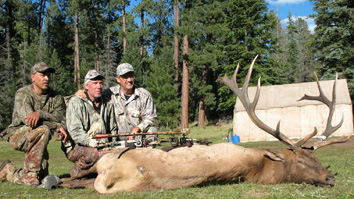
How many articles have you read that begin something like this: “It all started when I learned I had finally drawn that tag of a lifetime!?” The author then goes on to tell you about the giant bull elk or muley buck or bighorn ram he killed and how thankful he was to the stars above for the opportunity.
Such articles are highly misleading. They make the average Joe think all they have to do to replicate this success is to apply in several states for a few years, and then, when they draw that coveted tag, just show up and a giant buck or bull or ram will easily be plucked from the fold, like picking blueberries in a year of good rain. It just isn’t so. Many, many times lottery tag winners end up having horrible hunts. The question then becomes, how do you avoid such a nightmare when you draw that “dream tag?”
For advice, I turned to a true expert, Gary “Goose” Howell of Flagstaff, Ariz. His experience includes more than 20 years of everything from organizing large multi-hunter tent camps with numerous guides and cooks, to just himself and one hunter in a trailer, guiding both archers and gun hunters. He is so good he has been selected by many well-heeled hunters who have purchased governor’s tags in Arizona and elsewhere to be their personal guide. “Because it has become increasingly difficult to draw a top-quality, high-demand hunting permit on public land it is imperative to implement a plan and conduct your due diligence if you hope to be successful,” Howell said. “You must do all of the research and do your own pre-scouting or hire a qualified, experienced guide/outfitter to do the work for you. This is critical! Failure to do either or both of these things will lead you to certain failure and disappointment.
“Even if you opt to hire an outfitter, you must make sure they both know and have successfully hunted that specific hunting unit, what class of trophies have they previously harvested for their clients in that unit, and thus what you should expect an opportunity to harvest, given your goals, weapon proficiency and physical condition,” Howell said. “It is also imperative that the outfitter and his guide(s) are available to pre-scout everything and do everything for you, so you may make the most of your hunting opportunity. The importance of this cannot be overemphasized!"
Here’s an example. “Arizona has some of the best quality bull elk in the West, but the state keeps offering more hunting opportunities (seasons) so that more sportsmen can participate and actually hunt elk,” Howell said. “Thus, in many areas Arizona elk are actually being continually hunted from mid-September through the first week of December. In other words you may have a great elk tag in a great elk unit, but you may be the fourth and or even fifth elk hunt in that particular unit, which makes it very difficult to expect to harvest a true trophy-quality bull elk after all of the previous continuous hunting pressure. I mean, each previous hunt has been full of hunters and their buddies out there beating the bushes, making top-end bulls very hard to come by, so if you have one of these tags you better know what you are up against and be able to adjust accordingly. Even the experienced local hunter must put his time in to even expect to have a reasonable opportunity to see and harvest a trophy-class animal. For the nonresident tag holder it will be doubly difficult.
“Also, never forget that public land hunts require that you be dedicated to be in the best physical condition possible, be mentally tough and plan to stick with your goal to harvest the best trophy possible, win, lose or draw,” Howell continued. “You must be qualified and proficient with your hunting weapon, and take off the time necessary to get the most out of your top-quality, high-demand hunt! Just because you drew a great permit does not mean it will be a cake walk to harvest a big trophy. To maximize your chances requires dedication, time and a quality hunt game plan.”
Limited-entry, high-demand public land hunting tags are the way of the future in the West. Serious nonresident hunters stay abreast of the changing nature of these tags and are learning to make the system work for, not against, them. The one thing you can be assured of is that the days of waltzing unprepared into National Forest or BLM lands out West and shooting a whopper buck or bull are over. If that does happen to you, immediately rush out and buy a lottery ticket. You are destined to be easy rich!