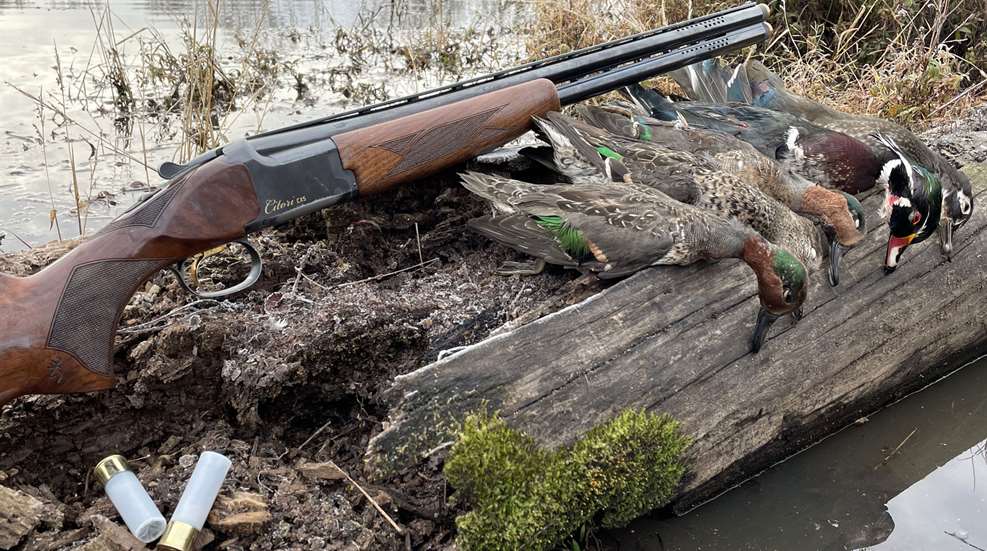
Peruse the shotguns at your local brick-and-mortar gunshop, or the websites of large-scale online retailers, and you’ll be overwhelmed by the untold options. As an ardent hunter of nearly four decades and competitive clay target shooter, even I am stunned, so I can only imagine what a first-time buyer feels. It’s for that very reason that I wrote this article. Simply stated, I sought to help you narrow the field to the one.
In the subsequent sections, I detail the key characteristics of shotguns and what advantages and drawbacks exist for each. Using this knowledge, you’ll be able to make an informed purchase. Let’s begin with the various action types.
Single-Shots
Shotguns are available as single-shots, doubles (side-by-sides and over-unders), tri-barrels (rare), bolt-actions, pump-actions and semi-automatics. Tri-barrels (or triple-barreled), drillings and bolt-action shotguns are relics from a bygone era, and are best left there; there are simply far better options.
Single-shots, as the name suggests, offer hunters access to a solitary shell. Often selected by newcomers to hunting (think low price and thus minimal investment), youth and those primarily pursuing smaller species. Big-game hunters—whitetail deer, feral hogs and turkey—comfortable with a lone shell and slow reloading can experience equal success to those using repeaters. In fact, though far from ideal, my first wingshooting shotgun was a no frills New England Firearms Pardner single-shot with a fixed, modified choke. It worked well, though recoil was stout.
As long as all goes according to plan, single-shots are practical firearms. However, hunting is rife with “beyond-belief” occurrences, such as a well-hit sea duck diving into the abyss, and a once-flopping gobbler suddenly on its feet and darting like an all-star athlete or soaring off to the distance. And, when wingshooting in particular, multiple birds can flush or buzz the decoys simultaneously, thereby offering extra opportunities which you cannot exploit with a single shot.
What’s more, on single-shots featuring an exposed hammer, once cocked, safely lowering it to the pre-firing position requires tact. More than once I’ve witnessed the hammer slip while the trigger remained pulled, and on each occasion it resulted in an accidental discharge. Fortunately, no one was hurt. For that reason, I don’t recommend single-shots for the very people who would benefit most from them. Perceived recoil, too, can be heavy due to their lightweight design. An alternative fixed recoil pad or slip-on variant can help lessen the discomfort.
Doubles
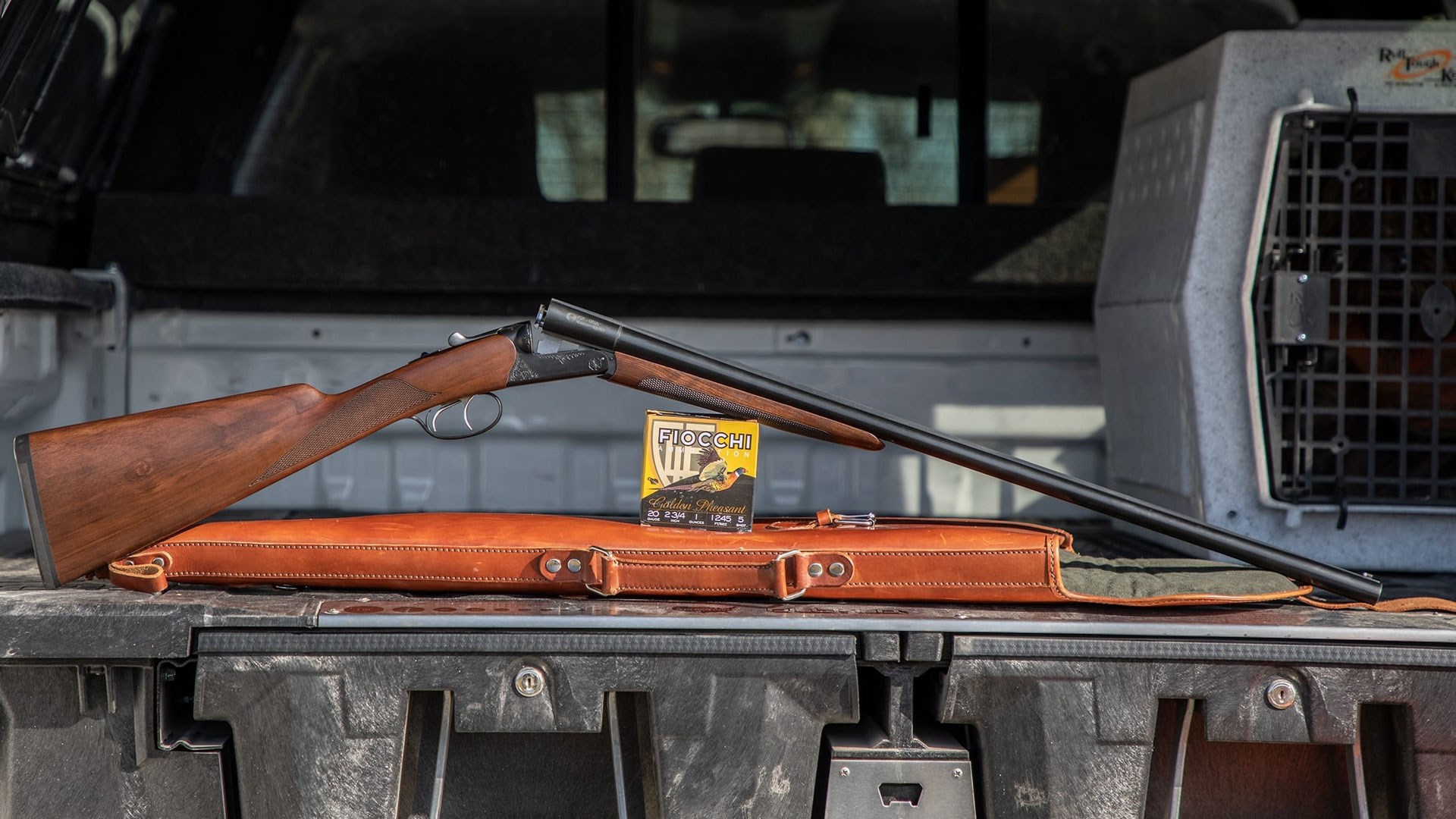
Side-by-sides (double-barrels) were the original repeaters. The benefit of having immediate access to a second shot should be obvious. But, how that follow-up is achieved varies by gun. Older double-barrels generally had dual triggers, and learning their location and firing sequence took time. Why did it matter which trigger was pulled first? One word: the choke. Rare is the period-piece side-by-side that doesn’t have a tighter choke constriction in the left barrel, which fires second. That makes sense, as in most circumstances the quarry is fleeing while the second shot is taken, and thus it’s further away. Modern side-by-sides are offered with a single trigger that fires both barrels, not unlike over-unders. They’re not traditional but are more practical. For the old guard, dual triggers can still be had.
Double-barrel shotguns are wide, and it takes practice to become proficient with pointing (not aiming) them without being distracted by the horizontal twin tubes. Additionally, said guns typically having smallish forearms, thereby requiring the support hand to wrap around the barrels. If the shooting is hot, the tubes will be as well. Wear a glove.
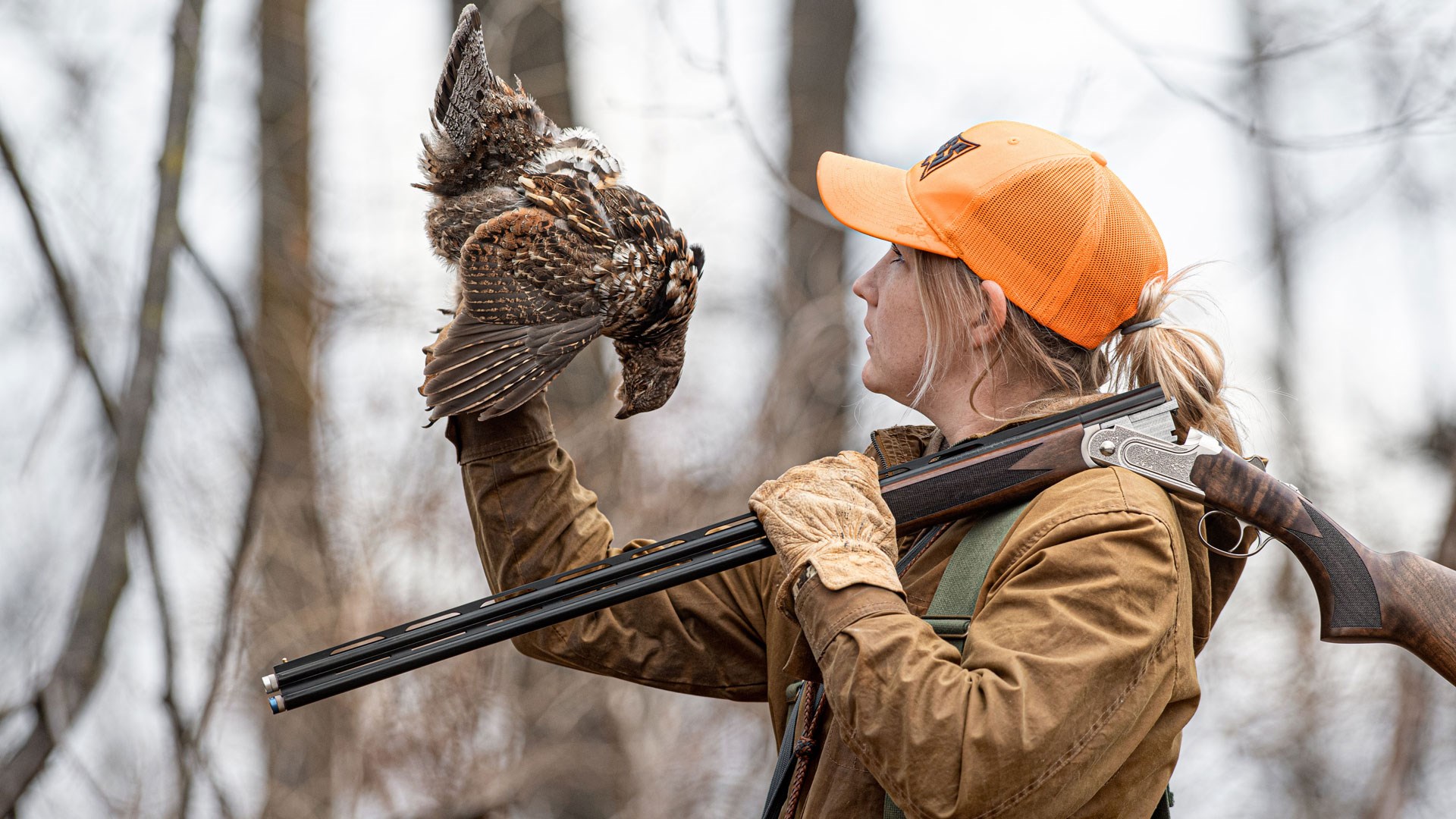
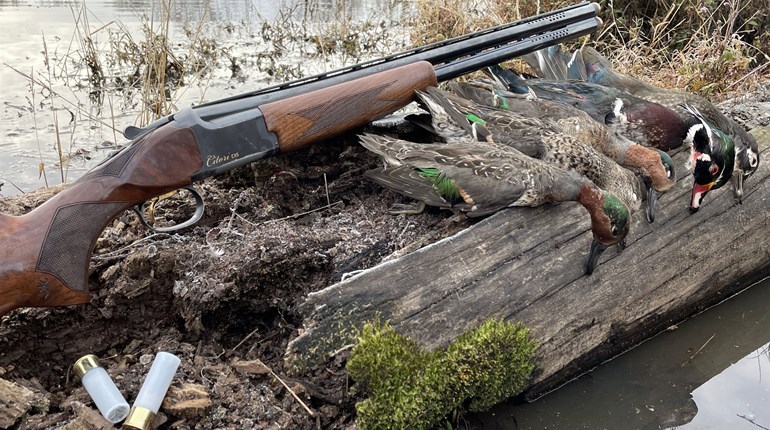
If you don’t like the sight picture and width of a side-by-side, the over-under, which dates to at least the early part of the early 20th Century, is an alternative. An inverted side-by-side, the over-under has the fast-follow-up capability of the double-barrel with an accustomed-to sight-picture and feel. Over-unders, or “stacked barrels,” have one of two trigger designs: inertia or mechanical. The former uses the recoil from the first shot to reset for the second shot, while mechanical triggers reset automatically. The benefit of the latter is that, should a low-recoil round be fired, a dud be encountered, or the gun not be held tightly, the trigger is still ready to fire the second barrel. Smart.
Some doubles have extractors and ejectors, while others are extractor-only models. Those foregoing extractors simplify the gathering of spent hulls, but at the expense of slower reloading—not an issue, until it is. Crippled waterfowl in open water; need I say more? I prefer models with ejectors.
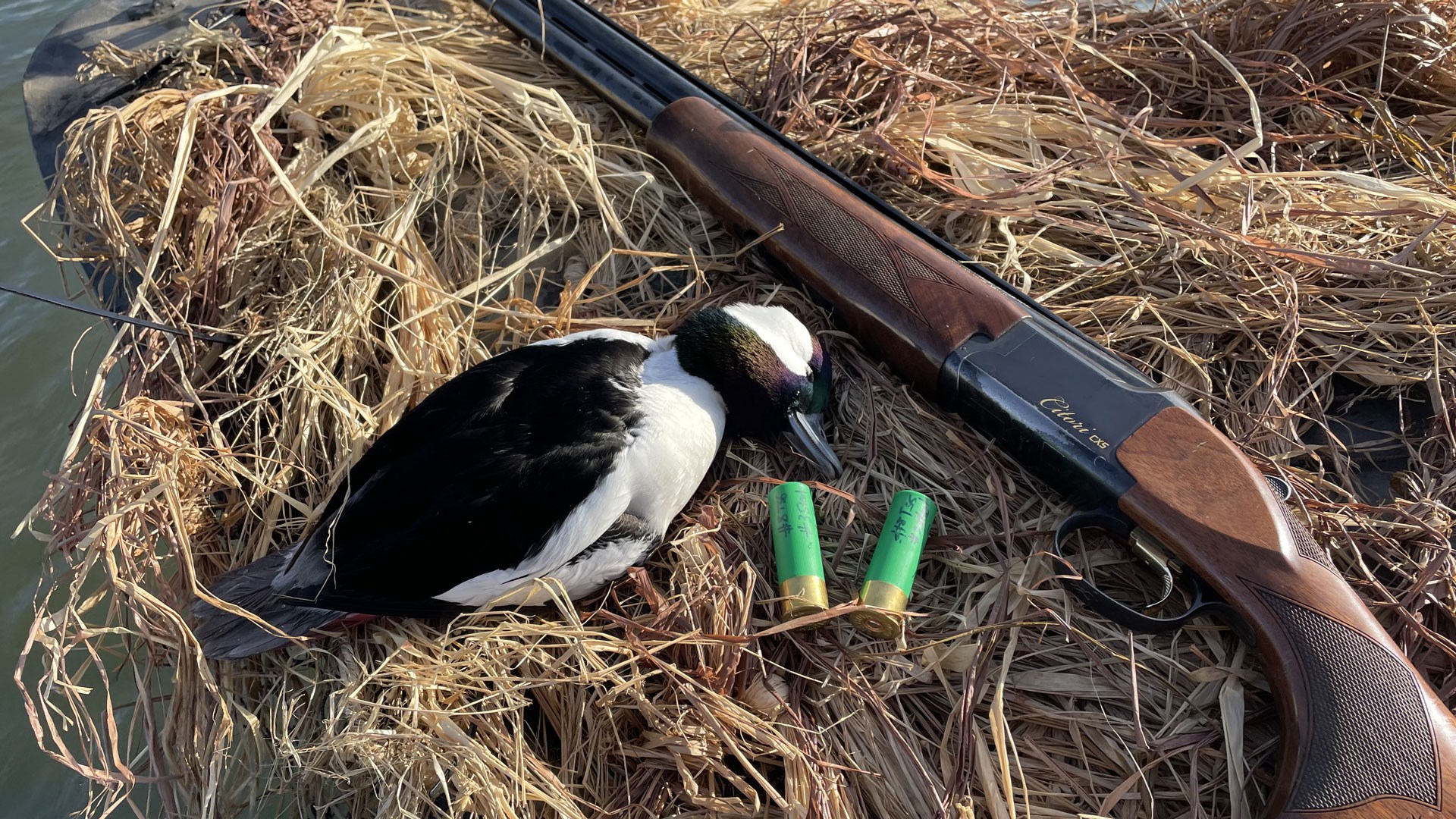
Since doubles are absent a long action (think pump-action or semi-automatic), they have short overall length—even when fitted with longish barrels, making them perfect for hunting in tight quarters, such as pop-up and layout blinds, sneak boats, and thick cover. Contemporary doubles are normally fitted by barrels that are threaded to accept screw-in choke tubes, and thus you, the hunter, can determine what combination of constrictions is best suited for the situation. This, along with the traditional feel and sighting picture of a single-barreled shotgun, are why over-unders are increasingly dominating sporting clays competitions and popular for hunting, too.
As an example, my 28-inch-barreled Browning CXS over-under has won many individual clays competitions and leagues, and has likewise collected limits of ducks, geese, and other small game. While side-by-sides are still encountered afield (and used in competition), over-unders are dominant.
If there’s a weakness to doubles, it’s their weight; the metal necessary to add an extra barrel and secure the duo in place naturally increases heft, so they’re more taxing on long jaunts across CRP and crop fields or while side-hilling. Moreover, quality doubles are pricey, and I don’t suggest skimping; “cheap” over-unders are often plagued with problems when used for high-volume shooting. Although it could happen to any double, shotguns with barrels that don’t hit near the same point of aim or have reliability issues are those with attractive prices. The adage “buy once cry once” applies here.
Pump-Actions
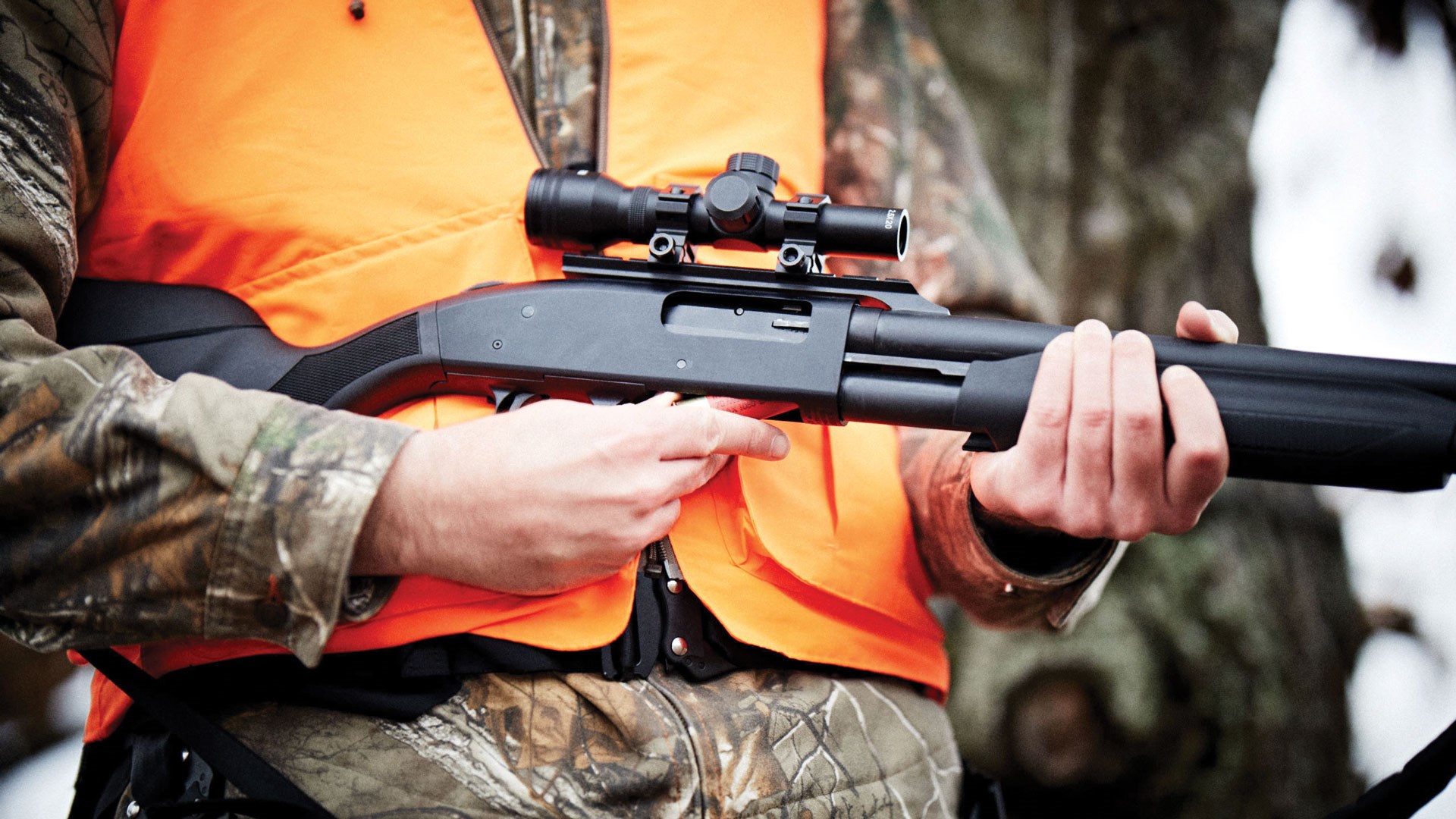
Single-barreled pump-actions—not dual-barreled “defense” shotguns—remain popular options for hunting, though they’ve lost ground in recent decades to autoloaders. Many early autoloaders were infamously unreliable, especially when paired with paper-hulled shells, which were prone to swelling when exposed to moisture. For that reason, and economical ones, too, many hunters opted for pump-actions. And, given their barebones designs, there’s little to go wrong. Best of all, you have access to a fair number of rounds (excluding migratory birds, which is limited to three).
Practiced shell-shuckers (count me among them) are exceedingly fast; in fact, they can outrun those with autoloaders. Don’t believe me? I’ve experienced this on multiple occasions.
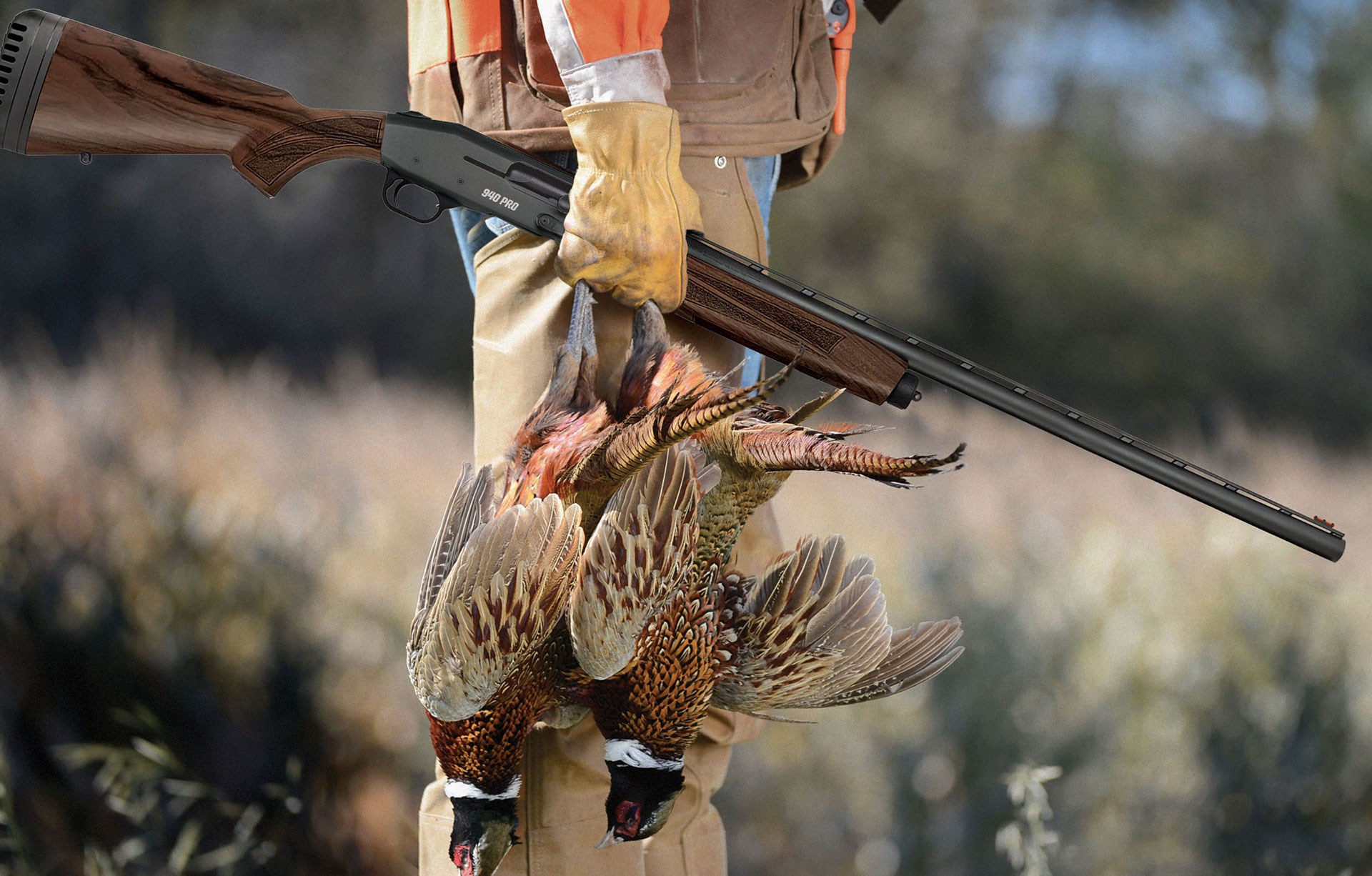
Most recently, when completing the Defensive Shotgun course at Thunder Ranch, outside of the Lakeview, Ore., I was pitted with shooter after shooter (including the instructors) in head-to-head competition for multiple rotations, and I cleaned house. I could fire, load, fire and repeat faster with a Mossberg Thunder Ranch 590 pump-action than those armed with the Mossberg Thunder Ranch 940 Pro autoloader. For me, it’s muscle memory. But, when shooting from an awkward position, such as seated in my Barnegat Bay boat, a pump-action is slow and awkward.
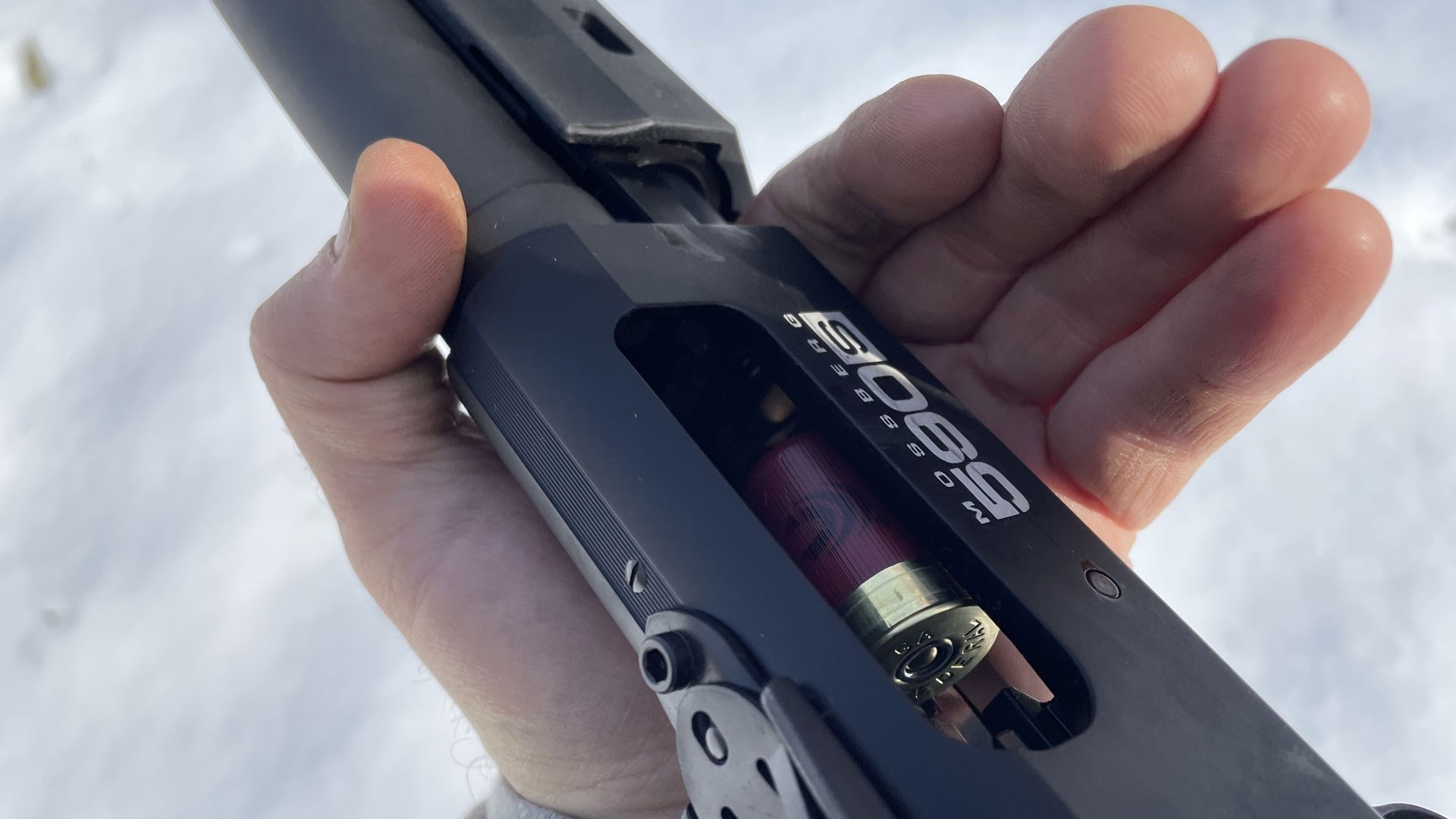
Older pump-actions often had steel receivers, and the Remington Model 870, for example, still does. Others, including the Mossberg Model 500 and its kin, feature aluminum receivers designed to save weight but sacrifice nothing with regard to safety, as lock-up is achieved via a steel barrel extension.
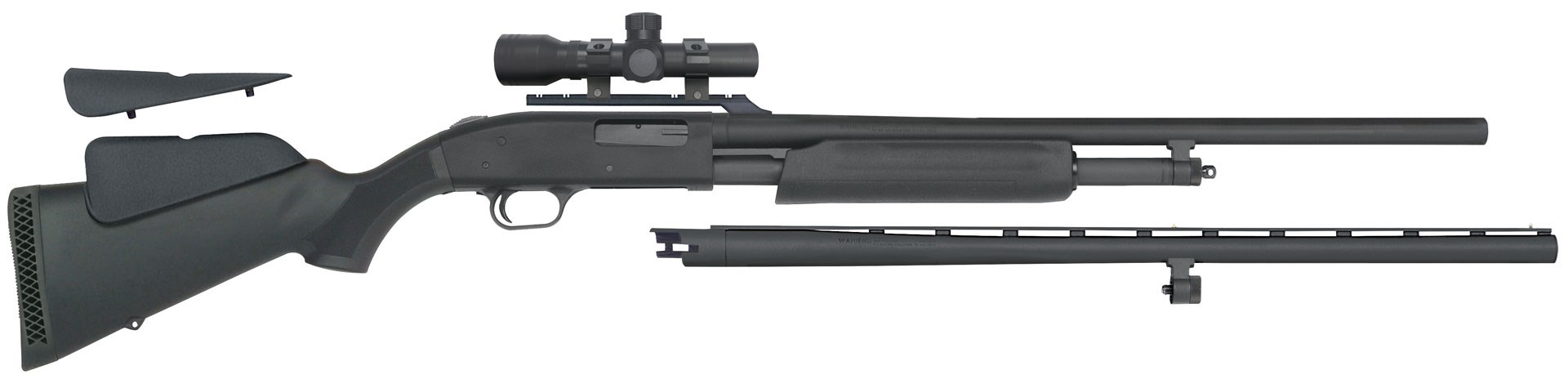
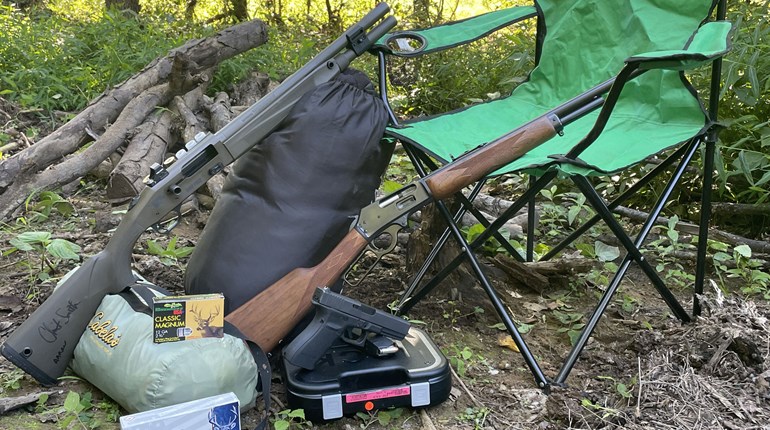
Due to their design, the barrel of a pump-action can quickly and easily be removed for transport or exchanged for one better suited for a specific hunt. For instance, my Mossberg 500 is currently fitted with a rifled slug barrel topped with a low-magnification Leupold scope on a cantilever mount for a slug-only deer hunt, and a 28-inch smooth bore barrel is kept for everything else.
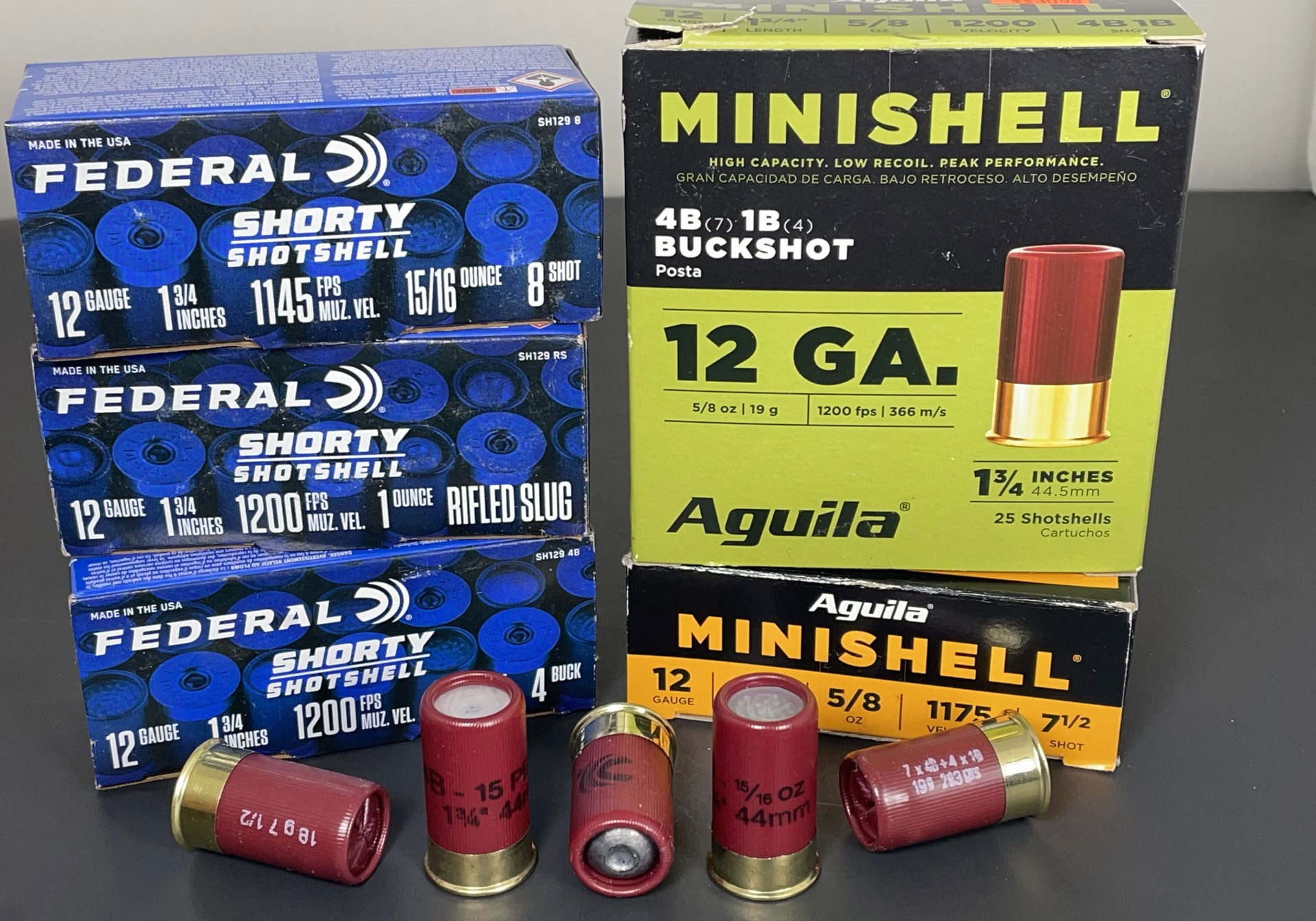
Perhaps the best attributes to pump-actions, besides having extra shells on-tap, is their low cost. Found in high quantity on the used market, and even at a fair price when new, they are the best choice for someone dabbling in hunting or desiring a reliable, low-maintenance shotgun that can handle everything from camp defense and deer to calling coyotes and wingshooting. They’re not finicky concerning ammunition, either; in fact, the 3-inch-chambered Mossberg 590S can even use the 12-gauge, 1¾-inch shells.
Autoloaders (Semi-Automatics)
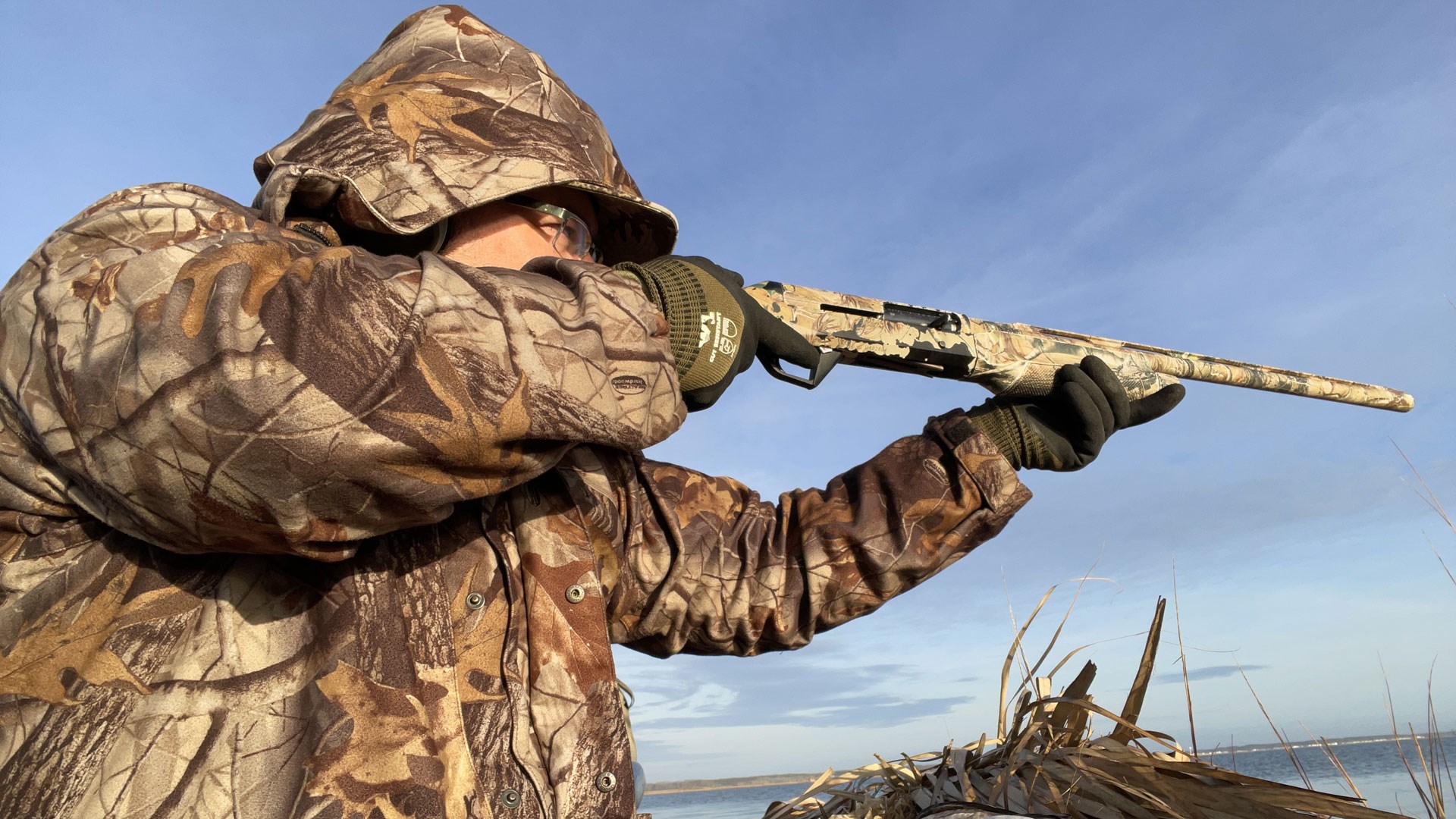
The last option is autoloaders. Despite early hiccups due to their design (and shotshell configurations at the time), semi-automatics are increasingly the go-to for hunting—especially wingshooting. This is for good reason. Like pumps, autoloaders offer instant access to shells. What’s more, because manual operation is unnecessary for operation, most hunters can deliver faster follow-up shots than had they been using a pump-action.
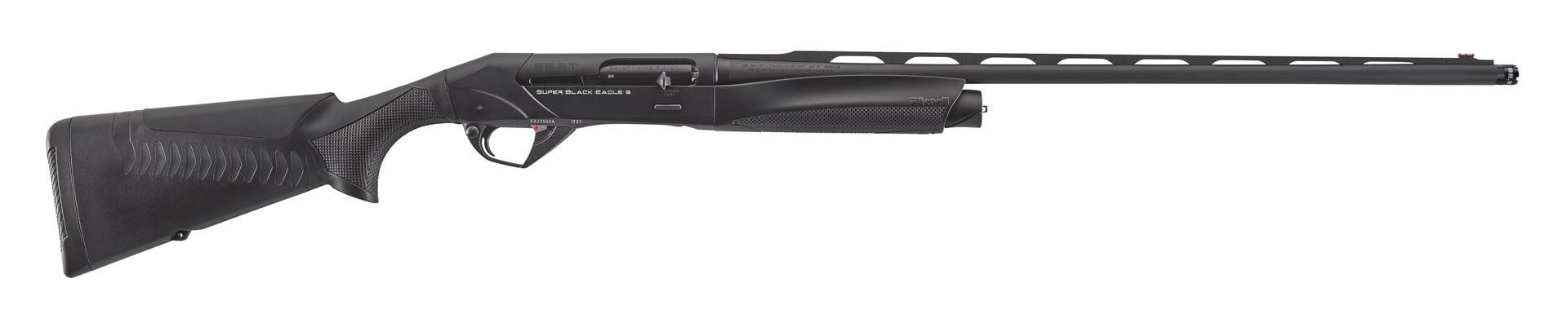
Modern autoloaders use one of two types of operation: inertia or gas. There are advantages and drawbacks to both. Let’s begin with inertia. Inertia operated shotguns—think Benelli Super Black Eagle series, Franchi Affinity series, and Stoeger M3000 series, to name but a couple—use the gun’s recoil for operation. Since gas (and fouling) isn’t bled from the barrel into the action, cleaning inertia-operated shotguns is uncomplicated and quick, and that’s the reason I favor them. That being said, they must be held securely for reliable functioning, and felt recoil is greater than with gas-operated shotguns—hence why most competition clays shooters prefer gas-operated models.
Gas-operated shotguns, such as the Beretta A400, A300 and new AX800 series, bleed gas from the barrel via ports to cycle the action. Along with the gas is fouling/debris, which accumulate on the piston and surrounding area, and which finds its way into the action. The result is a dirtier gun and lengthier cleaning session. Advancements in gun design (for Beretta, at least) enable it to run longer, even when dirty. But, upkeep isn’t optional, and when you do commit to the task, expect to spend considerable time. Plus, parts on autoloaders wear faster—par for the course.
A considerable benefit of gas-operated shotguns is less perceived recoil—particularly when paired with a supplemental recoil-reduction system, such as Beretta’ s Kick-Off. The ability to mitigate felt recoil when using magnum-type loads for waterfowl, turkey, predators, and big-game is a real blessing.
Gas-operated shotguns used to greatly outnumber those with inertia operation; however, the latter’s popularity (thanks to the Benelli design) has changed that. The Benelli design is extensively used, even within its sister companies under the Beretta umbrella, and value-priced clones are increasingly capturing consumer’s eyes. Generally speaking, though, Turkish-made, gas-operated shotguns are perhaps the least costly autoloaders, and many of them have proven to be quite serviceable and durable.
Barrels
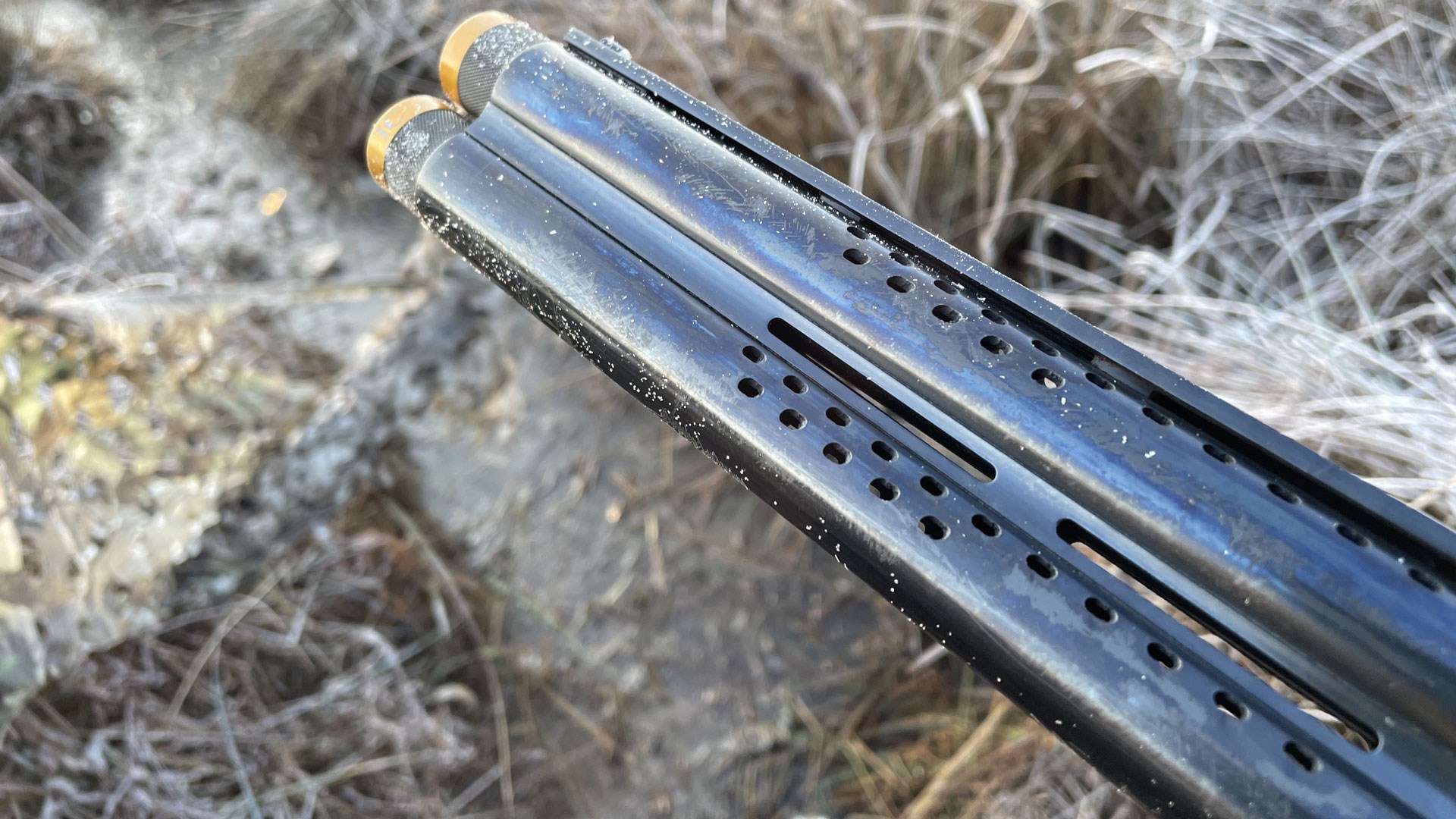
Barrel configuration should match the gun’s intended use. Whereas in the past, when barrels were long to accommodate powder burn (at least that’s what were told), it’s more likely that the longer sighting plain was sought for shooting distant, darting fowl. Tubes reaching 34 inches are still encountered on competition-specific shotguns, but those meant for hunting are largely 24- to 28-inches, with 26- and 28-inch being the most prevalent—and they’re perfect.
Frankly, in all but a few situations, long barrels are merely a burden; they’re prone to snagging, and the extra metal adds to the gun’s heft. In fact, outside of my Browning CXS (still short due to absence of lengthy action) and secondhand Franchi Affinity, both of which have 28-inch barrels, no other shotgun I own has tubes longer than 26 inches. That’s a good, all-around length. For turkeys and whitetails, 24 inches or shorter is even better.
Outside of length, ensure that the barrel(s) is/are threaded for choke tubes for enhanced versatility. I prefer a ventilated rib and 50/50 or 60/40 point of impact. Some hunters like a two-bead system, but a single gold or silver bead works for me. I don’t like overly large, fiber-optic strands. Camo on the barrel and other steel parts will help with corrosion resistance, especially if hunting where sea spray is likely. Want extra assurance? Benelli parts that receive its BE.S.T. (Benelli Surface Treatment) come with a 25-year warranty against rust and corrosion.
The internal design of a shotgun barrel can drastically change the results downrange. In the past, short, steep forcing cones, were a mainstay; however, long ones common to competition guns are increasingly being cut into the barrels of autoloaders. The Beretta AX800, for instance, has the same forcing cone length—450 mm—as does its DT11 over-under shotguns, which was without peer at multiple events during the 2024 Summer Olympics in Paris, France.
Lengthened forcing cones are known to create tighter, more consistent patterns and are also advertised as increasing on-target energy. Outside of top-end models, you won’t see such forcing cones from the factory. Back-boring, or increasing the internal diameter of the bore (in some cases to the maximum permitted) can increase velocities, improve patterns, and supposedly, decrease felt recoil, too. Back-boring has become commonplace. Porting (such as that completed aftermarket Mag-na-port International, Inc. or similar, as well as from the factory) can help with perceived recoil and muzzle flip, but at the cost of a sharp increase in noise.
Stocks
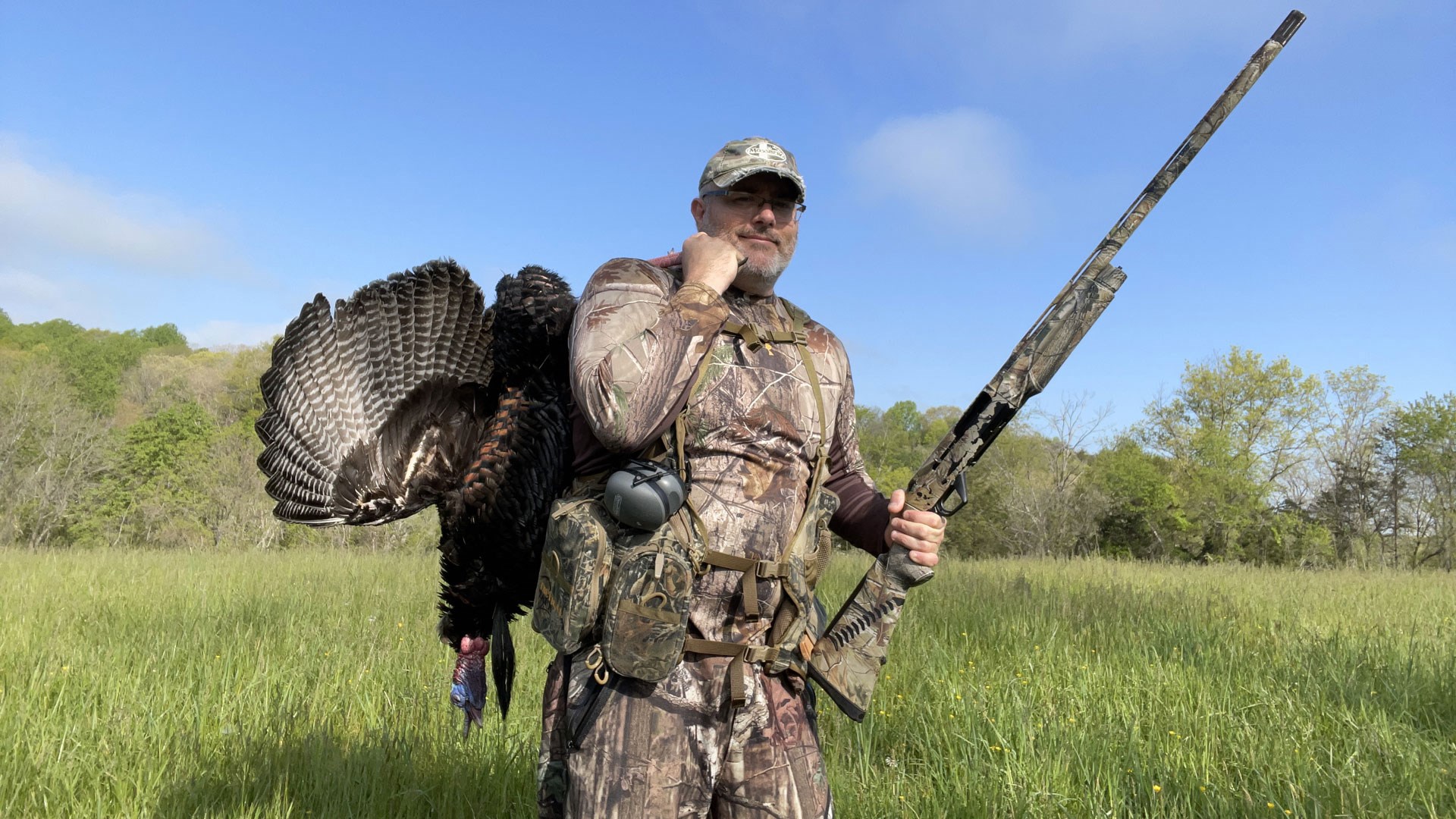
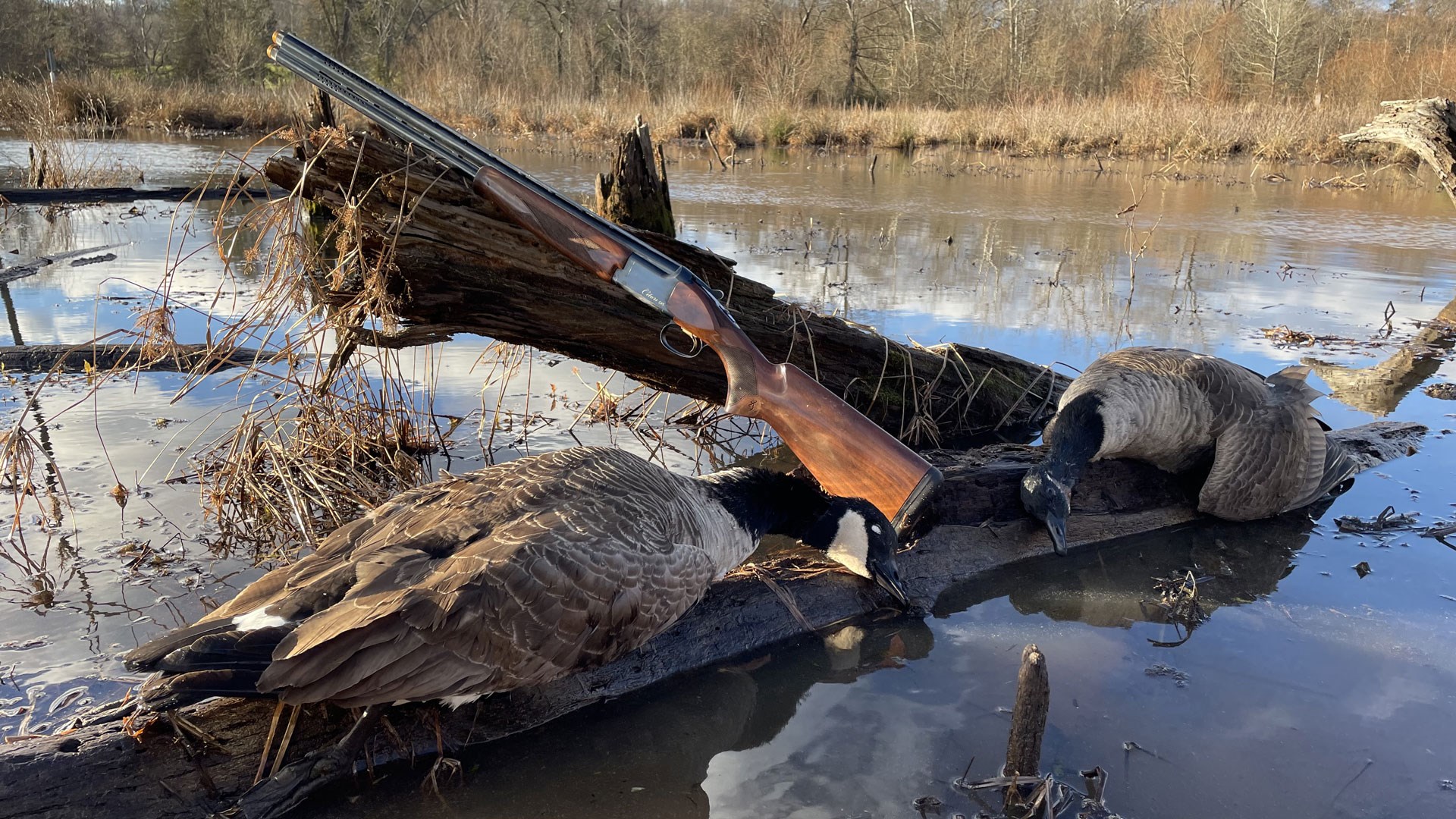
Outside of cool camo patterns, synthetic stocks are ugly—no matter the configuration. Straight facts. Nothing is as beautiful on a gun as is highly figured hardwood. Unless you’re going to consign it to an occasional bramble- or brush-free jaunt on uncluttered, flat ground, or time on the range, it’s a bad choice. In fact, if you’re looking to preserve the aesthetics of finest-quality wood on a shotgun while hunting, either you’ll need to senselessly baby it when afield or leave it at home. It's for this reason, I opt for synthetic furniture on my hunting shotguns. My dual-purpose Browning CXS over-under wears wood, and it’s time afield is recorded by countless scratches and dents. Oh well. It’s a tool and will be used accordingly.
Synthetic stocks are consistent, though. They don’t swell when exposed to moisture, are practically undestroyable, and can lower a gun’s overall weight. In sum, a plastic gunstock’s unattractiveness is more than offset by the perks. Therefore, when seeking out a shotgun, consider its use and the likelihood of it being subjected to unintentional abuse when afield. If you’re clumsy or a driven hunter, opt for synthetic. Just forego “tactical” versions.
Gauge and Shell length
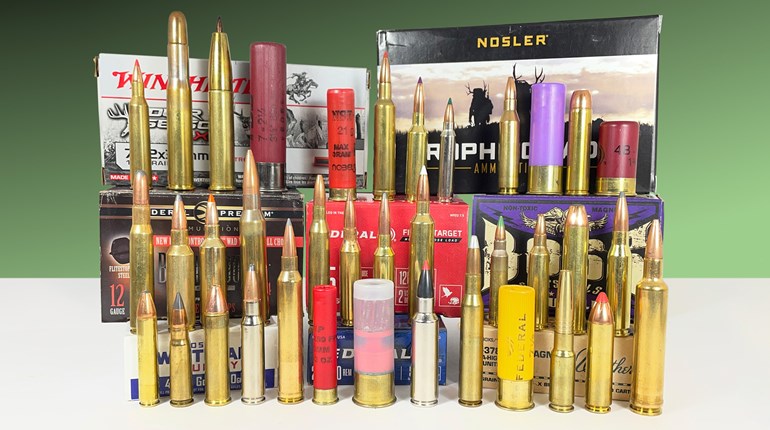
According to Cartridges of the World, 13th Ed., “If there is one shotshell that holds all titles as most versatile, most popular, and most varied in loading, the 12-gauge is it. Except for the .22 rimfire, by almost any measure the 12-gauge is the most popular sporting chambering ever offered.”
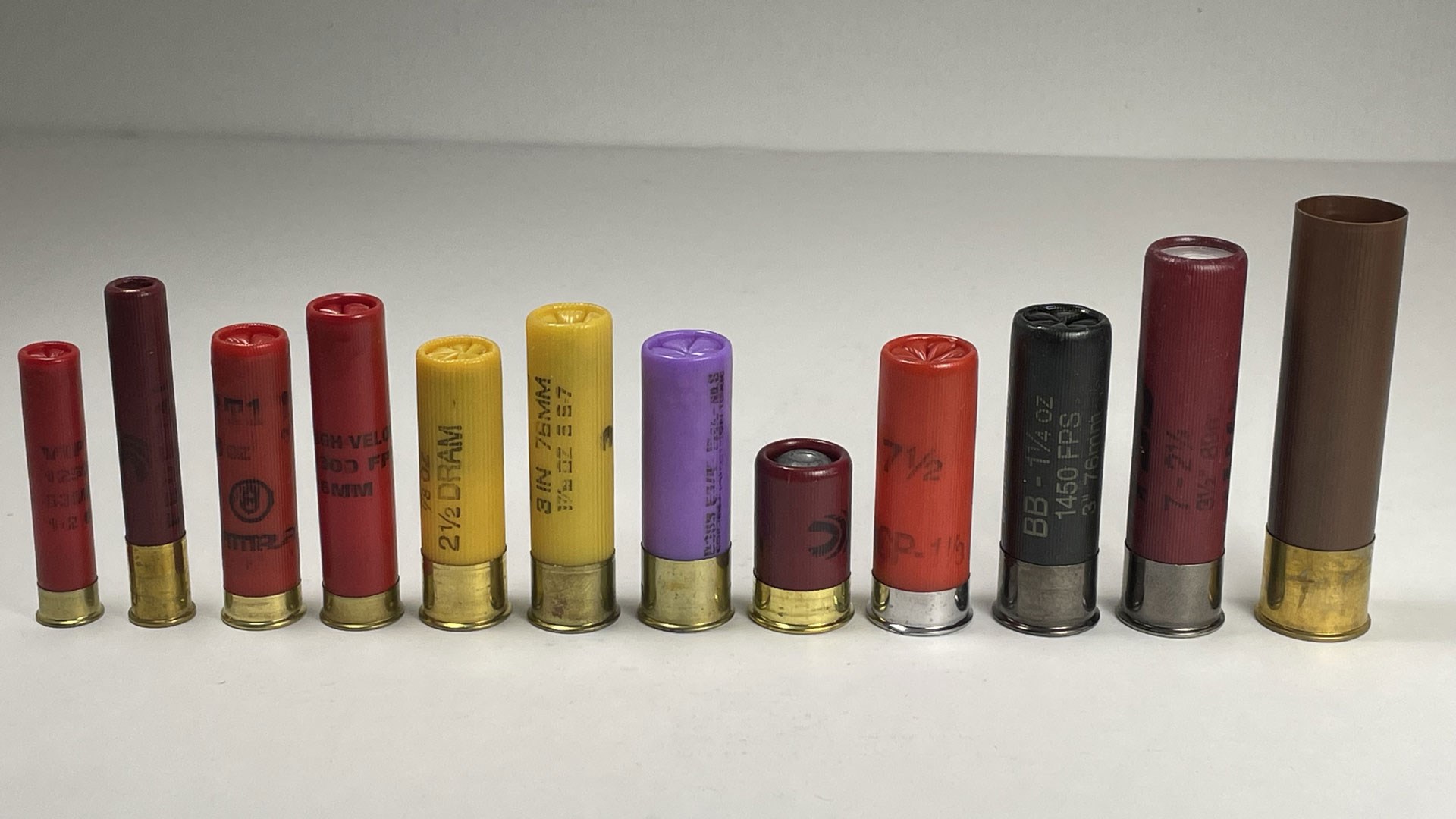
The 12 gauge isn’t ideal for all situations, but it’s as utilitarian as it gets. There are loads available to pursue nigh any huntable species, and ammunition for it is incomparable in assortment and cost. So, as long as recoil isn’t an issue, a 3-inch-chambered 12 gauge is a good all-around option. Why? Such shotguns can fire 2¾- and 3-inch shells interchangeably (unless of insufficient power in semi-automatics), and the advantage that 3½-inch shells once had has diminished greatly thanks to technological advancements in newer wad systems and shot metallurgy, including TSS.
It can be successfully argued, however, that the Roman Candle-sized 3½-inch shells’ extra capacity—for propellant and payload—improves performance with large steel shot and lead-alloy buckshot. Additionally, the extra pellets sent downrange only serve to improve patterns when pursing spring gobblers.. But it comes at a significant jump in recoil, even in gas-operated shotguns. Unless you like punishment, avoid 3½-inch shells in other shotgun types.
Similarly, a 3-inch, 20-gauge shotgun is nigh perfect for most pursuits due to the same advancements in ammunition. In fact, the 20 gauge is, in most cases, now as capable as the 12 gauge, but can be had in lighter, faster-handling guns. Recoil is more tolerable, too.
Still questioning its capabilities? You needn’t worry; last year I used a 26-inch-barreled Benelli M2 to take long tailed ducks, buffleheads, Canada geese, and my three-bird limit of spring gobblers. Concerning the latter, 1½ ounces of No. 7 TSS from a Browning 3-inch load was all that was needed to bag three birds ranging from 15 yards to a distance that I refuse to mention here due to a grossly underestimated range. And yet the bird was killed stone dead. With such performance, why lug a hefty 12 gauge afield? Ammunition is similar in cost and approaching the 12 in variety.
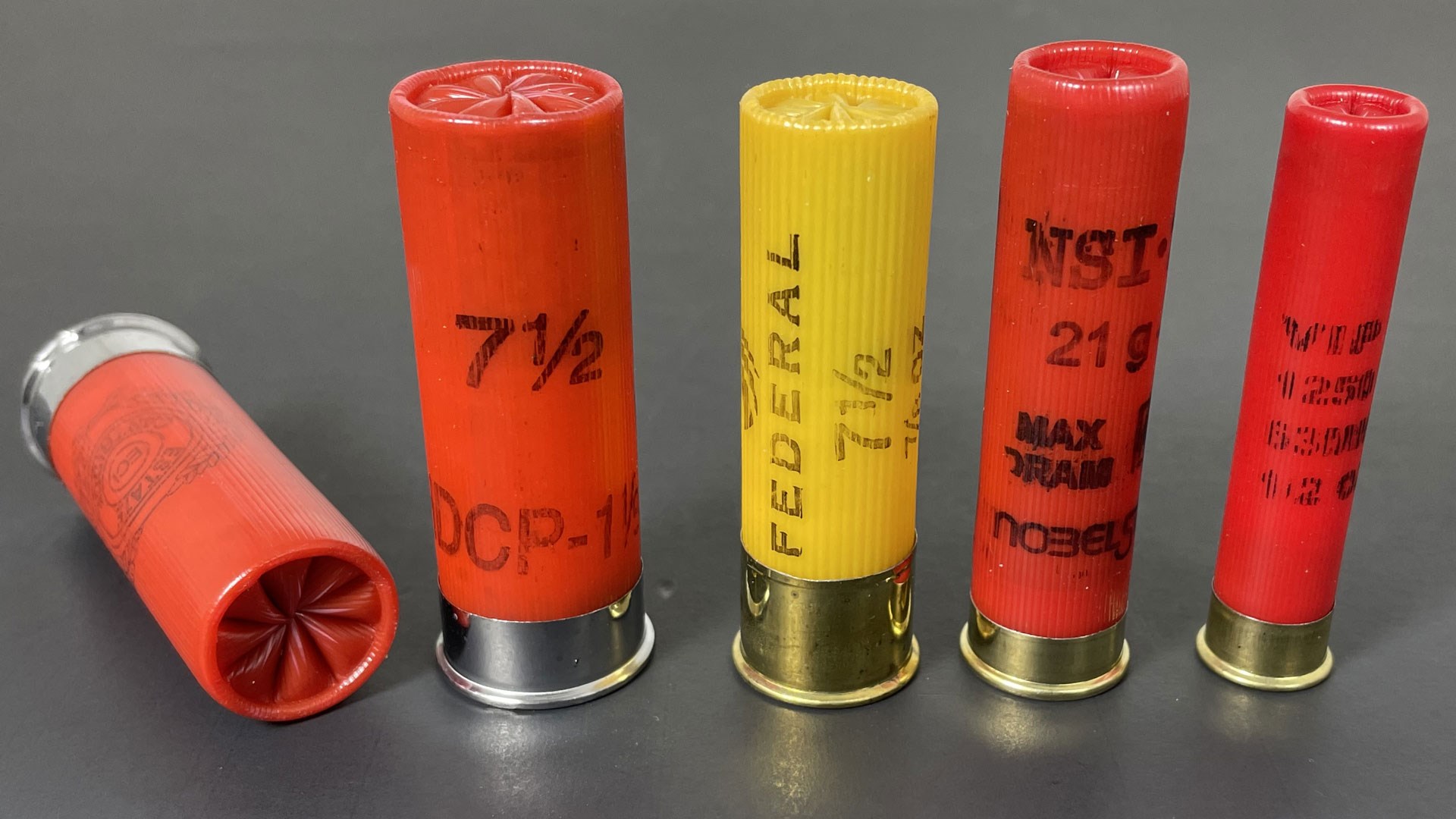
The 16- and 28-gauge, as well as the .410 bore, are wonderful options, too. However, they don’t have the breadth of capability of the 12 or 20 gauge, though the former two certainly have overlapping performance with the 20. Problem is, the 16 gauge (only in 2¾ inch) is a superb chambering, but its ammunition selection is rather limited. Quality 16-gauge shotguns are few in number, too. Browning is keeping it alive with multiple versions of its A5 and the Citori Gran Lightning, though the latter wears fine walnut.
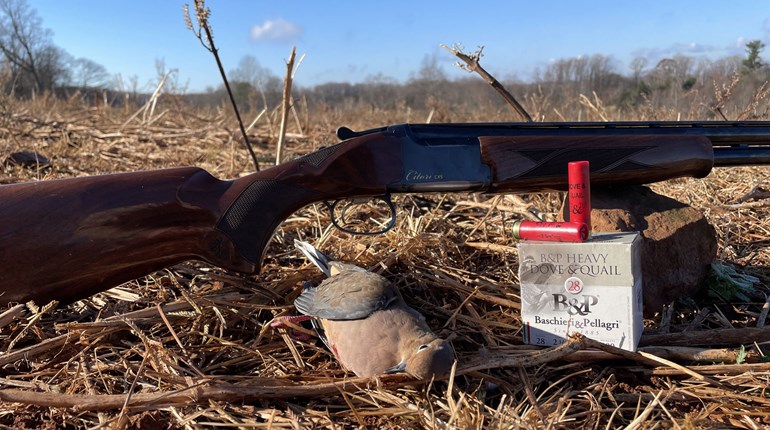
The 28 gauge, which recently debuted in a 3-inch version, is encountered more frequently than the 16. It’s a great option for upland hunting, as well as turkeys when loaded with TSS. With the right loads, it can meet the needs of most waterfowlers as well. Additionally, 28-gauge shotguns are generally scaled down and thus lightweight, as well as quick in the hands and smooth-swinging. Frankly outside of ammunition cost, the 28 gauge is a superb choice for the budding hunter who isn’t keen on collecting big game or large waterfowl at distance.
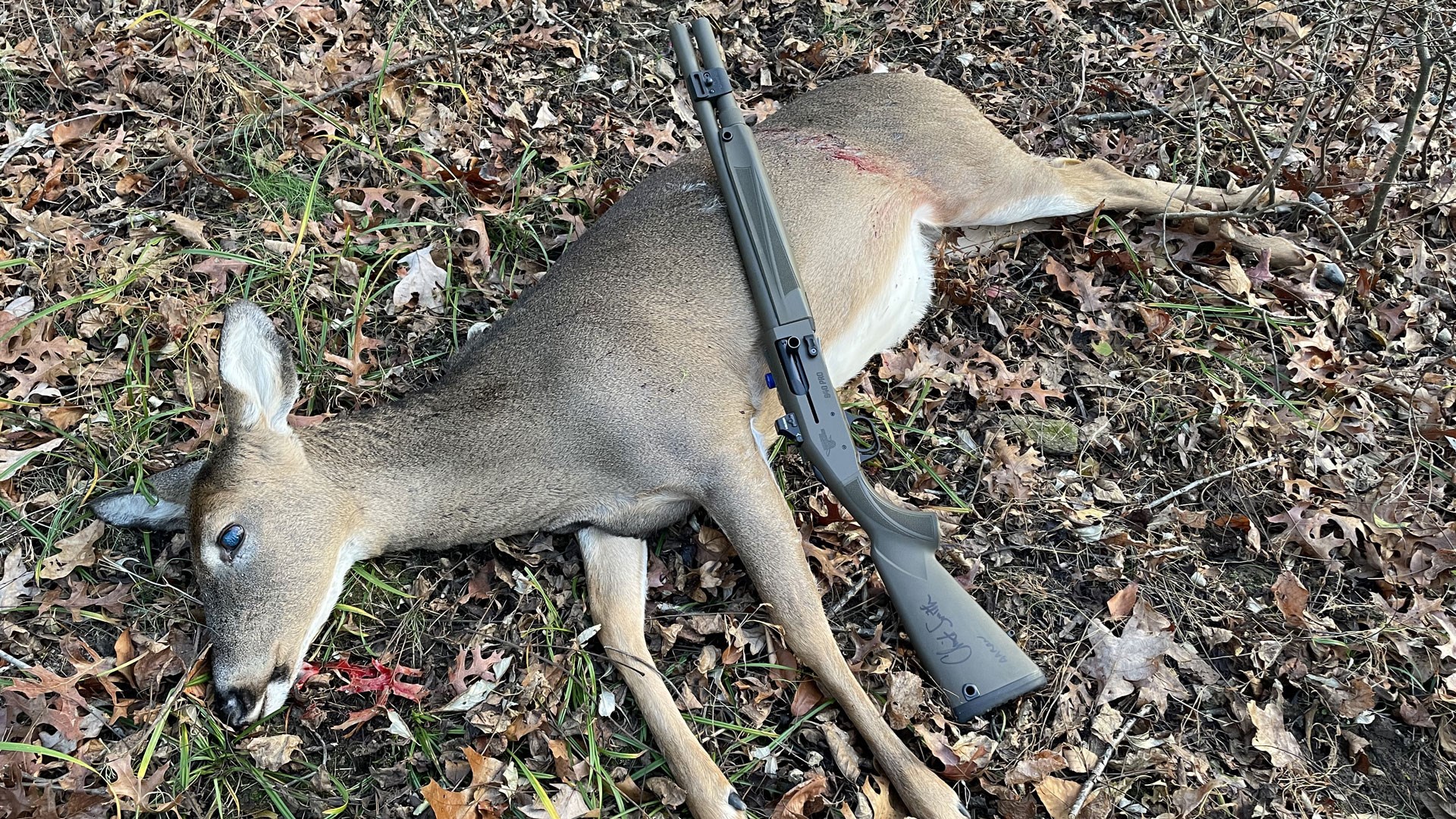
The .410 is often selected as a beginner’s shotgun, and though it has minimal recoil, it’s far from a great choice for that role. With a minimalist payload, it’s more of an expert’s round than one for the novice. Overall, it’ll serve well for small upland species, including quail, dove and squirrels, to name a few. Three-inch shells are preferred, but all .410s are pricey.
As much as it pains me to say this, the 10 gauge is too specialized for most hunters, and between its weight, recoil and ammunition cost, it’s a bad decision. I’ve owned several through the years, and though they’re a boon for high-flying, oversized waterfowl, big game and boisterous toms, in reality the 10 gauge offers no real advantage over the 3½-inch 12 gauge—especially when high-density leadless shot is employed in the 12.
Selecting a shotgun well-suited for your style of hunting and intended quarry can seem daunting. Using what you learned in this article can help you narrow the field. But, until you handle the gun in-person and are comfortable with its feel and operation, you shouldn’t close the deal. Good luck on the hunt for your scattergun.