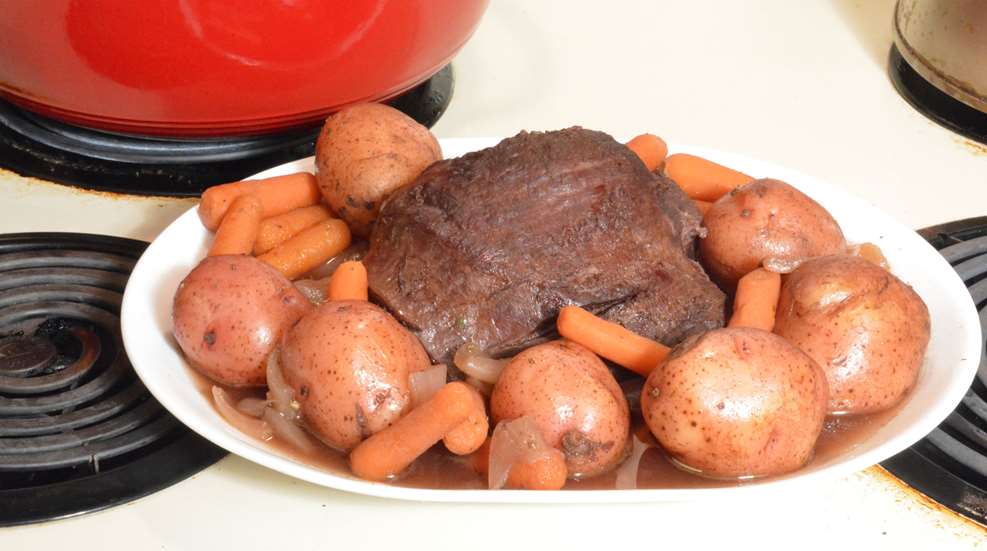
For years I would separate the muscle groups in a deer’s hind quarters and then cut them into steaks. Unfortunately, that left me with one option after I thawed them for cooking: steaks. Now, I separate the muscles, clean up the fat, silverskin and sinew before packaging them whole. That gives me a lot of options. I can still cut them into steaks, or I can do something else. More often than not, “something else” wins the day. If you don’t process your own meat, ask the butcher to leave at least some of the meat whole. It’s easy enough to cut it later. Besides, any butcher I have ever used has always cut the steaks too thin.
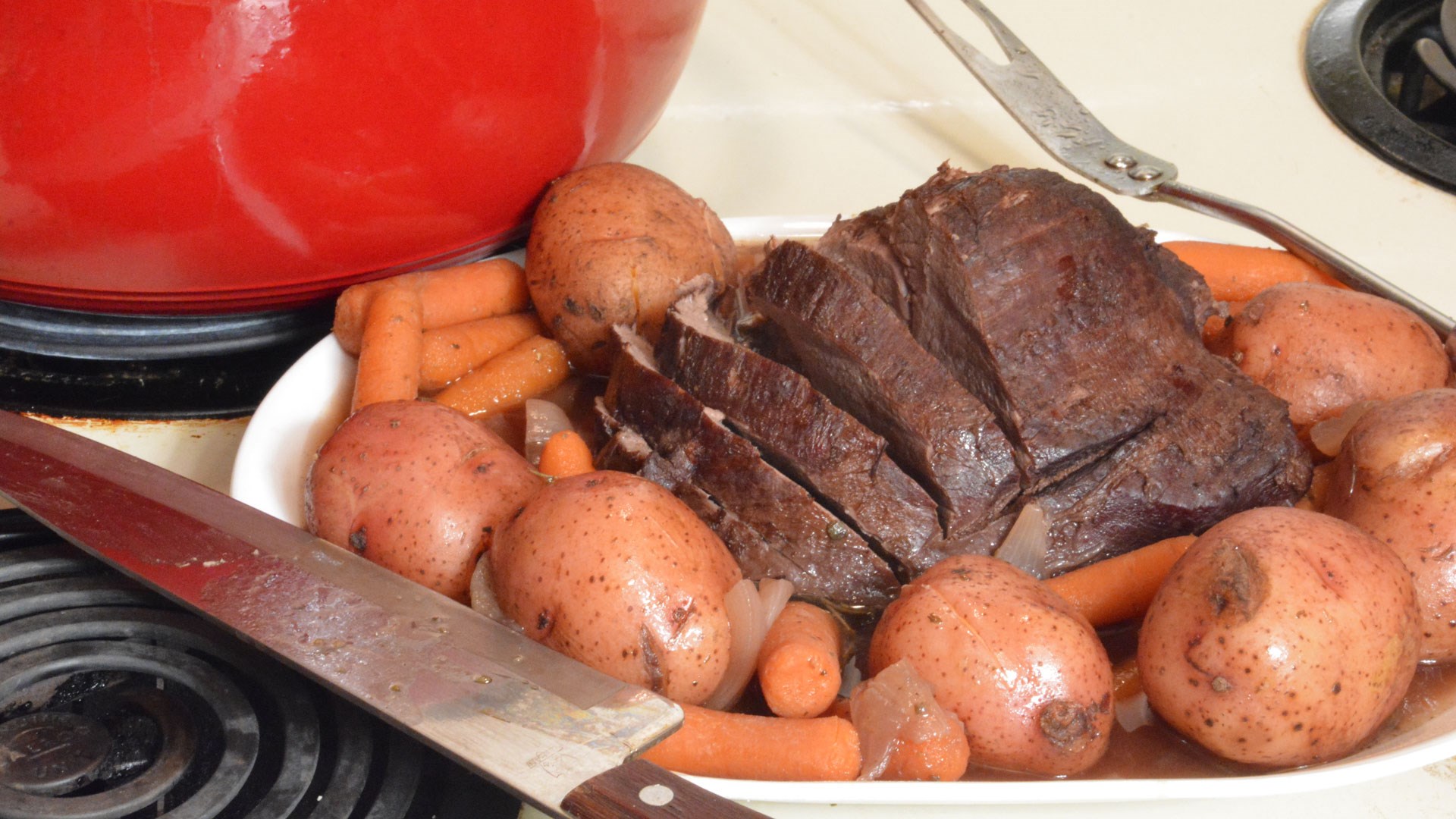
One of the best ways I have found to cook big chunks of hind-quarter meat is by braising, though truth be known, it’s not *true* braising. Braising calls for the meat to be surrounded by liquid, but not covered. With true braising, the liquid will come half to two-thirds of the way up the meat. I cover mine, so I guess it’s not braising, but closer to stewing if we wanted to get technical. I can tell you, however, that it’s one of the best ways to cook venison I have yet found.
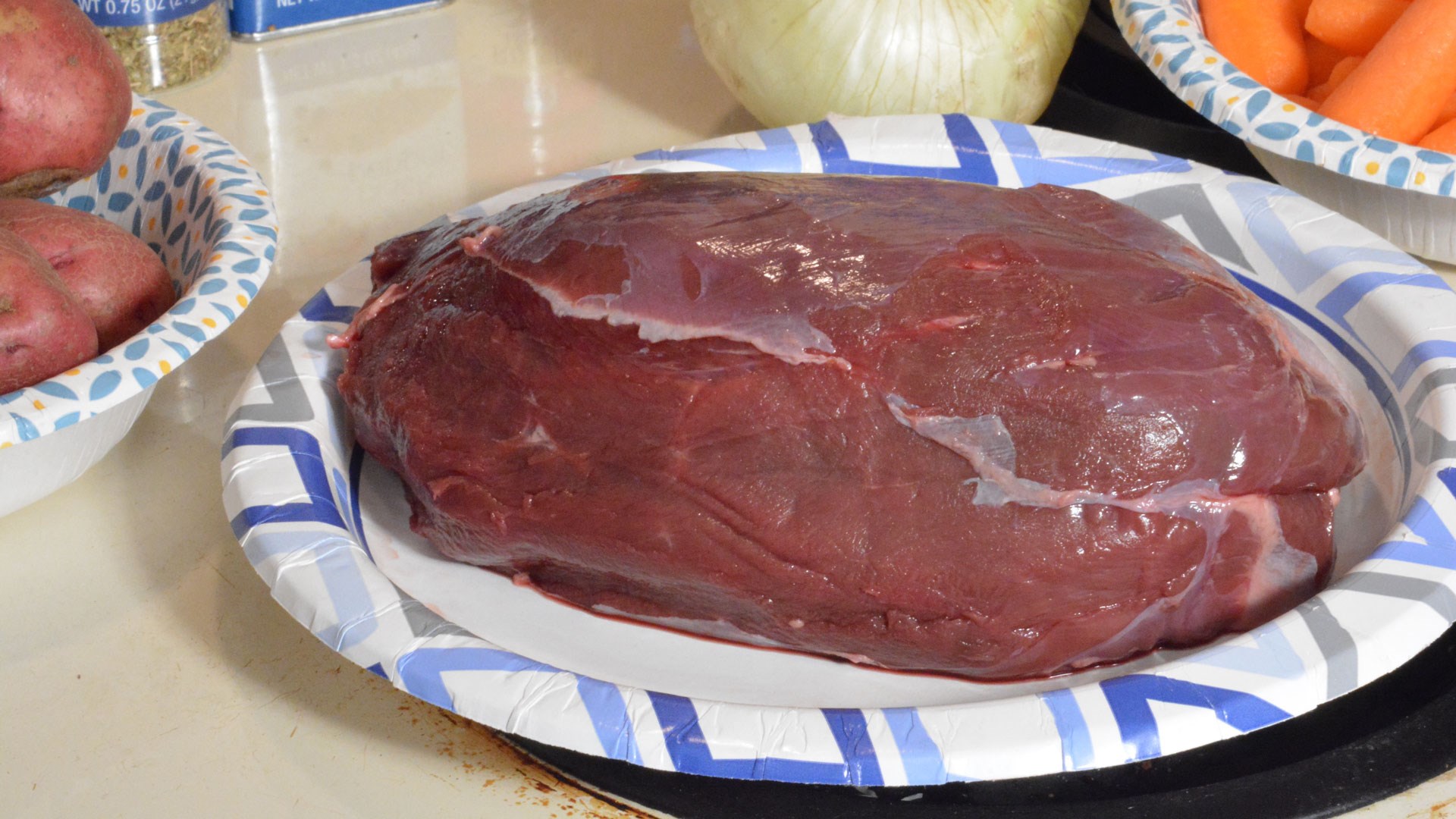
Any large piece of meat will work, but I like the muscle from the hind leg that is semi-round in shape and looks like a deflated football. I don’t know the exact name, but I have heard it called the sirloin tip. No matter, it’s a distinctive looking piece of meat and anybody who has ever cut up a deer knows exactly what I am talking about.
For years I used a 5-quart cast iron pot made by Lodge. They call it a Dutch Oven, but it lacks the legs that we typically see on a Dutch oven. I think that a lot of us like cast iron not only for its cooking qualities, but because we like to tinker with it. Cast iron is unique in its care and feeding. It needs to be seasoned and then cared for gently to maintain that seasoning.
I fall into that “love to tinker” category, most of the time. But I must confess, after my wife gave me a Lodge 6-quart enameled Dutch oven, for recipes like this I have never looked back. Clean up is easy, soap and water, nothing sticks. No seasoning needed yet you still get the even heating of cast iron.
Of course, they will pry my cast-iron cooking tools from my cold dead hands before I give them up. Nothing is quite the same for cooking game or camp cooking. But for this recipe (and the Maple Venison Stew—stay tuned to americanhunter.org for that one), the enameled version is a lot easier to clean. It’s also not affected by the high acid found in tomato or wine-based recipes, as cast iron can be.
Procedure
- Clean the meat and remove as much fat and sinew as possible. The silverskin in this case is not a big problem, as it will dissolve into a gelatin during cooking which adds to the flavor.
- Cover the bottom of the pot with a thick layer of olive oil, maybe 1/8th of an inch deep and heat on high until it’s smoking. Keeping the heat high, brown the meat on all sides until the edges are well caramelized or brown. This initiates the Maillard effect for the best flavor. You may need to add more olive oil during this process.
- Add other ingredients and seasonings, then enough beef broth to cover the meat. Bring to a full boil while stirring, then reduce heat and simmer while covered for a minimum of one hour per pound of meat. Stir occasionally.
- When done, the meat will pull apart with a fork. It’s important to cook it long enough. If you take it out too soon the meat will be dry and tough. Cook until you can pull it apart with a fork, then serve.
- Mix a cup of the broth with a package of brown gravy mix to pour over the meat and potatoes when serving.
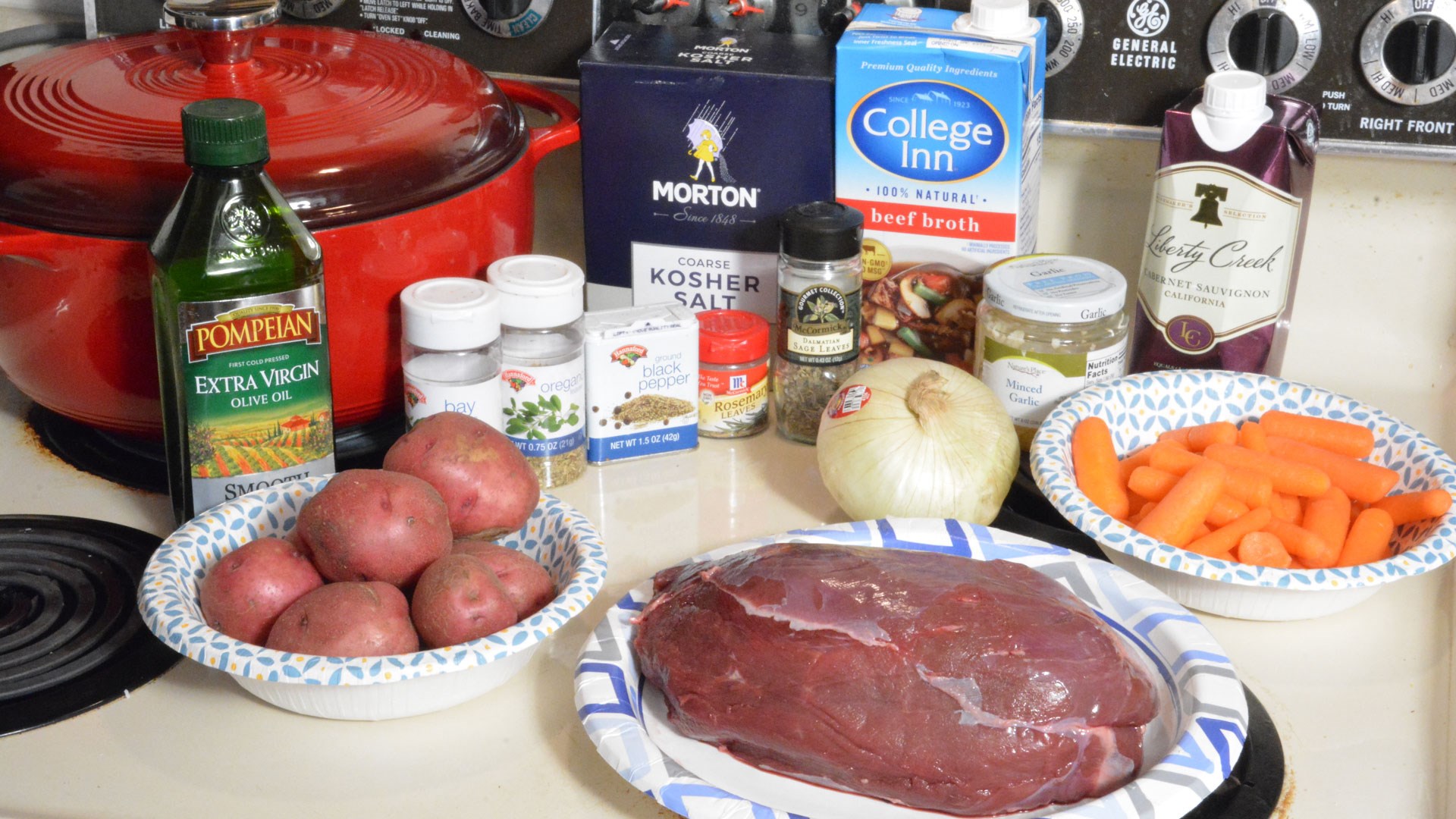
Ingredients
- 2- to 3-pound piece of venison.
- (The meat will cook down, so figure one pound pre-cooked weight, per person, depending on appetite).
- 1 Vidalia onion cut into medium size pieces.
- ½ pound of mushrooms, White Button or Baby Bella, sliced.
- (I love mushrooms and prefer these. My wife does not, so sometimes we make it without them. On the whole, I think they add greatly to the flavor).
- 1 cup of baby carrots cut into ½-inch pieces. (They can be left whole if preferred).
- 1 cup of baby potatoes, quartered.
- (These can also be left whole if desired. I think the flavor is better if they are cut into pieces to expose the inside).
- ¼ teaspoon of sage
- ½ teaspoon of oregano
- ½ teaspoon of rosemary
- ½ teaspoon of ground black pepper
- 1 bay leaf
- ½ teaspoon of kosher salt
- 1 teaspoon of minced garlic
- 2 cups of red wine.
- (I buy the cheap, dark-red wine in the one-serving boxes. If you don’t like wine, substitute a cup of tomato sauce. The acid in wine or tomato sauce helps break down the meat to make it tender).
- Beef broth to cover. You can use beef stock, but I think the flavor is better with broth.
Final Tips
I keep a printed copy of my favorite game recipes so that I can make notes about changes or tweaks I make when I am experimenting. My wife was making hand written notes on the bottom of my master copy of this recipe the last time we made this. Her final instructions are:
“Set fire to the kitchen, twice.”
My advice is to skip this step—it makes a horrible mess and it really aggravates the wife.