It is easy for some, especially members of the younger generations, to think that just because something has been around for a while, it is no longer useful or interesting to the more modern-minded enthusiasts. But when it comes to firearms, we see cartridges and platforms that are still popular decades after their invention, and for good reason. The 19th-century Mauser bolt-action rifle configuration, Smith & Wesson's hand-ejector double-action revolver design and the venerable .45-70 Gov't. still hold sway after more than a century in service.
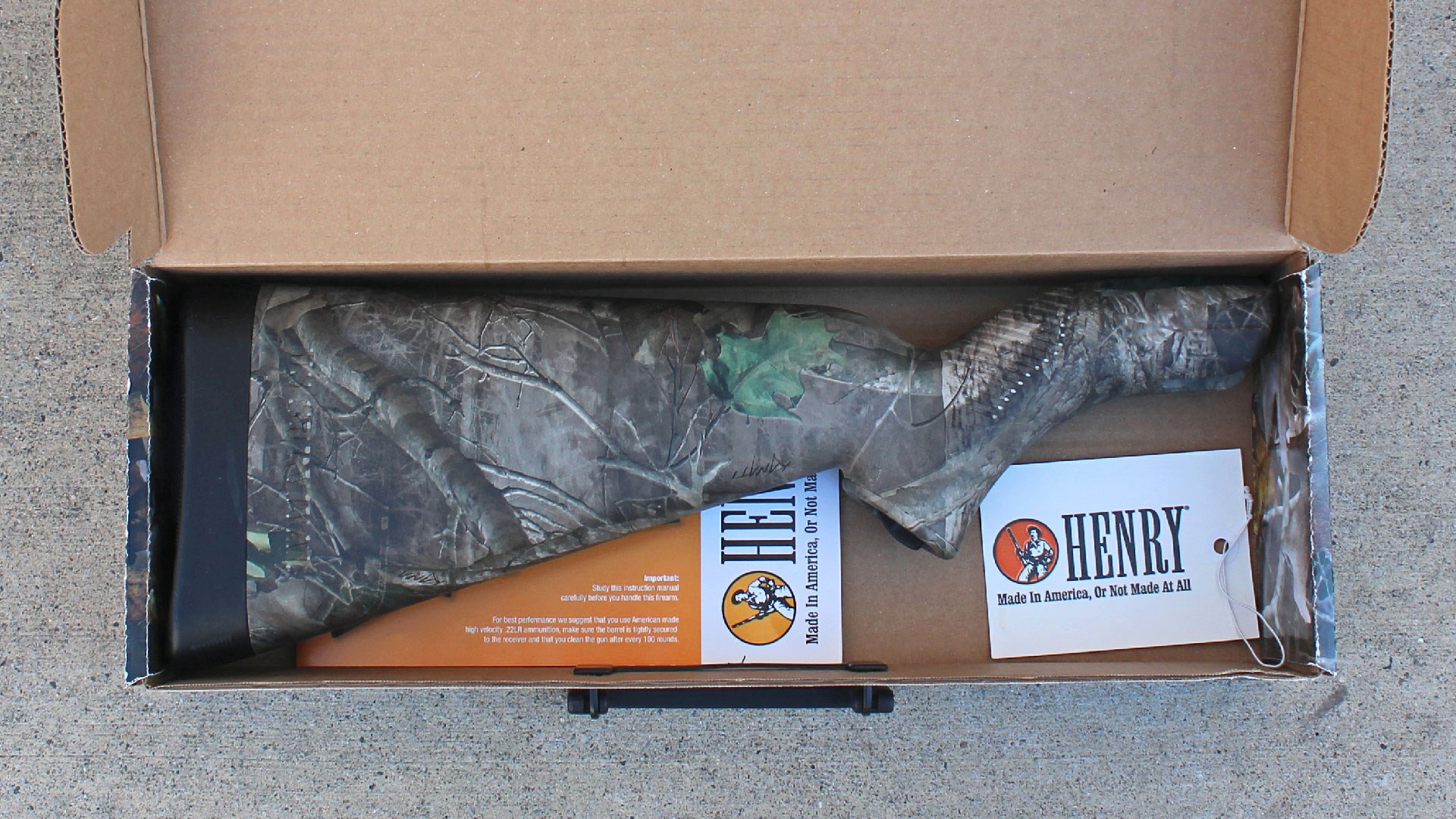
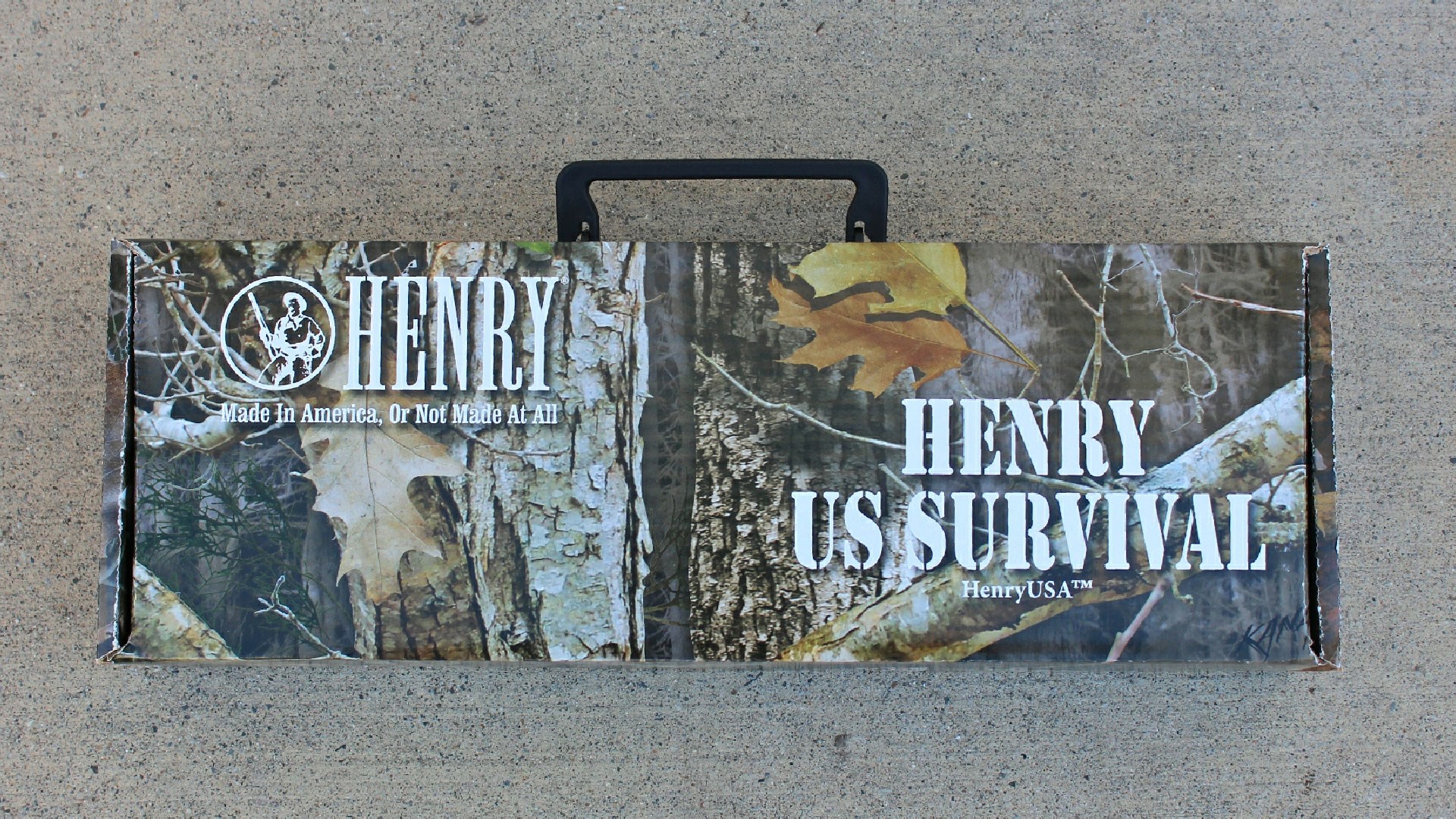 The Henry U.S. Survival arrives in a handy box that can also serve as a light duty storage case.
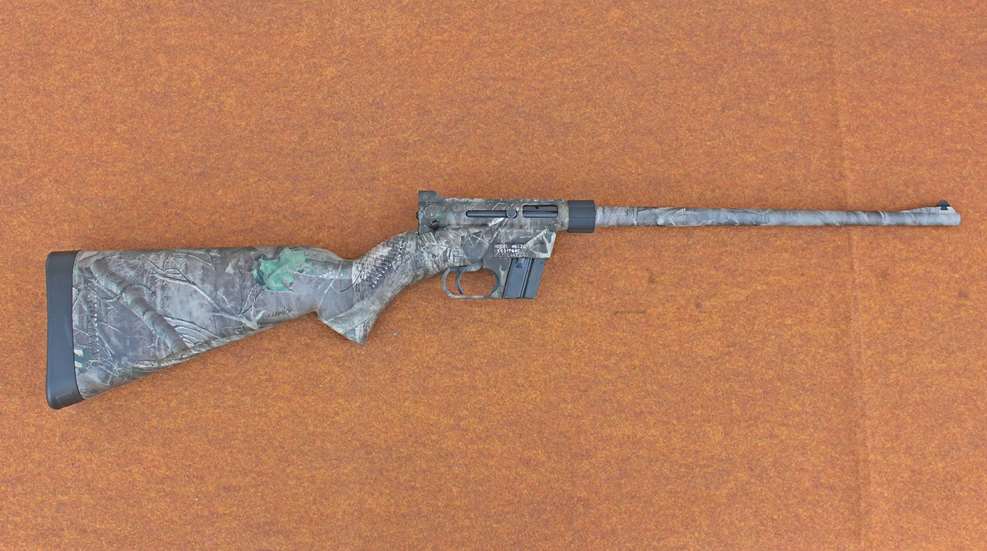
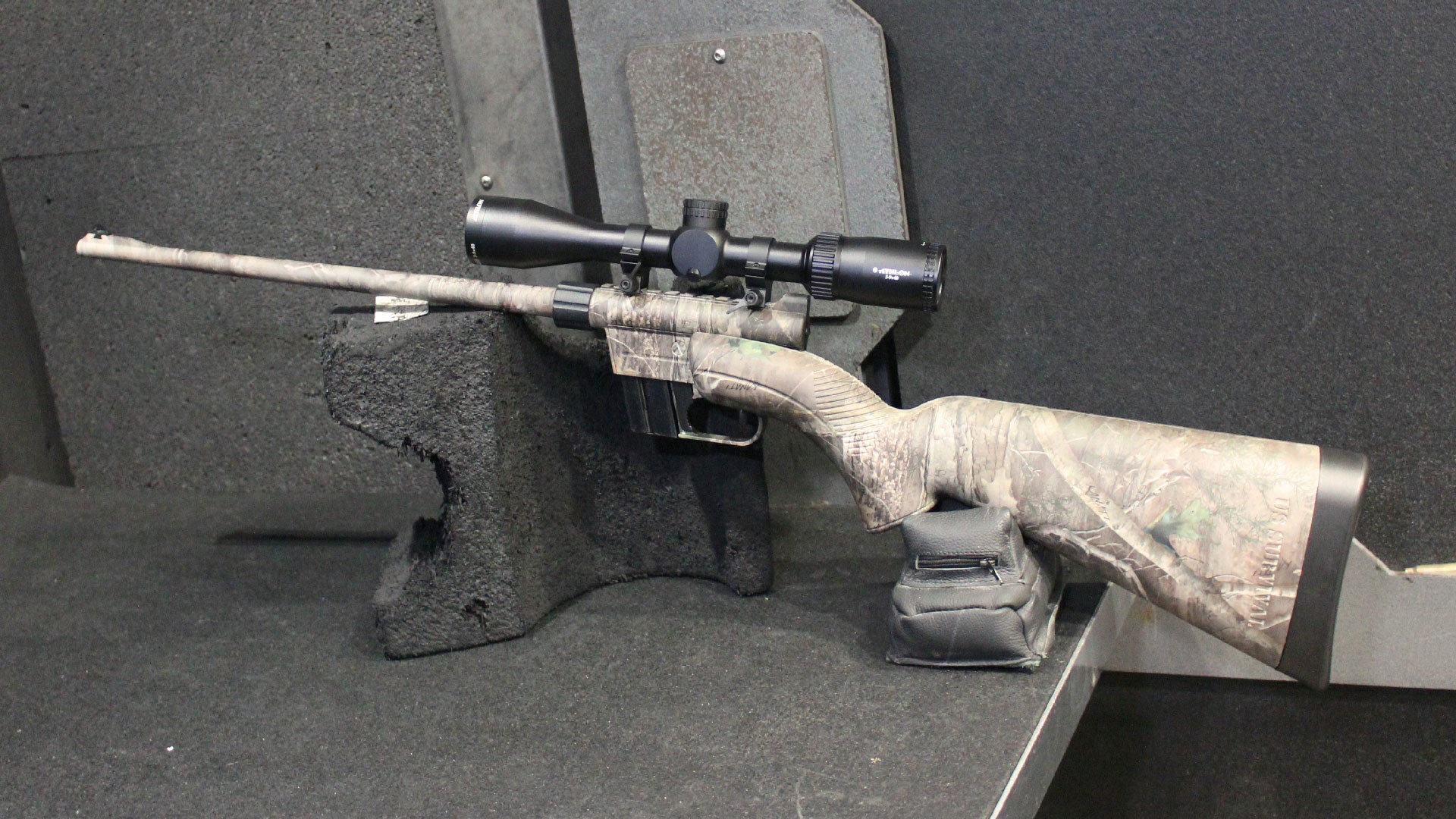
One gun that still has impressively modern sensibilities is Henry Repeating Arms' interpretation of Eugene Stoner's 66-year old AR-7 takedown .22 LR rimfire rifle design. Dubbed the U.S. Survival Rifle, Henry's offerings provide some handy features, along with improvements and finishes not available with the original model. This evaluation takes a closer look at the model with a hydro-dipped True Timber Kanati Camo finish.
 This takedown rifle is available in three finishes including the True Timber Kanati Camo shown here.
The U.S. Survival is a blow-back operated takedown rimfire rifle that tips the scales at just 3 pounds 8 ounces, unloaded. Unlike other takedown .22s, which usually split in half or fold, this model breaks apart into four major components. Once separated, the receiver, magazines and barrel can all be stored inside the hollow ABS polymer shoulder stock. When collapsed and stowed, the stock is 16.55 inches long and 2.75 inches thick (at the widest point) making it an ideal size to fit into a backpack or small vehicle storage space.
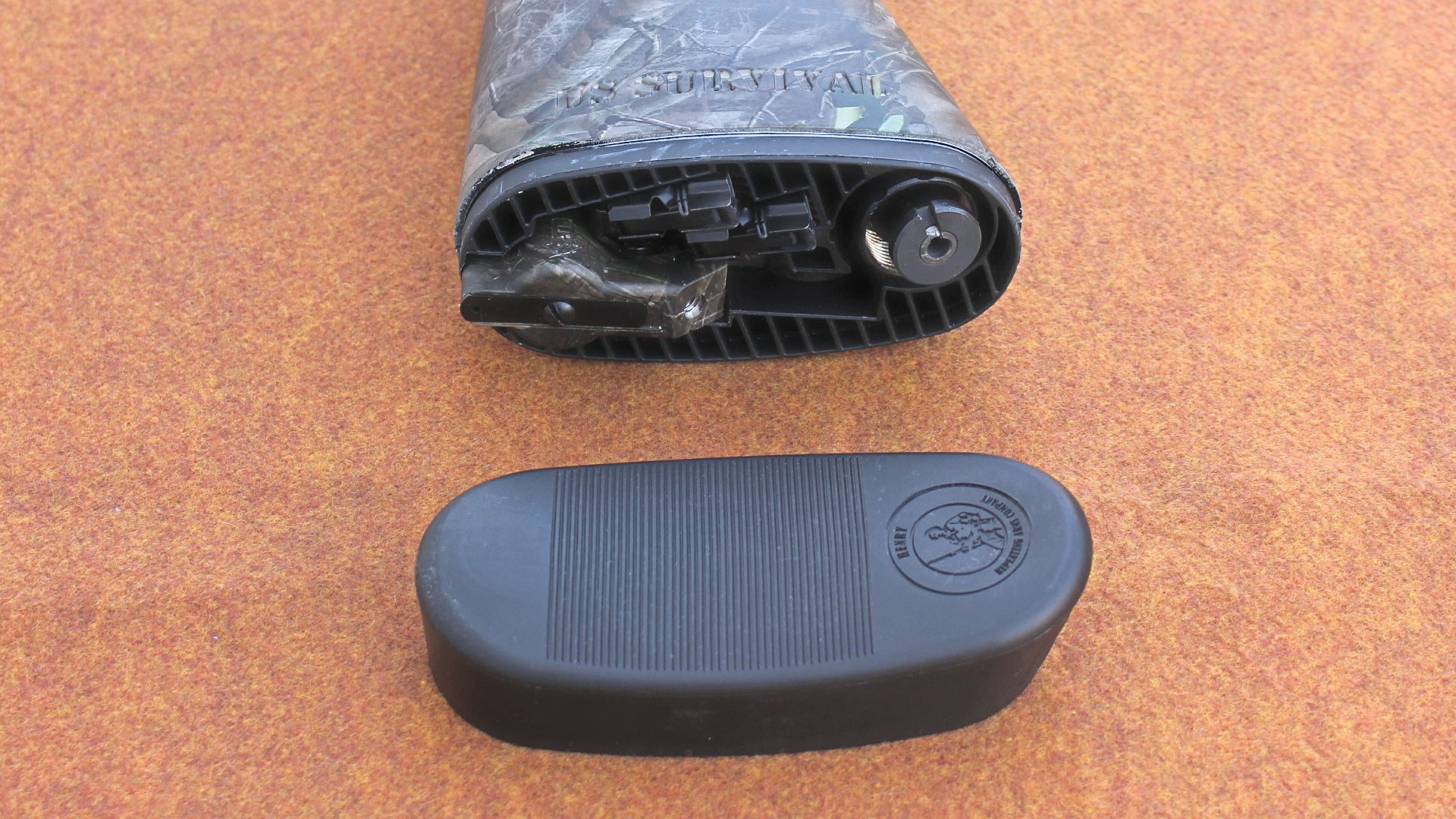 Removing the stock’s end cap exposes the specialized storage compartment.
Inside the stock is a vented polymer liner with pockets and slots for the parts. In some models this liner, along with the front sight, is made of bright orange plastic. But this model's liner and front sight are black like the end cap. The storage space is not listed as water proof or water resistant. However, if dropped into water, the stowed rifle can float for a minute or two before becoming water logged and sinking. But that should be enough time to retrieve the gun if you hustle to get it.
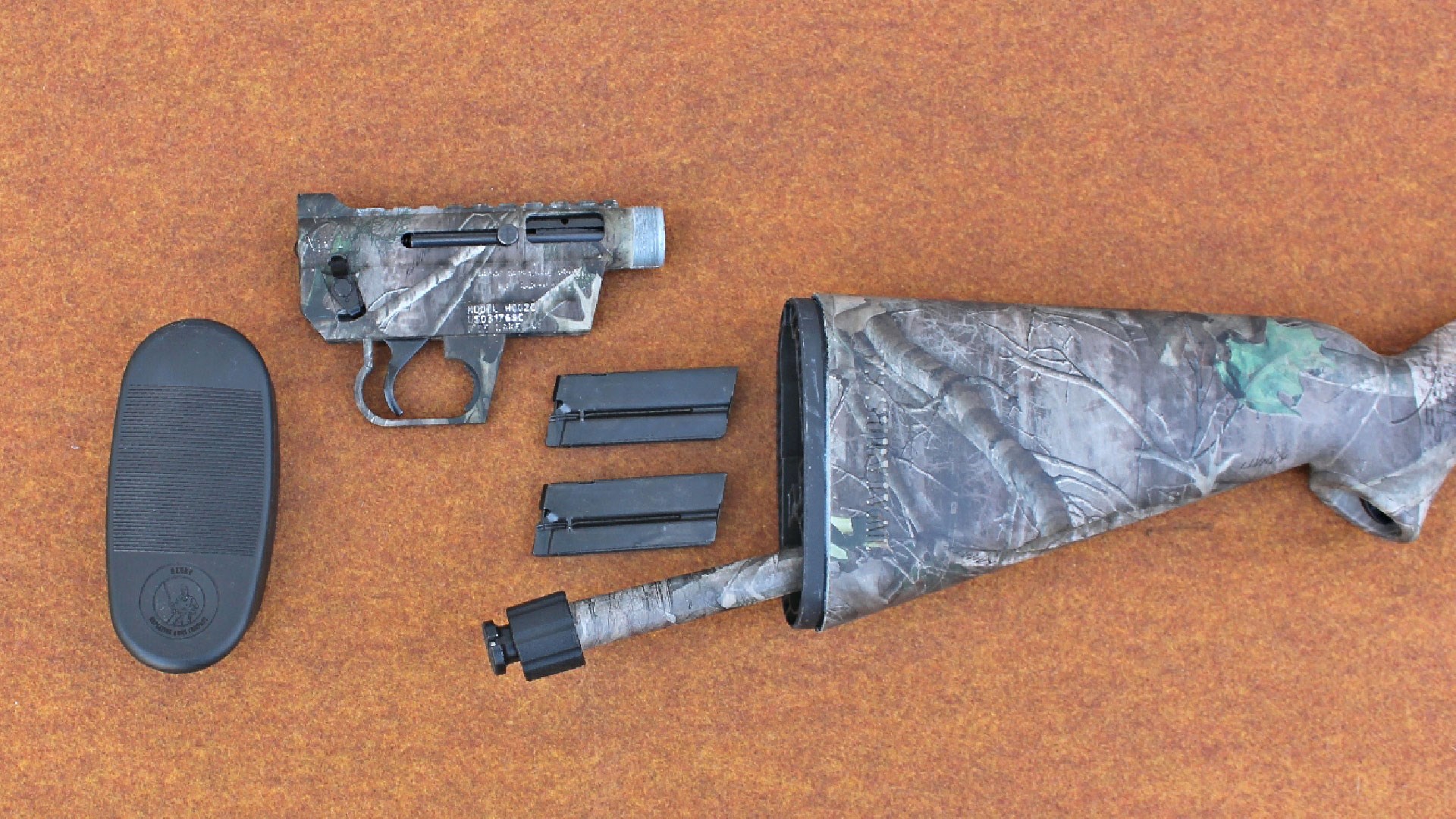 The receiver, barrel and magazines are stored inside the shoulder stock.
Assembly of the rifle is simple and does not require any tools. Pop off the black polymer end cap and removed the components from the stock. The rifle ships with two single-stack, 8 round magazines tucked into their own storage slots. But it is worth noting here that there's room inside of the stock for a third magazine if it's inserted in the receiver's magazine well. It’s a good investment to purchase a two-pack of Henry's replacement magazines (HS-15-16-17-2PK; $41.89) from the henryoutfitters.com website so as to keep a third magazine with the gun. This is a survival tool and magazines have been known to be dropped and lost at inopportune times, so the more the merrier! I like to keep the spare magazines inside the stock when not in use since it’s an easy way to keep track of them.
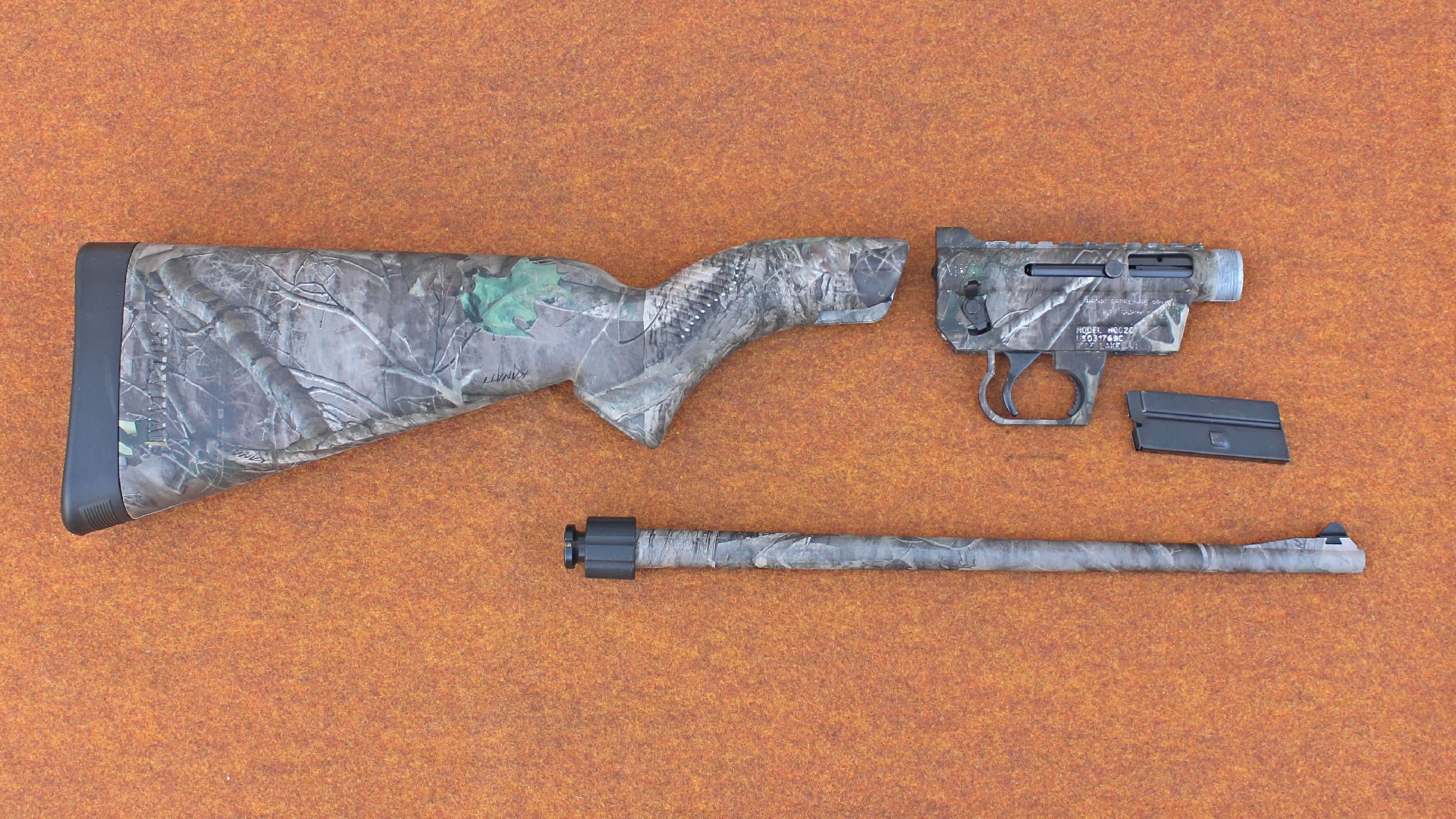 The U.S. Survival is simple to assemble without the need for tools.
With the parts laid out, go ahead and replace the end cap. The receiver is mounted to the shoulder stock via a screw captured in the stock's textured grip. Set the receiver into its slot and then tighten the screw finger tight. The barrel's chamber has a small post on top which aligns with a notch in the top of the threaded portion of the receiver. Insert the barrel properly, tighten the black polymer barrel nut manually and the rifle is assembled. Load the magazine and insert it into the magazine well when you are ready to fire.
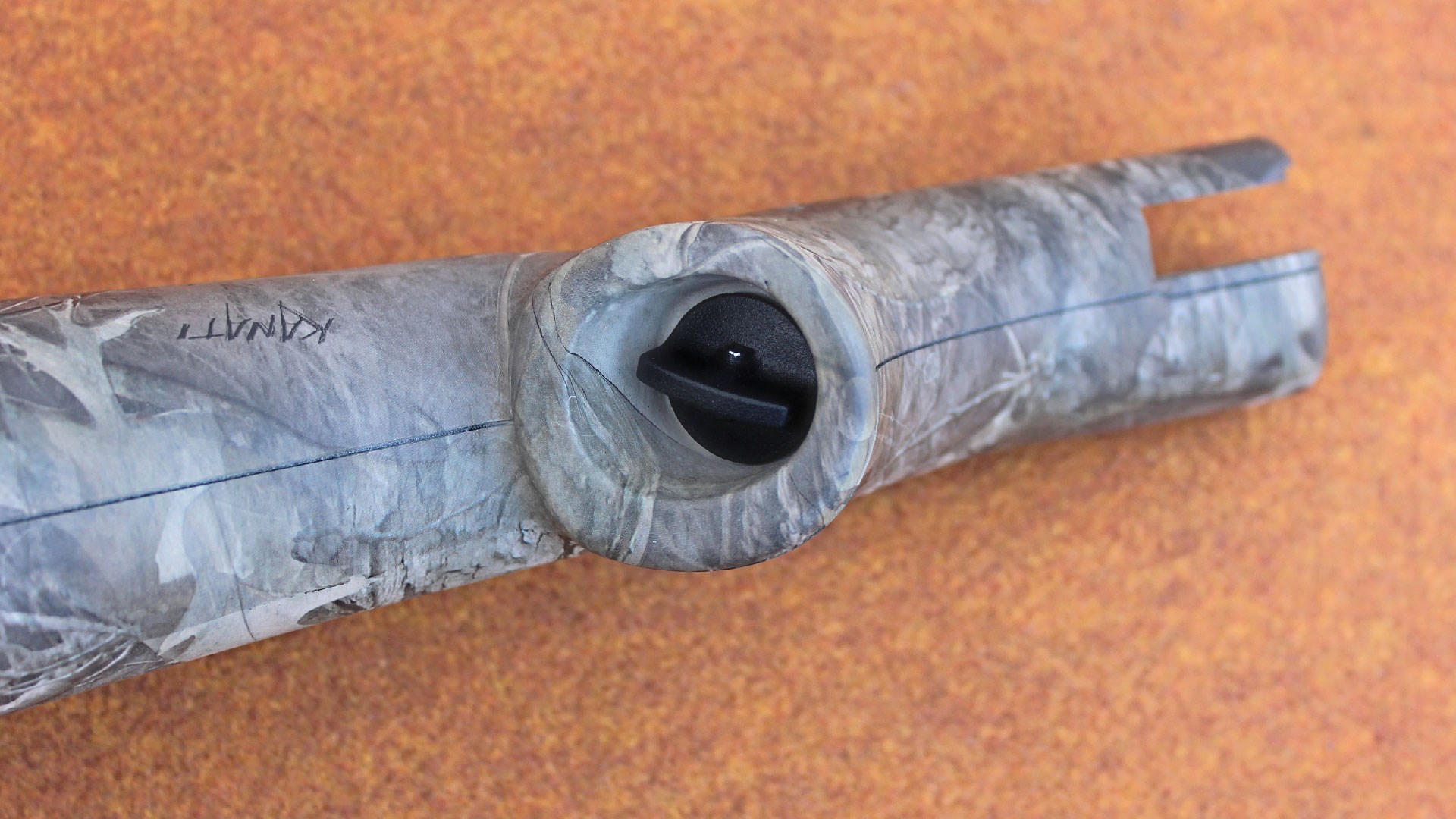 The receiver screw is captured inside the stock’s grip.
The 16-inch barrel assembly consists of a slim, steel 'pencil' bore molded into a light weight, weather resistant polymer sleeve. The dovetailed black polymer front blade sight is paired with the receiver's integral, height-adjustable aperture rear sight. The top of the receiver sports an integral 3/8-inch groove rail for mounting optics. The receiver is made from a corrosion-resistant aluminum alloy and fitted with steel components where needed. In this case, the barrel, receiver and stock are all treated with the same camouflage finish.
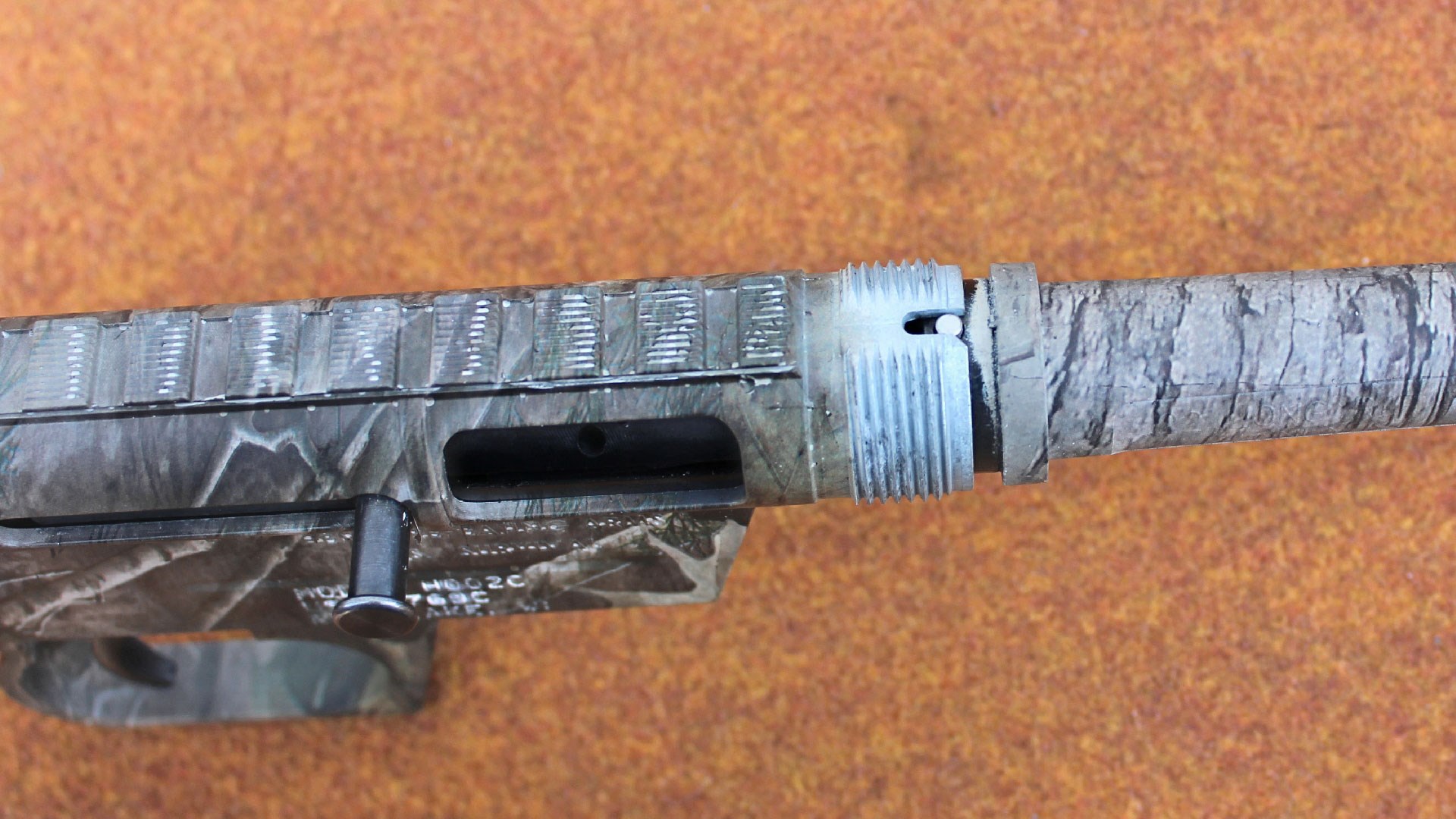 A pin atop the barrel’s chamber ensures proper alignment with the receiver.
The ejection port, charging handle and thumb safety lever are located on the right side of the receiver. The charging handle is a round pin which recedes into bolt assembly when not in use. The safety lever swings back towards the shoulder stock into the SAFE position. Pressing it forward readies the rifle to fire. The magazine release lever is located on the left side of the trigger guard. It is pressed forward toward the muzzle using the trigger finger to drop the magazine out of the magazine well. The single-stage trigger's pull was a bit heavy at 4 pounds 15 ounces but it exhibited a smooth feel and a clean break.
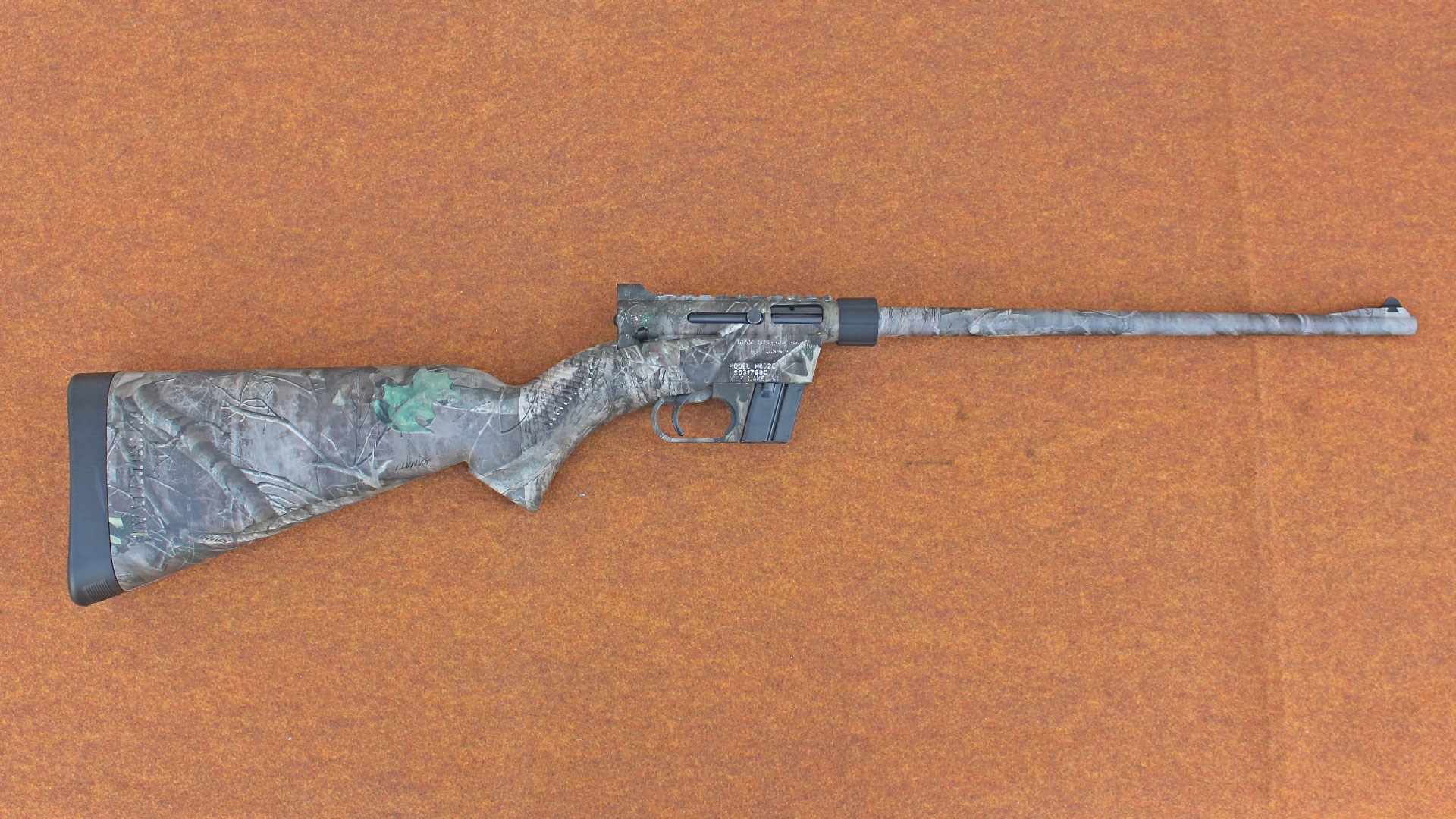 Fully assembled this rimfire semi-automatic weighs in at 3 pounds 8 ounces.
When the U.S. Survival is disassembled for storage in the stock, it's also almost ready for routine cleaning and lubrication. The barrel is separated from the receiver providing unobstructed access to the chamber bore for brushing and patching with a cleaning rod. As for the action, Henry made a change to the AR-7 design to simplify its disassembly. The old design requires the removal of the receiver's left-side plate in order to remove the bolt assembly. This in turn exposed the spring and pins of the safety lever and trigger group.
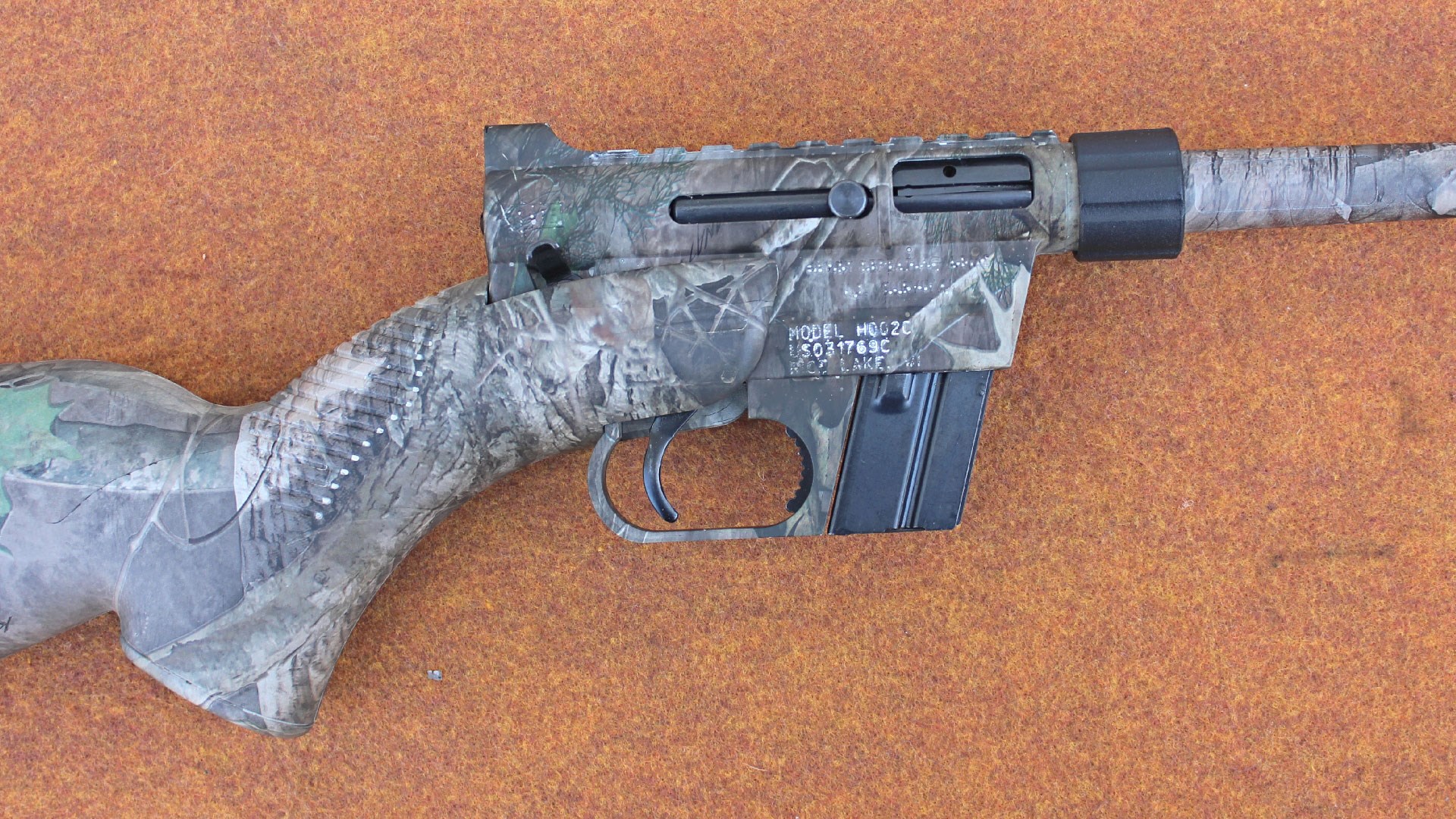 The right side controls include the thumb safety lever and the retractable charging handle pin.
Henry's version does not require the receiver to be opened. Instead, just press the bolt assembly back into the receiver a fraction of an inch to free up the pin that serves as the charging handle. This allows the pin to be pulled out of the bolt. With the pin removed, the bolt, its pair of action (recoil) springs and the polymer action spring guide can slide forward out of the receiver. Wipe, oil, reinstall and the receiver is back in action. It's just about as simple to work with as a semi-automatic rimfire gets.
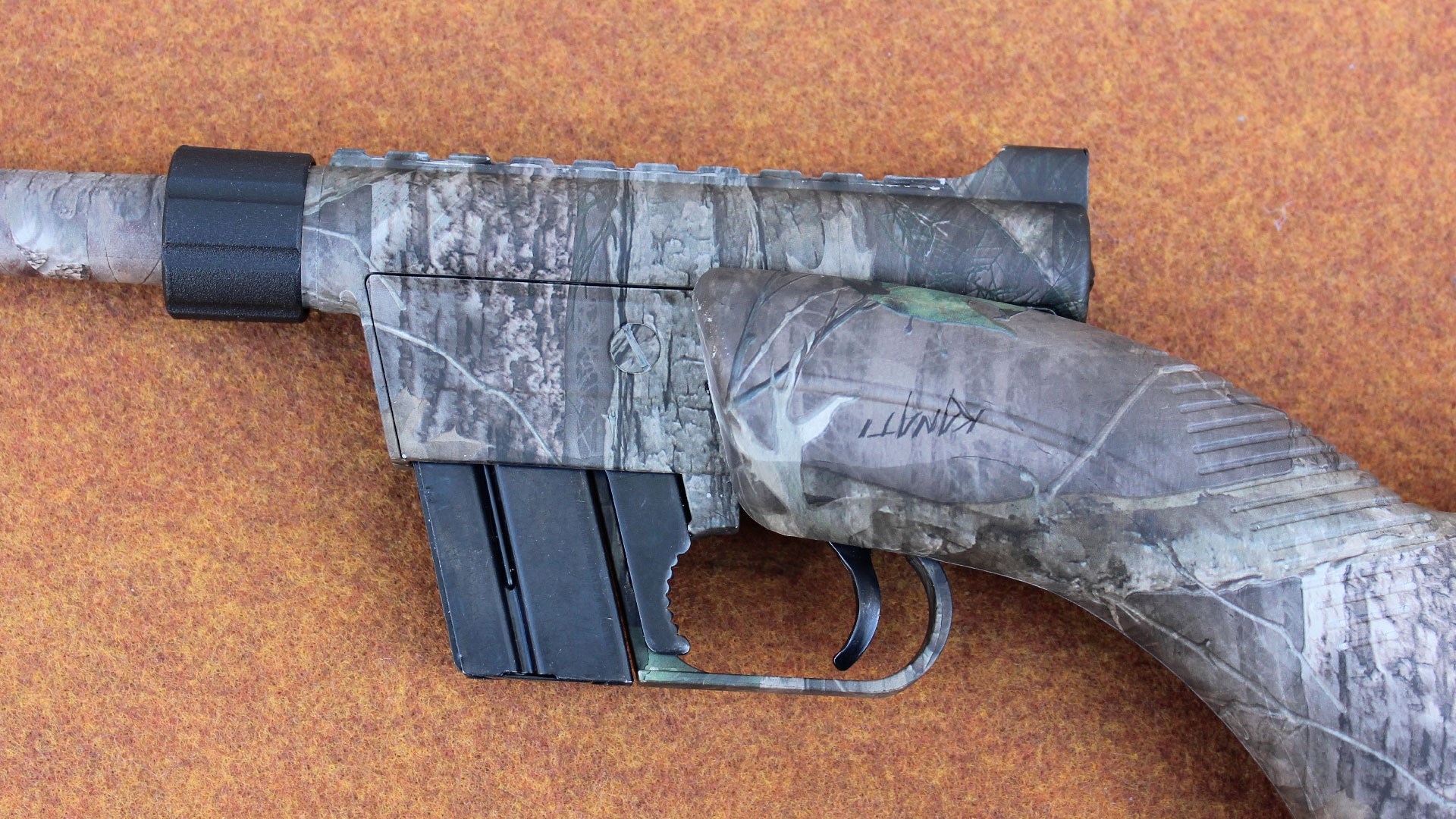 The left side magazine release lever is mounted to the front of the trigger guard.
Some folks who have conducted evaluations of the U.S. Survival Rifle have opined that the receiver's 3/8-inch groove optics rail is essentially a vestigial feature. Who is going to mount a magnified optic to a takedown rifle like this one? I too have eschewed using the rail in the past in favor of the factory installed iron sights. However, for this evaluation, just in case someone does want to use the rail, I broke out the trusty Athlon Optics Neos 3-9x40mm BDC 22 Rimfire Reticle scope ($162.49) that I've enjoyed using for a few years now. A set of Warne Maxima 1-inch High 7.3/22 Quick Detach rings were just tall enough for the scope tube to clear the receiver's fixed aperture rear sight.
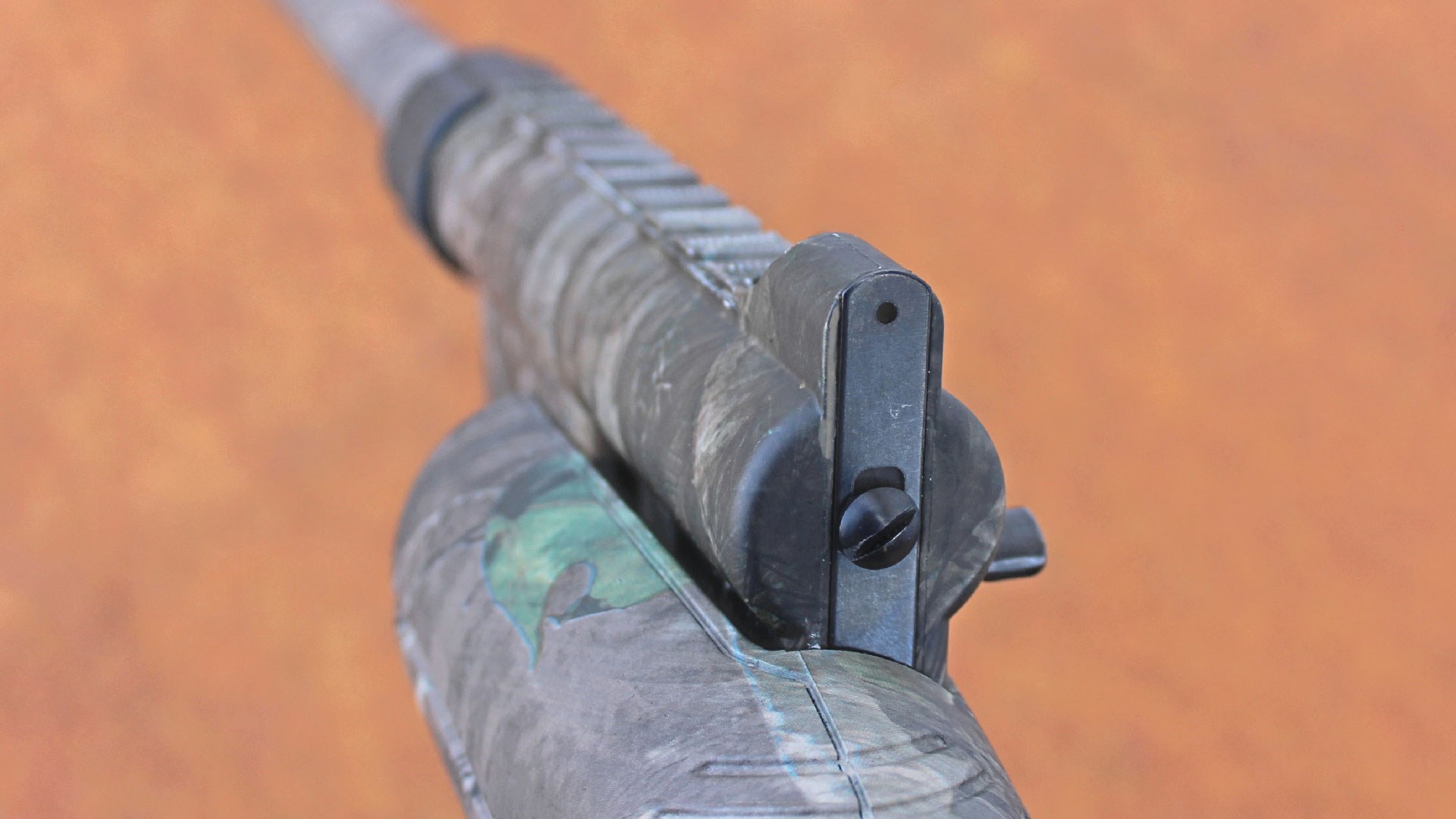 The rear sight aperture plate is adjustable for height.
The informal and formal testing was conducted using a total of four factory AR-7 style 8-round magazines stoked with a mix of practice and premium grade .22 LR loads in commonly available bullet weights and velocities. There were two bulk-box cartridges, used during the first 50 rounds, that failed to fire their first time through the gun. Each round did fire when chambered a second time with the firing pin striking a different section of the rim. I'm writing this pair off as faulty primers which is typical for less expensive, practice-grade .22 LR loads. Otherwise, the rifle, magazines and ammunition operated reliably and without any hangups or issues.
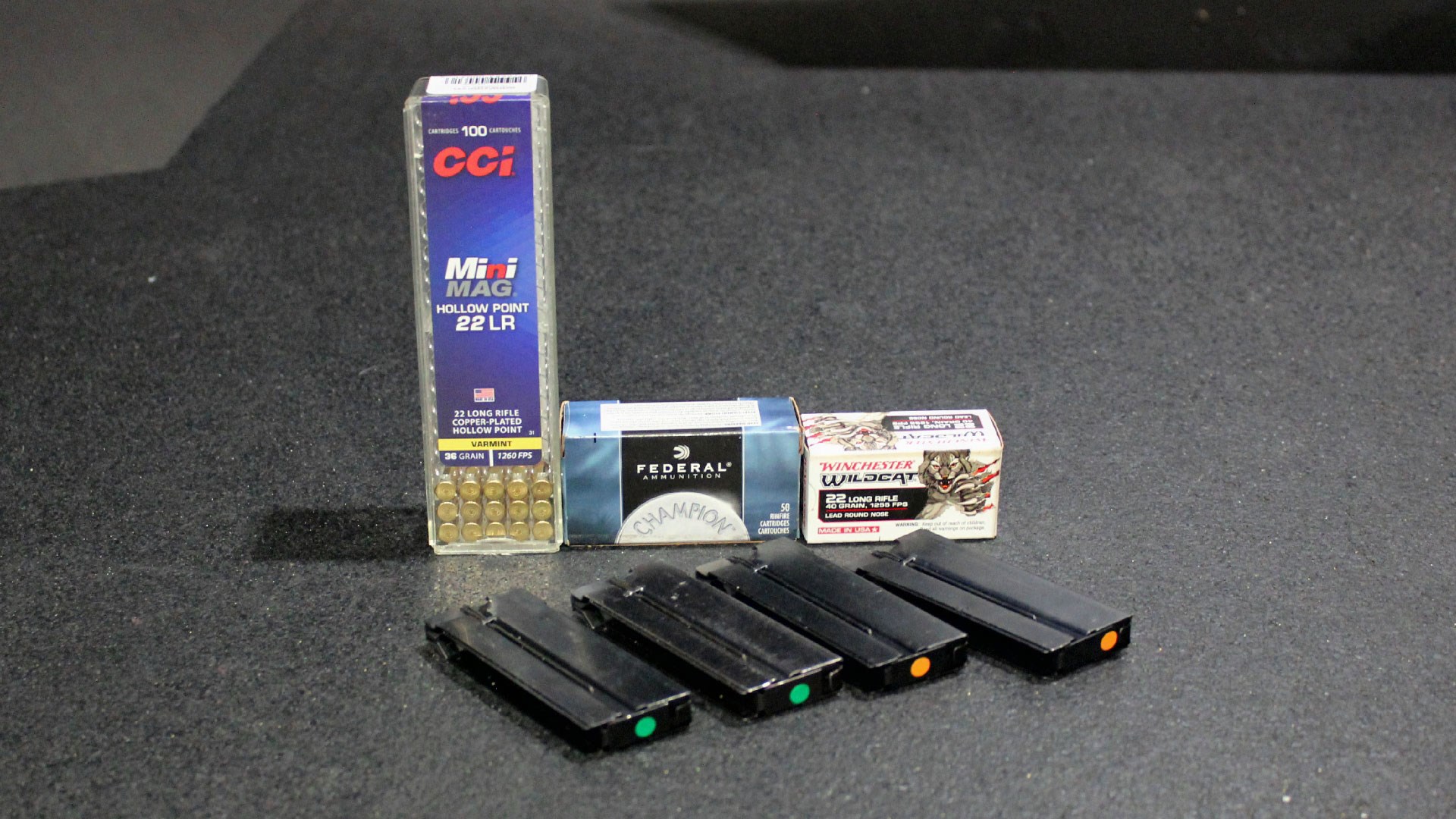 This rifle proved to be reliable with the magazines and ammunition tested.
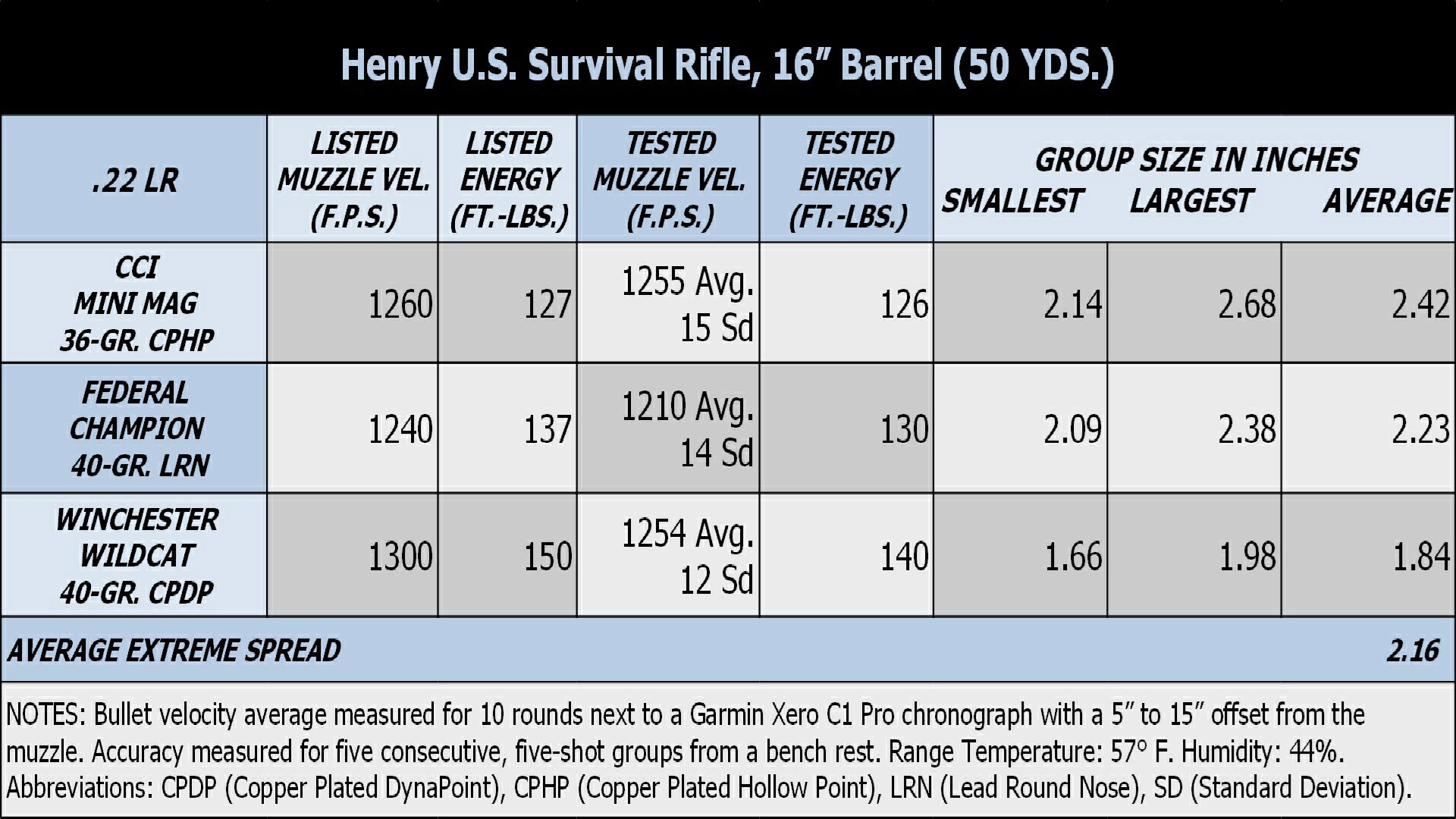
With the optic installed and the rifle couched in a bench rest, the formal performance testing was conducted by firing three 3-shot groups with a trio of .22 LR loads into paper targets posted at a distance of 50-yards. A Garmin Xero C1 Pro chronograph was used to measure bullet muzzle velocity averages for 10-shot strings. The test ammunition included CCI Mini Mag, Federal Champion and Winchester Wildcat loads. Here are the results:
The U.S. Survival rifle is among my favorite Henry offerings. It successfully balances utility and that often elusive cool factor in a takedown rifle package that is portable, reliable and easy to work with. Although the handling and operation is fairly unique, due to the trigger and stock configuration, it is enjoyable to use thanks to the stock's grip shape and a comfortable cheek weld. One of these guns has been following my family around on outdoor adventures for many years now. I hope the next generation will 'discover' this platform and keep it in circulation for years to come. But could there be some changes or updates to the lineup? Here is what I would suggest.
It would be good to see the receiver's integral optics rail changed from the current 3/8-inch grooved configuration to an integral Picatinny rail. The rifle works nicely with the native iron sights. However, we now live in the age of micro red-dot optics. Being able to quickly mount one of the more affordable sub-3-ounce, polymer-housed optics to one of these rifles would only increase its appeal. Next, a suppressor-ready barrel would be popular, even if it was sold separately as an accessory. It would pair up nicely with the Picatinny rail. And last but not least, how about reviving the AR-7-type pistol? That would be a terrific addition. But until then, I'm going to keep enjoying these .22 LR rifles as-is. For more information, visit henryusa.com.
Technical Specifications:
- Type: blow back operated; semi-automatic; rimfire rifle
- Caliber: .22 LR
- Magazine: single-stack blued steel removable box; 8-round capacity
- Barrel: 16-inches; polymer with steel insert; 6-grooves;
- 1:16 RH twist
- Trigger: single stage; pull weight 4-pounds 15-ounces (as tested)
- Sights: black polymer blade front; height-adjustable aperture rear
- Safety: 2-position
- Stocks: hollow ABS plastic; LOP 15 inches
- Metal Finish: hydro dipped camouflage
- Assembled Length: 35 inches
- Stowed Length: 16.55 inches
- Weight: 3 pounds 8 ounces unloaded and stowed in stock
- Accessories: two 8 round detachable box magazines, lock, owner’s manual
- MSRP: Camouflage $428 (H002C), Black $350 (H002B)