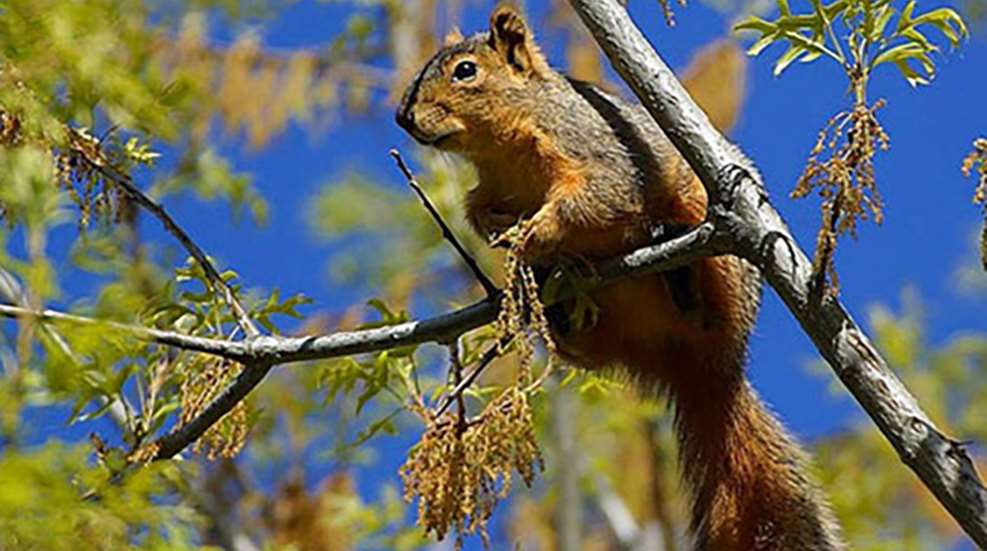
Many hunters put away their gear after spring gobbler season, believing that all hunting opportunities are over until fall. But that’s not the case in states that hold a spring squirrel season.
Spring squirrel hunting extends the hunting season right into the summer, and with fewer hunters in the woods chasing other game it’s a great way to introduce youngsters to hunting, as well as to scout for larger game and learn new properties.
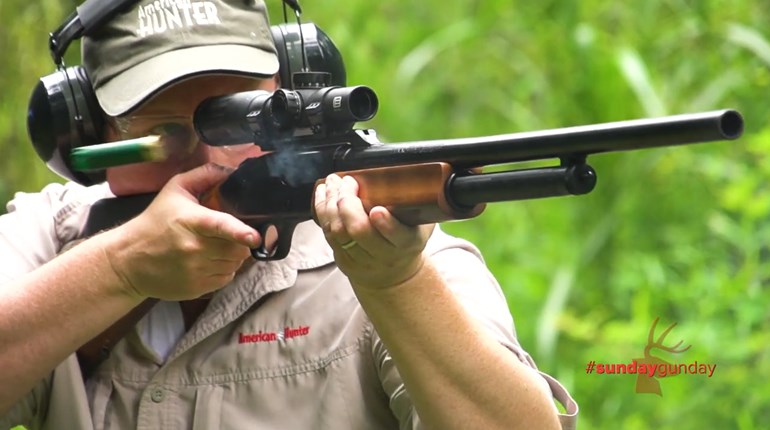
Spring squirrel hunting is in many ways similar to fall hunting. A lot of the strategies that work then will work in the spring. However, it’s a lot hotter, as most spring seasons are actually held in the early summer. Because of this, the trees are full of bright, new foliage. This means that most shots in the spring will be quick and close, making a shotgun with a modified or full choke a better option than a .22 rifle. Of course, if you’re looking for a way to improve your rifle shooting skills, then spring hunting will force first-shot concentration as squirrels can quickly disappear into the greenery, preventing follow-up shots.
In both spring and fall squirrel hunting, one of the most popular strategies is to find a food source, sit near it and wait for the critters to appear. As squirrels eat a lot of nuts, oak and hickory trees are prime locations. Of course in the spring, the trees aren’t dropping nuts, so you have to watch the ground for squirrels foraging last year’s crop. Squirrels also utilize early fruit, especially mulberries; if you know where a mulberry tree is, you should set up and stay there.
Other strategies are spot-and-stalk and calling, and, of course, the three can be combined for excellent results.
Spot-and-stalk is similar to still hunting for deer, so it’s a good way to teach new hunters to move quietly through the woods after game. Squirrels aren’t anywhere near as observant as deer to potential danger, but hunters still have to move slowly and quietly to be successful.
Calling squirrels is more about locating them than actually bringing them to the gun. There are many vocalizations that squirrels use to communicate, with the main one being the basic bark. The bark is a good locator as squirrels often answer when they hear it. Use it, along with the bark/squeal, to zone in on a squirrel, as well as keeping up with it when stalking. Use the chatter to reassure the squirrels in your area that nothing is wrong, as squirrels only run around and chatter when there is no danger. The distress can be used to get a squirrel to stop and crouch down, providing you with a shot. Other than that, it’s really a call that should be avoided. Old-time hunters used to run two coins together to imitate squirrels cutting nuts, but in the spring this call isn’t used very often as the crop is already on the ground.
Squirrel Vocalizations
While the bark and other vocalizations can be imitated by some hunters, most should use a hand-held caller. Both Hunter’s Specialties and Primos make squirrel calls that are easy to learn.
Bark: Tap the bellows lightly from three to eight times to make a gray squirrel bark. Cup your hand around the end of the call to produce the fox squirrel bark. The bark is a good locator as squirrels often answer when they hear it.
Squeal: Push the bellows from the top two to three times. This can be combined with the bark to produce the Bark/Squeal.
Chatter: Shake the call for three to five seconds from the tube end.
Distress: Blow harshly into the tube end of the call three to five times, making sure you don’t cover the small hole in the barrel.
The Main Differences
Squirrel hunting is squirrel hunting in most instances. However, there are some differences that spring hunters should understand. The first is camouflage. In the spring, the foliage is bright, meaning that hunters stand out when wearing the dark patterns used in the fall. Brighter patterns, such as Mossy Oak’s Obsession or Realtree’s Hardwoods Green HD, are best for warm season hunting, but military jungle camo will work for the budget-conscious hunter.
The next main difference is insects. Sure, the bugs are out during spring gobbler season, but they become much worse as the days get longer and warmer, and Lyme disease is no joking matter. A good insect repellant is crucial to staying comfortable and itch free, or you can use bug suits or a ThermaCell to keep mosquitoes and other pesky insects as bay. Combining all three will really keep you from being bothered.
Other than camo and insects, spring squirrel hunting is the same as fall squirrel hunting without the competition of deer hunters. The strategies that work in the fall, will work in the spring and summer. And if your state allows spring squirrel hunting, it will keep you in the woods for a large portion of the year.
Legal States to Hunt Spring Squirrel:
*Be sure to check your state’s regulations as season dates, areas and bag limits can be different or change annually.
• Arkansas – May 15 to Feb. 28, 2013
• Kentucky – May 18 to June 21, 2013
• Louisiana – May 4 to May 26, 2013 (private land and some WMAs)
• Missouri – May 26, 2013 to Feb. 15, 2014
• Oklahoma – May 15, 2013 to Jan. 31, 2014
• Tennessee – May 11 to June 9, 2013
• Texas (East Texas) – May 1 to May 31, 2013
• Virginia – June 1 to 15, 2013 (closed on National Forest Lands)
• Kansas – June 1, 2013 to Feb. 28, 2014