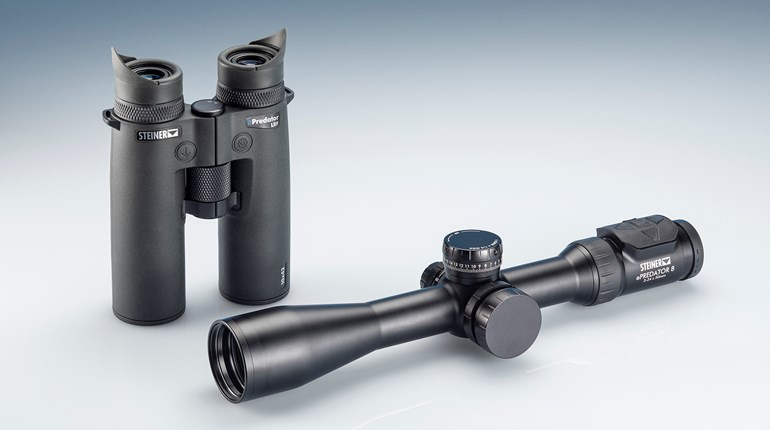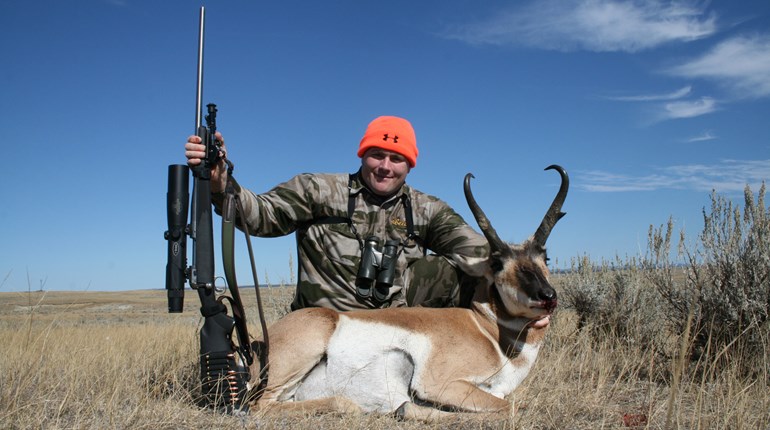
The scene before me could’ve been clipped from the Discovery Channel’s “Planet Earth” television program, except the prism through which I viewed it was Swarovski’s 12-power version of HD, and the commentary was provided by a burly Boer whose breath—and breadth—were vastly different, I imagine, from those of a Hollywood honey-mouth. We’d spied a herd of gemsbok as it milled nervously across one of seemingly endless grassy valleys partitioned by wavy ridges of windswept sand. These burnt-red beaches are the Kalahari’s trademark; the lack of visible water beyond them could be the reason why Sigourney Weaver types glean their filtered knowledge of this sun-baked place from shadier locales. As it was, I was separated from a mature gemsbok bull not by time, television or thousands of miles, but merely by four American football fields, a German No. 4 reticle and a sappy layer of sunblock.
“Shoot the big one,” said Johan simply, as dictated by his rancher-turned-hunter pragmatism.
At 375 pounds on the hoof, Oryx beisa, also called gemsbok or beisa in other regions, is not the biggest African antelope, but it’s likely the toughest. This animal’s Ray Lewis-like muscle structure, water-storing body and Refuse-to-be-a-Victim mind-set make it hell on bullets. You can’t outrun them when they decide they’ve had enough of you, and with 40-inch horns that look like inverted ebony icicles, it’d be unwise to challenge ol’ clown-face to a fencing match if you don’t prefer to whistle while you walk.
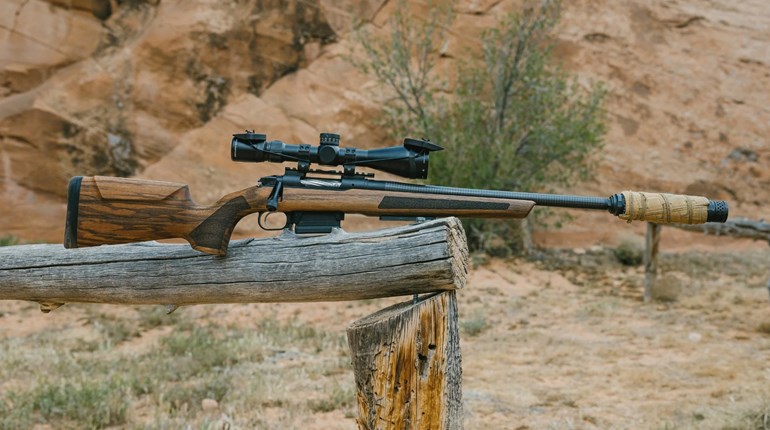
Therefore my foil was a .30-06, firmly rested, doped in and affixed midway up the front shoulder of a splendid old bull. It stood, swishing its tail, proud but so aware of our weighty eyes that Johann felt it’d put miles between us in another swish if we didn’t take it now. Four hundred yards is hardly calling myself a hunter, but when the PH says shoot, it’s bad form to say no.
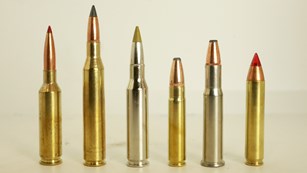
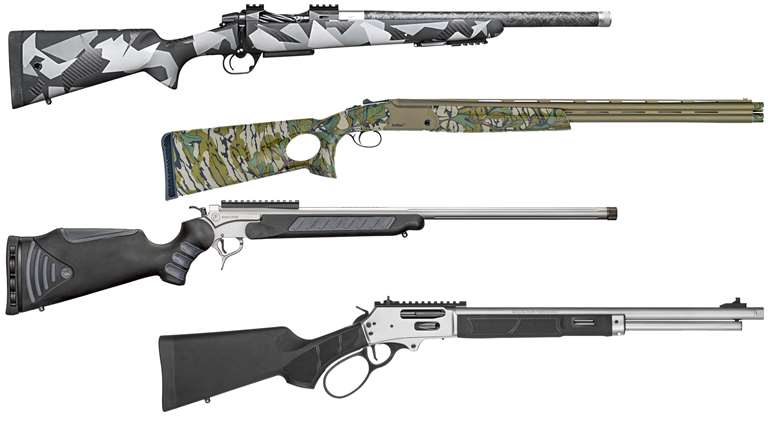
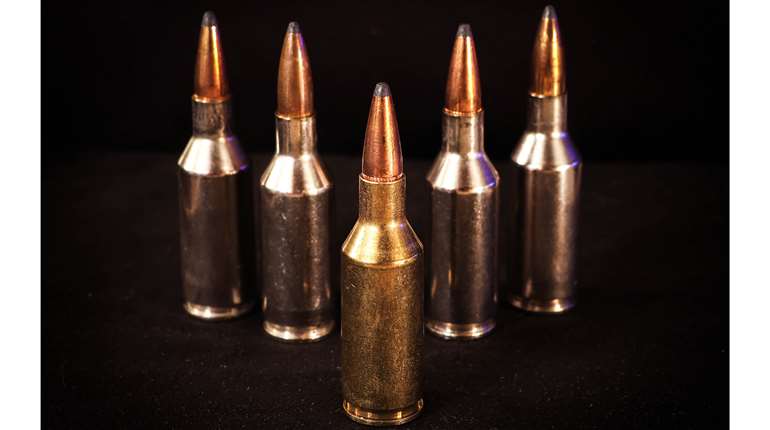
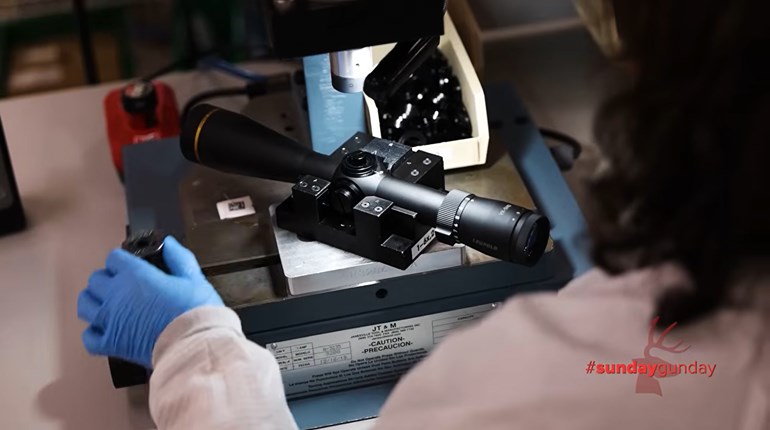
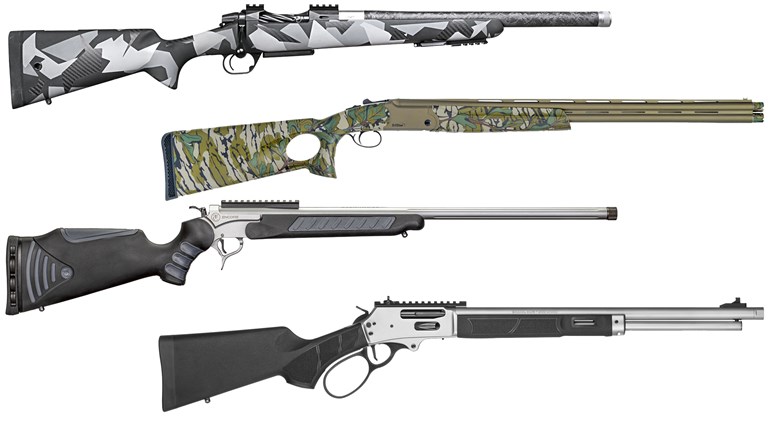
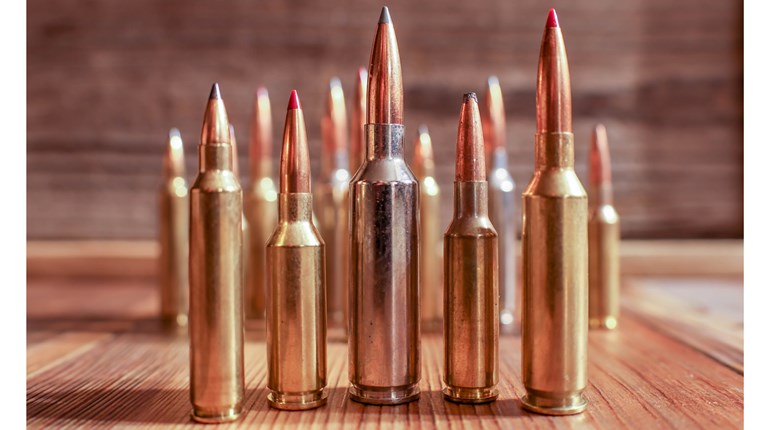
Besides, I’d shot the T/C Icon at that distance, it was an moa rifle, my rest was supreme and there was no wind. But even with a perfect shot, there are more experienced hunters than this writer who frown on non-magnum rifles for this notoriously tough species—especially at this range. But I had no time for second-guessing my selection of armament. It was all about trigger control now, and then it would be out of my hands and into those of a metallurgist’s. While it was true I had not used the new bullet I was about to send at a living creature, I knew enough—or thought I knew enough—about it and the 06’s numbers to know, academically at least, that at impact my 165-grain slug would be traveling 2,170 fps for 1,750 pounds of energy while dropping 21 inches with my 200-yard zero. Granted, 1,750 is not overly powerful for this type of antelope, and I questioned briefly whether I should aim behind its bulky shoulder bone, rather than smack dab in the middle of it like I’d learned to do by accident years ago on whitetails with a .308 and a Failsafe bullet. But I quickly shook off the notion; the shoulder shot on such a broadside beast is best, and from past experience with monolithic bullets I figured the super-hard gilding metal of the GMX would do its job if I did mine. To that end, I concentrated.
I took a deep breath, exhaled, then I took another, sucking in the desert air as time began its addictive, adrenaline-induced crawl. I let the breath halfway out and began a slothful depression of the trigger. As it neared its valley—somewhere near 3.5 pounds—I remembered another flash of past experience.
■ ■ ■
Five years ago I hunted gemsbok in South Africa. Rather than brag about how supremely I followed the guide around and shot when and sometimes where he pointed, I’ll relay an interesting anecdote involving guns and bullets.
My PH made it apparent that he was keen on the .300 Win. Mag. He frowned upon anything owning less horsepower at the blood-metal junction for the large end of his menu, specifically gemsbok. Over a slew of pre-safari email it became apparent that the .30-06 and its non-magnum relatives could easily fail to anchor a bull if the shot was less than perfect. This dude had likely taken more gemsbok than a pack of healthy hyenas, so who was I, other than an over-analyzing American gadget-packer, to disagree? A freshly minted .300 Win. Mag. and 40 of 60 handloaded rounds arrived in Jo-berg at the same time I did, albeit with considerably more pedigree. The .30-caliber belted cases were crowned with Barnes TSX bullets because I’ve come to trust them under all conditions.
To make a glorious seven-day safari dull, by mid-morning on day three of a good hunt, my PH slapped my back as we closely admired my very dead gemsbok bull. Ashamedly, I had not hit the gemsbok perfectly—it was a little far back and a touch high—but it was mortally wounded and we recovered it in short order. (Let’s be clear: When talking about bullet performance, it does little good to discuss instances in which the game was hit perfectly, as we all know that proper shot placement can solve nearly all bullet shortcomings.) Later that night as we honored the fallen bull by speaking of it, my guide beamed, “What’d I tell you, the .300 Mag. is the ticket!” Perhaps it was the moment, or the medium-rare evidence followed by native red wine across my lips, but I wholeheartedly agreed.
It was six months later, back in Virginia, when I shot the rest of those .300 Win. Mag. handloads while testing another rifle. To my astonishment, the loads—the same ones I’d taken on my safari—consistently averaged 2840 fps. Turns out, my buddy had done a great job of downloading them; he’d created a .30-06 in a .300’s copper clothing, and that’s what I’d shot the gemsbok with. I never told the PH of the disparity. (Who can argue that a .300 mag. is not better if it can be shot well, anyway?) And honestly, a gemsbok makes a better rug than a judge of such an elementary figure like 200 fps.
■ ■ ■
In my favorite room lays a copy of John Taylor’s age-old book African Rifles and Cartridges. It’s ragged from heavy use decades after its 1948 copyright. No doubt, old “Pondoro” knew his stuff—as 30 years of sleeping in the bush will allow—but he was unimpressed with the “umpteen” different soft-point bullets of the day because he felt they were unreliable at close range. He swore by “full-patch,” solid bullets for game—as did “Karamojo” Bell who labotomized elephants with a .275—but Taylor was frustrated there wasn’t a better option. He wrote, “I have gone into this question of expanding bullets at considerable length, because it is a very much more important matter than many men seem to realize.” But Taylor’s work is not timeless; like the land over which he hunted freely, things have changed and they will continue to do so. To deny technological advances is to wish they didn’t exist.
It was Robert Ruark who said to use enough gun. But he said curiously little about the bullets, the hunter’s only real connection to an animal. Forty years later hairy-hunting-story king Peter Capstick suggested that readers: “Use a soft point for your first shot on a Cape buffalo, but only if it’s a top notch tough bullet like a Core Lokt or Silvertip.”
Now most dangerous game hunters would disagree with this. It’s not that these bullets have gotten worse or the game has gotten tougher, its just that these bullets are not top-notch anymore, because they’ve been replaced by better ones. By better I mean tougher and more predictable in their expansion pattern across a wider range of velocities and target materials. With a few exceptions, like the venerable Nosler Partition, premium bullets these days are better than bullets of even 10 years ago, but that doesn’t mean the bullets 20 years ago didn’t work. Just because the astronauts flew to the moon using a computer a hundred times less powerful than your Blackberry doesn’t mean NASA hasn’t undertaken a few hardware upgrades over the years.