The Great Depression was, perhaps, not the greatest period of time for rifle and cartridge sales. However, in spite of the universally difficult economic times, two undeniably classic varmint cartridges came onto the scene; one introduced by Winchester, and the other a wildcat destined for fame.
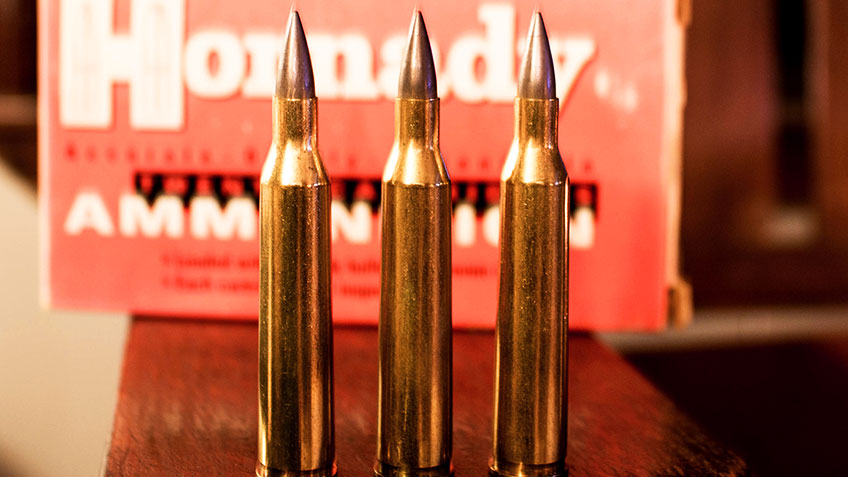
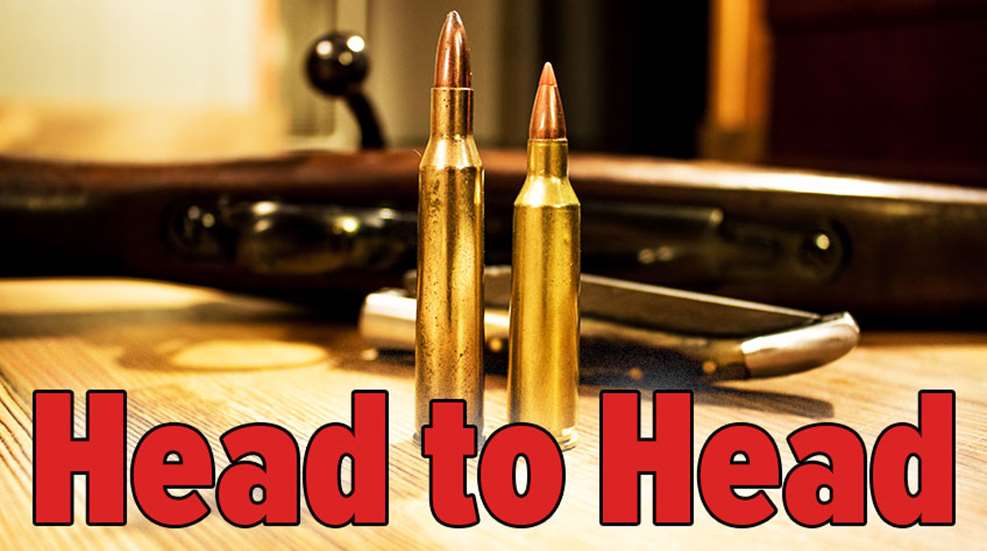
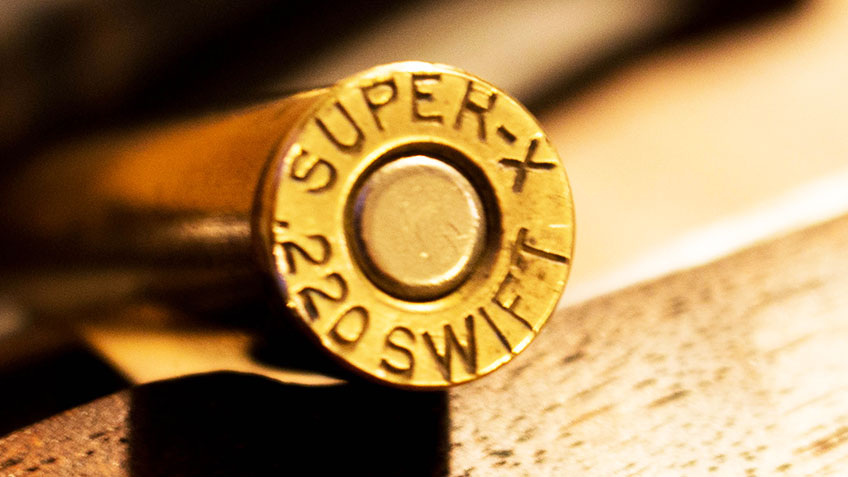
In 1935, Winchester released the .220 Swift, a truly high velocity cartridge designed for varmints and furbearers. Based on the 6mm Lee Navy cartridge, the Swift is a semi-rimmed affair with plenty of case capacity for the 48-grain bullets that Winchester loaded for it. It gave unprecedented velocities, breaking the 4000 fps mark, as it drove that 48-grain bullet to 4140 fps; the Swift is a screamer. Mind you, this was an era where telescopic sights were sketchy at best, so the true benefits of the Swift’s velocity would take some time to be appreciated. The Swift was introduced in Winchester’s Model 54 bolt-action rifle, and was one of the first cartridges available in the revolutionary Model 70, released one year after the Swift. However, in 1964, when the Model 70 went through its rebirth, Winchester discontinued the Swift.
The .220 Swift was designed for varmints (coyotes, woodchucks, prairie dogs, et al.), but in no time flat it was used as a deer rifle, with mixed results. Projectiles in the mid-1930s were certainly not what we have today, and while some swore by the cartridge—W.D.M. Bell considered it a perfect cartridge for stalking red deer—others saw lost and wounded game. Metallurgy also played a factor in the early rifles chambered for the Swift; the 1930s steel also wasn’t what we have today, and the Swift’s velocity quickly took its toll on many barrels, earning a reputation as a barrel-burner. However, it was—and is—absolute hell on smaller game. It’s an accurate cartridge, one of the best in a well-tuned rifle.
The .250-3000 Savage was also a groundbreaking cartridge, being the first to break the 3000 fps mark with its 87-grain bullet. It gained a quick reputation as a deer-killer, and a century later it remains a great choice. The wildcatters took to this cartridge, necking it down to hold .224″ diameter bullets; one of the first incarnations of the cartridge is attributed to Grosvenor Wotkyns, J. E. Gebby and J. B. Smith, under the name .22 Varminter, shortly after the release of the .220 Swift. And among the wildcatters, the necked-down .250-3000 would spend almost three decades doing what it does best before it would be adopted and made legitimate. It had won the favor of Philip Sharpe—renowned ballistician and champion of both the .220 Swift and .22-250 equally—and he gave the cartridge his vote for “outstanding cartridge development of the last decade.”
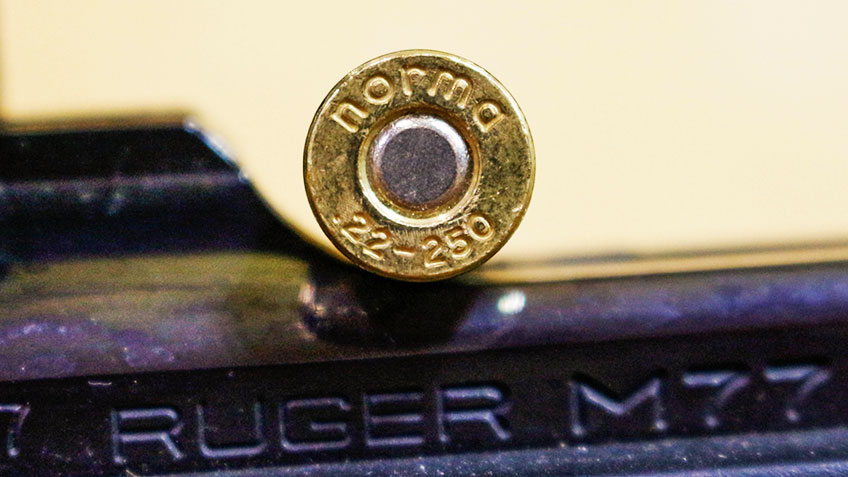
Browning released a rifle chambered for the .22-250 Remington—as it came to be known—before there was a SAAMI specification or a single factory-loaded cartridge available for it. This was 1964, nearly 30 years after the cartridge first reared its head. The following year, Remington—which has had a knack for legitimizing the best wildcats—added their name to the .22-250 cartridge, obtaining SAAMI-approval and cementing the cartridge dimensions for eternity. And the rest is history. The .22-250 Remington will drive a 55-grain bullet to a muzzle velocity of 3800 fps, with the lighter bullets breaking the 4000 fps mark, and has been capable of serious accuracy.
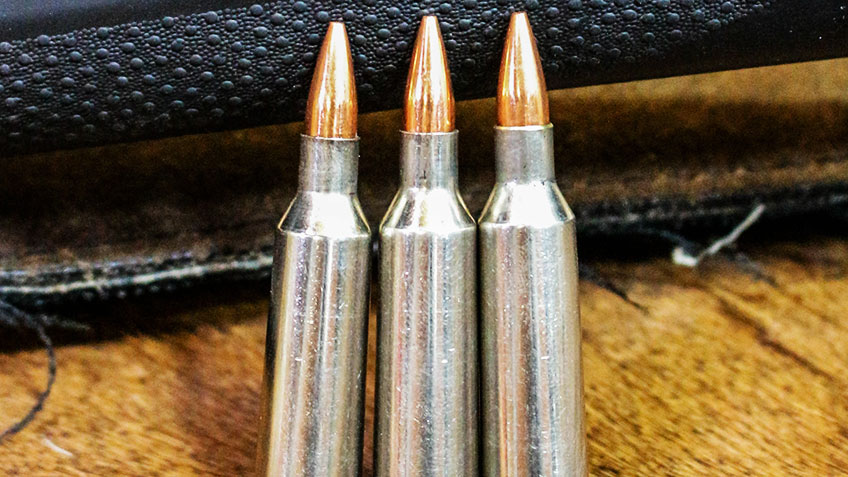
These two cartridges are the most popular of the truly fast .22 centerfires, but which one comes out on top? First, both these cartridges have a bit of a handicap (by modern standards) in that their twist rates preclude them from using bullets above 55 or 60 grains. Both are equipped with a 1:12″, or sometimes worse, 1:14″ twist rate, probably because their creators never envisioned the modern, high B.C. bullets we’re all currently enjoying. If any of our .22 centerfires have the potential to drive an 85- or 90-grain bullet, it would be one of these two. The .220 Swift has a smaller but fervent following, yet the .22-250 Remington is undoubtedly the more popular, and maybe for reasons that include more than marketing.
In spite of the larger case capacity of the .220 Swift, most modern ammunition is only 100 fps or so above that of the .22-250 Remington. While that essentially negates the old barrel-burner issue, it also nearly removes any advantage the larger Swift case provides. Couple that fact with the notion that the .22-250 Remington is cheaper to produce—it uses the .473″ case head that the 7x57mm Mauser and .30-06 families all share – and you may see why the younger design has taken root so well.
For its cool factor, the .220 Swift sure is fun to own and shoot, and in the hands of a handloader it can be made to really sing. The .22-250 Remington can, however, do anything that a .220 Swift can do, within normal hunting ranges. Neither makes a good 1,000-yard rifle, as the bullets just don’t possess the B.C. to reliably perform at those distances, unless the twist rates were to be revised to handle different bullets.
While I enjoy shooting the Swift, the .22-250 gets the nod from me, as I feel it is available in a wider array of rifles, as well as having a wider selection of factory loaded ammunition. The cases for the .22-250 are less expensive than those of the Swift for those who handload their own ammo, not to mention the fact that they can easily be made from a number of different cartridges. This is not so with the .220 Swift; the process is much more complicated. The .22-250 Remington may be the coolest wildcat that Big Green has legitimized; it’s light enough to handle a prairie dog town, yet fast enough to crumple a distant coyote, and will teach accuracy to any shooter, without fear of recoil.
With plenty of case capacity, I’d love to re-barrel my .22-250 to have a 1:8″ twist, and allow it to push the heavy bullets that the .22 Nosler and .224 Valkyrie are using. Until then, I’ll just keep using my old faithful rifle as is; coyotes beware!
Looking for previous installments of our "Head to Head" series? Click here.