A new puppy is spring incarnate, joy overflowing and trouble down the road if you don’t direct it along the correct path.
For the first several months, obedience is not that path. Puppies don’t need correction so much as positive experiences. Calm, safe, consistent introduction to pup’s big new world should be your training schedule for the first few months.
Pups that are too sheltered can grow up to be fearful, aggressive and slow learners. Having encountered few new experiences when young, they cringe when facing them in maturity. So make it your job to introduce pup to as many experiences as you can, starting with water.
Wet and Wild
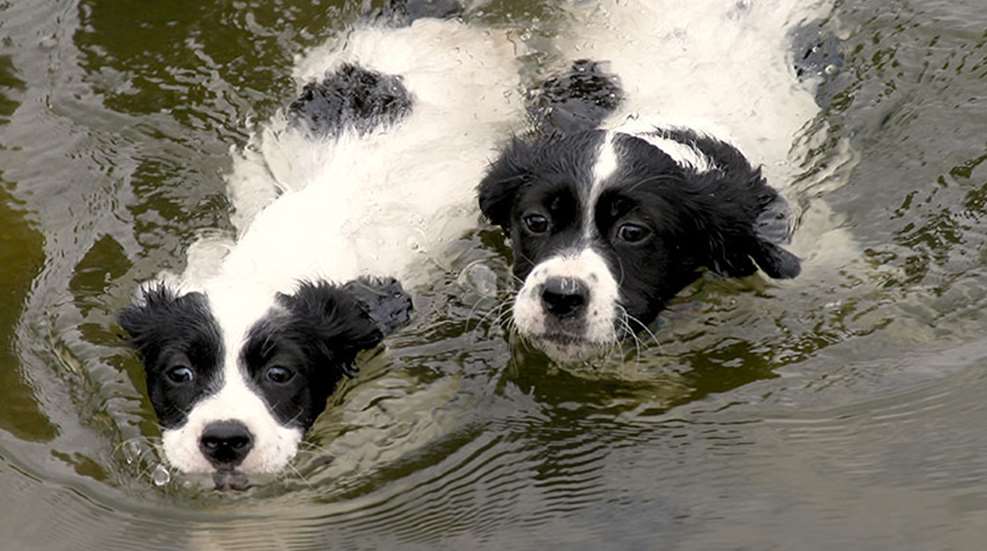
Some breeds take to water as if half muskrat. Others approach it like the Wicked Witch of the West. “Melting, I’m melting…” English setters are notorious for this. But not if you baptize them as babies.
My water-loving setters met the wet stuff on hot, hot days after they were heated even more by vigorous romping and chasing. At that point I entered the cooling lake with them in my arms, immersing them gradually without letting their heads submerge. Their legs started churning as I gently minimized support, but I maintained just enough hand pressure under their bellies to reassure them and keep those little heads above water. Within seconds they were swimming buoyantly toward shore a short distance away. Another hot romp on dry land and we were back for another cooling swim. Soon we were splashing exuberantly in the shallows. Refreshing water activities like these convert the most water-shy breeds quickly.
Once a pup is taking to water like an otter, encourage leaping into it from increasingly higher banks. A 6-inch drop into the shallows is a sufficient start. As pup grows in confidence, present him chances to plunge from ever higher banks or docks. You’ll be amazed at how his confidence grows with leaps and bounds.
Let’s Hear It For Noise
Shy dogs are infamous for being jumpy and gun shy. Unless they get used to loud, sudden noises at an early age, they’ll fear them in old age. A failsafe technique for acclimating pups to noise is to keep newborn pups in a noisy environment (if that doesn’t disturb the dam). You can’t beat a household with rambunctious children, kitchen appliances, vacuums and slamming doors. Workshops with electric drills, saws and pounding hammers are also effective. As the puppies’ hearing begins to come alive, they discover a naturally noisy world. As they continue to mature, you should continue to keep them safe in and around loud environments.
If you missed the early noise period, you can gradually expose a shier, older pup to it by engaging him in distracting, fun activities (romping, eating) while loud activity happens at a distance. Gradually increase proximity to the noise until pup is happily playing or eating quite close to the disturbance. A standard tactic for preventing gun shyness is to begin lightly banging pots and pans while a hungry pup eats, gradually increasing volume.
Perfect Strangers
No dog is an island, so get him used to other animals. And people. The “one-man dog” is a great fixture in novels and movies, but a pain in real life. What happens when one-man is gone for a week? Effective hunting dogs are adaptable, able to work with and around a variety of people and other animals. This talent is, again, developed by exposing pup to variety. The younger his age, the better.
Little pups should play with other puppies and mature dogs as well as tame house cats, even pet birds, barnyard chickens, goats, cows, etc. The more variety the better, including rabbits. Any animals you don’t want pup to fear or attack some day should become safe, pleasant parts of his puppy experiences. Just stand guard to ensure they’re pleasant, non-aggressive interactions. These are the times to gently discipline pup from rough, violent play. Interrupt aggressive barking, nipping, chasing or roughhousing. Guide pup to become a safe, confident, non-aggressive player.
Pup will be easier for everyone to live with if he adapts easily to life with other humans, too. Kids, wives, husbands, aunts, grandmas, neighborhood friends, strangers on the street. Make the effort to get pup out and about and handled by dozens of different folks. Let him sleep in different rooms, different houses and different kennel boxes, indoors and out. Take him down the street, downtown and into a wide variety of different environments with varying degrees of noise and confusion. Keep him safe through all of this and he should become fearless and confident, setting himself up to learn hunting skills and pursue them effectively despite the worst conditions.
Ready to Ride
Unless you’re lucky enough to live with a hunter’s paradise at your backdoor, pup will have to travel with you to various hunting destinations, so get him vehicle trained early. Many breeds get car sick quite easily once they’ve developed past 8 weeks or so. Get those baby pups in a basket in the back seat for frequent, short rides if you can.
If you get a pup at 8 weeks or so, introduce him to vehicles by playing inside a parked one. Close doors lightly, run windows up and down, try the stereo and gradually increase volume. Once he’s feeling safe and comfortable, have someone gently rock the rig with you and pup inside. Move next to idling, then driving slowly. Watch pup’s responses to all of this and progress at a pace that doesn’t frighten him. Adding treats to vehicle activities (a chunk of hotdog as reward for clamoring into the back, perhaps?) can speed things up. Just avoid sudden stops, starts and turns.
Acclimating is essentially what you’re doing with all of this. Introduce pup safely to all places and aspects of the life he’ll be living, and you’ll prepare him to handle it with confidence. And a confident dog is always a faster learner and better hunter than a shy dog.