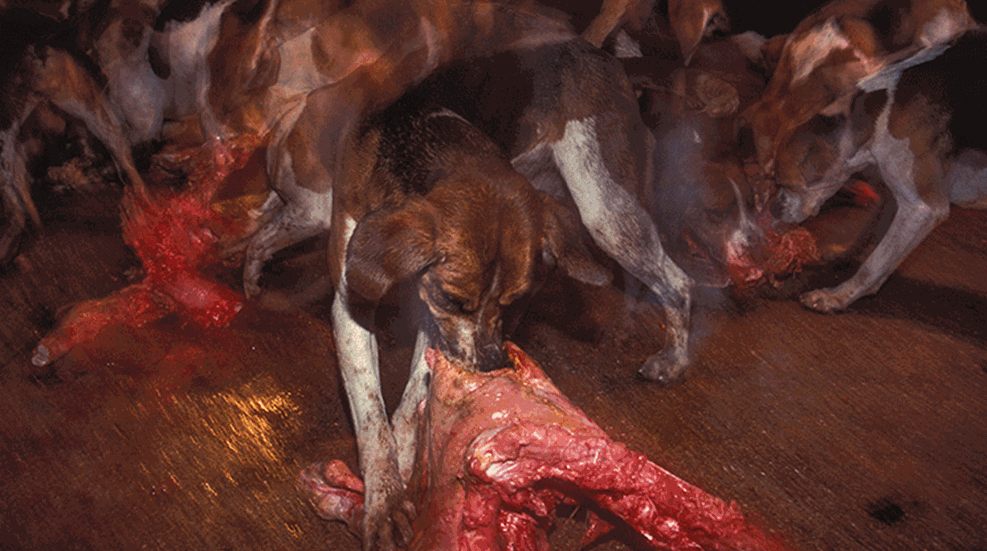
We first noticed the coyotes as prints in the snow following fresh tracks of a mule deer. One coyote track became two, became seven. When we rounded a sharp bend in the canyon, the Lucky Seven were tearing a mule deer doe limb from limb. It looked like a pack of African wild dogs ripping the life out of their dinner.
It was a short meal. By the time we’d run to the cabin for our rifles and returned, the mule deer was just a red stain in the snow. Proof, as if we needed any, that canines love meat. Raw meat.
So why are you feeding you hunting dogs grain?
A little-appreciated fact is that most of today’s dog food is grain based. Corn, rice and wheat are high-carbohydrate foods for squirrels, pheasants and deer, but you don’t see many wolf packs attacking these crops. That’s because a canine’s digestive system is geared toward raw meat.
I re-awoke to this ancient reality several years ago while visiting with an owner of award-winning Saluki show dogs. He credited their raw-meat diet for their extra vigor, bright eyes and sparkling, lustrous coats.
“What kind of raw meat do you feed them?” I asked. To my great surprise he replied, “Chicken backs.”
Turns out many supermarkets cut up whole chickens to sell as parts. Nobody wants the backs that tie all these parts together. OK, cheap meat. But raw chicken bones?
“They don’t splinter,” the Saluki master swore. “It’s cooked bird bones that turn brittle and cause problems.” I can’t vouch for that, but if he was telling the truth about those award-winning Salukis, the raw-meat-and-bones idea must have considerable merit.
Given the long evolutionary history of canines, this makes perfect sense. It’s only in the last 90 years or so that we invented modern dog food, most of it made with as much as 60 percent plant-based carbohydrates. Dogs can live on this, but according to Alaska veterinarian and sled-dog breeder/trainer/racer Dr. Arleigh Reynolds, a dog’s diet should contain no more than about 25 percent carbs. It should include upwards of 50 percent protein and 30 percent fat. Sounds like a heart-attack diet for humans, unless you’re into the caveman thing, but it proves to be a fitness diet for dogs.
Dogs of all breeds and sizes have large stomachs, short digestive tracts and a short, small cecum for absorption of vital, volatile fatty acids. Because they don’t have the large, elaborate fermentation vats of herbivores like cattle, dogs require nutrient-dense, easily digestible meats and fats. What they eat slips through them in a hurry, often in less than 12 hours. For endurance—the canine ability to trot or run for hours—dogs rely on fats rather than carbohydrates because they can store fat.
As Dr. Reynolds explained, carbs provide early energy but burn out in a hurry. Fats (triglycerides) get metabolized to provide that slow, long burn—energy that keeps meat eaters like dogs going and going and … .
Scientific studies have been conducted on dog diets in various countries over the years. At least one of these found that dogs fed a diet of raw meat (the quantities of intestines, bones, hair, feathers, etc., included, intentionally or inadvertently, were not specified) lived about three years longer than those fed a traditional, grain-based commercial dog food. Hmmm. Unspecified was the quality of that commercial food or its
fat/carb/protein balance. But more than a few sources pushing raw-meat diets for Dog mention various unsavory chemicals and toxins supposedly found in some dry dog foods. Some of these included aflatoxins, or carcinogenic molds, which often grow on grains, legumes and nuts. Other alarming-sounding pollutants potentially include acrylamides and heterocyclic amines, both springing from cooking processes; polybrominated diphenyl ethers (PBDEs—flame retardants) at levels 10 times higher than found in human foods may also arise from cooking.
And on it goes, building the case for a raw, “natural” diet. Now, before you get so alarmed you rush out and buy Dog half a steer, consider some of the wild claims made by the “organic, all-
natural” foodies, some of whom try to cure humankind’s worst diseases with kale and spinach. I’m not saying that kale and spinach might not be extremely beneficial to the human body—or even Dog’s—I’m just pointing out that advocates of “all-natural” anything can sometimes be excessively enthusiastic. In short, take this information on meat vs. grain dog food with a grain of salt, if you’ll forgive the pun.
Many veterinarians warn against potential risks in raw diets, including bacteria in raw meat; the potential for an unbalanced diet (canines in the wild consume hide, hair, hooves, internal organs, etc.); and physical injury from bone puncture, choking, broken teeth, etc. Considering the kind of carrion wild canines eat (and the stuff most of my tame ones have snarfed up, too), I’m not too concerned about bacteria. I’d be more worried about getting Dog the right levels of vegetation and internal organs. Many of my dogs have shown considerable interest in ingesting apples, grass, carrots, watermelon and so on.
Finally, allow me to point out that Dr. Reynolds feeds his race dogs a commercial kibble. They win races. Long, grueling races. One of his 8-year-old bitches ran a marathon over three days, averaging 20 mph. At the time she was the oldest dog to ever win that particular sled race.
Most breeders and trainers of today’s best hunting breeds, including competition winners, feed high-quality commercial dog food with sparkling results. My last two setters lived to ages 15 and 17 on high-fat, high-protein kibbles and hunted right up to their last years. Not many wolves or coyotes come close to that.